 Chuckanut Exterior
 Windows Built for Columbia's Coastal Climate
Homes in the Columbia area near Chuckanut face a specific combination of weather stress that inland Washington homes simply don't deal with. Salt air off the water accelerates corrosion on hardware and fasteners. Driving rain, pushed sideways by wind off the Sound, tests every seam and flashing detail around a window opening. And the long, shaded moss season that Whatcom County is known for keeps siding, trim, and window sills damp for weeks at a stretch, which is exactly the kind of environment that rots wood and breaks down poor sealant work.
Window installation in this setting isn't just about picking a good window. It's about how that window gets set into the wall, sealed, flashed, and finished so water has nowhere to go but back outside. A window that's a fine product but poorly installed will fail here faster than it would in a drier climate, and the failure is usually hidden behind trim until it's a rot problem.
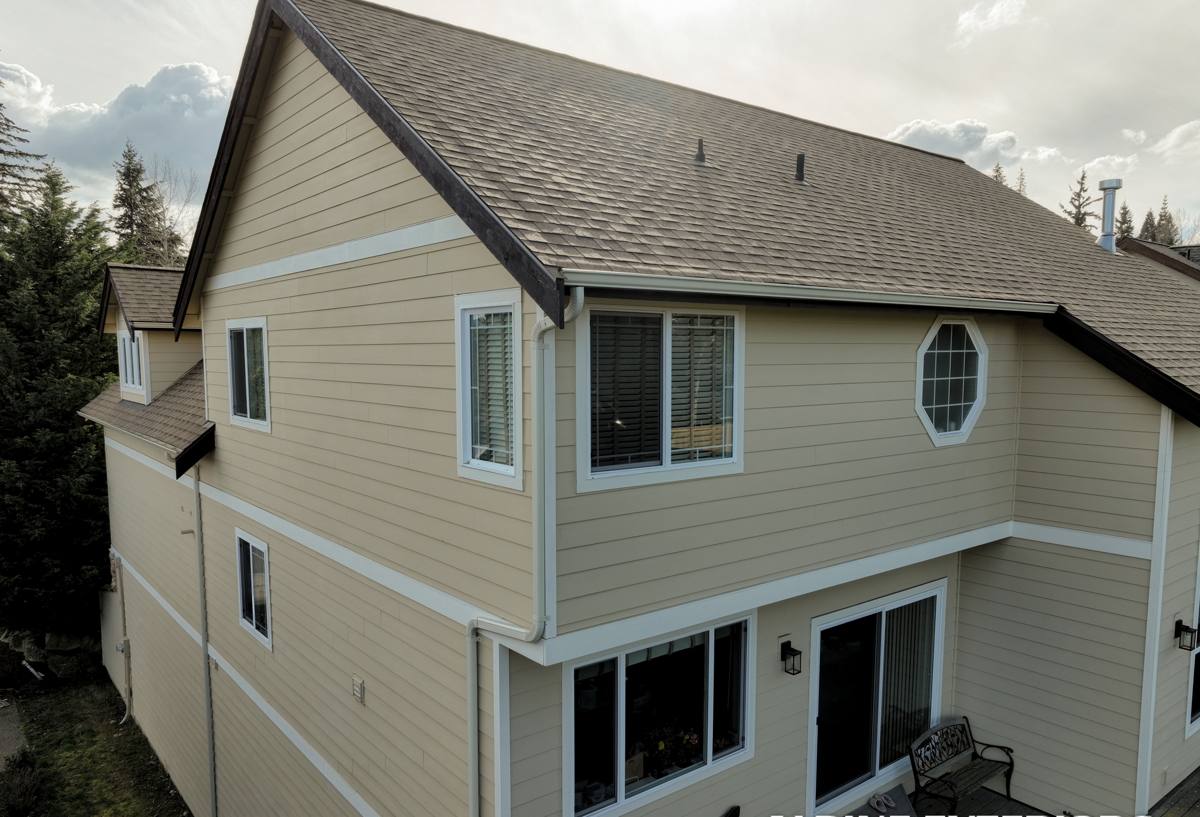
What Correct Installation Actually Involves
A lot of window problems we get called out to inspect in the Columbia area aren't product failures — they're installation shortcuts. Correct installation is a sequence, and skipping any step in a wet, salt-exposed climate shows up as a callback within a few years instead of a few decades.
The Sequence That Matters
- Remove the old window and inspect the rough opening for hidden rot or water staining before anything new goes in
- Repair or rebuild any damaged framing — never install a new window over compromised wood
- Install a proper weather-resistive barrier and flashing tape at the sill, jambs, and head, lapped in the correct order so water sheds outward and down
- Set the window level, plumb, and square, shimmed correctly so the frame isn't under stress
- Seal and insulate the gap between the window frame and rough opening — not stuffed tight, which restricts drainage, and not left gapped, which lets in air and moisture
- Apply exterior sealant at the correct joints only, leaving the sill pan free to drain
- Finish trim and flashing so the whole assembly sheds water the way the original wall design intended
Every one of those steps matters more here than it would in a dry climate, because Columbia's homes get more cumulative exposure to wind-driven rain and damp, shaded conditions than most of the state.
Common Problems We See in Columbia Homes
Older homes in and around Chuckanut tend to show a consistent pattern of window trouble, and it usually traces back to age, original construction methods, or a prior repair that wasn't done with this climate in mind.
| Symptom | Likely Cause | Why It Matters Here |
|---|---|---|
| Fogging between glass panes | Failed seal on an older insulated glass unit | Common on windows facing prevailing wind and rain; once the seal fails, moisture is trapped for good |
| Soft or discolored trim near the window | Water intrusion behind flashing or caulk | Moss season keeps that area damp for extended stretches, so rot progresses faster than it would elsewhere |
| Drafts even with windows closed | Worn weatherstripping or a frame that's shifted out of square | Salt-laden wind finds any gap, and heating costs climb through the wet months |
| Corroded hardware or hinges | Standard-grade fasteners exposed to salt air over years | Coastal proximity accelerates this well beyond what's typical for inland Whatcom County homes |
| Sticking or hard-to-operate sashes | Wood swelling from repeated moisture cycling | Frequent damp-to-dry cycling stresses wood components more than a steady climate would |
Choosing the Right Frame Material
There's no single "best" window material for every home — it depends on the home's style, budget, and how exposed it is to wind and salt spray. What we won't do is install a product we know performs poorly in this climate just because it's cheaper up front; we'd rather explain the trade-offs honestly.
| Frame Type | Strengths | Trade-offs in This Climate |
|---|---|---|
| Vinyl | Low maintenance, good insulating value, resists rot entirely | Can expand/contract with temperature swings; quality varies a lot between manufacturers |
| Fiberglass | Very stable dimensionally, strong, holds paint well, resists moisture damage | Higher upfront cost than vinyl |
| Aluminum | Slim sightlines, durable frame | Conducts cold and can corrode faster near salt air unless properly coated |
| Wood / wood-clad | Classic appearance, works well for period homes | Highest maintenance burden — needs consistent upkeep to avoid rot in a damp, shaded climate like this one |
For homes closer to the water with more direct salt exposure, we generally steer clients away from bare wood exteriors and uncoated aluminum unless there's a strong style reason to keep them, simply because the maintenance schedule needed to keep those materials performing well is demanding in this environment.
Our Installation Process for Columbia Homeowners
1. On-Site Assessment
We look at each window opening individually — sun exposure, wind direction, existing framing condition, and any signs of past moisture problems. Columbia's homes don't all face the weather the same way, so the openings on the windward side of a house often need more attention than the sheltered side.
2. Honest Product Recommendation
We walk through material and glass options based on your home's exposure and budget, not a one-size-fits-all package. If a certain product isn't a good fit for a particularly exposed wall, we'll say so.
3. Careful Removal and Opening Inspection
Every rough opening gets inspected once the old window is out. If there's hidden rot or water damage, we address it before installing anything new — installing over a compromised opening just moves the problem down the road.
4. Proper Flashing and Sealing
This is where most installation quality is won or lost. We flash and seal to shed water outward, not trap it, and we don't rely on caulk alone to do a flashing detail's job.
5. Final Fit, Trim, and Walkthrough
Every window is checked for level, operation, and a clean seal before we consider the job done, and we walk the homeowner through what was done and what to watch for over time.
Signs It's Time to Consider Replacement
Not every window problem means full replacement — sometimes a repair or reseal is enough. But a few signs consistently mean replacement is the more sensible long-term move, especially on a home exposed to Chuckanut's weather:
- Visible fogging or moisture trapped between glass panes
- Frame wood that's soft, spongy, or visibly discolored
- Windows that won't stay open, won't latch, or are difficult to operate
- Noticeable drafts around the frame even when fully closed
- Rising heating bills without another clear explanation
- Visible gaps between the frame and the wall, or cracked/failing exterior caulk
- Hardware that's rusted, pitted, or seized from salt exposure
Why Local Experience in Columbia Matters
A crew that regularly works homes in and around Chuckanut already understands how the wind and rain move across the terrain here, which sides of a house tend to take the brunt of it, and how long the moss season typically keeps things damp. That's not something you can fully substitute with a generic installation checklist. It shapes decisions like where extra flashing detail is worth the time, which frame materials make sense for a given exposure, and what maintenance schedule actually fits Whatcom County's weather pattern rather than a national average.
It also means a faster, more accurate assessment. We're not learning your neighborhood's weather behavior on your project — we've already seen how it plays out on similar homes nearby.
What Affects the Cost of a Window Installation
Every project is different, but the same handful of factors tend to drive the price up or down. We'll always give you a clear, itemized estimate before any work starts — no surprises once the job is underway.
| Factor | Effect on Cost |
|---|---|
| Frame material chosen | Vinyl is typically the most budget-friendly; fiberglass and wood-clad options cost more upfront |
| Number of windows and their size | More straightforward math — larger openings and more windows increase material and labor |
| Condition of the existing rough opening | Hidden rot or framing damage adds repair work before the new window can go in |
| Glass package | Upgraded glass (extra panes, coatings) adds cost but can pay back through comfort and energy savings |
| Exposure and access | Windows on exposed or hard-to-reach walls may need extra care and time |
Maintaining New Windows in a Salt-Air, Moss-Season Climate
Even a well-installed window benefits from a little seasonal attention here. A few habits go a long way toward protecting your investment through Chuckanut's wet months:
- Rinse exterior frames periodically to clear salt residue, especially on homes closer to the water
- Check exterior caulk lines once a year for cracking or separation and address small gaps before they become water paths
- Keep gutters and nearby drainage clear so water isn't sheeting down across window openings
- Trim back vegetation that keeps a window area shaded and damp longer than necessary, which contributes to moss and mildew buildup
- Operate hardware periodically through the year so mechanisms don't seize up from disuse and moisture
If you're weighing a repair versus a full replacement, or just want an honest read on how your current windows are holding up against Columbia's weather, we're happy to take a look. Reach out for a free, no-pressure estimate using the form below.