 Chuckanut Exterior
 Windows Take a Different Kind of Beating in Silver Beach
Homes in the Silver Beach area of Chuckanut sit in a stretch of Whatcom County where the weather doesn't do anything by half measures. Salt-laden air off the water works into aluminum hardware and steel fasteners year-round. Driving rain, pushed sideways by wind off the Sound, finds every gap in flashing and trim. And the long gray moss season here — often eight or nine months a year of damp, low-light conditions — turns any window with poor drainage into a place where algae and moss can gain a foothold on sills, tracks, and exterior trim. None of this is dramatic on its own. It's the accumulation, year after year, that eventually shows up as fogged glass, soft wood, or a window that won't latch square anymore.
Window replacement done right in this neighborhood isn't just about swapping old glass for new. It's about correcting how water moves around the opening in the first place, so the next set of windows doesn't fail the same way the last set did.
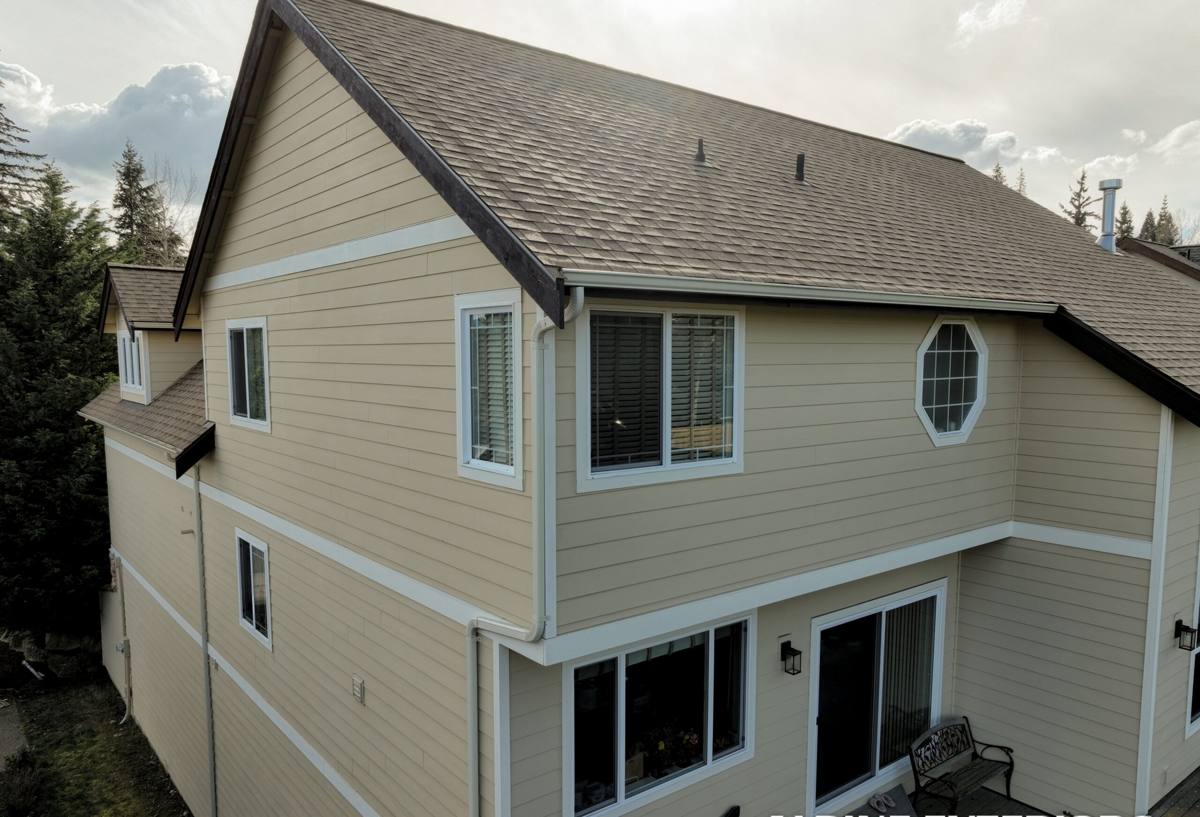
Signs a Silver Beach Home Needs New Windows
Most homeowners call us after noticing one or two of these, not realizing the underlying cause is usually the same: water has been getting past the window's weather barrier for a while.
- Fog, haze, or moisture trapped between panes — the seal on the insulated glass unit has failed
- Windows that are hard to open, close, or lock, especially wood or older vinyl units
- Soft, discolored, or spongy wood on the sill, jamb, or the trim just below the window
- Moss, algae, or black staining building up on the sill or exterior casing
- Cold drafts near the window even when it's fully latched
- Rising heating bills without any other clear explanation
- Visible daylight or a whistling sound around the frame during wind
- Peeling paint or bubbling drywall on the interior wall below or beside the window
Any one of these is worth a look. Several at once, especially on a wall that faces prevailing wind and rain, usually means the window and the flashing behind it both need attention.
What a Correct Replacement Actually Involves
The window itself is often the easy part. What determines whether a replacement lasts fifteen years or thirty is what happens at the opening before the new unit ever goes in.
Removing the Old Window Without Guessing
Before a new window goes in, we pull the old one and actually look at the rough opening — sill, jack studs, header, and sheathing. In a wet climate like ours, this is where problems hide. If there's rot or long-term moisture damage, patching over it and installing a new window on top guarantees a repeat failure, just delayed a few years.
Flashing and the Weather Barrier
This is the step that separates a window that survives driving rain from one that doesn't. Proper flashing — sill pan, side flashing, and head flashing installed in the correct shingle-lap order and tied into the home's existing weather-resistive barrier — routes water back out instead of into the wall cavity. It's not visible once the trim goes back on, which is exactly why it's the step some lower-cost installers skip.
Sealing, Insulation, and Trim
Low-expansion foam or backer rod and sealant around the frame closes air gaps without bowing the window frame out of square — a common mistake with standard spray foam. Exterior trim and caulking are then finished in a way that sheds water rather than holding it against the wood.
Choosing a Window Material for This Climate
There's no single "best" window material — the right choice depends on your home's exposure, your maintenance appetite, and your budget. Here's how the common options actually perform in a marine, high-moisture setting like Silver Beach.
| Material | Moisture Resistance | Maintenance | Typical Lifespan |
|---|---|---|---|
| Vinyl | Very good — won't rot or corrode | Low; occasional cleaning | 20–30 years |
| Fiberglass | Excellent; dimensionally stable in temperature swings | Low | 30–40 years |
| Wood-clad | Good on the exterior clad side; interior wood needs protection from condensation | Moderate to high | 20–30 years with upkeep |
| Aluminum | Prone to corrosion near salt air unless marine-grade and well-finished | Moderate | 15–25 years in coastal exposure |
For homes with direct salt-air exposure, we generally steer clients away from standard aluminum-framed units — not because aluminum is a bad product broadly, but because its corrosion resistance in a salt-air environment depends heavily on finish quality and maintenance, and it's an added variable most homeowners don't want to manage. Vinyl and fiberglass remove that variable almost entirely.
Cost Factors Homeowners Should Understand
We don't publish blanket per-window pricing because the honest answer is "it depends," and pretending otherwise doesn't serve anyone. What we can tell you is what actually moves the number.
| Factor | Why It Matters |
|---|---|
| Window count and size | Larger and more numerous openings mean more material and labor |
| Frame material | Fiberglass generally costs more upfront than vinyl; both cost less long-term than frequent repairs |
| Condition of the rough opening | Rot or water damage found during removal adds repair scope before the new window can go in |
| Trim and siding tie-in | Matching existing trim or siding profiles takes more time than a straight swap |
| Access and home height | Second-story or hard-to-reach windows take longer and need more equipment |
| Full-frame vs. insert replacement | Full-frame replacement (recommended when flashing is compromised) costs more than an insert but corrects the underlying water management |
As a general range, most single-window replacements on homes in this area run from the low thousands per window for standard sizes and materials, up to significantly more for large picture windows, custom shapes, or full-frame work with rot repair. We'll give you real numbers, specific to your windows, after a walkthrough — not a phone estimate.
Our Process, Start to Finish
- Walkthrough and assessment — we look at each window's condition, the surrounding trim, and any signs of moisture intrusion, not just the glass itself
- Written estimate — clear pricing broken out by window, with material options explained so you're choosing based on facts, not sales pressure
- Scheduling around weather — we plan installs to minimize how long any opening sits exposed, which matters more here than in drier climates
- Removal and opening inspection — old windows come out and we check the framing before anything new goes in
- Flashing, install, and seal — done in the sequence that actually sheds water, not just what's fastest
- Trim, cleanup, and walkthrough — interior and exterior finish work, debris hauled away, and a final check with you before we call it done
Why It Matters That We Already Work in Silver Beach
A crew that's installed windows on other homes in this same pocket of Chuckanut has already seen how the wind hits which exposures, which older homes tend to have marginal flashing from previous work, and where moss and algae build up fastest on north- and west-facing walls. That's not a marketing point — it's practical knowledge that shows up in fewer surprises during the job and fewer callbacks after it. It also means we're a known, reachable local business if a question comes up two or five years down the road, not a crew that drove in from out of the area for one job and moved on.
We also understand that a house on a windy waterfront-adjacent lot needs a different sequencing and sealing approach than one tucked back from the water, even within the same neighborhood. That's the kind of judgment that comes from repetition in a specific place, not from a general contractor's checklist.
Permits and Local Requirements
Window replacement projects in Whatcom County may or may not require a permit depending on scope — whether it's a like-for-like swap versus enlarging an opening, and whether structural framing is affected. We handle that determination and any required paperwork as part of the job, so you're not left guessing whether your project is code-compliant. If egress requirements apply to a bedroom window, we'll flag that during the estimate, not after the old window is already out.
Maintaining New Windows in a Marine Climate
Even the best window benefits from a little seasonal attention here.
- Rinse sills and tracks a couple of times a year to clear salt residue and organic buildup before it stains or scratches
- Check exterior caulking annually, especially after a hard winter, and re-seal any cracked joints promptly
- Keep gutters and downspouts clear so roof runoff isn't sheeting directly down over window heads
- Trim back vegetation that shades a window and keeps it damp longer than the rest of the wall
- Operate locks and hardware periodically through the winter so moving parts don't seize from disuse
None of this takes much time, and it meaningfully extends the life of whatever windows you install.
If your windows are fogging, sticking, or just letting in more cold and noise than they used to, we're happy to take a look and give you a straight, no-pressure estimate — free, with no obligation. Use the form below and we'll get in touch to schedule a walkthrough of your Silver Beach home.