 Chuckanut Exterior
 Sedro-Woolley Decks Take a Different Kind of Beating
A deck in Sedro-Woolley doesn't age the way a deck in a drier inland climate does. Between the salt-laden air moving in off the water, a rainy season that can stretch for months at a time, and moss that gets a foothold almost anywhere shade and moisture overlap, the wear pattern here is specific. It shows up as soft spots near ledger boards, corroded fasteners, slick green growth on north-facing boards, and framing that looks fine from the top but is quietly losing strength underneath. Most of the repair calls we get in this area aren't from decks that were built badly — they're from decks that were built for a different climate, or maintained on a schedule that doesn't account for how much moisture this region actually sees.
This page is about one job, done right, in one place: deck repair for homes in and around Sedro-Woolley. Not a full rebuild sales pitch, not a generic list of deck tips — an honest look at what this climate does to a deck, what a correct repair actually involves, and why it matters that the crew doing the work already knows this area.
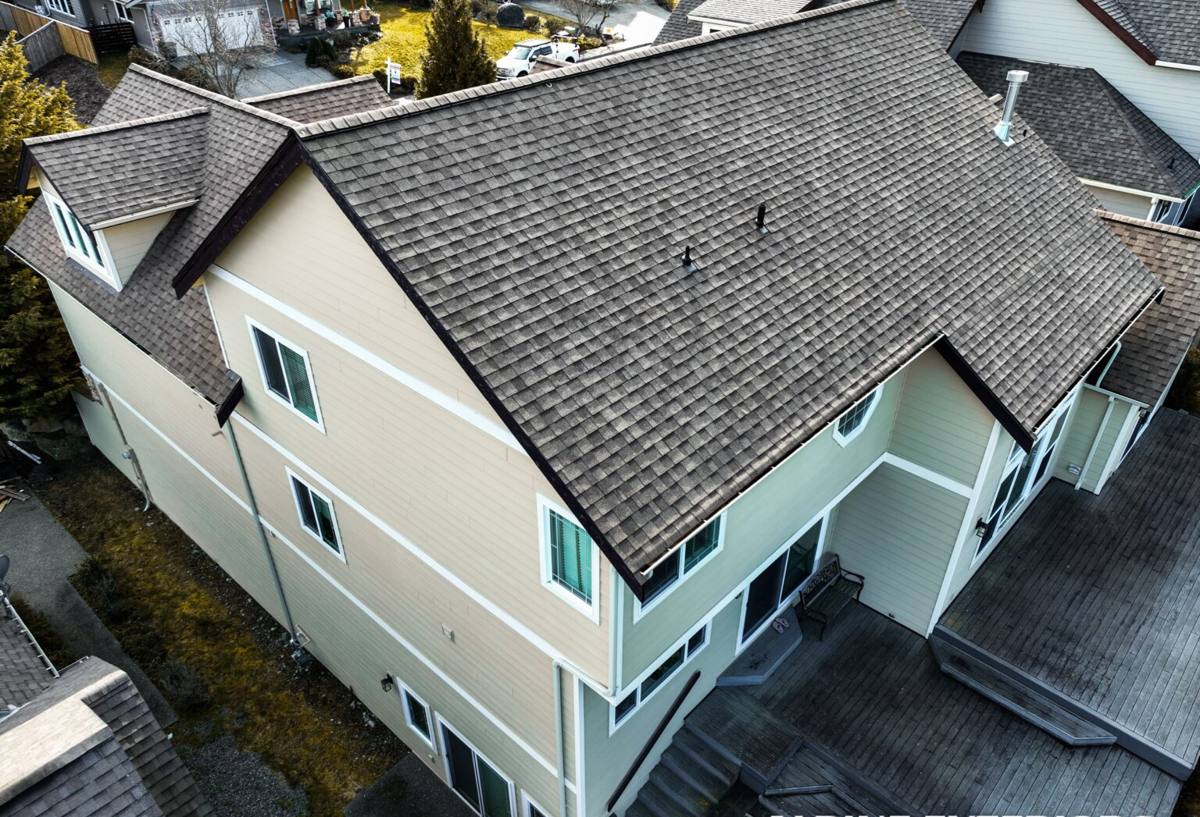
What the Marine Climate Actually Does to a Deck
Wood decking and framing
Wood swells and shrinks with every wet-dry cycle. In a region where "dry" might only last a few weeks at a stretch, that cycling never really lets up. Over years, it opens up checking in the boards, loosens fastener holes, and lets water track down into end grain and ledger connections. Add salt-carrying air and you get faster corrosion on anything metal — nails, brackets, joist hangers — long before the wood itself has failed. A deck can look structurally sound on the surface while the connections holding it together are already compromised.
Composite and PVC decking
Composite and PVC boards don't rot, but they aren't immune to this climate either. Moisture that gets trapped underneath a low-clearance deck, or that sits in a spot with poor airflow, is exactly where moss and mildew take hold on composite surfaces — it's a surface-growth problem rather than a decay problem, but it still needs to be dealt with, and it tells you something about drainage and ventilation under the deck that's worth fixing at the same time as any repair.
Fasteners, hardware, and hidden connections
This is where we find the most underestimated damage. Standard or under-spec fasteners and connectors corrode faster near the coast, and once a fastener starts to go, it stops doing its job long before it visibly fails. A deck can pass a casual look and still have joist hangers, ledger bolts, or post connections that have lost real holding strength. This is also the part of a deck most homeowners never inspect, because it's underneath — which is exactly why it's the first place we check.
Signs a Deck Needs Repair, Not a Full Rebuild
Most decks don't need to be torn out. They need the specific parts that are actually failing addressed properly, while the sound structure and decking are left alone. Here's what we look for before recommending anything:
- Soft, spongy, or bouncy spots when you walk across the deck, especially near the house
- Visible rust streaks running down from fasteners or metal brackets
- Gaps opening up where the deck meets the ledger board attached to the house
- Persistent moss or dark staining in the same spots every year, even after cleaning
- Railings or stair posts that wiggle more than they used to
- Boards that are cupping, splitting along their length, or feel damp days after the last rain
- A musty smell coming from underneath the deck
- Steps that feel uneven or have started to separate from stringers
Any one of these on its own might be a small fix. Several together, especially near the ledger or stairs, usually mean it's worth having someone look underneath before deciding what the job actually is.
What a Correct Deck Repair Actually Involves
Start with an honest structural look, not just the surface
A repair that only replaces the boards you can see and ignores the framing underneath is a repair that fails again in a year or two. Before we touch decking, we check the ledger connection, the joists, the posts, and the fasteners holding it all together. That's where this climate does its real damage, and it's the part that determines whether a repair will actually hold.
Ledger board and flashing come first
The ledger — the board that attaches the deck to the house — is the single most common point of failure we see, because it's also the hardest spot for water to drain away from. If flashing is missing, damaged, or was never installed correctly, no amount of new decking on top will fix the underlying problem. Getting this connection right, with proper flashing and fasteners rated for the exposure, is non-negotiable in a repair.
Board replacement done board-by-board, not by guesswork
We replace boards that have actually failed — split, soft, or structurally compromised — rather than assuming an entire deck surface needs to come off. This keeps costs honest and avoids tearing out material that still has years of life left in it.
Hardware and fasteners get upgraded, not just replaced like-for-like
If the original build used fasteners or connectors that weren't suited to this climate, replacing them with the same spec just resets the clock on the same failure. Part of a correct repair is matching hardware to the exposure the deck actually faces.
Our Process for Sedro-Woolley Deck Repairs
- Full inspection, top and underneath. We check decking, framing, ledger, posts, stairs, and railings — not just the parts that are easy to see.
- Straight talk on what's actually needed. We tell you what's failing, what's still sound, and what we'd recommend versus what we'd leave alone if it were our own deck.
- A written scope and price before any work starts. No open-ended "we'll see what we find" billing on the parts we can already assess.
- Repair the structure first, then the surface. Framing, connections, and flashing get addressed before cosmetic board replacement.
- Clean up and a final walkthrough. We show you what was done and why, including anything underneath you wouldn't otherwise see.
Repair or Replace? Weighing the Real Factors
Not every deck in rough shape needs to come out. This is generally how we help homeowners think through it:
| Factor | Usually Favors Repair | Usually Favors Replacement |
|---|---|---|
| Framing condition | Solid, dry, only isolated fastener corrosion | Widespread soft or rotted joists and posts |
| Ledger connection | Sound once flashing is corrected | Long-term water intrusion into the house rim joist |
| Decking surface | Scattered bad boards, rest is stable | Most boards cupped, split, or failing at once |
| Deck age | Under 15-20 years, built reasonably well | Original build already near end of typical service life |
| Design fit | Layout and size still work for how you use it | You've outgrown the current footprint or design |
Most of the decks we're called out for in Sedro-Woolley land on the repair side of this table — the bones are fine, but a handful of specific problems need to be corrected properly.
Materials and Fasteners We Use, and Why
We use fasteners and connectors rated for exterior, coastal-adjacent exposure rather than standard interior-grade hardware, because the cost difference is small and the difference in how long a repair lasts is not. When we're replacing decking, we'll talk through wood versus composite honestly: wood costs less up front but asks for real annual maintenance in this climate, while composite costs more initially but handles moisture and moss with less upkeep. Neither is wrong — it depends on how much maintenance time you want to put in versus pay for up front. What we won't do is spec a product or fastener because it's cheaper if we know it won't hold up to what this area throws at a deck; that's a callback waiting to happen, and it's not how we want to build a reputation here.
Why a Crew That Already Works Sedro-Woolley Matters
Deck repair done right depends on understanding the specific exposure a given property has — how much shade it sits in, which direction the weather comes from, how close it is to salt air, how the moss season plays out on that particular lot. A crew that already works Sedro-Woolley regularly has seen this pattern across dozens of decks, not guessed at it from a single visit. That translates into faster, more accurate diagnosis, fewer surprises once we open things up, and a repair scoped to what actually happens to decks in this part of Whatcom and Skagit county, not a generic national playbook. It also means we're not disappearing after the invoice — we're a short drive away if a question comes up during the next wet season.
Keeping a Repaired Deck Ahead of the Weather
A good repair buys you years, but a little seasonal attention buys you more. This is the maintenance rhythm we recommend to homeowners after a repair:
- Sweep leaves and debris out of gaps between boards before fall rains set in
- Rinse or gently brush off moss as soon as it appears, before it spreads
- Check the ledger area and any flashing once a year for gaps or staining
- Keep gutters and downspouts clear so runoff isn't dumping directly onto or under the deck
- Reseal or refinish wood decking on the schedule the product actually calls for, not "when it looks bad"
- Walk the deck once a season and note any new soft spots or movement in railings
None of this is complicated, but skipping it is how a good repair turns into a repeat call two winters later.
If your deck has a soft spot, some rust streaks, or just doesn't feel as solid as it used to, we're happy to come take an honest look. There's a free, no-pressure estimate form below — we'll tell you what we actually find, what we'd fix, and what can wait.