 Chuckanut Exterior
 Samish Sits in a Tougher Weather Lane Than Most of Whatcom County
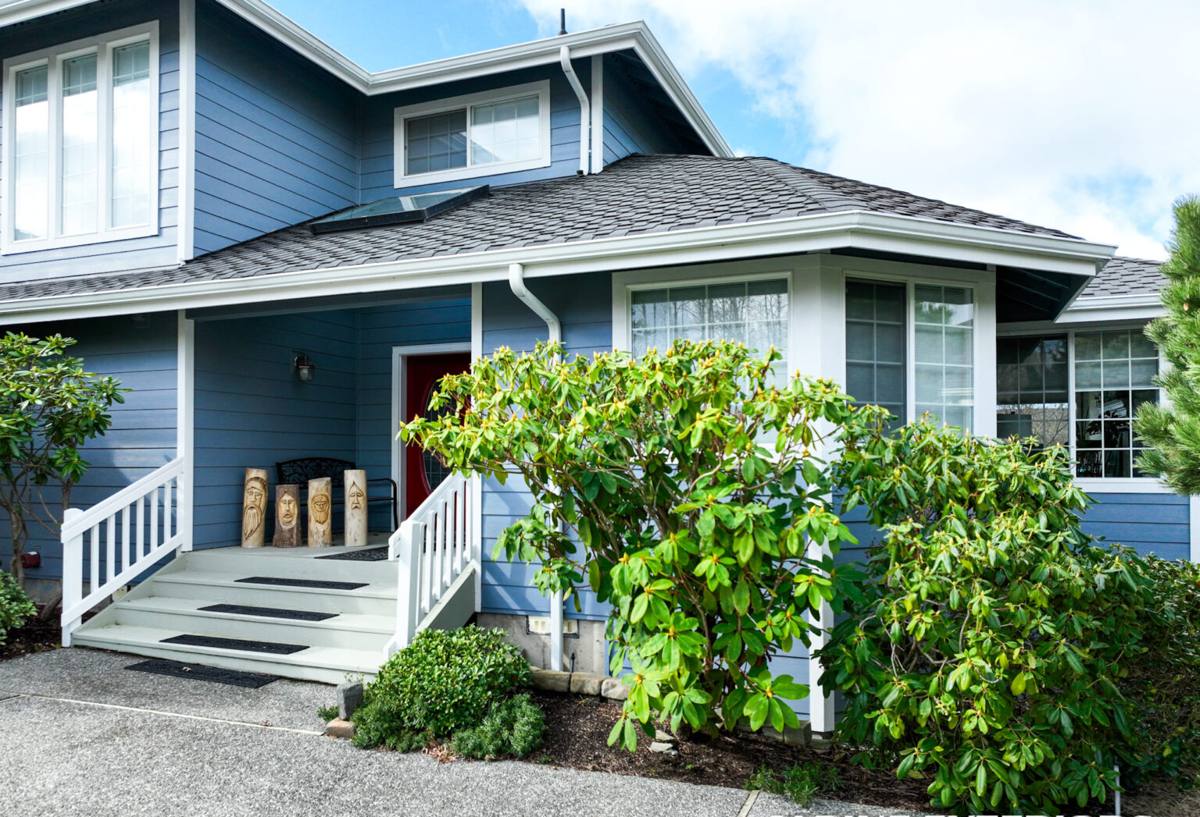
Homes in Samish take on a specific mix of punishment that inland Whatcom County properties mostly avoid. Being close to the water means salt-laden air is a near-constant presence, settling on exterior surfaces and accelerating the breakdown of paint films, caulk, and fasteners. Add the long stretches of driving rain that come off the Pacific through the fall and winter, and you get siding that stays wet longer, dries slower, and is under near-continuous moisture load for months at a time. Then there's shade — mature tree cover common in this part of Chuckanut keeps humidity pooled against north- and west-facing walls, which is exactly the environment moss needs to take hold and spread.
None of this is unusual for coastal Pacific Northwest siding, but it does mean that generic siding advice doesn't quite fit. What holds up in a drier, sunnier climate zone can fail years early here. The right product, installed the right way, matters more in Samish than it does in a lot of places we work.
Why James Hardie Is the Only Siding We Install
We install James Hardie fiber cement siding exclusively — we don't offer vinyl, LP SmartSide, Cemplank, Allura, primed spruce, or cedar. That's not a marketing position, it's a standard we hold ourselves to because of what we've seen these products do (and not do) in exactly this kind of coastal, wet, shaded climate.
- Non-combustible core: fiber cement doesn't feed a fire the way wood-based products can.
- Moisture-resistant composition: unlike wood siding, Hardie's fiber cement doesn't swell, rot, or provide a food source for the fungus that drives moss and mildew growth.
- Factory-applied ColorPlus finish: baked-on color and sealant that resists fading and chalking far longer than field-applied paint, which matters when salt air is constantly working on painted surfaces.
- Climate-engineered HZ5 formulation: Hardie's HZ5 product line is engineered specifically for wetter, harsher climate zones like ours, rather than a one-size-fits-all mix.
- Strong transferable warranty: backed by a manufacturer with decades of track record, not a regional or private-label warranty that may not survive a company's changes.
Vinyl can warp and fade under UV and salt exposure and often traps moisture behind it rather than letting a wall system breathe. Wood-based products like LP SmartSide and cedar require diligent, ongoing sealing and caulk maintenance to keep moisture out — skip a cycle in a climate this wet and you're inviting the exact rot and moss problems homeowners are trying to avoid. Primed spruce simply isn't built for sustained coastal exposure. Hardie fiber cement, installed correctly, is the product we've found actually holds up to what Samish weather does to a house year after year.
What "Correct Installation" Actually Means Here
James Hardie siding performs to its rated lifespan only when it's installed to the manufacturer's specifications — and in a high-moisture, salt-exposed area, the margin for installation error is smaller than it looks. The panels themselves are excellent; most premature siding failures we're called to look at trace back to installation shortcuts, not the product.
The details that matter most in this climate
- Correct clearances: Hardie specifies minimum gaps between siding and roofing, decks, and grade — skip these and you create a wick point for standing water.
- Proper flashing and weather barrier integration: every penetration, window, and door needs flashing detailed to shed water outward, not trap it behind the panel.
- Fastener pattern and type: corrosion-resistant fasteners, placed per Hardie's nailing schedule — undersized or incorrectly placed fasteners are a common failure point near salt air.
- Field-cut edge sealing: any cut panel edge needs to be sealed per manufacturer instructions, or that exposed edge becomes a moisture entry point.
- Rainscreen or drainage plane where appropriate: giving the wall assembly a way to drain and dry matters more here than in drier regions.
- Caulk joints at butt seams and trim: done with the right sealant and joint design so they don't fail in year two or three.
Get these details right and Hardie siding shrugs off what Samish throws at it for decades. Get them wrong and you can end up with moisture intrusion, staining, and localized failure well before the product's real potential.
Our Process for a Samish Siding Job
1. On-site assessment
We walk the exterior with you, looking at existing siding condition, moss and staining patterns, moisture evidence at trim and penetrations, and how the house sits relative to sun, shade, and prevailing wind and rain direction.
2. Substrate and moisture check
Before any new siding goes on, we check what's underneath — sheathing condition, existing weather barrier, and any signs of past water intrusion. Covering a moisture problem with new siding just hides it; we address it first.
3. Tear-off and prep
Old siding, trim, and any compromised weather barrier or sheathing come off and get replaced as needed. This is also when we correct clearances at rooflines, decks, and grade that may have been wrong on the original install.
4. Weather barrier and flashing
A properly lapped weather-resistant barrier goes on, followed by correctly detailed flashing at every window, door, and penetration — the step that does the most to keep driving rain out of the wall assembly long-term.
5. Hardie panel installation
Panels go on to manufacturer spec: correct fastener type and pattern, proper clearances, sealed field cuts, and attention to how butt joints and corners are detailed for this climate.
6. Final inspection and walkthrough
We walk the finished job with you, checking joints, trim, and caulk lines, and go over what maintenance (if any) the specific product line and color you chose will need going forward.
How Local Climate Stress Maps to Installation Choices
| Climate stressor common in Samish | What it does to siding over time | How correct Hardie installation addresses it |
|---|---|---|
| Salt-laden coastal air | Accelerates fastener corrosion, breaks down paint film, chalks finishes | Corrosion-resistant fasteners, factory-baked ColorPlus finish |
| Driving, wind-blown rain | Pushes water past standard laps and into wall assemblies | Properly lapped weather barrier, correctly detailed flashing at every opening |
| Extended shade / tree cover | Keeps humidity high against walls, feeds moss and mildew | Fiber cement core resists moisture absorption; drainage plane where needed |
| Long wet season, slow drying | Prolonged moisture contact at joints, cuts, and clearances | Sealed field cuts, correct clearances at grade/deck/roof intersections |
Signs a Samish Home May Need Siding Attention
A lot of siding problems in this area develop slowly enough that homeowners don't notice until they're significant. Some patterns worth watching for:
- Persistent green or black staining that returns quickly after cleaning, especially on shaded walls
- Caulk that has cracked, shrunk, or pulled away from trim and joints
- Paint that's peeling, bubbling, or chalking heavily, particularly on walls facing prevailing wind and rain
- Soft spots, visible warping, or delamination on existing wood-based siding
- Rust streaking around fastener heads
- Musty odors or visible staining on interior walls that back onto exterior siding
Any one of these on their own isn't necessarily an emergency, but together — or left unaddressed through another wet season — they tend to compound.
Maintaining Hardie Siding in a Moss-Prone Climate
One of the practical advantages of fiber cement in this environment is how little upkeep it demands compared to wood siding, but "little" isn't "none." A simple seasonal routine keeps a Hardie installation performing the way it's designed to:
- Rinse siding gently once or twice a year to clear salt residue and organic buildup, especially on shaded or wind-facing walls
- Keep gutters and downspouts clear so water isn't sheeting down the siding face
- Trim back vegetation that's shading walls and keeping them damp longer than necessary
- Check caulk joints at trim and penetrations annually and re-seal if you see cracking or gaps
- Address any moss growth promptly rather than letting it establish and spread
Why It Matters That We Already Work in Samish
Coastal Whatcom County isn't a uniform climate — a home a few miles inland can weather very differently than one closer to the water with more direct salt and wind exposure. Crews that install siding across a wide range of climates without local, repeated experience in this specific coastal pattern can miss the details that matter here: how much clearance to leave given local rain intensity, where flashing needs extra attention because of prevailing wind direction, or which walls are going to fight moss regardless of product because of shade and airflow. We've installed and serviced Hardie siding on homes dealing with exactly these conditions, and that repetition is what shows up in the details of a job — the ones that determine whether siding performs for decades or needs attention in year five.
If your Samish home's siding is showing wear, or you're planning ahead for a replacement, we're happy to take a look and talk through what correct James Hardie installation would involve for your specific property — no pressure, no obligation. Reach out using the form below for a free estimate.