 Chuckanut Exterior
 Why Samish Homes Wear Out Windows Faster Than Most
Samish sits close enough to the water that salt air is a daily fact of life, not an occasional nuisance. Add Whatcom County's long wet season, driving rain that comes in sideways off the Sound during winter storms, and a moss season that can stretch from fall through spring, and you've got a climate that is genuinely hard on window frames, seals, and glass. Windows here don't fail because of one dramatic event — they fail slowly, from years of moisture cycling, salt film building up in tracks and hardware, and UV exposure breaking down seals that were never rated for this kind of coastal exposure to begin with.
That's the backdrop for any conversation about energy-efficient windows in this neighborhood. A window that performs well in a dry inland climate can still underperform here if it wasn't chosen and installed with Samish's specific conditions in mind.
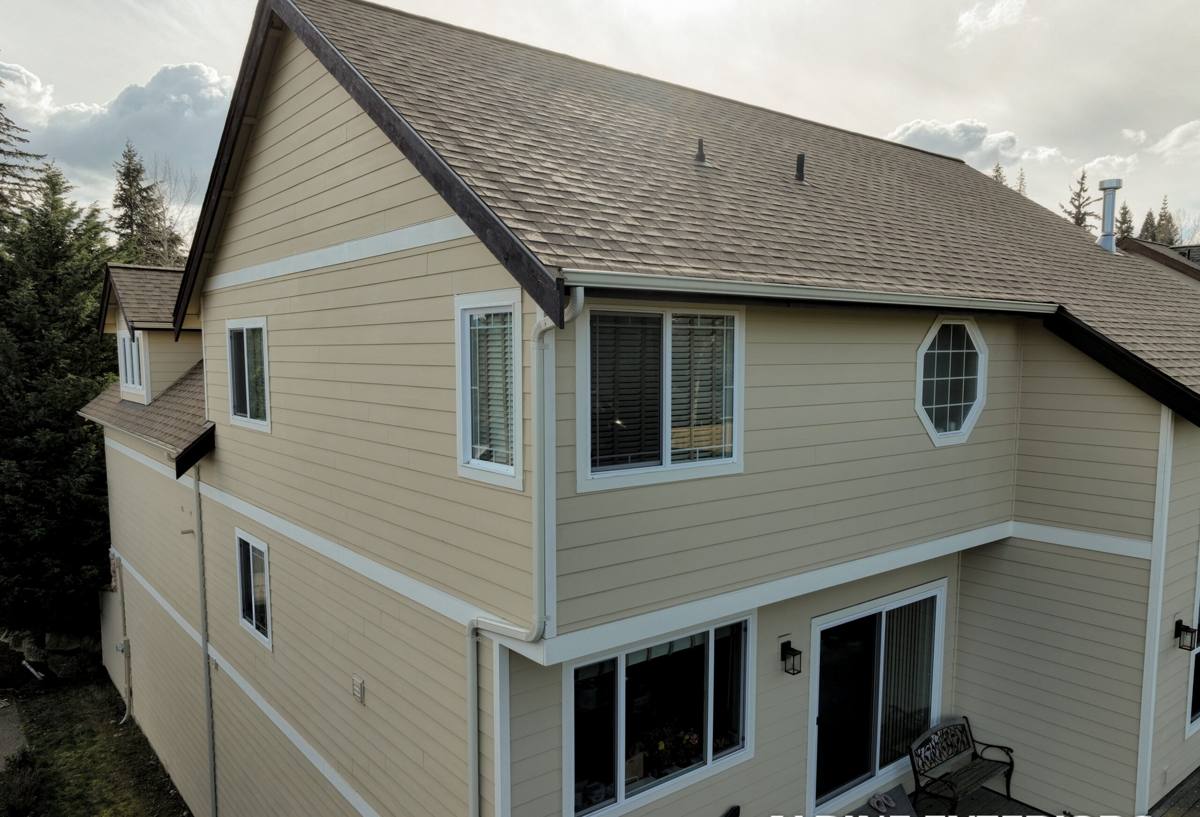
What "Energy-Efficient" Actually Means in This Climate
"Energy-efficient" gets used loosely in the window industry, so it's worth breaking down what actually matters for a home in this part of Whatcom County.
U-Factor
U-factor measures how well a window resists heat loss. Lower is better. In a marine climate like ours, where winters are damp and mild rather than bitterly cold, a strong U-factor still matters — it's the difference between a window that keeps the room comfortable next to it and one that leaves a cold draft you can feel from six feet away.
Solar Heat Gain Coefficient (SHGC)
This measures how much solar heat passes through the glass. Samish doesn't get the intense summer sun that inland or southern climates do, so SHGC is a smaller factor here than U-factor, but it still affects comfort in rooms with larger window areas or west-facing exposure.
Air Infiltration and Condensation Resistance
This is the category that matters most locally. Driving rain tests seals and flashing details far harder than still-air rain does, and our humidity levels make condensation resistance a real, everyday concern — not a lab spec. A window with a great U-factor but a poor air infiltration rating will still fog up, sweat, and let drafts in around here.
| Performance Factor | Why It Matters in Samish | What to Look For |
|---|---|---|
| U-Factor | Controls heat loss during our long damp winters | Lower number, consistent across the whole window (not just center-of-glass) |
| SHGC | Manages solar gain on west-facing or larger window areas | Moderate rating — extreme values aren't necessary in this climate |
| Air Infiltration Rating | Resists driving rain and wind off the water | Certified low air leakage rating, tested at higher pressure differentials |
| Condensation Resistance | Prevents interior sweating and long-term seal failure | Warm-edge spacer systems, quality gas fill, tight glazing |
Frame Material: The Decision That Matters Most Near the Water
Glass performance gets most of the attention, but for a home exposed to salt air, frame material is often the bigger long-term factor.
Vinyl
Vinyl frames are a solid, budget-friendly option and hold up reasonably well against moisture since they don't rot or corrode. Their weak point in this climate is UV and thermal cycling over many years, which can eventually affect seal integrity at the welded corners. Quality varies a lot between manufacturers, so the construction of the frame matters more than the fact that it's "vinyl."
Fiberglass
Fiberglass expands and contracts at a rate very close to glass, which helps seals last longer through our wide seasonal humidity swings. It resists salt air corrosion well and holds paint if you want a custom color. It typically costs more than vinyl but tends to need less attention over its life.
Wood and Clad-Wood
Wood interiors look great and perform well thermally, but exposed wood exteriors are a poor match for a salt-air, high-rainfall environment unless maintained diligently. Clad-wood (wood interior, aluminum or vinyl exterior cladding) solves this by keeping the vulnerable material indoors, but the cladding's seams and corners are exactly where coastal moisture finds a way in if the installation isn't done carefully.
Aluminum
Aluminum is durable and slim-profile, but it conducts heat and cold efficiently, which works against energy efficiency unless it has a proper thermal break. Near salt air, aluminum also needs a marine-grade finish to avoid pitting and corrosion over time. We don't recommend it as a primary choice for most Samish homes unless there's a specific architectural reason to use it.
Signs Your Current Windows Are Costing You Money
Before jumping to replacement, it's worth knowing what actual window failure looks like in this climate, versus normal wear.
- Visible fog or moisture trapped between panes — the seal has failed and the gas fill is gone
- Drafts you can feel around the frame even when the window is fully latched
- Windows that stick, won't stay open, or are hard to lock — frame warping or hardware corrosion
- Condensation forming on the inside of the glass regularly, especially in bathrooms and kitchens
- Visible staining, soft spots, or discoloration on the exterior frame or sill
- A noticeable jump in heating costs without a clear explanation
- Moss or algae growth building up in the frame corners or track, holding moisture against the material
Any one of these on its own might just mean a cleaning or minor repair. Several of them together, especially on windows original to an older home, usually mean the window has reached the end of its useful life.
What a Correct Installation Involves
The window unit itself is only part of the job. In a driving-rain climate, how the window is installed determines whether it actually performs the way its ratings promise.
Flashing and Moisture Management
Proper flashing directs water that gets past the exterior cladding back out and away from the framing, rather than letting it pool at the sill. This is the single most common place we find shortcuts on older installs, and it's usually invisible until there's already rot behind the wall.
Sealing and Insulation
The gap between the window frame and the rough opening needs to be insulated and air-sealed correctly, not just caulked around the visible trim. A window can have excellent factory ratings and still perform poorly if this step is rushed.
Proper Fit and Squaring
An out-of-square installation stresses the frame, strains the hardware, and can compromise the seal over time. This matters even more on remodels and older homes where the original opening may have shifted slightly.
Cleanup and Disposal
Old windows, especially anything with failed seals or rot, should be removed and disposed of properly, and the work area left clean — no shortcuts that leave debris or exposed openings overnight.
Our Process for Samish Projects
We keep the process straightforward and honest:
- On-site assessment. We look at your current windows, note which ones are failing versus just dated, and check for signs of moisture intrusion around existing openings.
- Product recommendations based on the specific window's exposure. A window on the weather side of the house facing the water may warrant a different frame material or glazing package than one on a sheltered side.
- Clear, itemized quote. You should know what you're paying for — unit cost, labor, disposal, and any framing repair if we find hidden damage — before work starts.
- Installation with proper flashing and sealing details suited to a high-rainfall, salt-air environment, not generic instructions written for a different climate.
- Final walkthrough to confirm every window operates smoothly, locks properly, and is sealed correctly, inside and out.
Maintenance in a Moss-Prone, Salty Climate
Even a well-installed, high-quality window benefits from a little seasonal attention here:
- Rinse frames and tracks periodically to clear salt residue, especially on window faces exposed to prevailing wind off the water
- Keep weep holes (the small drainage openings along the bottom of the frame) clear of moss, dirt, and debris so water can drain out instead of pooling
- Check and lightly lubricate hardware once a year to prevent corrosion from setting in
- Inspect exterior caulking annually and touch up before gaps widen into real leaks
- Clear moss and organic buildup from nearby siding and trim so it doesn't hold moisture against the window frame
Why Local Experience in Samish Matters
Window installation isn't the same job everywhere. A crew that mostly works drier, inland climates can install a technically correct window and still miss the details that matter for a home exposed to Samish Bay's salt air and Whatcom County's driving winter storms. Working this specific coastline regularly means knowing which sides of a house typically take the worst weather, which frame materials actually hold up here rather than just on paper, and how to flash an opening so it survives its first real atmospheric river event, not just a dry-season inspection.
It also means we're not guessing about your neighborhood's conditions — we've seen what salt air and moss season do to windows installed without those factors in mind, and we build our recommendations around avoiding those specific failures rather than a one-size-fits-all approach.
Get a Straight Answer About Your Windows
If your windows are drafty, fogged, hard to operate, or just older than they feel like they should be, we're happy to take a look and give you an honest read on whether you need replacement, repair, or nothing at all right now. Reach out for a free, no-pressure estimate using the form below.