 Chuckanut Exterior
 Why Sehome Roofs Wear Differently
Sehome sits close enough to the water and the marine weather patterns that move through Whatcom County that its roofs take a different kind of beating than a roof fifty miles inland. Three things stack up against a roof here: salt-laden air that accelerates corrosion on metal fasteners and flashing, driving rain that gets pushed sideways by wind and tests every seam and lap joint, and a moss season that runs longer than most homeowners expect — often eight or nine months out of the year in shaded, north-facing sections of a roof.
None of these factors is dramatic on its own. The problem is that they compound. A roof that sheds a normal rainstorm without issue can still fail at a nail head that's corroded from years of salt exposure, or at a valley where moss has held moisture against the shingle mat long enough to break down the granules underneath. Roof replacement in this neighborhood isn't just about picking a material and nailing it down — it's about building a system that's matched to how Chuckanut's climate actually behaves over a 20 to 30 year roof life.
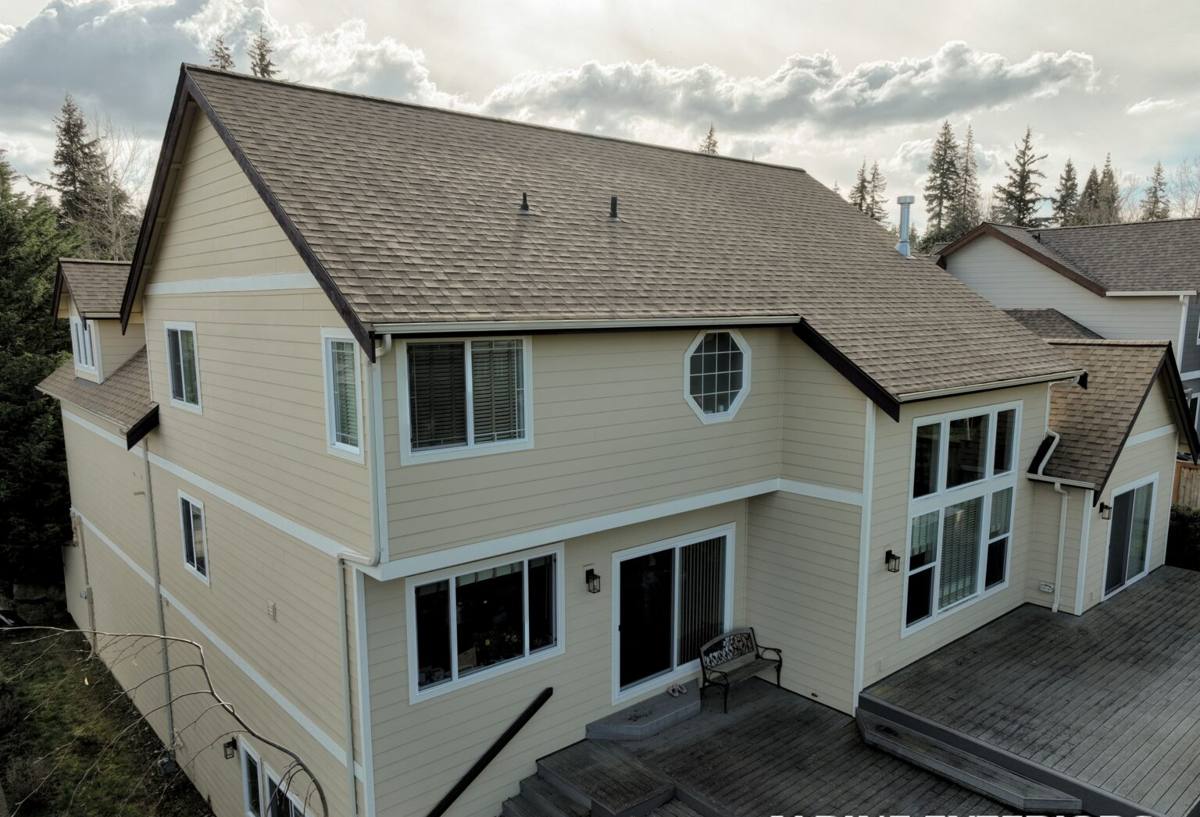
Signs a Sehome Roof Needs Replacement, Not Just Repair
Not every roof problem calls for a full tear-off. But there's a point where patching becomes a losing game — you're spending money to delay a job that's coming anyway, and sometimes making the eventual replacement harder because of hidden damage that keeps spreading underneath. Here's what tends to tip a roof from "repair" into "replace" territory in this area:
- Granule loss heavy enough that you can see bare, shiny patches on multiple shingles, not just one or two
- Moss that's established itself in mats rather than a light green film — mats hold water against the roofing material continuously
- Curling, cupping, or cracked shingles across more than one slope of the roof
- Soft spots or sagging in the decking when walked on, which usually means water has already gotten past the roofing surface
- Daylight visible through the roof deck from inside the attic
- Repeated leaks around the same penetration (chimney, vent pipe, skylight) even after past repairs
- A roof that's 20+ years old and has never had underlayment or ventilation upgraded to current standards
What a Correct Roof Replacement Involves
A roof replacement is more than swapping old shingles for new ones. In a climate like Chuckanut's, the parts you don't see — the underlayment, the ventilation, the flashing details — matter as much as the shingle you pick for curb appeal.
Tear-Off and Deck Inspection
We remove the existing roofing down to the deck rather than layering over it. That's the only way to actually see what's underneath — rot, soft plywood, or old damage that's been hidden by shingles for years. Any damaged decking gets replaced before anything new goes down, because a new roof over a compromised deck just fails again from the bottom up.
Underlayment and Water Protection
Given how much driving rain this area sees, we treat underlayment as a real second line of defense, not a formality. That means synthetic underlayment across the field of the roof and self-adhering ice-and-water membrane at the vulnerable spots — eaves, valleys, and around penetrations — where wind-driven rain is most likely to work its way backward under the shingle edge.
Ventilation
Marine climates make roof ventilation more important, not less. A roof deck that can't breathe traps moisture from both directions — humid indoor air pushing up in winter, and damp coastal air sitting on the roof surface. Poor ventilation is one of the biggest hidden contributors to premature shingle failure and moss growth we see on roofs in this area, because a cooler, damper deck gives moss more to work with. Balanced intake and exhaust ventilation is part of a correct replacement, not an upsell.
Flashing and Fasteners
Salt air corrodes cheap fasteners and thin flashing faster than most homeowners realize. We use corrosion-resistant fasteners and properly formed flashing at every chimney, wall intersection, and valley, since these are the points where a roof actually leaks — it's rarely the open field of shingles that fails first.
Roofing Material Comparison for This Climate
There's no single "best" roofing material — the right choice depends on your home's exposure, roof pitch, budget, and how much upkeep you want to take on. Here's how the common options stack up against Chuckanut's salt air, rain, and moss conditions.
| Material | Moss Resistance | Salt Air Durability | Typical Lifespan | Maintenance |
|---|---|---|---|---|
| Architectural asphalt shingle | Moderate (better with algae-resistant granules) | Good with corrosion-resistant fasteners | 25–30 years | Periodic moss treatment, gutter clearing |
| Standing seam metal | Very good — smooth surface sheds debris | Requires marine-grade coatings/fasteners near the coast | 40–50+ years | Low; occasional fastener/seam check |
| Cedar shake | Poor — porous surface holds moisture | Fair, but moisture cycling shortens life near salt air | 20–25 years with upkeep | High; regular treatment and moss removal |
| Synthetic/composite shingle | Good | Good | 30–50 years | Low to moderate |
We're generally cautious about recommending cedar shake for homes in exposed Sehome locations. It's a good-looking material, but its porous surface holds moisture longer than other options, which means more frequent moss treatment and a shorter practical lifespan in a climate that already favors moss growth. That's a maintenance and cost trade-off worth knowing about upfront, not a knock on the material itself — it performs better in drier, less shaded settings.
Our Roof Replacement Process
- On-site assessment. We walk the roof and the attic, check the deck condition, ventilation, and existing flashing, and take note of shaded or moss-prone areas.
- Written estimate. You get a clear scope of work and cost breakdown before anything is scheduled — no surprise line items added mid-job.
- Material selection. We walk through the trade-offs of each option honestly, based on your home's exposure and budget, not just what's easiest to install.
- Tear-off and deck repair. Old roofing comes off, decking is inspected, and any damaged sections are replaced.
- Underlayment, flashing, and ventilation installed to current standards.
- New roofing installed per manufacturer specifications, which also protects your warranty coverage.
- Final walkthrough and cleanup, including a magnetic sweep for stray nails and debris removal.
Cost Factors for a Sehome Roof Replacement
Every roof is different, but the same handful of variables drive most of the cost difference between two similarly sized homes. Rather than quote a number that won't mean much without seeing your roof, here's what actually moves the price:
| Factor | Why It Matters |
|---|---|
| Roof size and number of planes | More cuts, seams, and valleys means more labor and material waste |
| Roof pitch and access | Steeper or harder-to-access roofs require more safety equipment and time |
| Existing deck condition | Rot or soft decking found during tear-off adds repair scope |
| Material choice | Asphalt, metal, and composite options span a wide cost range |
| Number of penetrations | Chimneys, skylights, and vents each need proper flashing detail |
| Ventilation upgrades needed | Adding intake/exhaust venting where none exists is additional scope |
We'll always give you a written, itemized estimate after seeing the roof in person — not a ballpark over the phone — so you know exactly what you're paying for and why.
Why Local Experience Matters
A crew that already works in Sehome and the surrounding Chuckanut neighborhoods has a working sense of which slopes hold shade and moss longest, how the local wind and rain patterns tend to hit a roof, and which flashing and fastener choices actually hold up here versus what looks fine on paper. That's not something you get from a crew that mostly works dry-climate jobs and treats a coastal roof like any other. It also means faster response if a warranty question or minor issue comes up after the job — we're not driving in from out of the county.
Keeping Your New Roof Performing
A correctly installed roof still benefits from basic upkeep, especially in a climate that favors moss:
- Keep gutters and downspouts clear so water isn't backing up against the roof edge
- Trim overhanging branches to reduce shade and debris buildup on north-facing slopes
- Have moss growth treated early, before it establishes into thick mats
- Schedule a roof check after major windstorms to catch lifted shingles or flashing early
- Avoid pressure washing the roof surface, which can strip granules and shorten shingle life
If your Sehome roof is showing its age or you're just weighing your options before a problem forces the decision, we're happy to take a look and walk you through what we find. Reach out for a free, no-pressure estimate using the form below.