 Chuckanut Exterior
 Why Roofs in Bow Wear Differently Than Roofs Inland
If you own a home in the Bow area, you already know your roof works harder than one twenty miles inland. The combination of salt-tinged air, wind-driven rain off the water, and a moss season that seems to stretch from October through May puts a specific kind of stress on roofing materials. A roof replacement here isn't just about swapping old shingles for new ones — it's about matching the assembly to the conditions it actually has to survive, year after year, in this corner of Whatcom County.
We've replaced roofs on homes throughout the Chuckanut corridor long enough to know which failure patterns show up again and again in this specific microclimate, and which ones are avoidable with the right materials and installation details. This page walks through what that looks like in practice.
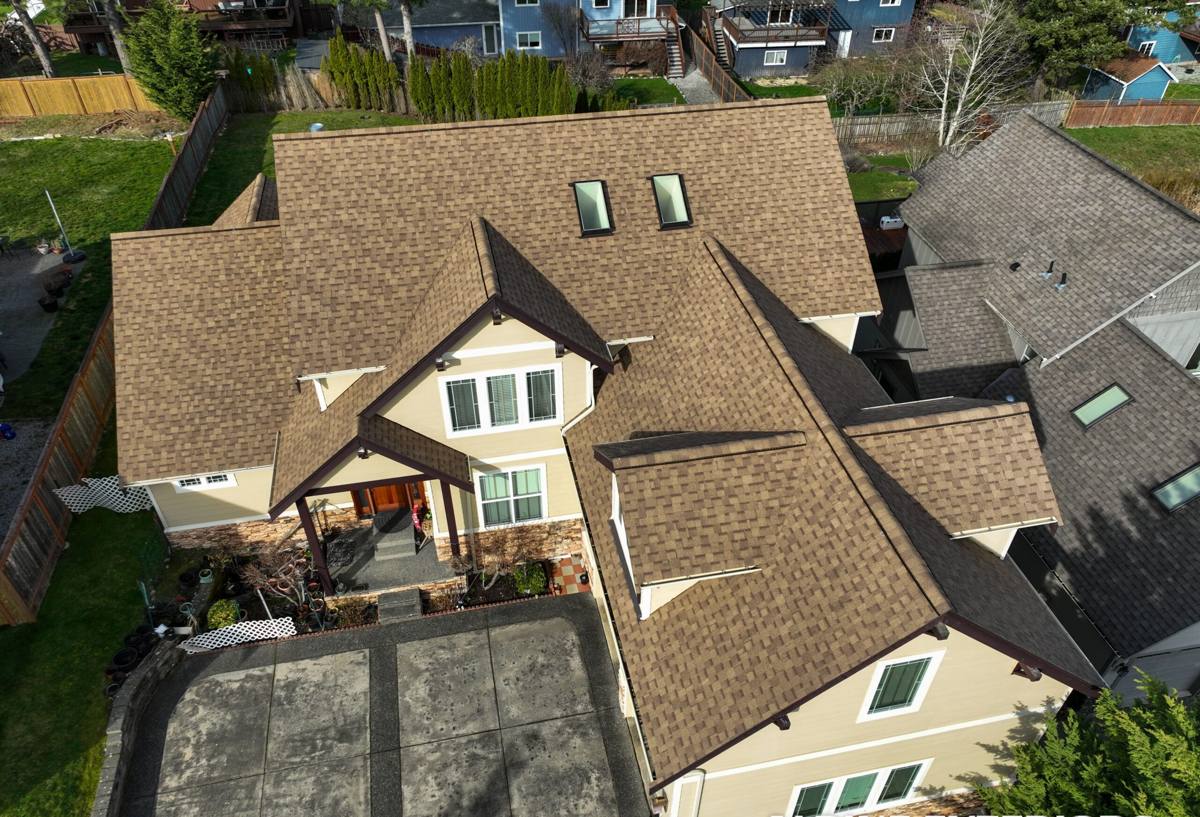
What Salt Air, Driving Rain, and Moss Actually Do to a Roof
Salt-Laden Air and Metal Components
Coastal and near-coastal air carries fine salt particulate that settles on every exposed surface, including roofing. Over years, that salt accelerates corrosion on unprotected fasteners, flashing, and any exposed metal trim. A roof that looks fine from the ground can have flashing or nail heads that have started to rust and weep stains onto shingles below — often years before the shingles themselves are due for replacement.
Wind-Driven Rain and Water Intrusion
Storms coming off the water tend to push rain sideways, not straight down. That matters because standard shingle installation assumes water shedding mostly by gravity. When rain is driven at an angle, it can work its way up under shingle tabs, around vent boots, and along valleys and eaves where water naturally concentrates. Underlayment quality and flashing detail matter more here than they would on a roof in a calmer, drier part of the state.
Moss, Shade, and a Long Wet Season
Bow's tree cover and the extended damp season give moss and algae plenty of time to establish themselves, especially on north-facing slopes and anywhere shade keeps a roof from drying out between rain events. Left unmanaged, moss lifts shingle edges, holds moisture against the roof deck, and shortens the usable life of an otherwise sound roof by years.
None of these factors alone is unusual for Western Washington. Together, and sustained over a full roof lifespan, they add up to real differences in how a roof should be built and maintained here compared to a drier inland location.
Signs a Bow Home Needs Replacement, Not Another Repair
Not every roof problem calls for full replacement — plenty of issues are legitimate repairs. But there's a point where patching becomes a losing game, especially on a roof that's already dealing with coastal exposure. Signs worth taking seriously include:
- Granule loss heavy enough that you can see bare asphalt on multiple slopes, not just one worn spot
- Shingles that are cupping, curling, or cracking across large sections rather than isolated spots
- Moss growth that keeps returning within a season or two of cleaning, especially on shaded slopes
- Rusted or deteriorating flashing around chimneys, skylights, or vent pipes
- Soft spots or sagging when walked, which can indicate deck damage underneath
- Interior staining, attic moisture, or daylight visible through the roof deck
- A roof approaching or past the end of its material's realistic service life, especially if it was installed without upgraded underlayment for coastal exposure
If your roof is showing two or more of these at once, that's usually a sign the whole system — not just the surface layer — is reaching the end of its useful life.
What a Correct Roof Replacement Involves Here
A roof replacement that's built for this climate involves more than laying new shingles over what's there. Every layer of the assembly has a job to do, and skipping or downgrading any of them shows up as a problem within a few wet seasons.
Full Tear-Off and Deck Inspection
We remove the existing roofing down to the deck rather than layering over it. That lets us actually see the plywood or plank sheathing underneath and replace any sections that have soft spots, delamination, or rot — problems that are common under older roofs that have had slow leaks for years without visible interior signs.
Upgraded Underlayment and Ice-and-Water Protection
Given how much wind-driven rain this area sees, we don't treat underlayment as an afterthought. Self-adhering waterproof membrane at eaves, valleys, and around every penetration gives the roof a real second line of defense if wind pushes water past the shingles themselves — which it will, eventually, on any roof.
Corrosion-Resistant Flashing and Fasteners
Because salt air accelerates corrosion on unprotected metal, we use flashing and fastener materials chosen for that exposure rather than whatever is cheapest to source. This is one of the areas where cutting corners doesn't show up as a problem for a few years — and then shows up as a leak that's expensive to trace.
Attic Ventilation
Proper intake and exhaust ventilation keeps moisture from condensing inside the attic and helps the roof deck dry out between storms. On homes with older, undersized ventilation, we'll flag it and explain the options rather than just reinstalling the same setup that contributed to the roof's premature wear.
Comparing Roofing Materials for a Coastal Whatcom County Home
There's no single "correct" material for every home — it depends on your roof's pitch, your budget, how much shade and moss pressure the roof sees, and how long you plan to own the home. Here's how the common options stack up against Bow's specific conditions.
| Material | Salt Air / Moisture Resistance | Moss Susceptibility | Wind Performance | Typical Lifespan |
|---|---|---|---|---|
| Architectural asphalt shingle | Good, with quality underlayment and flashing | Moderate — needs periodic cleaning on shaded slopes | Good when properly nailed and sealed | 20-30 years |
| Standing seam metal | Very good with coated, corrosion-resistant panels and fasteners | Low — sheds moss more easily than textured surfaces | Very good | 40-60+ years |
| Synthetic/composite shingle | Good — resists moisture absorption well | Moderate, varies by product | Good | 30-50 years, product-dependent |
| Wood shake | Requires diligent maintenance in damp, shaded conditions | High — retains moisture, needs regular treatment | Moderate | Highly maintenance-dependent |
We'll generally steer homeowners on heavily shaded, moss-prone lots away from materials that hold moisture against the deck, simply because the maintenance burden in this climate is real and ongoing. That's a professional recommendation based on how these materials behave here over decades, not a knock on any manufacturer.
Our Roof Replacement Process
- On-site assessment. We inspect the existing roof, attic, and ventilation, and talk through what we're seeing before recommending a scope.
- Written estimate. A clear breakdown of materials, scope, and timeline — no vague allowances.
- Material selection. We walk through the tradeoffs above so you're choosing based on your home and budget, not guesswork.
- Tear-off and deck repair. Old roofing removed, deck inspected and repaired as needed.
- Underlayment, flashing, and ventilation installed. The layers that determine how the roof actually performs in a coastal storm.
- Final installation and cleanup. New roofing installed to manufacturer and code specification, site cleaned and inspected before we consider the job done.
Why It Matters to Hire a Crew That Already Works in Bow
Roofing crews that mostly work drier, inland areas sometimes default to standard specifications that don't account for salt exposure, wind-driven rain, or extended moss seasons. That's not a knock on their skill — it's just not what they see day to day. A crew that regularly works the Chuckanut area brings a few practical advantages:
- Familiarity with which slopes and orientations in this area tend to develop moss and moisture issues first
- A default habit of upgrading underlayment and flashing for coastal exposure, rather than treating it as an optional add-on
- Realistic scheduling around this area's wet season, so tear-offs aren't left exposed longer than necessary
- Familiarity with Whatcom County permitting requirements for reroofing projects
Local experience doesn't replace good workmanship, but it does mean fewer surprises and a roof specified correctly the first time.
Maintaining Your New Roof After Installation
A properly installed roof still benefits from basic upkeep, especially in a moss- and moisture-heavy climate. Keep gutters clear so water isn't backing up under the roof edge. Have shaded, moss-prone slopes checked and gently cleaned periodically rather than left to accumulate growth. Keep overhanging branches trimmed back to cut down on shade and debris. And have the roof looked at after any major windstorm, since even a well-installed roof can take isolated damage from flying debris.
If you're weighing whether your Bow-area roof needs replacing or just some attention, we're happy to take a look and give you an honest read on where things stand. Reach out for a free, no-pressure estimate using the form below.