 Chuckanut Exterior
 Roof Repair Built for South Hill's Weather, Not Generic Weather
South Hill homes sit close enough to the water and the tree line that they take on a different kind of wear than roofs a few miles inland. Salt-laden air off the bay, driving rain that comes in sideways during winter storms, and a moss season that can run most of the year all work on a roof at the same time. A repair that ignores any one of those factors tends to fail again within a season or two.
We repair roofs in South Hill and the surrounding Chuckanut area regularly, which means we're not guessing at how this microclimate treats shingles, flashing, and fasteners — we're addressing what we consistently see when we get up on these roofs.
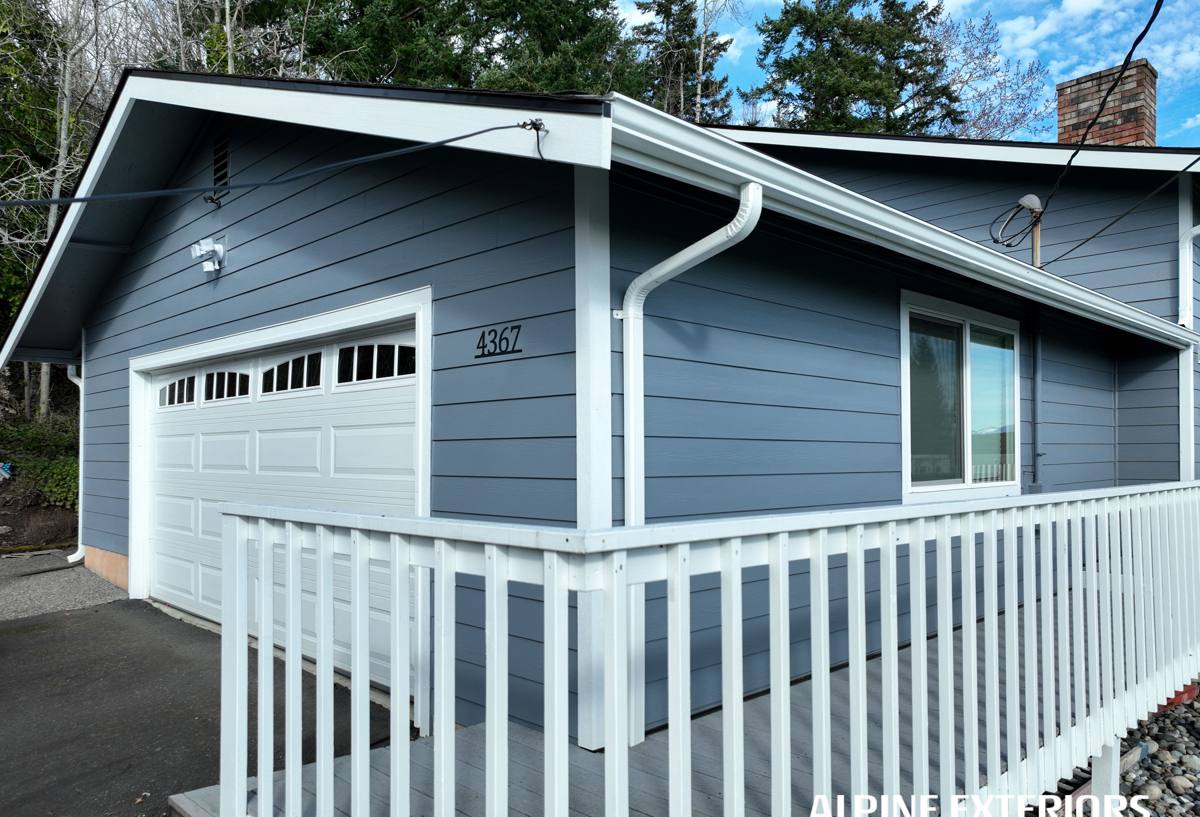
What Whatcom County Weather Does to a Roof
Salt Air
Airborne salt accelerates corrosion on exposed metal — nail heads, flashing, gutter fasteners, and vent caps age faster here than they would twenty miles inland. Once a fastener starts to corrode, it loses its grip and the shingle or flashing piece it's holding starts to move. Movement is how small leaks start.
Driving Rain
Wind-driven rain doesn't just fall on a roof, it pushes sideways and finds its way under shingle edges, around chimney flashing, and into any gap that a calm-weather rain would never reach. Roofs that look fine in a light drizzle can leak badly in a real Pacific Northwest system. Repairs need to account for wind-driven water, not just gravity-fed runoff.
Moss Season
Whatcom County's damp, shaded conditions give moss and algae a long growing window. Moss doesn't just sit on top of shingles — it works its rhizoids under the shingle edges and granule layer, lifting material and holding moisture against the roof deck. A roof with heavy moss growth is almost always losing granules and holding water in spots that should be shedding it.
Signs a South Hill Roof Needs Repair, Not Just a Look
- Dark streaking or thick moss growth concentrated on the north-facing or shaded slopes
- Granules collecting in gutters or at downspout outlets
- Curling, cracked, or lifted shingle edges, especially on wind-exposed slopes
- Rust staining or visible corrosion around vent boots, flashing, or exposed fasteners
- Soft spots or slight sagging when walked, which can point to deck damage under the surface
- Water stains on interior ceilings or in the attic near chimneys, skylights, or valleys
- Daylight visible through the roof deck from inside the attic
Any one of these on its own might be minor. Two or three together usually means water has already found a way past the surface layer, and the repair needs to address the underlayment or decking, not just the shingles.
What an Honest Repair Actually Involves
A roof repair that holds up in this climate is more than swapping a few shingles. The steps that matter most:
1. Find the Real Source, Not Just the Visible Damage
Water travels before it shows up as a stain. A leak that appears over a bedroom ceiling might originate at a chimney flashing ten feet away. Tracing the actual entry point — not just patching where the stain is — is the difference between a repair that lasts and one that reappears next winter.
2. Check and Correct the Flashing First
Most repeat leaks in this region come back to flashing, not shingles: valleys, chimneys, skylights, pipe boots, and roof-to-wall transitions. If the flashing is corroded, poorly sealed, or was never installed with enough lap for wind-driven rain, replacing shingles around it won't fix anything.
3. Address Moss and Algae at the Cause
Removing moss without treating the cause — usually shade, debris buildup, and organic growth left to sit — means it comes right back. A proper repair clears growth carefully (moss should be swept or brushed, not pressure-washed, which can strip granules and drive water under the shingle layer), clears the debris that feeds it, and can include zinc or copper strips near the ridge that let rain carry metal ions down the slope to discourage regrowth.
4. Match Materials and Fastener Grade to the Environment
In a salt-air zone, we use corrosion-resistant fasteners and flashing metals rather than standard-grade hardware. It costs a little more upfront and holds up for years longer, which matters more here than it would on an inland roof.
5. Confirm the Deck Underneath
If water has been getting in for a while, the plywood or plank decking under the affected area may be soft or delaminating. A repair that covers over a soft deck with new shingles is a short-term fix. We check deck condition at every repair site before closing it back up.
Repair vs. Replacement: How to Tell Which One You Need
| Situation | Repair Usually Makes Sense | Replacement Should Be Considered |
|---|---|---|
| Damage location | Isolated to one slope, valley, or penetration | Spread across most or all slopes |
| Roof age | Under roughly 12-15 years, or well within expected lifespan for the material | At or past the material's typical service life |
| Granule loss | Localized, with most of the roof still holding good coverage | Widespread and thin across the field |
| Deck condition | Solid, dry decking outside the repair area | Soft or damaged decking in multiple areas |
| Leak history | First occurrence or a known, fixable cause | Recurring leaks in different spots over time |
When the situation is genuinely borderline, we'll tell you that directly. A repair that's likely to need a follow-up repair in a year isn't a good use of your money, and we'd rather say so upfront than come back to the same roof twice.
How Our Repair Process Works
- Inspection: We walk the roof (weather permitting) and check the attic from inside where accessible, looking at flashing, fasteners, moss/algae extent, granule condition, and any signs of deck movement.
- Written scope: You get a clear explanation of what's actually wrong, what we recommend, and why — including whether repair is the right call or replacement should be on the table.
- The repair itself: Flashing corrected first, then shingle or roofing material replacement, then moss/algae treatment, using fasteners and flashing rated for salt-air exposure.
- Cleanup and gutter check: Debris and old material removed, gutters and downspouts cleared so water has a clean path off the roof once the repair is done.
- Follow-up: We'll walk you through what to watch for and when a roof of your age and material typically needs its next inspection.
What Affects the Cost of a Roof Repair Here
| Factor | Why It Matters in South Hill |
|---|---|
| Extent of moss/algae growth | Heavy growth takes longer to clear safely and may point to deeper granule loss |
| Flashing condition | Corroded flashing from salt air often needs full replacement, not just resealing |
| Roof pitch and access | Steeper slopes and limited access add labor time and safety setup |
| Deck condition | Soft decking found under damaged shingles adds material and labor to the scope |
| Material match | Matching existing shingle color/style on an older roof can affect sourcing time |
Most straightforward, single-area repairs land in a modest range; anything involving deck replacement or full flashing systems runs higher. We'll always give you the real number after inspection rather than a guess over the phone.
Why a Crew That Already Works South Hill Matters
Roofing crews that mostly work drier, inland areas don't always account for how differently a roof ages under sustained salt air and driving rain. We work in Chuckanut and the surrounding Whatcom County communities regularly, so decisions like fastener grade, flashing metal, and moss treatment aren't an afterthought — they're built into how we scope every repair from the start.
That local familiarity also means we're realistic about timing. Winter storm season is when leaks show up, but it's also when roof work is hardest to schedule safely. We plan repairs around the weather windows that actually exist here rather than promising a timeline that doesn't hold up.
Simple Maintenance That Extends a Repair's Life
- Clear gutters and downspouts at least twice a year, more often under overhanging trees
- Have moss brushed off (not pressure-washed) before it spreads across a full slope
- Trim back branches that shade roof sections and keep them damp longer than the rest of the roof
- Walk the attic after major storms and check for new staining or light coming through the deck
- Have flashing and fastener condition checked every few years, especially on south- and west-facing slopes exposed to driving rain
None of this replaces a proper inspection, but it's the difference between a repair that lasts its full expected life and one that starts breaking down early because small issues went unnoticed.
If you're dealing with a leak, visible moss buildup, or just want an honest read on your roof's condition, we're happy to take a look. Estimates are free and there's no pressure to move forward — fill out the form below and we'll get back to you.