 Chuckanut Exterior
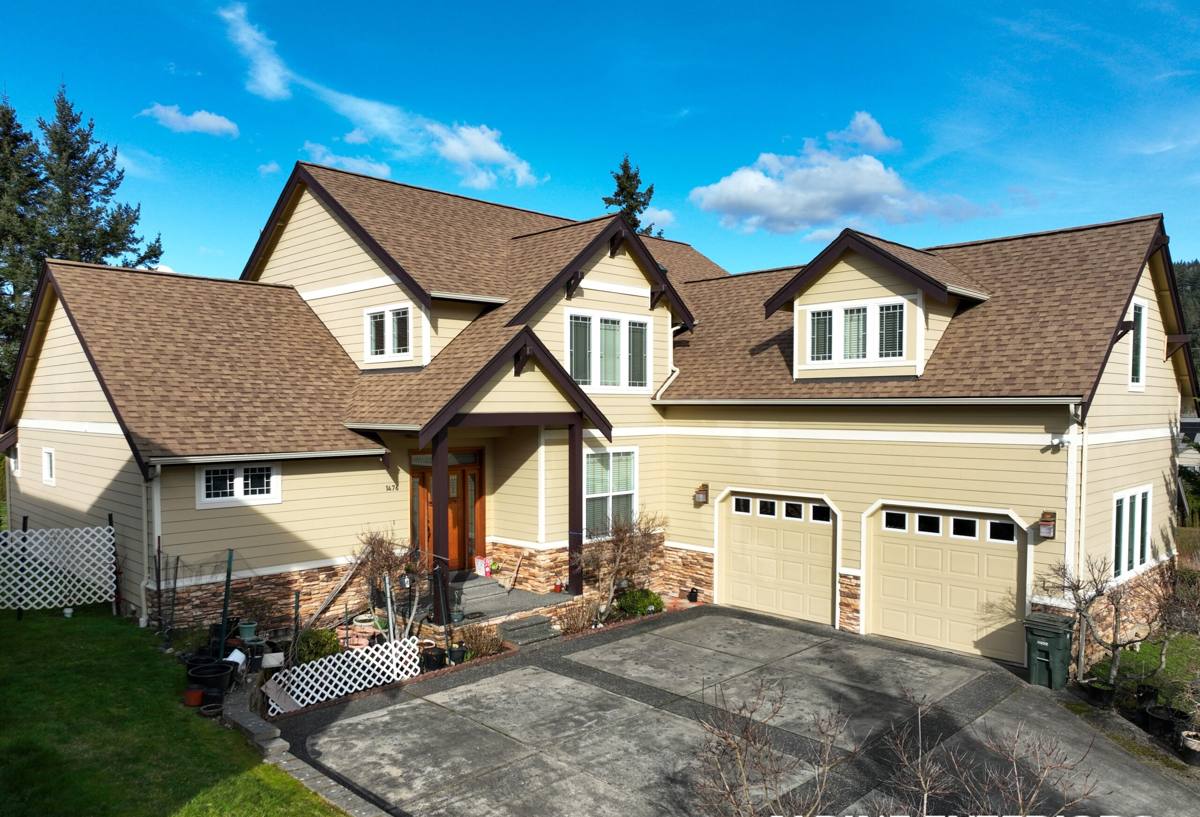
 New Roof Installation Built for Samish's Weather, Not a Generic Climate
Samish sits close enough to the water that salt air is a daily fact of life, and it sits inside a Whatcom County weather pattern that delivers long stretches of driving rain and a moss season that can run most of the year. A roof designed for a dry inland climate doesn't hold up the same way out here. When we install a new roof for a Samish homeowner, we're not just covering a house — we're building an assembly that has to shed wind-driven rain, resist salt-laden air working on metal fasteners and flashing, and stand up to moss that wants to take hold the moment conditions allow it.
This page is specifically about full new roof installation for homes in the Samish area. If your roof is nearing the end of its life, showing widespread wear, or you're building new, this is what a correct installation looks like here and why the details matter more in this microclimate than they would somewhere drier.
What Salt Air, Rain, and Moss Actually Do to a Roof
Salt Air and Corrosion
Homes near Samish's shoreline areas get a steady drift of salt-laden moisture in the air. Over years, that salt content accelerates corrosion on exposed metal — fasteners, flashing, drip edge, and vent stacks are the first places it shows up. Standard galvanized fasteners can start rusting years before an inland roof would see the same wear, and once a fastener corrodes, it loses grip and can back out or let water track down the shaft into the deck.
Driving Rain and Wind
Rain in this part of Whatcom County rarely just falls straight down. Storms off the water push rain sideways, which means it's testing every seam, lap, and flashing detail on a roof, not just the open field of shingle or panel. A roof that's only built to shed water moving downhild will eventually leak at valleys, chimneys, skylights, and wall intersections when wind-driven rain gets under the laps.
Moss and Prolonged Moisture
The combination of shade, moisture, and mild temperatures common around Samish gives moss an easy foothold, especially on north-facing slopes and anywhere debris collects. Moss isn't just a cosmetic issue — it holds moisture against the roofing material, lifts shingle edges as it grows, and can work its way under laps over time, shortening the service life of an otherwise sound roof.
Signs Your Samish Roof Needs Replacement, Not Another Repair
Not every roof problem calls for a full tear-off. But there's a point where patching stops making sense — where the cost and risk of repeated repairs exceeds the cost of doing it right once. Common signs we look for on Samish roofs include:
- Granule loss heavy enough that shingles look patchy or bald in sun-exposed areas
- Soft spots or visible sag in the roof deck when walked
- Moss coverage across large sections rather than isolated patches
- Repeated leaks in different spots after past repairs
- Flashing that's rusted, lifted, or missing around chimneys and vents
- A roof that's at or past the manufacturer's expected service life for this climate
If a roof is only a few years old and has one isolated issue, repair is usually the right call. If it's showing several of the signs above at once, a new installation is typically the more cost-effective long-term decision.
Choosing a Roofing Material for Samish's Conditions
Material choice matters more here than it would in a drier, calmer climate. We walk every Samish homeowner through the real trade-offs rather than pushing one product for everyone.
| Material | Salt Air Tolerance | Moss Resistance | Typical Lifespan Here | Trade-offs |
|---|---|---|---|---|
| Architectural Asphalt Shingle (algae-resistant) | Good with quality flashing/fasteners | Improved with copper or zinc granules | 25–30 years | Most affordable; still needs moss upkeep over time |
| Standing Seam Metal | Very good with proper coating and stainless fasteners | Excellent — sheds moss easily | 40–50+ years | Higher upfront cost; installation sensitivity around fasteners and expansion |
| Synthetic/Composite Shingle | Good | Good, doesn't hold moisture like wood | 30–40 years | Mid-range cost; fewer local installers experienced with it |
| Cedar Shake | Fair — needs regular maintenance near salt air | Poor without diligent upkeep | 20–25 years with maintenance | Attractive look, but highest ongoing maintenance burden in this climate |
We don't install every product on this list for every home. Where a material's moisture behavior or maintenance demands don't line up with a specific roof's exposure — a heavily shaded north slope, or a home close to the water — we'll say so up front rather than sell a product that's going to disappoint the homeowner in five years.
What a Correct New Roof Installation Actually Involves
Tear-Off and Deck Inspection
We remove the old roofing down to the deck rather than layering over it. That's the only way to actually inspect the sheathing for rot, soft spots, or damage from long-term moisture — issues that are common on older Samish roofs that have dealt with years of driving rain and moss retention. Any damaged decking gets replaced before anything new goes down.
Underlayment and Water Barrier
Given how much wind-driven rain this area sees, underlayment choice isn't a place to cut corners. We use a synthetic underlayment across the field and add self-adhering ice-and-water barrier at the vulnerable spots — eaves, valleys, and around penetrations — where wind-driven rain is most likely to work its way underneath the surface layer.
Flashing Details
Most roof leaks trace back to flashing, not the field material. Chimneys, skylights, sidewalls, and vent penetrations all get new flashing during a full installation, sized and lapped correctly for the direction rain typically comes from on that specific roof.
Ventilation
Proper intake and exhaust ventilation keeps moisture from building up in the attic space, which matters in a climate where the air itself carries a lot of humidity. Poor ventilation shortens the life of a new roof no matter how good the shingles are, and it can also feed the conditions that let moss and mold take hold from the inside out.
Moss Strategy at Installation
Where moss has historically been a problem, we can incorporate copper or zinc strips at ridges, or choose algae-resistant materials, to slow regrowth from day one rather than treating it purely as a maintenance afterthought.
Our Process, Start to Finish
- Free on-site assessment — we inspect the current roof, deck condition, ventilation, and any problem areas specific to your home's exposure
- Written estimate — clear scope, material options, and pricing, so you're comparing real numbers, not guesses
- Scheduling — timed around Whatcom County weather windows to minimize the days your home is exposed during tear-off
- Tear-off and deck repair — old roofing removed, deck inspected and repaired as needed
- Installation — underlayment, flashing, field material, and ventilation installed to spec
- Cleanup and walk-through — site cleared of debris and nails, and we walk the finished roof with you before calling the job done
What to Ask Before Hiring a Roofing Crew in Samish
Roofing is one of those trades where the quality gap between crews is large and not always obvious until years later. Before hiring anyone for a new roof installation, it's worth asking:
- Are you licensed and insured in Washington State, and can you provide proof?
- Do you have experience with homes in this specific area and its coastal exposure?
- What underlayment and ice-and-water barrier do you use, and where do you place it?
- How do you handle flashing at chimneys, skylights, and sidewalls?
- What's your plan for ventilation, not just shingles?
- What manufacturer warranty applies, and what's your separate workmanship warranty?
- Can I see the written estimate broken down by scope, not just a lump sum?
- How do you handle deck repair if you find rot once tear-off starts?
A contractor who answers these clearly and specifically, without hedging, is usually one who's done this enough times in this climate to know exactly what matters.
Why Local Experience in Samish Specifically Matters
A roofing crew that mostly works inland jobs may be perfectly competent and still miss details that matter here — how much salt-air exposure changes fastener choice, how aggressive moss growth can get on a shaded slope near the water, or how wind direction off the water affects where flashing needs extra attention. We work in Chuckanut and the surrounding Whatcom County communities regularly, including Samish, so these aren't theoretical considerations for us — they're the baseline we design every installation around.
Protecting Your New Roof After Installation
A correctly installed roof still benefits from basic upkeep in this climate. Keeping gutters and valleys clear of debris prevents standing water that feeds moss growth. A periodic visual check after major storms can catch a lifted shingle or displaced flashing before it becomes a leak. And if moss does start to reappear on a shaded section years down the road, addressing it early is far cheaper than letting it work its way under the roofing material.
If your Samish home needs a new roof, or you're not sure whether repair or replacement makes more sense, we're happy to take a look and give you a straight answer. Use the form below to request a free, no-pressure estimate.