 Chuckanut Exterior
 Building New in Mount Vernon? The Windows Are Where the Envelope Succeeds or Fails
When a house is framed and the sheathing is wrapped, the windows are one of the last things installed before the building is sealed up — and one of the first things that will leak if they're rushed. In Mount Vernon and the surrounding Skagit Valley, that matters more than in drier parts of the country. Salt air drifting in off the bay, long stretches of driving rain, and a moss season that seems to run half the year all put steady pressure on a building envelope. New-construction window installation is the point where a builder either gets ahead of that pressure or bakes a slow leak into the wall for the next twenty years.
This page covers what a correct new-construction window install actually involves, what our regional climate demands from the work, and how we approach it for homeowners and builders in Mount Vernon.
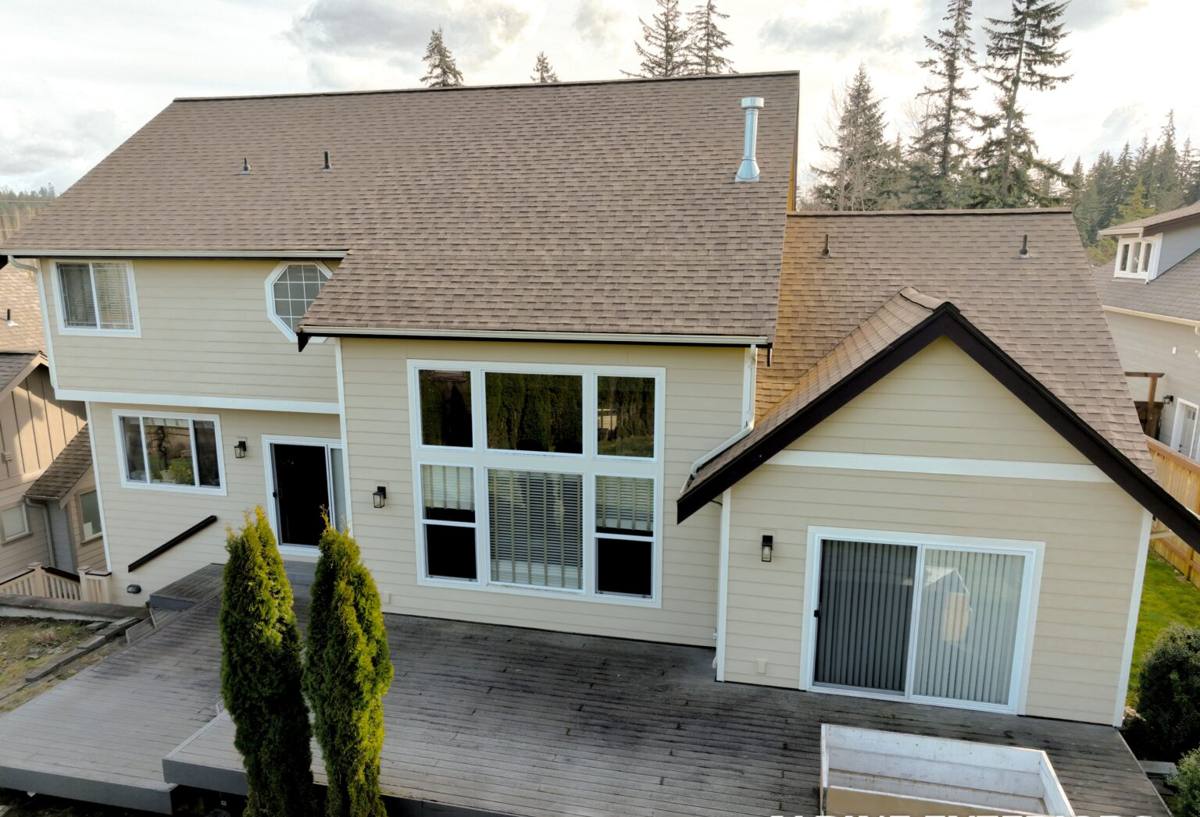
New-Construction vs. Replacement Windows: Why the Distinction Matters
These are two different trades, even though both involve putting a window in a wall. Replacement windows go into an existing, finished opening — the old frame usually stays, and the new unit is sized to fit inside it with the exterior trim and siding left undisturbed. New-construction windows are different: they're installed into a raw, unfinished rough opening before siding and exterior trim go on, using a nailing flange (or "fin") that gets fastened directly to the sheathing and integrated with the weather-resistive barrier (WRB) and flashing tape before anything else closes around it.
That flanged, integrated approach is actually the more forgiving and more durable method when it's done in the correct sequence — but it only works if the sequence is followed exactly. Skip a step, and you don't find out until the drywall is up and water starts showing up somewhere unexpected.
Why the Sequence Is the Whole Job
With a new-construction install, the window itself is rarely the weak point. Almost every leak we get called to diagnose in newer homes traces back to how the flashing, sill pan, and WRB were layered around the window — not the window unit itself. Get the layering order right and water is directed out and down, away from the framing, every time it rains. Get it wrong and the same rain finds its way behind the cladding.
What Mount Vernon's Climate Actually Demands From a Window Install
Skagit Valley weather isn't dramatic, but it's relentless. That's the part that trips up installs done to a generic national standard instead of a Pacific Northwest one.
- Driving rain, not just rain: Wind-driven rain pushes water sideways and upward against a wall, which means flashing details have to work against wind pressure, not just gravity. A sill pan and head flashing that would be fine in a calmer climate can fail here.
- Salt air: Proximity to the water means airborne salt accelerates corrosion on fasteners, hardware, and lower-grade cladding finishes. Material and fastener choice matter more here than inland.
- A long moss and algae season: Persistent damp shade keeps moisture sitting on and around window trim and sills longer than in drier regions, which is hard on untreated wood trim and any sealant joint that isn't detailed to shed water cleanly.
- Extended wet seasons: Whatcom and Skagit County builds spend more months of the year with damp framing exposed than most U.S. markets, so sequencing and weather timing during construction carry real consequences if rushed.
None of this means Mount Vernon needs exotic materials. It means ordinary materials installed with the right sequence, the right flashing overlap, and the right attention to drainage — every single time, not just when it's convenient on the schedule.
The Anatomy of a Correct New-Construction Window Install
A properly installed new-construction window follows a specific order. Each layer overlaps the one below it, so water is always directed outward and downward — this is often called "shingle-style" layering, the same principle as roof shingles.
- Rough opening check: The opening is verified square, plumb, and sized correctly before anything else happens. An opening that's slightly out of square is a problem to fix now, not after the window is in.
- Sill pan flashing: A sloped, sealed pan goes at the bottom of the opening so any water that does get past the window has a path back outside instead of soaking into the framing.
- Jamb and head flashing integration: Flashing tape is applied up the sides and across the top, tied into the WRB above the window so water sheds down and over, never up and under.
- Window installation and fastening: The unit is set, shimmed level and plumb, and fastened through the nailing flange per the manufacturer's schedule — not just "enough nails to hold it."
- WRB lap and taping: The house wrap above the window laps over the head flashing, and all seams are taped, maintaining a continuous drainage plane.
- Interior and exterior sealant: Backer rod and sealant are used at the interior air seal, and exterior sealant is applied only where it's supposed to go — sealing the wrong spot can trap water instead of keeping it out.
- Final inspection: Every opening gets checked for operation, square, and flashing continuity before siding closes it in for good.
Choosing Window Materials for a Wet, Salt-Air Climate
Frame material is a real decision here, not a cosmetic one. We'll talk through trade-offs honestly rather than push one option — the right call depends on your budget, your architecture, and how much long-term maintenance you want to take on.
| Material | Performance in Salt Air / Wet Climate | Maintenance | Notes for New Construction |
|---|---|---|---|
| Vinyl | Good — won't corrode or rot; seams and welds are the main watch point | Low — no painting or sealing needed | Cost-effective, wide size range, solid choice for most new builds |
| Fiberglass | Very good — dimensionally stable, resists moisture and corrosion well | Low | Higher upfront cost, holds up especially well to temperature and humidity swings |
| Wood-clad (aluminum or vinyl exterior) | Good on the clad exterior; interior wood needs the cladding to stay intact | Moderate — exterior is low-maintenance, but any breach in cladding exposes wood to our wet season | Popular for interior appearance; installation quality at the cladding seams matters a lot here |
| Aluminum | Fair — prone to corrosion in salt air unless properly finished, and conducts cold/condensation | Low, but finish quality varies | We're selective about aluminum this close to the water because of corrosion and condensation risk |
Whatever frame material you choose, low-E glass and a solid multi-point locking mechanism are worth the modest upcharge in this climate — they cut down on both heat loss and the condensation that shows up on colder, damp Skagit Valley mornings.
Our New-Construction Window Process in Mount Vernon
We coordinate directly with your builder or general contractor so window installation lands at the right point in the framing schedule — not too early, before the WRB is ready, and not so late that the house sits open to weather longer than it needs to.
- We review the plans and rough opening sizes before units are ordered, so nothing shows up the wrong size on install day.
- We install sill pan flashing and jamb/head flashing to a documented sequence on every opening, not just the ones that are easy to reach.
- We photograph flashing details before they're covered by siding — useful documentation if it's ever needed for a warranty question or inspection.
- We do a final walk-through with the builder or homeowner, testing operation and checking seals before we consider the job done.
Mistakes We See When Window Install Gets Rushed
Most of what we're called back to fix on newer construction isn't dramatic — it's small sequencing shortcuts that only show up after a wet season or two.
Skipped or shortcut sill pans. A sill pan takes extra time to install correctly, and it's invisible once the window is in — which makes it an easy thing to shortcut when a crew is behind schedule.
WRB not lapped correctly over head flashing. If the house wrap goes behind instead of over the head flashing, water gets funneled straight into the wall instead of around it. This is a sequencing error, not a materials problem, and it's completely avoidable.
Sealant used to compensate for bad flashing. Caulk is a backup layer, not a flashing substitute. When it's asked to do a flashing detail's job, it eventually fails — usually a few years in, right when it's least convenient to find out.
Under-fastened nailing flanges. Following the manufacturer's fastening schedule isn't optional — it affects both structural performance in wind and the warranty coverage on the unit itself.
What to Ask Before You Hire a Window Contractor for New Construction
- Do you install a dedicated sill pan on every opening, or only when asked?
- How do you document flashing details before they're covered by siding?
- Are you following the specific window manufacturer's installation and fastening instructions, or a generic method?
- Who handles warranty claims if a leak shows up in year two or three — you, the builder, or the manufacturer?
- Have you worked new construction in Mount Vernon or elsewhere in Skagit County before, and can you speak to how our weather affects the schedule?
What Affects New-Construction Window Cost
Costs vary by project, but the main drivers are consistent across most Mount Vernon builds. We'll always walk through actual numbers for your specific plans during an estimate rather than quote off a general range.
| Factor | Why It Moves the Price |
|---|---|
| Number and size of openings | More openings and larger units mean more material and labor hours, straightforwardly |
| Frame material | Vinyl, fiberglass, and wood-clad carry different unit costs and installation time |
| Glass package | Low-E coatings, gas fills, and impact or sound-rated glass add cost but pay off in comfort and energy performance |
| Wall height and access | Second-story and hard-to-access openings take longer and may need additional equipment |
| Flashing and WRB coordination | Complex rooflines, dormers, or bump-outs add flashing detail work beyond a standard opening |
| Timing with the build schedule | Coordinating install around framing and WRB timing affects scheduling flexibility and, occasionally, cost |
Let's Talk About Your Project
If you're framing a new home or addition in Mount Vernon and want windows installed by a crew that treats flashing sequence as seriously as the windows themselves, we're happy to walk your plans and rough openings with you. There's no pressure and no cost to get an estimate — just a straightforward look at what your project needs and what it'll take to get it right the first time. The form below will get you started.