 Chuckanut Exterior
 Why Alger Roofs Take a Different Kind of Beating
Alger sits close enough to the water and low enough in the tree line that its homes deal with three things at once: salt-laden air moving in off the Sound, long stretches of driving rain, and a moss season that never really ends. Any one of these is manageable on its own. Together, they shorten the life of a roof faster than most homeowners expect, especially on older asphalt shingle roofs that were never built with this specific combination in mind.
Metal roofing handles all three better than shingles do, but only when it's installed correctly for this climate. A metal roof put on the way a contractor might do it in a dry inland town will underperform here. The details that matter in Alger — fastener choice, flashing sequence, ventilation, and finish coating — are exactly the details that get skipped when a crew doesn't work this area regularly.
What Driving Rain Actually Requires From a Roof
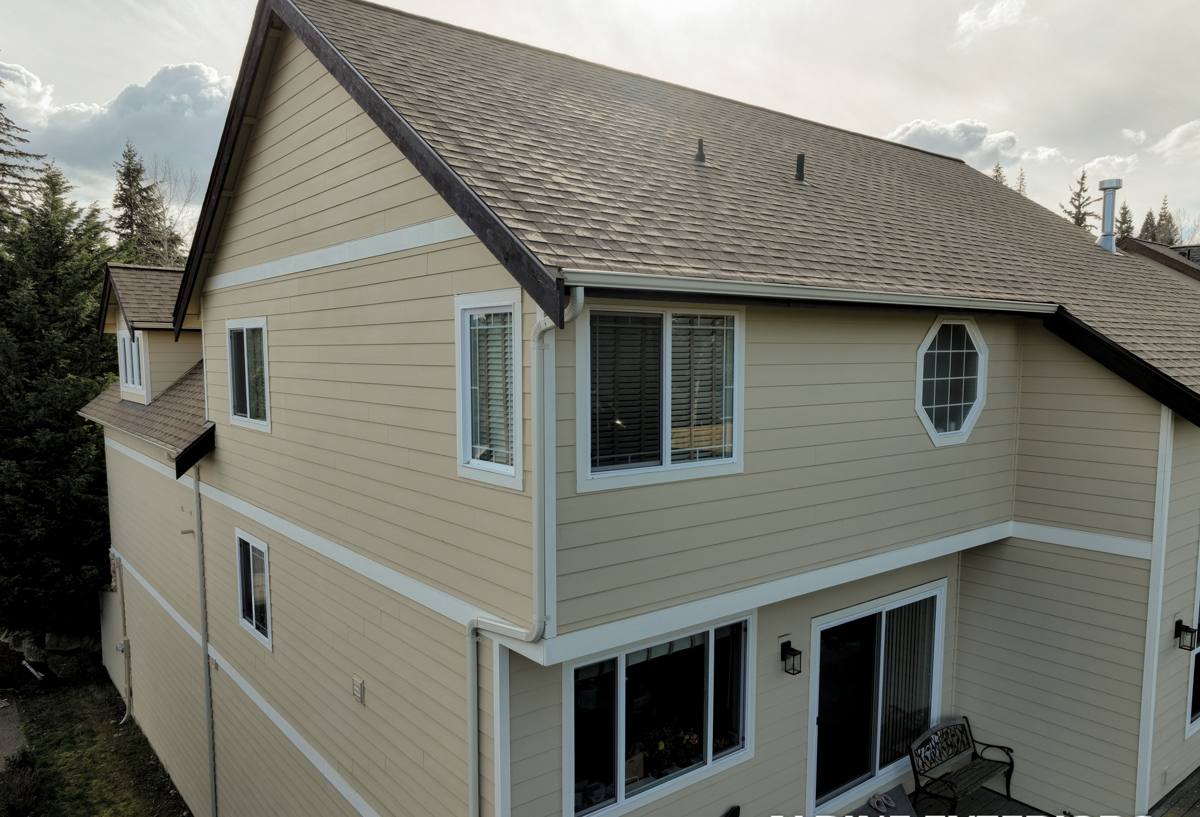
Wind-driven rain doesn't just fall on a roof, it gets pushed sideways and upward into laps, seams, and penetrations. A roof that sheds water fine in a calm downpour can still leak in a sideways storm if the underlayment, flashing, and panel overlaps weren't built with that in mind.
Underlayment matters more here than the panels do
A synthetic, high-temperature underlayment installed under the metal panels is the actual water barrier once wind pushes moisture past the surface layer. We treat this as non-negotiable on every metal roof we install, not an upgrade option, because in a wind-driven rain climate the panels are the first line of defense, not the only one.
Flashing is where roofs actually fail
Valleys, chimneys, skylights, and wall transitions are where almost every roof leak originates, metal or otherwise. Correct flashing means step flashing that's actually stepped and tied into the underlayment, not just caulked on top of it, and valley metal sized for real water volume rather than a minimum-code width.
Salt Air and What It Does to Metal Roofing
Salt air accelerates corrosion on any exposed metal, including fasteners, flashing, and the roofing panels themselves. This doesn't mean metal roofing is a bad choice near the coast — it means the specific metal and coating matter a lot more than they would inland.
We steer homeowners toward panels and fasteners rated for coastal exposure, with finishes designed to resist chalking and corrosion rather than the bargain-grade coatings sold for drier markets. The upfront cost difference is modest. The difference in how the roof looks and performs after a decade in salt air is not.
Fasteners are the weak point, not the panels
On exposed-fastener systems, the screws are usually the first thing to show corrosion, well before the panel itself does. We use fasteners matched to the panel material and rated for coastal environments, and we check fastener spacing and torque carefully — overdriven screws crush the rubber washer seal and become a leak point within a few years.
Moss Season and Why It's a Roof Problem, Not Just a Look
Moss doesn't just make a roof look neglected. It holds moisture against the roofing material, works its way under laps and edges, and on shingle roofs it lifts granules and shortens the shingle's life significantly. Metal roofing gives moss far less to hold onto than shingles do, since there's no rough granule surface for spores to catch on, but a metal roof isn't automatically moss-proof.
Moss still collects in valleys, around penetrations, and in any spot where debris sits and holds moisture — north-facing slopes and areas shaded by trees are the most common trouble spots we see. A metal roof with the right slope, clean valley design, and proper ventilation resists moss buildup far better than one installed without those details in mind.
Standing Seam vs. Exposed Fastener: Choosing the Right System
Not every metal roofing system is the same, and the right choice depends on the home, the roof pitch, and the budget. Here's how the two most common options compare for a climate like this one.
| Factor | Standing Seam | Exposed Fastener |
|---|---|---|
| Fasteners | Hidden, no exposed screw heads to corrode or loosen | Visible screws through the panel face |
| Long-term maintenance | Very low — no fastener washers to inspect or replace | Washers should be checked periodically, especially in salt air |
| Upfront cost | Higher material and labor cost | More affordable, especially for outbuildings and simpler roofs |
| Best fit | Primary residences, steeper or more visible roofs | Shops, garages, additions, budget-conscious re-roofs |
| Moss resistance | Slightly better due to fewer surface interruptions | Still strong, especially with proper slope and clean valleys |
We install both systems and will tell you honestly which one fits your home and budget rather than defaulting to whichever is easier to sell.
How Our Metal Roofing Process Works
A metal roof is only as good as the layers underneath it, so our process is built around getting those layers right before a single panel goes on.
1. Inspection and tear-off
We start by inspecting the existing roof deck for rot, soft spots, or moisture damage — common on older roofs that have been dealing with driving rain and moss for years. Any damaged decking gets replaced before anything else happens.
2. Underlayment and ice/water protection
We install synthetic underlayment across the full roof, with additional ice-and-water membrane at eaves, valleys, and penetrations where wind-driven rain is most likely to get pushed underneath panels.
3. Flashing and trim
All flashing, valley metal, and edge trim goes in before or during panel installation, tied into the underlayment so water is directed out and away rather than trapped underneath.
4. Panel installation
Panels are fastened according to the manufacturer's spacing and torque specs, with coastal-rated fasteners and careful attention to alignment so seams and laps shed water the way they're designed to.
5. Cleanup and walkthrough
We clear the site of scrap metal, old fasteners, and debris, and walk the roof with you so you know what was done and what to watch for going forward.
What Homeowners Should Check Between Visits
Metal roofing needs far less maintenance than shingles, but a little attention goes a long way in a climate like this one.
- Clear debris and needles out of valleys and around penetrations at least once a year
- Look for moss or algae buildup in shaded or north-facing areas and remove it before it spreads
- Check that gutters and downspouts are clear so water isn't backing up under the roof edge
- Watch for any fastener heads that look rusted, raised, or loose on exposed-fastener systems
- After major windstorms, do a visual check for lifted flashing or debris damage
- Trim back overhanging branches that keep sections of the roof shaded and damp
Cost Factors for a Metal Roof in Alger
Metal roofing costs more upfront than asphalt shingles, but the gap is easier to justify once you factor in lifespan and how much less maintenance it needs in this climate. Actual pricing depends on your specific roof, but these are the main variables that move the number.
| Factor | Why It Affects Cost |
|---|---|
| Panel system | Standing seam runs higher than exposed-fastener due to material and labor time |
| Roof complexity | Valleys, dormers, and multiple roof planes add flashing work and labor hours |
| Deck condition | Rot or moisture damage found during tear-off means added repair before install |
| Coating and material grade | Coastal-rated finishes and fasteners cost more than standard-grade options |
| Tear-off scope | Full tear-off to bare decking costs more than installing over an existing single layer where code allows |
We give straightforward, itemized estimates so you can see exactly what's driving the cost, rather than a single lump-sum number.
Why Hiring a Crew That Already Works in Alger Matters
A roofing crew that mostly works dry, inland jobs will make different default decisions than one that installs roofs in salt air and driving rain every week. That shows up in small choices — how much underlayment overlap they use, whether they upgrade fasteners for coastal exposure without being asked, how they detail valleys for moss-prone shade.
We work throughout Whatcom County, including the Chuckanut area and communities like Alger, and the roofs we build reflect the actual weather this area gets rather than a generic install. That local familiarity also means we know what building departments in this region expect for permitting and inspection, so there are no surprises partway through the job.
Signs Your Roof Is Ready for a Metal Replacement
Not every roof needs replacing right now, but a few signs point to a roof that's losing the battle against this climate rather than just showing normal age.
- Granules collecting in gutters and downspouts in noticeable amounts
- Persistent moss growth that comes back within a season or two of cleaning
- Curling, cupping, or missing shingles, especially on north-facing slopes
- Visible sagging in the roofline or soft spots when walked on
- Interior water stains after wind-driven rain events
- A roof approaching or past its expected lifespan with recurring repair calls
If you're seeing two or more of these, it's worth a real inspection rather than another round of patching.
If you're weighing metal roofing for a home in Alger, we're happy to take a look and walk you through what your specific roof needs — no pressure, no generic sales pitch. Use the form below to request a free estimate and we'll go from there.