 Chuckanut Exterior
 Windows Built for Larrabee's Coastline, Not a Showroom
Larrabee sits right where Chuckanut Drive hugs the water — homes here catch salt-laden air off the Salish Sea, wind-driven rain that comes at windows sideways instead of straight down, and a moss season that stretches from fall through spring. A window that performs fine on an inland lot in Bellingham or Ferndale can fail early here. The frame material, the flashing detail, and even the caulk you use all need to account for salt exposure and near-constant moisture, not just insulation value.
We install windows for homes in this stretch of Whatcom County regularly, and the failures we get called out to fix follow a pattern: rot at the sill before the glass itself ever fails, corroded hardware on lower-grade metal components, and moss or algae staining that traps moisture against wood trim long after the rain stops. A correct installation in Larrabee is designed around those specific failure points from day one.
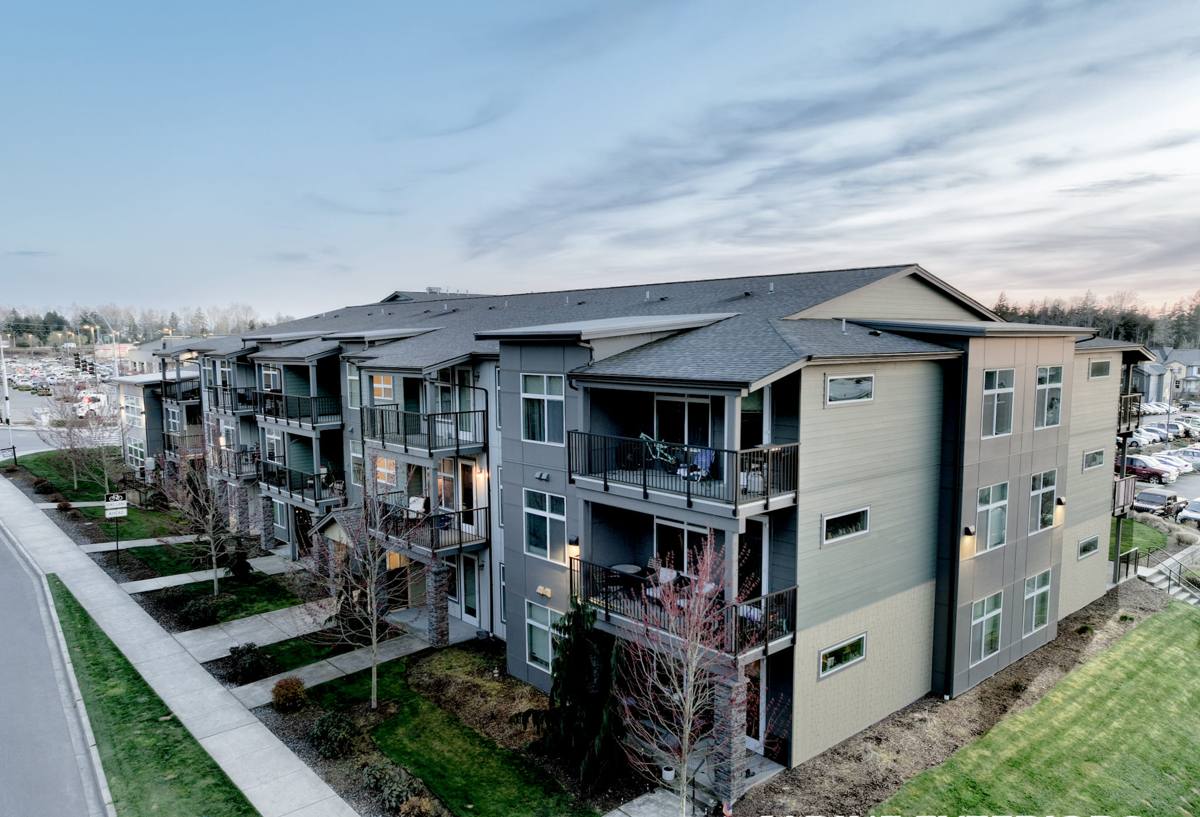
What Salt Air, Driving Rain, and Moss Season Actually Do to a Window
Salt Air
Airborne salt settles on frames, hardware, and screens. Over years it accelerates corrosion on lower-quality fasteners, hinges, and locking mechanisms, and it can etch or dull certain metal and glass coatings faster than in a dry inland climate. This is less about the glass itself and more about everything that holds the window together and lets it operate smoothly.
Driving Rain
Wind off the water pushes rain into gaps that would stay dry on a calmer site. Water doesn't just fall on a window here — it gets driven sideways and upward under the wrong flashing detail. That means installation technique matters as much as the window unit. A great window with poor flashing will leak. A modest window with correct flashing will not.
Moss Season
Shaded, north-facing, and tree-covered walls in Larrabee stay damp for months at a time. Moss and algae growth on siding and trim holds moisture directly against wood surfaces, which is exactly the condition that rots sills and casings from the outside in. Homes with mature tree cover need extra attention to drainage paths around every window opening.
Signs Your Current Windows Are Losing the Fight
- Soft or spongy wood at the sill or lower corners of the frame, especially on the weather-facing side of the house
- Fogging or moisture between panes on double- or triple-glazed units — a sign the seal has failed
- Hardware that's stiff, corroded, or won't latch fully
- Persistent moss, algae, or black staining on the frame or trim that keeps coming back after cleaning
- Drafts or a cold zone near the window even when it's fully closed
- Visible daylight or gaps around the frame from outside
- Paint or finish that's blistering or peeling specifically around the window opening rather than the wall in general
Any one of these on its own might just need maintenance. Two or more together, especially on a wall that takes the brunt of the weather off the water, usually means it's time to talk about replacement rather than another repair.
What a Correct Installation Involves Here
Window installation is one of those jobs that looks the same to a homeowner whether it's done right or done fast. The difference shows up two or three winters later. For a Larrabee property, we treat these steps as non-negotiable:
- Full opening inspection before the new unit ever goes in — checking the sheathing, sill, and framing for hidden rot from prior water intrusion
- Proper flashing sequence (sill pan, side flashing, head flashing) installed to shed water outward and downward, lapped correctly so wind-driven rain can't work its way behind it
- Continuous sealant at the right points only — sealing everything solid can trap moisture instead of letting incidental water drain back out, which is a common mistake that causes rot years later
- Correct fastening and shimming so the unit is square, plumb, and not relying on foam or caulk to hold its shape
- Weep paths kept clear so any water that does get past the outer seal has somewhere to go
- Interior air sealing separate from exterior weatherproofing — these are two different jobs that both need doing
Choosing a Frame Material for a Coastal-Exposure Home
There's no single "best" window material — there's a best fit for your exposure, your budget, and how much upkeep you want to take on. Here's how the common options hold up specifically under salt air and heavy driving rain:
| Frame Material | Coastal / Moisture Performance | Maintenance | General Cost Position |
|---|---|---|---|
| Vinyl | Won't rot or corrode; performs well in salt air | Low — occasional cleaning | Lower |
| Fiberglass | Very stable in temperature swings and moisture; strong long-term option for exposed walls | Low | Mid to higher |
| Wood-clad (metal or vinyl exterior, wood interior) | Good if cladding and flashing are done right; interior wood still needs protection from any leaks | Moderate | Higher |
| Aluminum | Prone to corrosion and condensation in salt air unless it's a marine-grade or thermally broken product | Moderate to high | Varies |
For most Larrabee homes we lean toward vinyl or fiberglass for weather-facing walls specifically because they don't give salt air and moisture anything to work on. Wood-clad units still have a place, especially where a homeowner wants a specific interior look, but we're upfront that they carry a bit more long-term maintenance in this climate.
Glass and Glazing
Double-pane, low-E glass is the baseline we'd recommend for this area — it handles the temperature swings between damp mornings and any summer sun off the water reasonably well. Triple-pane adds extra insulation value and sound dampening, which is worth considering on a wall that also faces wind noise off Chuckanut Drive or the water, but it's a cost-and-benefit conversation, not an automatic upgrade for every window.
Our Process for a Larrabee Window Job
- On-site assessment — we look at each opening individually, not just the house as a whole, since a window on the water-facing wall may need a different approach than one on a sheltered side
- Honest scope and estimate — including whether any framing or sill repair is needed before the new window goes in, so there are no surprises mid-job
- Material selection — matched to that specific wall's exposure, your budget, and how the rest of the home is finished
- Removal and opening prep — including addressing any rot or moisture damage found once the old unit is out
- Installation with full flashing and sealing detail — done to shed water, not just to look finished
- Interior and exterior finish work — trim, caulking, and touch-up matched to the existing house
- Final walkthrough — operation check on every window, and a plain explanation of any maintenance you should keep an eye on
Why Local Experience in This Area Matters
A crew that mostly works drier, inland neighborhoods can install a perfectly good window and still get the flashing detail wrong for a wall that takes wind-driven rain off the water. It's not a skill gap — it's exposure to the specific failure mode. Working regularly in Larrabee and along Chuckanut means we've seen what actually fails here: the sill corners, the shaded walls under trees, the hardware that corrodes faster than a spec sheet suggests. That shapes how we sequence flashing, which materials we steer clients toward for exposed walls, and where we tell a homeowner to keep an eye on moss buildup between service visits.
We're also familiar with what permitting and inspection looks like for this part of Whatcom County, which keeps the job moving instead of stalling on paperwork.
Questions Worth Asking Before You Commit
- Will you inspect the framing and sill for hidden rot before installing the new window, not just after a problem shows up?
- What's your flashing sequence, and can you explain it in plain terms?
- Which frame material do you recommend for this specific wall, and why?
- Is the sealant and caulking work included, or billed separately?
- What does the warranty actually cover — the window unit, the labor, or both?
- Have you worked on homes in Larrabee or along Chuckanut Drive before?
Get a Straight Estimate
If you're dealing with drafty, foggy, or rot-prone windows on a Larrabee property, we're happy to take a look and give you an honest read on what's actually needed — whether that's a full replacement, a partial repair, or just some maintenance to buy you a few more years. Use the form below to request a free, no-pressure estimate.