 Chuckanut Exterior
 Windows Built for the Larrabee Stretch of Chuckanut
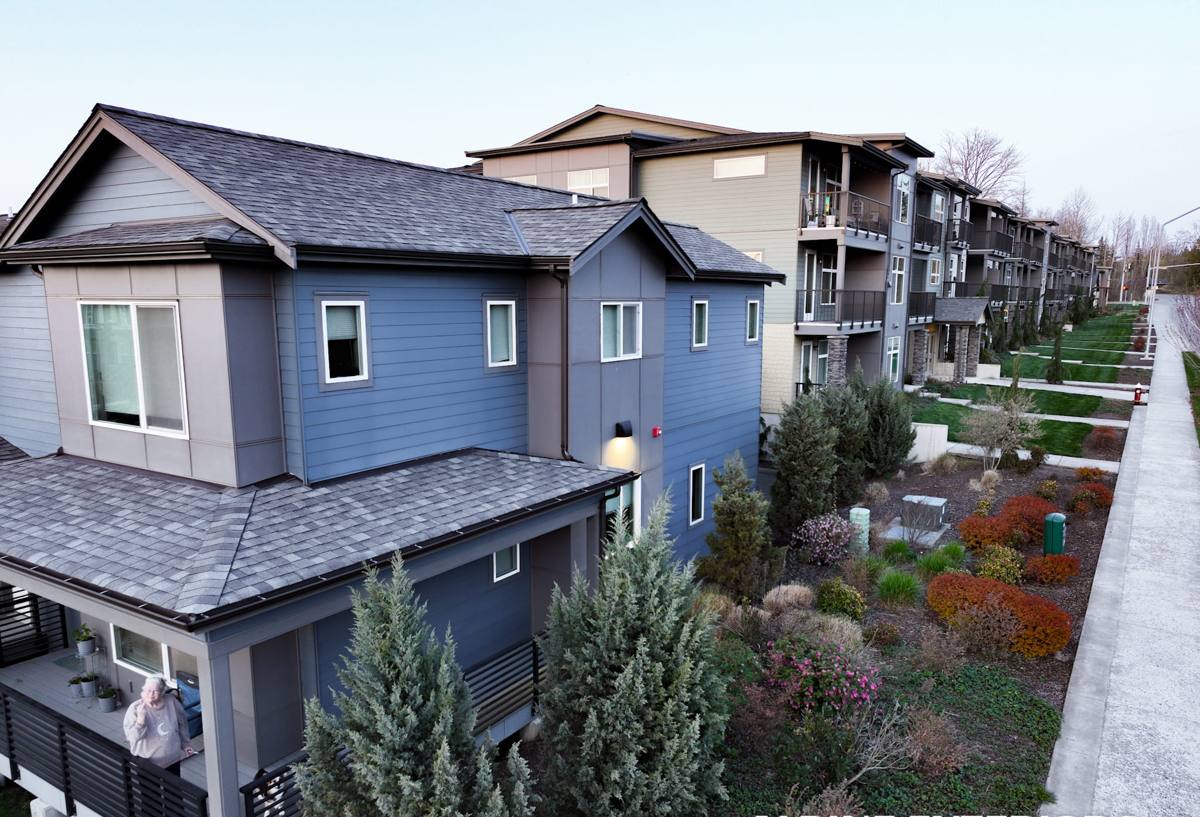
Homes along the Larrabee side of Chuckanut sit in one of the more demanding microclimates in Whatcom County. You're close enough to the water to deal with salt-laden air, tucked against enough tree cover and elevation change to catch driving, wind-blown rain, and wet enough for enough months of the year that moss and algae get a real head start on anything that holds moisture. Windows here don't just need to look good and keep heat in — they need to survive a specific combination of salt exposure, sideways rain, and a long damp season that inland Whatcom County homes don't deal with in the same way.
We work this area regularly, which matters more than it sounds. A window that performs fine in a dry, low-wind location can fail early here — not because the product is bad, but because it wasn't installed with this particular exposure in mind. This page covers what actually matters for energy-efficient window replacement on a Larrabee-area home: what the climate demands, what a correct install looks like, and what to expect when you work with a crew that already knows this stretch of Chuckanut.
What This Climate Actually Does to Windows
Salt Air
Airborne salt from Chuckanut Bay and the greater Salish Sea corrodes exposed metal hardware, fasteners, and low-quality cladding over time. It's slow, but it's constant — and it's one of the reasons hardware finish and frame material choice matter more here than they would twenty miles inland.
Driving Rain
Wind-driven rain doesn't just fall on a window — it pushes sideways into any gap in the flashing, sealant, or trim. A window that's watertight in a light straight-down rain can still leak during a wind event if the flashing details weren't done correctly at install. This is almost always an installation issue, not a product issue.
A Long Moss and Algae Season
Extended damp stretches give moss, algae, and mildew a long runway to establish themselves on sills, tracks, and any horizontal surface that doesn't shed water quickly. Frame material and sill design both affect how much of this problem you'll be dealing with year-round.
What "Energy-Efficient" Should Mean for a Larrabee Home
Energy efficiency isn't just a glass rating — it's the combination of frame, glass, and installation working together. For this area specifically, that means:
Frame Material
Vinyl and fiberglass frames handle coastal, wet-climate conditions well because they don't corrode and don't require painted maintenance to stay weathertight. Wood-clad frames can still be a good aesthetic choice but need more attention to the cladding seams, which are a common entry point for moisture in a driving-rain climate.
Glass Package
Double-pane with a Low-E coating is the standard baseline for this region and performs well for both summer heat gain and winter heat loss. Triple-pane adds real value mainly for west- or water-facing rooms that take direct wind and cold exposure, or for homeowners specifically prioritizing sound dampening and maximum efficiency — it's a legitimate upgrade, not a requirement for every opening.
Air Sealing and Flashing
This is the piece that gets skipped by installers unfamiliar with driving-rain exposure. Proper flashing integration with the existing wall assembly, correct sill pan installation, and continuous air sealing around the frame matter as much as the window unit itself. A high-efficiency window with a poor installation will underperform a mid-grade window installed correctly.
Signs Your Current Windows Are Costing You Money
Most homeowners don't replace windows because of one dramatic failure — it's a slow accumulation of small problems. Watch for:
- Visible fogging or moisture between panes (seal failure)
- Drafts you can feel near the frame on a windy day
- Sills or tracks that stay damp long after rain has stopped
- Moss or algae establishing on the sill or frame within the same season, year after year
- Difficulty opening, closing, or locking — often a sign the frame has shifted or swollen
- Visibly corroded or stiff hardware
- A noticeable rise in heating costs without another clear cause
- Condensation on the interior glass in cold weather
Any one of these on its own isn't necessarily urgent. Several together, especially on the same window, usually mean the seal or flashing has already failed and moisture is getting into the wall assembly — worth having looked at before it becomes a bigger repair.
What a Correct Installation Involves
Removal and Inspection
Once the old window is out, the surrounding framing and sheathing get a real look. This is often the first time hidden water damage from a prior installation shows up, and it needs to be addressed before the new window goes in — covering it up just resets the clock on the same failure.
Flashing and Weatherproofing
A correct install integrates the window flashing with the existing weather-resistive barrier in the correct shingle-lap order, with a sloped sill pan so any water that does get past the exterior sheds back out rather than sitting against the frame. This is the single most important step for driving-rain performance and the one most likely to be rushed on a lower-quality install.
Sealing, Insulation, and Finish
The gap between the window frame and rough opening gets properly insulated and air-sealed — not just caulked on the outside — and exterior trim and sealant are finished to shed water rather than trap it against the frame.
Comparing Frame Materials for This Exposure
There's no single "best" window for every home — it depends on your budget, the home's style, and how much maintenance you want to take on. Here's how the common options compare for a salt-air, high-rain environment like Larrabee:
| Frame Material | Coastal/Rain Performance | Maintenance | General Cost Position |
|---|---|---|---|
| Vinyl | Strong — won't corrode or rot, handles moisture well | Low — occasional cleaning | Lower to mid |
| Fiberglass | Strong — very stable, resists warping and corrosion | Low | Mid to higher |
| Wood-Clad | Good if cladding seams are detailed correctly; more vulnerable if not | Moderate — watch cladding joints and interior wood | Higher |
| Aluminum | Weaker in this climate — conducts cold and is more prone to corrosion near salt air | Moderate to high | Varies |
We don't install aluminum-frame windows on homes in this area as a general practice — not because it's a bad product everywhere, but because its thermal performance and corrosion resistance are a poor match for a salt-air, high-moisture climate specifically. That's a standard we apply based on how the material behaves here, not a knock on any manufacturer.
Cost Factors Worth Understanding
Every home is different, so we won't quote a number without seeing the openings, but the main variables that move price are the same across most Larrabee-area jobs:
- Number of openings and their size/shape (standard rectangular vs. custom or specialty shapes)
- Frame material selected (vinyl, fiberglass, or wood-clad)
- Glass package (standard Low-E double-pane vs. triple-pane or specialty coatings)
- Condition of the existing framing once the old window is removed
- Full-frame replacement vs. insert (pocket) replacement, where the existing frame is sound enough to reuse
- Trim and finish work required to match the home's existing exterior
A broad, honest range for this region typically runs from a few hundred dollars per opening for a straightforward insert replacement up to several thousand per opening for full-frame replacement with higher-end materials — the only way to know where your project lands is a walkthrough.
Why a Crew That Already Works Larrabee Matters
Window installation isn't one-size-fits-all, and a crew that primarily works drier, less exposed parts of Whatcom County can miss details that matter here — flashing sequencing for wind-driven rain, hardware and fastener choices that resist salt corrosion, sill design that doesn't invite moss. We work this stretch of Chuckanut regularly enough to know what actually fails first on a home like yours, and we build the install around preventing that specific failure rather than following a generic checklist.
That local familiarity also means a more accurate estimate up front. We're not guessing at how your home's exposure compares to the rest of the region — we've seen it.
Ready to Talk About Your Windows?
If your windows are drafty, fogging, sticking, or just past their prime, we're happy to take a look and walk you through honest options for your home — no pressure, no upsell. Fill out the form below for a free estimate and we'll get back to you to schedule a time to come take a look.