 Chuckanut Exterior
 Why Lake Samish Is a Tough Place to Own Siding
Lake Samish sits in a forested basin just off the I-5 corridor between Bellingham and Skagit County, and that setting shapes everything about how siding performs there. Homes ring the water under heavy tree canopy, which means long stretches of shade, slower drying times after rain, and needles and organic debris that settle into siding seams and trim. Add in the marine-influenced air that moves up from Chuckanut Bay and the Salish Sea, and you get a climate that keeps building materials damp far more often than homes just a few miles inland.
That combination — shade, moisture, and salt-tinged air — is exactly what wears out the wrong siding fastest. Wood-based products swell, delaminate, or rot at the edges. Vinyl gets brittle and stained. Cheaper fiber cement products that aren't engineered for this kind of exposure can absorb moisture at cut edges and fastener points, leading to cracking and paint failure years before they should. Whatcom County's driving winter rains, combined with a genuine moss season that can run from fall through spring, mean siding here needs to shed water fast and resist organic growth, not just look good on installation day.
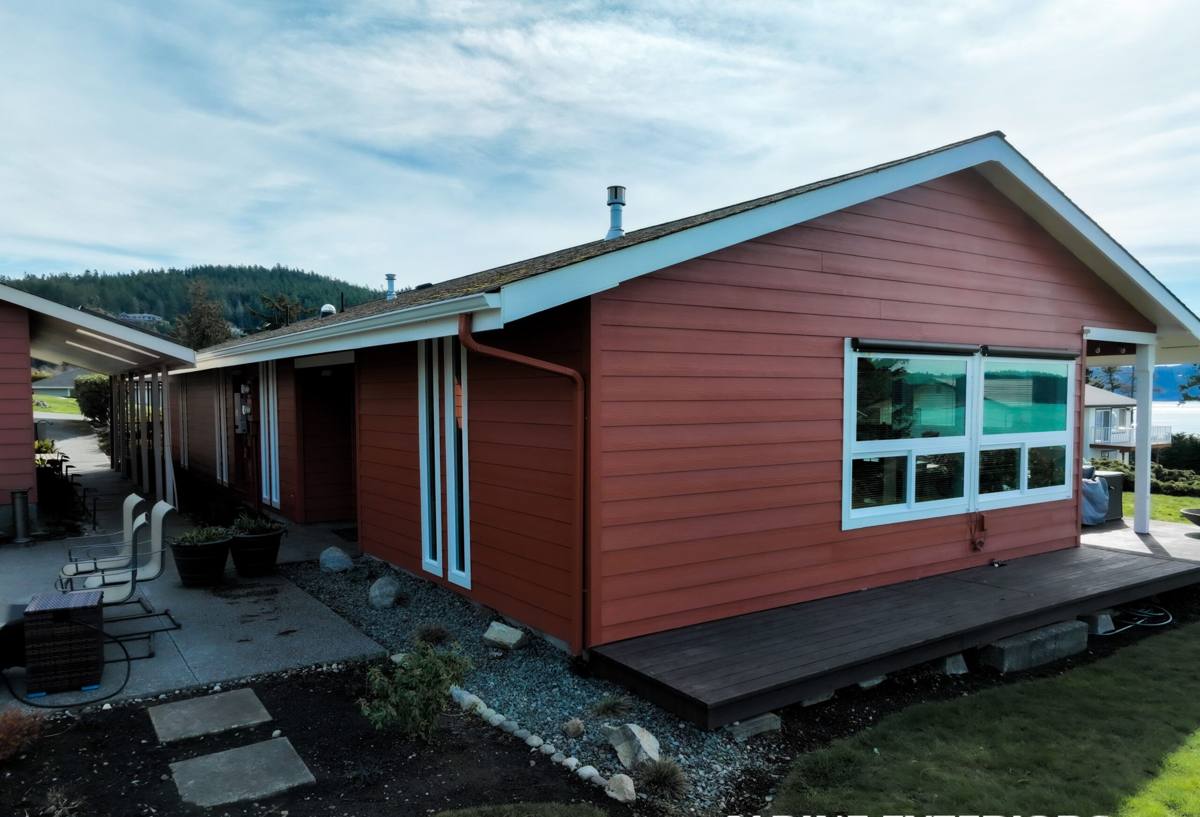
What Fiber Cement Needs to Deliver Around the Lake
For a Lake Samish property, we're not just looking for siding that survives — we're looking for siding that stays looking right through a climate that never really dries out for long. That means:
- Dimensional stability so panels don't swell, cup, or gap as humidity swings through the seasons
- A factory-applied finish that resists mildew, moss staining, and UV fade in both full shade and the occasional lake-reflected sun
- Moisture resistance at the core of the material, not just on the surface, since cut edges and joints get repeated wetting
- Non-combustible construction, which matters in a forested, tree-heavy setting where wildfire risk is a real consideration for insurers and homeowners alike
- A installation system — flashing, clearances, fastening — that actually manages water instead of trapping it against the wall
Fiber cement checks these boxes when it's the right product line and it's installed correctly. That second part — correct installation — is where most of the long-term problems on lakeside and heavily shaded properties actually start.
Why We Install Only James Hardie
We install James Hardie fiber cement exclusively, and around Lake Samish that's not a brand preference — it's a climate decision. Hardie engineers its HZ5 product line specifically for the freeze-thaw, high-moisture conditions common in the Pacific Northwest, with a formulation built to resist moisture absorption at the core rather than just the painted surface. The ColorPlus factory finish is baked on under controlled conditions, which gives it better resistance to fading, chipping, and moss staining than field-applied paint, and it comes backed by a real transferable warranty on both the substrate and the finish.
We've looked at the alternatives — LP SmartSide, vinyl, Cemplank, Allura, primed spruce, cedar — and each has a real trade-off that shows up hardest in exactly the kind of environment Lake Samish has: engineered wood products that depend on perfect edge-sealing to avoid moisture wicking, vinyl that can't compete with fiber cement on rigidity or fire performance, and lower-tier fiber cement brands without the same climate-specific engineering or finish warranty. We'd rather stand behind one product system we trust completely than offer several we have reservations about.
What "Correct Installation" Actually Means Here
Fiber cement's reputation lives or dies on installation quality, and that's doubly true in a shaded, moisture-heavy setting like Lake Samish. A correct job includes:
- A weather-resistant barrier behind the siding with properly lapped, sealed seams — not just stapled house wrap
- A rainscreen gap or furring where the wall assembly calls for it, so siding can dry to the outside instead of holding moisture against the sheathing
- Flashing at every window, door, deck ledger, and roof-to-wall intersection, installed to shed water outward and down
- Minimum clearances from grade, roof lines, and decks — a common failure point we see on older homes near the water where siding was run too close to the ground or a walking surface
- Hardie-specified fastener spacing and type, with joints caulked or flashed per the manufacturer's details, not just butted and painted over
Skip any one of these and you can end up with premature failure even on a top-tier product — which is exactly why we treat installation detail as seriously as the material itself.
Our Process, Start to Finish
We keep the process straightforward and transparent, and it looks the same whether we're working a full-time residence or a seasonal cabin near the water:
- On-site assessment. We walk the exterior, check for existing moisture damage, moss buildup, and problem areas around trim, decks, and roof lines, and talk through what your home actually needs.
- Written estimate. You get a clear scope and price before any work starts — no surprise add-ons buried in fine print.
- Tear-off and prep. We remove the old siding, inspect the sheathing for rot or damage, and repair anything compromised before a single new panel goes up.
- Weather barrier and flashing. This is the step that determines how your siding performs in twenty years, not just twenty days — we don't rush it.
- Hardie installation to spec. Panels, fasteners, and joints installed per James Hardie's published installation guide, not shortcuts we've picked up elsewhere.
- Final walkthrough and warranty registration. We review the finished work with you and make sure your product warranty is properly on file.
Fiber Cement vs. Other Siding Options for a Lake Property
| Factor | James Hardie Fiber Cement | Vinyl | Engineered Wood (LP-type) |
|---|---|---|---|
| Moisture resistance in shade | Engineered for it (HZ5) | Doesn't rot, but can trap moisture behind panels | Vulnerable at cut edges and seams |
| Fire resistance | Non-combustible | Combustible, can melt/warp | Combustible |
| Finish longevity in low sun | Factory ColorPlus finish, strong UV and mildew resistance | Can fade and chalk over time | Field-painted finish needs more frequent upkeep |
| Moss and algae resistance | Cleans easily, resists staining | Can stain and is harder to clean without damage | Prone to staining, especially in shaded areas |
| Warranty structure | Strong transferable warranty on material and finish | Varies widely by manufacturer and grade | Often shorter, with strict maintenance requirements to stay valid |
None of these products are inherently "bad" — they're built for different priorities. But for the specific mix of shade, moisture, and organic growth around Lake Samish, fiber cement's core moisture resistance and non-combustible makeup are the differentiators that matter most over a 20-30 year timeline.
Signs Your Current Siding Is Losing the Fight
If you're not sure whether it's time to talk about replacement, these are the warning signs we see most often on homes in shaded, moisture-heavy settings like this one:
- Dark streaking or green/black growth that returns within weeks of cleaning
- Soft spots, bubbling paint, or a spongy feel when you press on the siding, especially near the bottom courses
- Visible gaps opening at seams or trim where caulking has failed
- Panels that have cupped, warped, or pulled away from the wall
- Persistent musty smell along an exterior wall, which can point to moisture getting behind the siding
- Paint that's chalking, peeling, or fading unevenly, particularly on the shaded sides of the house
Catching these early can mean a straightforward siding replacement instead of dealing with rotted sheathing or framing repairs later.
Why Local Experience on Lake Samish Actually Matters
A lot of siding problems around the lake aren't about the product — they're about details a crew only learns by working the area repeatedly: which sides of a home hold shade and moisture longest through the year, how tree cover changes drying time compared to open sites closer to town, and how to sequence a tear-off and install around a seasonal schedule without leaving a home exposed during a heavy rain stretch. A crew that's worked Chuckanut and the surrounding Whatcom County lake communities before knows to check those things without being told, and knows what "correct installation" needs to account for in a climate that stays damp longer than the regional average.
That local familiarity also shows up in smaller ways — knowing to plan around narrower lakeside access, protecting landscaping and decks close to the work area, and understanding that a home near the water often needs more attention to ground clearance and drainage than a comparable home elsewhere in the county.
Caring for Fiber Cement Siding Through Moss Season
Even the right product benefits from basic upkeep in this environment. A yearly rinse-down (low-pressure, not a pressure washer aimed directly at seams) keeps moss and organic buildup from taking hold, and an annual walk-around to check caulking at trim and penetrations catches small gaps before they become moisture problems. Keeping gutters clear and trimming back vegetation that holds moisture against the wall goes a long way too — none of this is heavy maintenance, but skipping it in a shaded, high-moisture setting shortens the life of any siding product, Hardie included.
If you're weighing a siding project on your Lake Samish home, we're happy to take a look and give you a straightforward, no-pressure estimate — just fill out the form below and we'll set up a time to walk the property with you.