 Chuckanut Exterior
 Why Lake Samish Decks Wear Differently Than Decks in Town
A deck built two miles from open water ages differently than one sitting on a slope above Lake Samish. The lake holds moisture in the air long after a storm has passed, the surrounding tree canopy keeps that moisture from drying off quickly, and the driving rain that moves through Whatcom County in the fall and winter drives water sideways into places a deck was never designed to shed it. Add in the salt-laden marine air that reaches inland from the Salish Sea, and you get a slow, steady attack on fasteners, framing, and finishes that a lot of homeowners don't notice until a board flexes underfoot or a railing post wiggles.
We work on decks throughout the Chuckanut area, and the ones around Lake Samish consistently show a specific pattern of wear: moss and algae buildup on shaded sections, corrosion on nails and screws that were never rated for the exposure, and rot that starts at hidden connection points rather than on the visible deck boards. Repairing a deck here means understanding that pattern, not just replacing whatever board looks bad from the top.
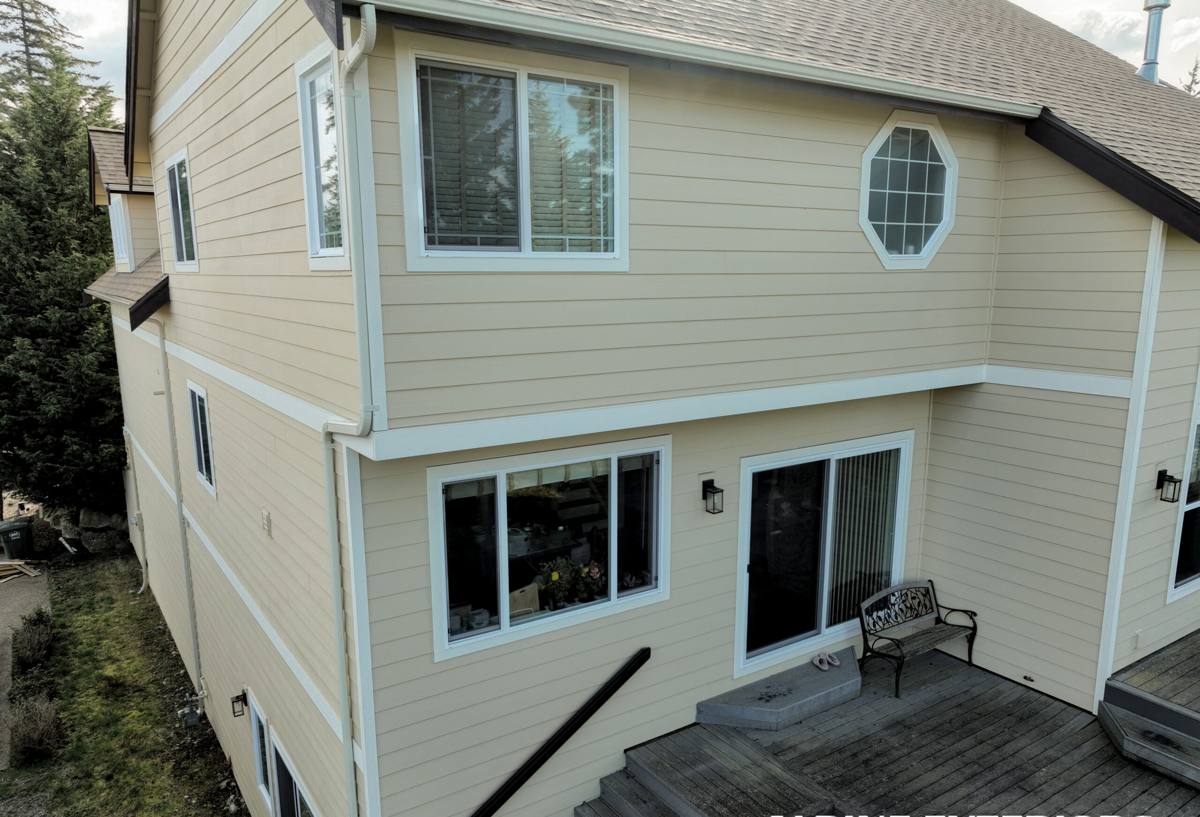
Signs Your Lake Samish Deck Needs Attention
Deck damage in this climate rarely announces itself all at once. It shows up as small changes that are easy to write off as normal aging, until they aren't. Walk your deck and check for these before the wet season sets in again:
- Soft or spongy spots when you press down with your foot, especially near the house or along the outer edge
- Green or black staining that keeps coming back within weeks of cleaning it off
- Railing posts or stair stringers that move when you push on them
- Nail or screw heads that have popped up, rusted, or stained the wood around them
- Gaps or separation where the deck meets the house (the ledger board connection)
- Standing water that takes more than a day to disappear after rain
- Cracked, cupped, or splintering boards concentrated on one side of the deck (usually the shadiest, wettest side)
Any one of these on its own might just be cosmetic. Two or three together, especially near the ledger or support posts, usually mean the damage has moved past the surface and into the structure.
What a Correct Deck Repair Actually Involves
A repair that only replaces the boards you can see is a repair that gets done again in two or three years. A correct repair starts underneath the deck, not on top of it.
Ledger Board and House Connection
The ledger board — the piece that bolts the deck to the house — is the single most common failure point we find on lake-adjacent decks. Water works its way behind the ledger through poor or missing flashing, and because that spot stays damp longer than the rest of the deck, rot can be well established before it ever shows on the surface. We check the flashing, the fasteners, and the wood behind the ledger on every repair call, even when that's not what the homeowner called about.
Joists, Beams, and Support Posts
Framing that's been shaded and damp for years shows a different failure pattern than framing in full sun — it tends to rot from the inside of the joist out, rather than just graying on the surface. We probe suspect joists and posts with an awl rather than judging by eye, because a joist can look sound on the outside and be soft two inches in.
Decking Surface and Fasteners
Old nails and undersized or non-coated screws are a recurring problem on decks that have been through a few Whatcom County winters. Once a fastener starts to corrode, it swells slightly in the hole, cracks the surrounding wood, and lets water in faster. Part of a correct repair is upgrading fasteners to a corrosion-rated grade appropriate for the decking material, not just swapping in whatever matches what's already there.
Railings and Guards
Railings take a different kind of stress than the deck floor — lateral force from people leaning on them — so a loose post is a safety issue, not just a cosmetic one. We check post connections down to the framing, not just where the railing meets the top rail.
Repair vs. Replacement: How We Decide
Not every deck with problems needs to be torn out. The decision usually comes down to how much of the structure below the surface is still sound, and how much of the visible damage is isolated versus spread across the whole deck.
| Factor | Favors Repair | Favors Replacement |
|---|---|---|
| Framing condition | Joists and posts probe solid, damage isolated to a few boards | Rot found in multiple joists, beams, or the ledger connection |
| Age of structure | Framing is under 15-20 years old and built to a reasonable standard | Original framing is decades old or undersized for current code |
| Extent of surface damage | Damage limited to one section (shaded side, stair area) | Damage is spread evenly across the whole deck surface |
| Moss and moisture pattern | Isolated to specific low-airflow spots | Chronic moisture across the whole substructure |
| Homeowner's timeline | Want to extend the deck's life a few more years | Ready to redesign layout, size, or material |
We'll give you an honest read on which side of that table your deck falls on before we ever talk about cost. A repair that's really a temporary patch over a failing structure isn't a service we're willing to sell you.
Our Process, Start to Finish
- Inspection. We walk the full deck, check the ledger and flashing, probe framing at multiple points, and check every post and stair connection — not just the area you flagged as a concern.
- Written assessment. You get a plain-language explanation of what's failing, what's still sound, and what repair or replacement options make sense, with reasoning you can follow.
- Scope and estimate. We price the work based on what we actually found, broken into clear line items so you know what you're paying for and why.
- Repair work. Framing repairs happen first and get inspected before any new decking goes down over them. Nothing gets covered up that we haven't verified is sound.
- Fastener and flashing upgrades. Any corroded fasteners or missing flashing found during the repair get addressed as part of the job, not left for a future call.
- Cleanup and walkthrough. We clear debris, sweep the site, and walk the finished deck with you so you know what was done and what to watch going forward.
Materials: Matching the Repair to the Exposure
What we use to repair a deck depends heavily on where that deck sits relative to shade, lake moisture, and airflow. Pressure-treated framing lumber remains the standard for structural repairs because it handles ground and moisture contact the way the rest of the structure was likely built. For decking surfaces, both wood and composite have a place:
- Wood decking costs less upfront and can be spot-repaired board by board, but it needs regular cleaning and refinishing to keep moss and algae from taking hold in shaded, damp areas — a real maintenance commitment on a lake-adjacent lot.
- Composite decking resists moisture and moss better with less upkeep, but it's a bigger upfront cost, and not every composite product handles standing moisture or heavy shade equally well — we'll walk you through the trade-offs for your specific site rather than push one option across the board.
We don't default to whatever's easiest to install. We tell you honestly which option fits your deck's exposure, your budget, and how much maintenance you're willing to keep up with.
Moss, Algae, and Slip Safety
Moss on a deck isn't just an appearance issue around Lake Samish — it's a slip hazard, and it holds moisture against the wood underneath it, which accelerates rot. Shaded decks under tree cover, or decks on the north or lake-facing side of a house, tend to grow moss back within weeks of a simple power wash if the underlying moisture problem isn't addressed. Part of a lasting repair is improving airflow and drainage under the deck where possible, not just scrubbing the surface clean and hoping it stays that way through the next wet season.
Permits and Lakefront Considerations
Whatcom County and local jurisdictions require permits for structural deck repairs and most replacements, and properties near Lake Samish can carry additional shoreline or setback considerations depending on how close the structure sits to the water. We handle the permit process as part of the job and will tell you upfront if your property's location adds any extra steps — better to know before work starts than to find out after an inspection stalls the project.
Keeping Your Deck in Shape After the Repair
A repaired deck still needs seasonal attention in this climate. A short routine goes a long way:
- Clear leaves and debris from between boards before fall rains set in — trapped debris holds moisture against the wood
- Rinse or lightly scrub shaded areas a couple of times a year to keep moss from establishing
- Check fastener heads and railing connections once a year for movement or rust staining
- Reapply sealant or stain on wood decking on the schedule the product calls for, not just when it looks faded
- Keep gutters and downspouts near the deck clear so runoff isn't dumping extra water onto or under the structure
Why Hiring a Crew That Already Works Lake Samish Matters
A repair crew that mostly works drier, more exposed sites in town can miss what's specific to a shaded, lake-adjacent property — where moisture sits longer, where moss comes back faster, and where the ledger and framing take on damage patterns that don't show up the same way elsewhere in Chuckanut. We've worked enough decks in this specific setting to know where to look first, what fastener and flashing upgrades actually hold up here, and when a repair is a real fix versus a short-term patch. That's the difference between a deck that's solid for another decade and one you're calling someone about again in two years.
If your deck around Lake Samish is showing soft spots, moss that won't quit, or a railing that doesn't feel as solid as it used to, we're happy to take a look and give you a straight answer. Reach out for a free, no-pressure estimate using the form below.