 Chuckanut Exterior
 Why Silver Beach Homes Need Siding Built for This Exposure
Homes in the Silver Beach area of Chuckanut sit close enough to the water that the climate does more work on a house than most homeowners realize. Salt-laden air corrodes fasteners and finishes over time, driving rain finds every gap in flashing and trim, and the shaded, damp stretches of the year turn north-facing walls and anything near tree cover into a moss and algae farm. Add Whatcom County's freeze-thaw winters into the mix, and you have a climate that punishes siding materials that can't handle sustained moisture exposure.
This isn't a theoretical problem. It's why so many homes in this pocket of Whatcom County show soft trim boards, peeling paint, swollen panel seams, and green-black streaking on the shaded sides of the house well before the siding has reached the end of its expected life. The material itself often isn't the only issue — installation quality and product choice matter just as much as what's actually on the wall.
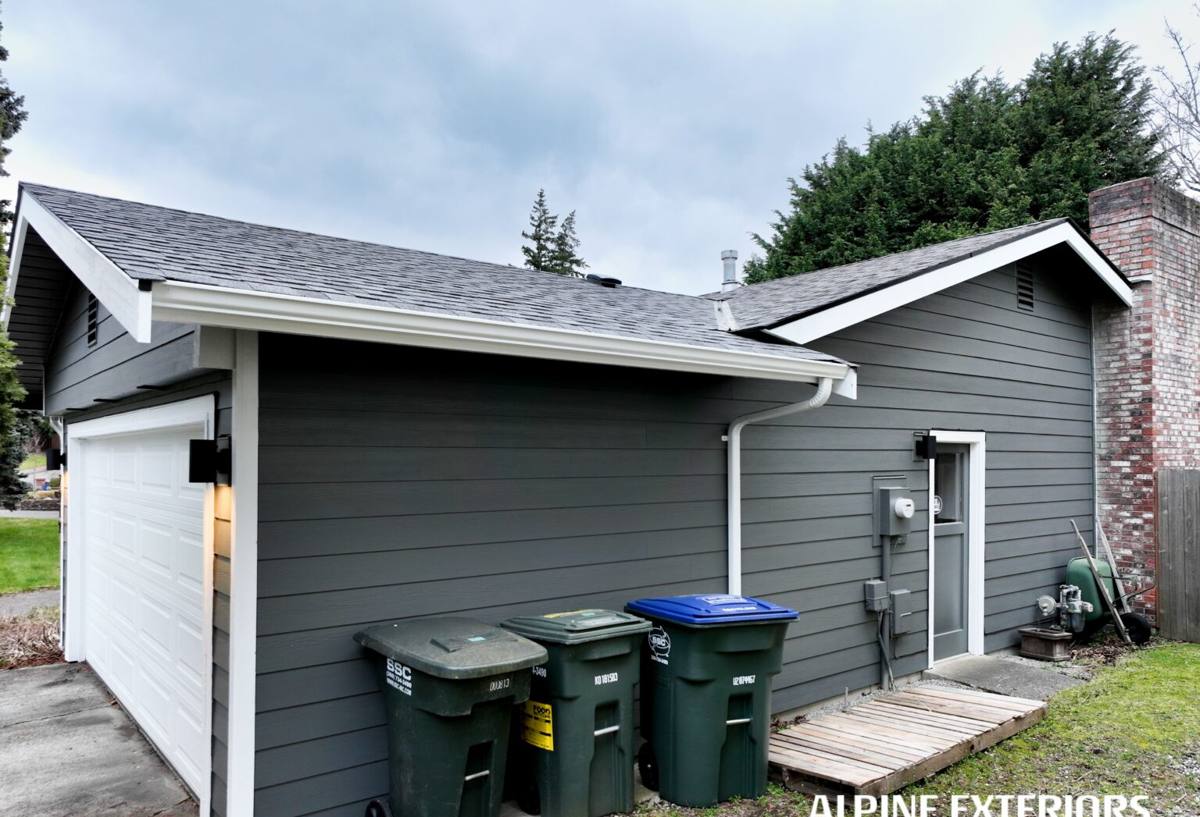
What James Hardie Brings to a Coastal, Moss-Prone Climate
James Hardie fiber cement siding is engineered from cement, sand, and cellulose fibers — a composition that doesn't rot, doesn't feed mold or fungus, and won't swell or delaminate the way wood-based or wood-adjacent products can when they take on repeated moisture. That matters directly for Silver Beach, where driving rain and a long damp season are the norm rather than the exception.
Three specific properties make it a strong fit for this exposure:
- Non-combustible core — fiber cement doesn't ignite or contribute fuel to a fire, which matters for insurance considerations and general peace of mind regardless of climate.
- Moisture-stable substrate — Hardie board doesn't absorb and release water the way wood or wood-fiber products do, so it isn't prone to the swelling, cupping, and paint failure that repeated wet-dry cycling causes.
- ColorPlus factory finish — a baked-on finish applied under controlled conditions, which holds up better against fading and moisture intrusion at the surface than field-applied paint, especially on the shaded, algae-prone sides of a house.
James Hardie also engineers its products by climate zone. For Western Washington, that means the HZ5 product line, formulated for regions with real freeze-thaw cycles and sustained moisture — as opposed to the HZ10 line built for hot, humid, non-freezing climates. Installing the wrong HZ designation for the region is a mistake we don't make, and it's worth confirming with any contractor you're considering.
Moss and Algae: A Maintenance Issue, Not a Structural One
Moss and algae will grow on almost any siding surface in this part of Whatcom County if conditions favor it — shade, moisture, and organic debris are the real drivers, not the siding material itself. The difference with fiber cement is that moss growth stays cosmetic. It sits on the surface and can be washed off without damaging the substrate underneath. On wood, wood composite, or poorly maintained painted surfaces, the same moss and algae hold moisture against the material and accelerate rot and finish failure underneath. That distinction matters a lot over a 20- or 30-year ownership timeline.
What a Correct Installation Involves in This Climate
Fiber cement siding performs the way it's designed to only when it's installed correctly — and in a high-moisture, salt-air environment like Silver Beach, installation details matter more than they would somewhere drier. A correct job includes:
- Proper weather-resistive barrier and rainscreen or drainage gap behind the siding, so any moisture that does get past the cladding has somewhere to go
- Correct fastener type and spacing — corrosion-resistant fasteners matter more near salt air, where standard fasteners can rust and streak the finish over time
- Manufacturer-specified clearances at the ground, roofline, and any horizontal trim, so water doesn't wick up into the bottom edge of the boards
- Properly lapped and sealed flashing at windows, doors, and any wall penetrations — this is where the majority of real-world moisture intrusion actually starts
- Correctly caulked and painted cut edges, since factory ColorPlus finish only protects the face of the board — exposed cut ends need to be sealed on-site
Skipping any one of these steps doesn't necessarily show up right away. It shows up in three to five years as staining, soft spots at trim, or premature caulk failure — right around the time a homeowner assumes the siding itself is the problem, when it's actually the installation.
Our Process for Silver Beach Homes
1. On-Site Assessment
We walk the property and look at more than just the visible siding condition — we check trim, flashing, roofline transitions, and any areas showing moss, staining, or moisture damage, since these tell us what the house has actually been dealing with.
2. Product and Line Selection
We talk through HardiePlank lap siding, HardiePanel vertical siding, and HardieShingle options based on the home's architecture and exposure, and confirm the correct HZ5 formulation and ColorPlus finish for this climate.
3. Tear-Off and Substrate Check
Old siding comes off and we inspect the sheathing underneath for hidden moisture damage before anything new goes up — this is the point where problems from a previous installation, if any, actually surface.
4. Installation to Manufacturer Spec
Weather barrier, drainage gap, fastening, clearances, and flashing are all installed to James Hardie's published specifications, not shortcut for speed. This is also what keeps the manufacturer's warranty intact.
5. Finish Detail and Cleanup
Cut edges are sealed, caulking lines are finished cleanly, and the site is cleaned up — job debris and old siding removed, not left for the homeowner to deal with.
Why a Crew That Already Works Silver Beach Matters
A contractor who works this specific stretch of Chuckanut regularly already knows what the salt air and driving rain do to a house here, has already made the fastener and flashing decisions that hold up under it, and isn't learning the local exposure on your project. That local pattern recognition — knowing which walls take the worst weather, which trim details fail first, how much drainage gap actually matters this close to the water — is the difference between a siding job that looks right on day one and one that still looks right in year ten.
Cost Factors for a Silver Beach Hardie Installation
Every home is different, but the factors that actually move the price on a project like this are consistent. Treat any estimate that skips these as incomplete.
| Factor | Why It Matters Here |
|---|---|
| Tear-off and substrate condition | Hidden moisture damage from prior siding failure adds repair scope before new siding can go on |
| Siding profile (lap, panel, shingle) | Labor and material costs vary by profile and by how much trim detail the home's architecture requires |
| Trim and flashing scope | Homes with more window and roofline transitions need more flashing detail — this is where moisture problems start if underbuilt |
| Home size and wall complexity | Cutouts, corners, and multi-story walls add labor time independent of square footage alone |
| ColorPlus color selection | Factory-finished color options vary in cost slightly by line, but eliminate on-site painting |
Maintenance Checklist for Hardie Siding in This Climate
Fiber cement is low-maintenance, not no-maintenance. In a salt air, high-rain, moss-prone environment like Silver Beach, a short annual routine keeps siding performing for decades:
- Rinse siding annually with a garden hose to clear salt residue, pollen, and organic buildup before it feeds moss or algae growth
- Inspect caulking at trim, windows, and doors yearly — caulk is the first line of defense against moisture intrusion and it does wear out
- Keep gutters clear and functioning so water isn't sheeting down wall surfaces or pooling at the base of the siding
- Trim back vegetation and tree cover that keeps shaded walls damp longer than they need to be
- Repaint or touch up any field-cut edges or trim that weren't factory-finished, on the manufacturer's recommended schedule
Warranty and Long-Term Value
James Hardie backs its fiber cement products with a strong, transferable limited warranty, and the ColorPlus finish carries its own separate finish warranty. That warranty coverage depends on installation meeting manufacturer specifications — another reason installation quality isn't a place to cut corners. For a home in Silver Beach, where the climate will test every seam and fastener over the coming decades, that combination of a moisture-stable material, a factory-protected finish, and a warranty that actually holds up is what makes the investment worth it.
If your Silver Beach home's siding is showing moss, staining, soft trim, or just age, we're happy to take a look and walk you through what it would take to do the job right. Reach out for a free, no-pressure estimate — no obligation, just a straight assessment of where your home stands.