 Chuckanut Exterior
 Windows in Happy Valley Take a Different Kind of Beating
Happy Valley sits close enough to the water and the tree line that its homes deal with a specific combination of stresses most inland neighborhoods never see: salt-laden air moving in off the water, wind-driven rain that gets pushed sideways into window openings rather than just falling straight down, and a shaded, damp growing season that keeps moss and algae active on sills and trim for much of the year. None of these are dramatic events. They're slow, steady conditions that wear down windows a little at a time until a homeowner notices drafts, fogging, or a sill that's gone soft.
Window replacement done right in this part of Whatcom County isn't just about swapping old glass for new. It's about choosing materials and installation details that hold up to that specific mix of salt, rain, and moisture over the long haul, not just windows pulled off a generic showroom shelf.
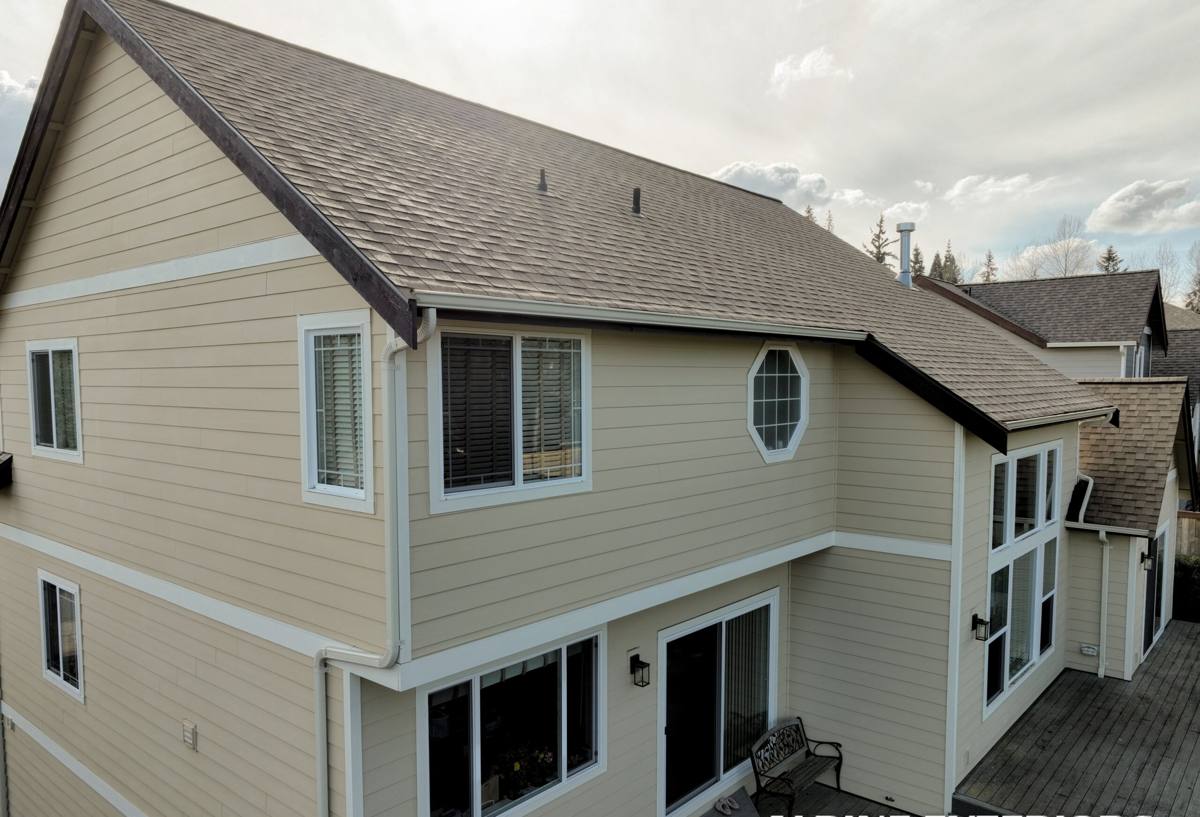
How Salt Air, Driving Rain, and Moss Season Actually Damage Windows
Salt Air
Airborne salt is corrosive to metal hardware — hinges, cranks, locks, and some aluminum framing components. Over years, that corrosion shows up as stiff or sticky operation, pitted finishes, and hardware that eventually fails even though the glass itself looks fine.
Driving Rain
When rain comes in at an angle instead of straight down, it puts pressure on every seam around a window — the joint between frame and siding, the caulk line, the flashing behind the trim. A window that would stay dry in a calm rain can still take on moisture in a wind-driven storm if those details weren't built correctly the first time. Once water gets behind the frame, it doesn't dry quickly.
Moss Season
Shaded exteriors and prolonged damp weather keep moss and algae established on horizontal surfaces like sills and lower trim for much of the year. Beyond the cosmetic issue, moss holds moisture against wood and paint, which shortens the life of anything that isn't well-sealed or naturally moisture-resistant.
Signs a Happy Valley Home's Windows Are Due for Replacement
Not every issue means a full replacement, but these are the signs worth taking seriously in this climate:
- Fogging or a hazy film trapped between panes (a failed seal, not a cleaning issue)
- Noticeable drafts even with the window fully latched
- Sills or lower frame corners that feel soft, spongy, or discolored
- Windows that are difficult to open, close, or lock — often a sign of hardware corrosion or a frame that's shifted
- Visible gaps, cracked caulk, or peeling paint around the frame edges
- Moss or dark staining that keeps returning to the sill no matter how often it's cleaned
- A noticeable jump in heating costs without another clear explanation
- Condensation forming on the inside of the glass regularly, especially in cooler months
A window with one or two of these signs might just need attention. Several at once, especially soft wood or persistent moisture, usually points to a frame that's past the point of a simple fix.
What a Correct Window Replacement Job Involves
The window unit itself is only part of the job. Most premature window failures we see trace back to installation shortcuts, not the product. In a climate with regular wind-driven rain, these details matter more than they would somewhere drier.
Removing the Old Window Without Damaging the Opening
The rough opening has to come out clean, with the surrounding sheathing and framing checked for hidden rot before anything new goes in. Installing a new window over a compromised opening just hides the problem behind fresh trim.
Flashing and Water Management
Proper flashing directs any water that gets past the exterior surface back out, rather than letting it pool behind the frame. This is the single most important detail for a home exposed to driving rain — it's also the detail that's invisible once the trim goes back on, which is why it matters who's doing the work.
Air Sealing and Insulation
The gap between the new window frame and the rough opening needs to be sealed and insulated correctly — not overpacked, not left with voids. Done wrong, it either restricts the window's ability to move slightly with temperature changes, or leaves a path for drafts and moisture.
Square, Level, and Properly Shimmed
A window that's slightly out of square will bind, won't seal evenly, and will wear its hardware and weatherstripping faster. Correct shimming keeps the unit operating smoothly for the life of the window.
Choosing a Frame Material for This Climate
There's no single "best" window material for every home — it depends on budget, the home's style, and how much maintenance an owner wants to take on. Here's how the common options generally compare for a salt-air, high-rain environment:
| Material | Moisture & Salt Resistance | Maintenance | Typical Lifespan |
|---|---|---|---|
| Vinyl | Very good — won't corrode or rot, handles salt air well | Low; occasional cleaning | 20–30+ years |
| Fiberglass | Excellent — dimensionally stable, resists moisture and corrosion | Low | 30–40+ years |
| Wood-clad | Good on the exterior clad side; interior wood needs protection from any interior moisture | Moderate to higher; clad surfaces need periodic inspection where seams meet | 20–30 years with upkeep |
| Aluminum | Fair — prone to corrosion and pitting in salt air over time without regular care | Higher in this climate | Varies widely with maintenance |
Given the salt exposure and rain volume typical of this area, we generally steer homeowners toward vinyl or fiberglass for most projects, and reserve wood-clad or aluminum for situations where the look or a specific architectural match calls for it. That's a maintenance and moisture-behavior judgment, not a knock on any manufacturer — every material has a place, and we'll walk through the honest trade-offs for your specific home.
Our Window Replacement Process
- On-site assessment. We look at each window opening, check for hidden moisture or rot in the framing, and talk through what's actually going on before recommending replacement.
- Measuring and ordering. Windows are measured to the specific opening — not a standard size — so the fit and seal are correct from the start.
- Removal and opening prep. Old units come out carefully, and any damaged sheathing or framing is repaired before the new window goes in.
- Flashing and installation. This is where the moisture-management details happen — flashing, sealant, and fastening done to hold up against wind-driven rain.
- Insulation, trim, and finish work. The gap around the frame is sealed and insulated, and interior and exterior trim are finished to match the home.
- Walkthrough and cleanup. Every window is tested for smooth operation and a proper seal before we consider the job done, and the work area is cleaned up.
Why It Matters That We Already Work in Happy Valley
A crew that's worked windows throughout Happy Valley and the surrounding Chuckanut area has already seen how this specific stretch of coastline treats a house — which sides of a home tend to take the worst of the driving rain, how quickly moss re-establishes on shaded sills, and where salt air tends to do the most damage to hardware over time. That local pattern recognition shapes real decisions: which side of the house needs the most attention to flashing, which material makes sense given how exposed a particular wall is, and what maintenance schedule actually fits the conditions here rather than a generic recommendation.
It also means straightforward logistics — a crew that's already familiar with the neighborhood, able to source materials without added delay, and available for a follow-up check if something needs adjusting after the first real storm tests the install.
What Affects the Cost of Window Replacement
Costs vary based on the home and the scope of work, but the main factors are consistent from job to job:
| Factor | How It Affects Cost |
|---|---|
| Frame material | Vinyl is typically the most budget-friendly; fiberglass and wood-clad run higher |
| Glass package | Double-pane vs. triple-pane, and low-E or gas-fill options, add to the base price but improve energy performance |
| Number of windows | Whole-home replacement generally lowers the per-window cost versus one-off jobs |
| Hidden rot or damage | Repairing a compromised opening adds labor and material beyond the window itself |
| Access and window size | Upper-story or oversized windows take more time and equipment to install safely |
| Custom sizing or shapes | Non-standard openings cost more than stock sizes |
We'll always walk through these factors specifically for your home during an estimate rather than quoting a flat number sight unseen — it's the only way to give an honest figure.
Maintaining New Windows Through the Wet Season
New windows installed correctly need very little upkeep, but a bit of seasonal attention extends their life in this climate:
- Clear weep holes (the small drainage openings along the bottom of the frame) so water can drain out instead of pooling
- Wipe moss, algae, or debris off sills and horizontal trim before it has a chance to hold moisture
- Check caulking and sealant lines once a year for cracking or gaps
- Operate hardware periodically through the year so cranks, locks, and hinges don't seize up
- Rinse salt residue off exterior frames and hardware near the coast during dry spells
A few minutes of seasonal attention is usually all that's needed to keep a properly installed window performing the way it should for decades.
Get an Honest Look at Your Windows
If your Happy Valley home has windows that are drafty, fogged, sticking, or showing soft spots at the sill, it's worth getting an honest, no-pressure assessment before deciding what to do next. We'll look at what's actually happening, explain the options plainly, and give you a straightforward estimate using the form below.