 Chuckanut Exterior
 Roofing in the Happy Valley Area Is Its Own Challenge
Homes in the Happy Valley area sit in one of the more demanding roofing environments in Whatcom County. You've got salt-laden air drifting in off the water, driving rain that comes in sideways during winter storms, and enough shade and moisture to keep moss growing nearly year-round. None of that is unusual for this part of the Chuckanut area — but it does mean a roof here ages differently than one in a drier, more open part of the state, and it needs repair work that accounts for that.
A lot of roof repair problems we see in this neighborhood aren't caused by bad materials or bad original installation. They're caused by a roof doing exactly what it's designed to do — shedding water and resisting wind — for years on end in a climate that never really gives it a break. Understanding that is the first step to repairing it correctly instead of just patching the symptom.
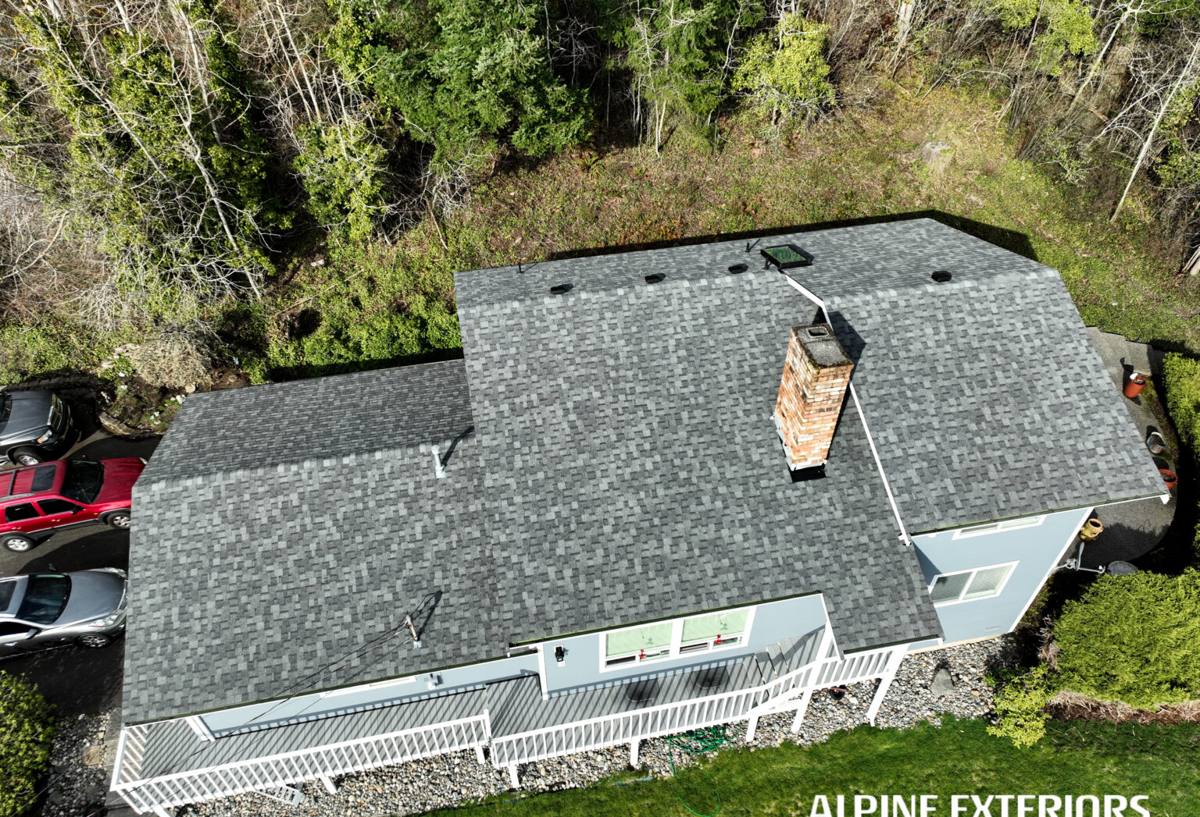
What Salt Air, Rain, and Moss Actually Do to a Roof
Salt Air
Airborne salt from nearby marine waters accelerates corrosion on any exposed metal — flashing, fasteners, valley metal, gutter hardware, and metal roofing panels themselves. Galvanized fasteners that would last decades inland can start showing rust streaks and pinholing years earlier this close to the water. Once a fastener or flashing seam corrodes, it stops sealing the way it should, and that's where leaks start.
Driving Rain
Rain that falls straight down is easy for any roof to handle. Rain that's being pushed sideways by wind is a different problem. It finds its way under lifted shingle tabs, behind poorly lapped flashing, and into any gap around penetrations like vent pipes and chimneys. Roofs in this part of Whatcom County need every lap, seal, and flashing detail done correctly — not just "close enough" — because wind-driven rain will find the one spot that isn't.
Moss and Algae
Shade, moisture, and mild temperatures are exactly what moss wants, and the Chuckanut area has all three for most of the year. Moss doesn't just look bad — it lifts shingle edges as it grows, holds moisture against the roofing material, and works its root structure into granule surfaces. Left unchecked, a mossy roof section will wear out significantly faster than a clean one, even if the shingles themselves are otherwise fine.
Signs a Happy Valley Roof Needs Repair Now
Most roof repairs get more expensive the longer they wait, because a small point leak rarely stays small once water finds a path into the roof deck. Homeowners in this area should treat the following as reasons to get a roof looked at, not reasons to wait until next summer:
- Water stains on interior ceilings or upper walls, even faint ones
- Granules collecting in gutters or at downspout outlets
- Shingles that are curling, cracked, or missing entirely
- Visible moss or dark algae streaking, especially on north-facing slopes
- Rusted or lifting flashing around chimneys, vent pipes, or skylights
- Sagging or soft-feeling spots when the roof is walked for inspection
- Daylight visible through the roof deck from inside an attic
- Ice or heavy moss buildup that lingers well after a storm passes
Any one of these can be a minor fix if caught early. Combined, or ignored for a season or two, they often turn into deck damage, insulation loss, or interior repair work that costs far more than the roof repair would have.
What a Correct Roof Repair Actually Involves
A roof repair that actually holds up in this climate is more than swapping a shingle or squirting sealant on a leak. We treat every repair as a small diagnostic project first, then a fix.
1. Find the Real Source
Water rarely leaks straight down from where it enters. It travels along the underlayment or roof deck and shows up somewhere else entirely. A correct repair starts by tracing the leak to its actual entry point — often a flashing seam, a nail pop, or a worn valley — rather than just addressing where the stain appeared inside the house.
2. Check What's Underneath
If water has been getting in for a while, the roof deck or underlayment beneath the visible shingles may already be compromised. A proper repair checks for soft or delaminated decking, not just the surface layer, so the fix doesn't fail again in the next storm season.
3. Match Materials and Method
Flashing, fasteners, and shingles used in the repair need to match or exceed what's already on the roof in both material and installation method — including using corrosion-resistant fasteners given the salt exposure in this area. A mismatched patch is often visible and can create its own weak point.
4. Reseal and Reintegrate Properly
Shingle courses, flashing laps, and sealant beads need to be reintegrated into the existing roof system correctly, following the same shed-water logic as the original installation — upper courses overlapping lower ones, flashing directing water away from seams, not toward them.
Common Repair Issues We See Around Happy Valley
| Issue | Typical Cause | What the Repair Involves |
|---|---|---|
| Leak at chimney or skylight | Corroded or improperly lapped flashing | Remove and replace flashing, reseal correctly against the deck |
| Curling or missing shingles | Age, wind exposure, sun and moisture cycling | Remove damaged shingles, inspect deck, install matching replacements |
| Soft or spongy roof deck | Long-term moisture intrusion from an undetected leak | Cut back roofing to sound deck, replace damaged sheathing, reroof that section |
| Moss ridges along shingle edges | Shaded, moisture-retaining roof sections | Careful moss removal, treatment, and inspection for lifted or damaged shingles underneath |
| Rust streaking near fasteners | Salt air corrosion on exposed metal | Replace corroded fasteners and flashing with corrosion-resistant materials |
| Gutter overflow staining fascia | Granule loss or debris blocking proper drainage | Clear drainage path, repair fascia if water-damaged, address granule loss cause |
Repair or Replace? How We Help You Decide
Not every roof problem in the Happy Valley area needs a full replacement, and we don't push one when a repair will genuinely hold. But there's a point where repeated repairs stop making financial sense. Here's how we think about it with homeowners:
| Factor | Leans Toward Repair | Leans Toward Replacement |
|---|---|---|
| Roof age | Under 12-15 years, or a young roof with an isolated problem | Nearing or past the expected service life for its material |
| Damage extent | Localized to one area, flashing, or a section of shingles | Spread across multiple slopes or recurring in different spots |
| Deck condition | Solid, dry decking found during inspection | Soft, delaminated, or water-stained decking over a wide area |
| Repair history | First or second repair on this roof | Third or more repair addressing similar symptoms |
| Moss/algae staining | Surface-level, roof material still sound underneath | Heavy, long-term staining with granule loss and shingle lifting |
We'll always give you a straight answer on which side of that line your roof falls on, along with the reasoning behind it, so the decision is yours to make with real information.
Between Repairs: Slowing Down Moss and Weather Wear
Roof repair and roof maintenance aren't the same thing, but they're connected. A roof that's kept reasonably clean and clear tends to need far less repair work over its life, which matters in a climate as persistent as Whatcom County's. A few habits make a real difference:
- Keep gutters and downspouts clear so water doesn't back up under shingle edges
- Trim back overhanging branches to reduce shade and debris buildup on shaded slopes
- Have moss treated before it establishes heavily, rather than after it's visibly thick
- Walk the roofline visually after major windstorms for lifted or displaced shingles
- Address small flashing or sealant issues promptly instead of waiting for a leak
None of this replaces a proper inspection, but it buys time between repairs and helps a repair last as long as it's supposed to.
Our Roof Repair Process
We keep the process straightforward because homeowners dealing with a leak don't need extra complexity added on top of it.
Inspection and Diagnosis
We inspect the affected area and the broader roof, trace the leak or damage to its actual source, and check the deck condition where relevant — not just the visible surface.
Honest Explanation
We explain what we found in plain terms, including whether this is a straightforward repair, a more involved one, or a case where replacement is the more sensible long-term call.
Written Estimate
You get a clear scope of work and price before anything is repaired, so there are no surprises once the work starts.
The Repair Itself
We use materials matched to your existing roof, install with the same attention to flashing and water-shedding detail as a full roof system, and account for the salt-air and rain exposure specific to this location.
Final Check
Before we call the job done, we verify the repair is fully integrated and sealed, and we point out anything else worth keeping an eye on, whether it's related to this repair or not.
Why Local Experience in Happy Valley Matters
A roofer who mostly works inland doesn't always account for the specific combination of conditions this neighborhood deals with — salt exposure on metal components, the volume and angle of wind-driven rain off the water, and a moss season that can run most of the year in shaded spots. That's not a knock on general roofing skill; it's just a different set of variables.
Crews who regularly work roofs in and around the Chuckanut area recognize these patterns quickly: which fastener types hold up, which flashing details tend to fail first in this exposure, and which parts of a roof typically need attention before others. That familiarity shows up as fewer repeat visits and repairs that are built for the conditions they'll actually face, not generic conditions.
Quality Checklist for Any Roof Repair
Whether you use us or another contractor, a repair worth paying for in this climate should check these boxes:
- The actual leak source was traced and confirmed, not assumed
- Roof deck condition was inspected, not just the surface shingles
- Replacement materials match the existing roof in type and quality
- Fasteners and flashing are appropriate for salt-air exposure
- Flashing and shingle laps follow correct water-shedding order
- You received a written scope and price before work began
- The contractor is licensed and insured to work in Washington State
If you're dealing with a leak, stained ceiling, or a roof that's just showing its age in the Happy Valley area, we're glad to take a look. Reach out for a free, no-pressure estimate using the form below — we'll give you a straight answer on what your roof actually needs.