 Chuckanut Exterior
 Building New in Happy Valley? Get the Windows Right the First Time
When you're framing a new home in Happy Valley, the windows are one of the few components that get sealed into the wall assembly and then largely forgotten — until something goes wrong five or ten years later. New-construction windows are installed with a nailing fin directly into the rough opening before siding goes on, which means the flashing, the water-resistive barrier integration, and the sealant details all happen once, in the right order, or they don't happen correctly at all. There's no "fix it later" with a nailing-fin window buried behind siding and trim.
We install new-construction windows on homes throughout the Chuckanut area, and Happy Valley builds come with their own set of considerations — lot orientation, tree cover, and how exposed a given elevation is to wind-driven rain off the water. Getting the window package and the installation details right at the framing stage saves the homeowner from tear-out repairs later, which are far more disruptive and expensive than doing it correctly during the build.
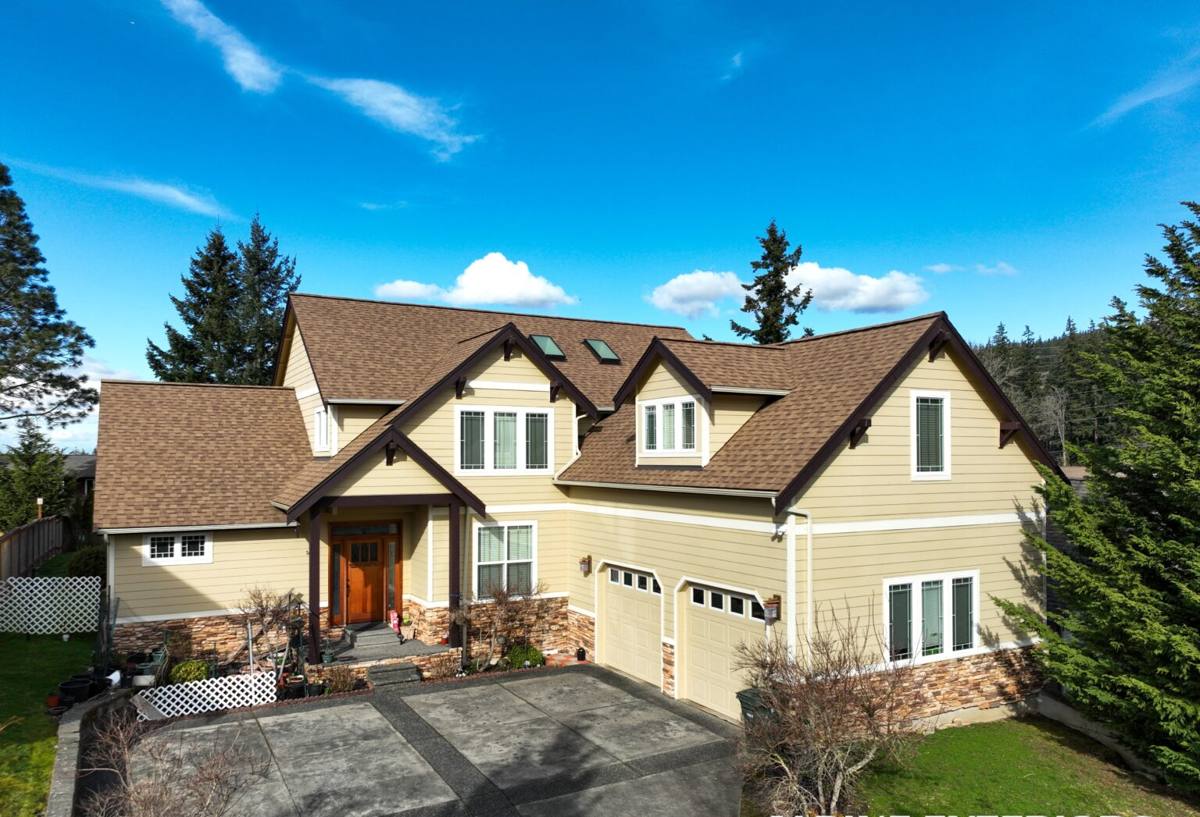
What Chuckanut's Climate Demands From New-Construction Windows
Whatcom County's marine climate is mild compared to a lot of the country, but "mild" doesn't mean easy on a house. Three things define what a window needs to survive here:
Salt Air
Homes closer to the water deal with airborne salt that accelerates corrosion on hardware, fasteners, and lower-grade metal components. This doesn't mean every window needs marine-grade everything, but it does mean hardware finish and fastener material matter more here than they would inland, and it's worth discussing with your contractor before you lock in a window package.
Driving Rain
Rain in this part of Washington doesn't just fall — wind pushes it sideways against west- and south-facing walls for days at a stretch during the wet season. A window opening that's flashed correctly sheds that water down and out, away from the sheathing. A window opening that's flashed even slightly wrong — laps in the wrong order, sealant used where flashing tape should be, no sill pan — will eventually let water track behind the WRB and into the wall cavity, often silently, for years.
Long Moss Season
Extended damp, shaded conditions are exactly what moss and mildew need to establish themselves, and that includes on window sills, trim, and exterior casing. Materials and detailing that shed water quickly and dry out between rain events hold up far better than anything that traps moisture against wood trim or lets water pool on a sill.
None of this is exotic. It's the same baseline every builder in Whatcom County should be designing around — but it only works if it's actually followed at the window opening, every time, on every elevation.
New-Construction vs. Replacement Windows — Why the Distinction Matters
New-construction windows have a nailing fin (sometimes called a flange) around the perimeter of the frame that gets fastened to the sheathing before the WRB and siding are installed. This is different from a replacement or "pocket" window, which is designed to fit into an existing opening without disturbing the siding around it.
On a new build, you want a true new-construction unit. It integrates properly with the water-resistive barrier and flashing sequence, and it gives the sill and jambs a continuous drainage plane instead of relying on a retrofit frame sitting inside an older opening. Using the wrong window type — or installing a new-construction window without following the flashing sequence it was designed for — is one of the more common ways new builds end up with water problems that don't show up until well after the home is finished and landscaped.
Choosing Materials and Glass for a Happy Valley Build
There's no single "best" window material — the right choice depends on the home's design, budget, and exposure. Here's how the common options compare for a coastal Whatcom County build:
| Material | Moisture & Salt-Air Behavior | Maintenance | Typical Fit |
|---|---|---|---|
| Vinyl | Won't corrode or rot; performs well in salt air | Low — occasional cleaning | Budget-conscious builds, rental properties |
| Fiberglass | Excellent dimensional stability, handles wet/dry cycling well | Low | Higher-end builds wanting durability without wood upkeep |
| Wood-clad (exterior-clad) | Good if cladding and seals stay intact; cladding protects the wood from direct weather | Moderate — watch for cladding seam failures over time | Homes prioritizing interior wood aesthetics |
| Aluminum | Strong but conducts cold and can corrode faster near salt air without proper finish | Moderate | Modern/contemporary designs, larger spans |
Glass package matters as much as frame material. For this area, we typically recommend dual-pane, low-E glass with an argon fill as a baseline — it manages heat loss through the long wet season and cuts down on condensation on interior glass during cold snaps. Homes with more direct rain and wind exposure benefit from confirming the window's design pressure (DP) rating is appropriate for that elevation rather than defaulting to a builder-grade minimum.
A Note on Product Choice
We install a range of reputable window lines, and we're upfront when a particular product isn't a good fit for a given application — usually because of how it handles moisture over time, how forgiving (or unforgiving) it is during installation, or how its warranty is structured. That's a professional judgment call based on the specific home and exposure, not a knock on any manufacturer.
What a Correct New-Construction Installation Actually Involves
The window unit itself is only part of the job. The installation sequence is what determines whether the opening stays dry for the life of the house. On every new-construction window we install, the sequence includes:
- Sill pan flashing installed first, sloped to shed any water that gets past the window back out to the exterior
- Proper shimming and squaring of the unit in the rough opening before fastening — an out-of-square window stresses the frame and can bind hardware over time
- Flashing tape applied in correct shingle-lap order (sides, then head) so water is always directed downward and outward, never trapped behind a lap
- Integration with the house's water-resistive barrier so the window becomes part of one continuous drainage plane, not a separate patched-in element
- Backer rod and sealant at the interior and exterior gaps, sized and placed correctly rather than just caulked over
- Fastening schedule that follows the manufacturer's specification, since under- or over-fastening both void warranty coverage
Skipping or rushing any one of these steps is invisible on installation day. The siding goes on, the trim goes on, the house looks finished — and the consequences show up years later as staining, soft trim, or a musty smell near an exterior wall.
Our Process for New Builds in Happy Valley
We coordinate directly with builders and homeowners during the framing stage so window installation isn't a rushed afterthought squeezed between other trades. Our process:
- Plan review — we look at the window schedule, elevations, and rough openings before ordering anything, and flag any openings that need extra attention due to exposure or design.
- Material and glass selection — we walk through frame material, glass package, and hardware finish based on the home's orientation and how exposed it is to wind-driven rain.
- Flashing and WRB coordination — we confirm sequencing with the framer or builder so flashing laps correctly with the water-resistive barrier rather than fighting it.
- Installation — units are set, squared, flashed, and fastened per manufacturer spec, with sill pans and drainage details done before the window ever goes in.
- Final inspection — every opening is checked for square, operation, and seal before we sign off, so nothing gets covered by siding until it's right.
Cost Factors for New-Construction Window Packages
Every build is different, and we'll give you an honest number after walking the plans, but these are the main factors that move the price on a Happy Valley new-construction window package:
| Factor | How It Affects Cost |
|---|---|
| Number and size of openings | More and larger windows mean more material and labor hours |
| Frame material | Vinyl is generally the most budget-friendly; fiberglass and wood-clad cost more |
| Glass package | Upgraded low-E coatings, triple-pane, or higher DP ratings add cost but improve performance in exposed spots |
| Opening style | Casement and awning windows generally cost more than fixed or single-hung units of the same size |
| Access and story height | Upper-story or hard-to-access openings take more time and equipment |
| Trim and exterior detailing | Custom trim packages or specific siding integration add labor beyond the window install itself |
Why a Crew That Already Works Happy Valley Matters
A window installed correctly on paper can still fail in practice if the crew doesn't understand how the local weather actually behaves against a given elevation. Knowing which sides of a Happy Valley home take the brunt of the wind-driven rain, how much moss and moisture buildup to plan trim details around, and how salt-tinged air near the water affects hardware over time isn't something you get from a spec sheet — it comes from doing this work in this area, season after season.
We also work regularly with builders in Whatcom County, which means we're used to coordinating around framing and siding schedules instead of working in isolation. That coordination is often the difference between a window opening that's flashed once, correctly, and one that gets patched together by two trades working around each other's timeline.
A Straightforward Checklist Before You Sign Off on Windows
- Confirm you're getting true new-construction units with a nailing fin, not retrofit/pocket windows
- Ask what glass package is standard versus upgraded, and whether it's appropriate for each elevation's exposure
- Ask how sill pan flashing and WRB integration will be handled, and in what order
- Confirm hardware finish is appropriate for a coastal, salt-air environment
- Get the fastening schedule and installation method in writing tied to manufacturer specs, so warranty coverage stays intact
- Ask how the installer coordinates with your framer or general contractor on timing
New-construction windows are a one-shot install — get the details right while the walls are still open, and you won't think about them again for decades. If you're planning a build in Happy Valley, we're happy to walk your plans, talk through material and glass options for your specific lot, and give you a free, no-pressure estimate.