 Chuckanut Exterior
 Happy Valley's Siding Has to Work Harder Than Most
Homes in Happy Valley sit in a tough spot for exterior materials. You've got salt-laden air drifting in off the water, long stretches of driving rain that comes in sideways more often than straight down, and a shade-and-moisture combination that keeps north-facing walls and rooflines damp for weeks at a time during the fall and winter. Add in the tree cover common to this part of Whatcom County, and you get a moss season that can run from October through April in a bad year. None of that is unusual for this corner of Washington — but it's exactly the combination that separates siding that lasts twenty-plus years from siding that starts failing in year eight.
We install fiber cement siding in this neighborhood specifically because it's one of the few materials that shrugs off all three of those stressors at once. This page is about what that actually means for a Happy Valley home — not siding in general, but siding on this street, in this climate, done the way it needs to be done here.
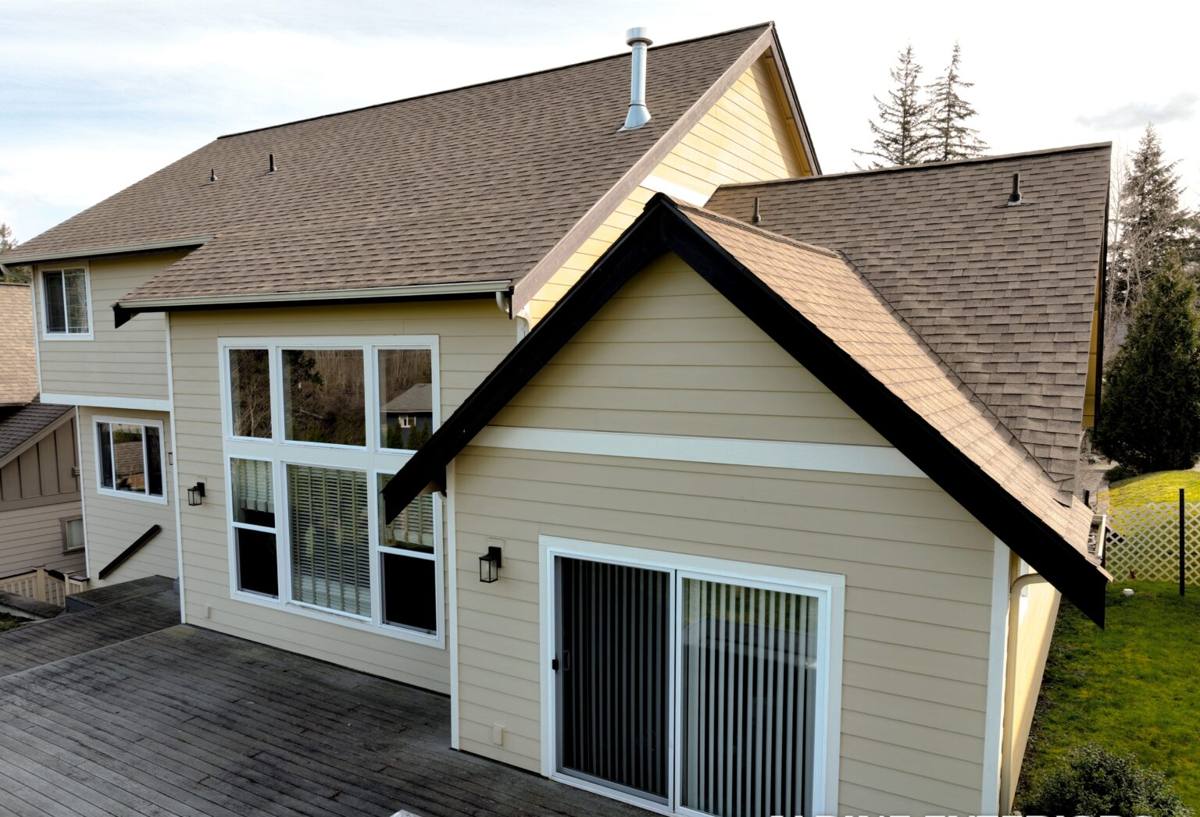
What Salt Air, Rain, and Moss Actually Do to a Wall
Salt Air
Airborne salt is corrosive to metal fasteners, flashing, and trim, and it's abrasive to painted surfaces over time. On homes closer to the water, salt residue settles into every seam and lap joint. Materials with weak factory finishes — or no factory finish at all — chalk, fade, and lose their protective coating faster near salt air than they would twenty miles inland.
Driving Rain
Whatcom County doesn't just get rain, it gets wind-driven rain that hits siding at an angle instead of running straight down the face of the wall. That means water gets pushed up under laps, into butt joints, and behind trim in a way that vertical-only rain wouldn't. Any siding system that depends on caulk alone to keep water out — rather than proper lap geometry, flashing, and drainage — is going to lose that fight eventually.
Moss and Sustained Moisture
Moss itself doesn't eat through siding, but it holds moisture against the surface for extended periods, and that constant dampness is what causes real damage underneath — softening substrates that can't tolerate long-term wetting, and giving mold and rot a foothold at seams and fastener points. Shaded walls, north exposures, and areas under overhanging trees are where we see this hit hardest in Happy Valley.
Why We Install James Hardie and Nothing Else
We're a fiber cement-only siding contractor, and specifically a James Hardie-only contractor. We don't install vinyl, LP SmartSide, Cemplank, Allura, primed spruce, or cedar. That's not a marketing position — it's a standard we hold because of what happens to those other materials in exactly the conditions Happy Valley deals with every year.
Vinyl can warp and become brittle over time with UV and temperature cycling, and it relies on overlap and gravity rather than a rigid, engineered water-management system — a real liability under driving rain. Wood-based products, including engineered wood siding and cedar, are organic materials at their core, which means sustained moisture and moss cover are their worst-case scenario; even with good coatings, the failure mode when water gets in is rot, not just cosmetic wear. Other fiber cement brands may use similar base materials, but James Hardie is the manufacturer that engineers products specifically by climate zone, backs them with a factory-applied finish system, and has the longest track record of any fiber cement maker in the Pacific Northwest.
James Hardie fiber cement is non-combustible, dimensionally stable in wet climates, and manufactured with a ColorPlus factory finish that's baked on and warrantied against fading and peeling — a real advantage over field-applied paint, which is only as good as the prep and the weather on the day it's applied. For a neighborhood dealing with salt air, wind-driven rain, and long moss seasons, that combination is the difference between siding you touch up every few years and siding you mostly forget about.
How Materials Actually Compare in This Climate
| Material | Behavior in Salt Air | Behavior Under Driving Rain | Behavior Under Sustained Moss/Moisture |
|---|---|---|---|
| James Hardie Fiber Cement | Factory ColorPlus finish resists fading and chalking | Engineered lap profile and rigid board resist wind-driven intrusion | Cement-based core does not rot; unaffected by prolonged dampness when properly installed |
| Vinyl | Can chalk and become brittle with UV/salt exposure over years | Depends on overlap and gaps; can allow water intrusion behind panels | Won't rot itself, but traps moisture against sheathing behind it |
| Engineered Wood / Primed Spruce | Coating wears faster in salt-exposed areas | Vulnerable at cut edges and joints if sealing isn't perfect | Organic substrate; sustained moisture leads to swelling and rot |
| Cedar | Natural but requires ongoing sealing/staining near salt air | Absorbs water at joints and end grain | Highly susceptible to rot and moss-related decay without diligent upkeep |
What a Correct Installation Actually Involves
The material is only half the equation. Most fiber cement failures we get called out to inspect aren't material failures — they're installation failures. In a climate like this one, the details matter more than they would somewhere drier.
- Correct starter strip and first-course alignment so the bottom edge sheds water instead of wicking it up into the wall
- Proper lap exposure per Hardie's published specs — not stretched to save material
- Rain-screen or drainage gap behind the siding where conditions call for it, so any incidental moisture can escape instead of sitting against the wall
- Flashing at every window, door, and horizontal trim transition — the single most common place we find water intrusion on older homes
- Corrosion-resistant fasteners driven to the correct depth — overdriven nails crack the board and create a moisture entry point
- Factory-cut and factory-primed edges wherever possible, since field-cut edges need proper sealing to perform as designed
- Correct clearance from grade, roofing, decks, and hardscape so the siding isn't sitting in a permanently wet zone
Skip any one of these and you can still end up with moisture problems behind fiber cement siding, even though the board itself won't rot. Doing it right the first time is cheaper than doing it twice.
Our Process for Happy Valley Projects
Assessment and Moisture Check
We start by walking the exterior and checking the areas most exposed to Happy Valley's conditions: north- and west-facing walls, anything under tree cover, and low areas near grade. Where we suspect existing moisture damage behind old siding, we check the sheathing before quoting anything, so there are no surprises once removal starts.
Tear-Off and Sheathing Repair
Old siding comes off, and any compromised sheathing or framing gets repaired before a single new board goes up. Installing new siding over damaged sheathing just locks the problem in — we won't do that.
Water Management Layer
A proper weather-resistive barrier and flashing package goes on next, sized and detailed for this region's rain load, not a generic minimum.
Hardie Installation to Spec
Boards are installed to James Hardie's fastening, clearance, and lap requirements, with attention to the specific trouble spots — window heads, deck ledger connections, roof-to-wall intersections — where this climate causes the most trouble.
Final Detailing and Walkthrough
Caulking, touch-up, and trim details get finished, and we walk the exterior with the homeowner before calling the job done.
Choosing the Right Hardie Product for a Happy Valley Home
James Hardie makes several siding profiles, and the right one depends on the home's style and exposure, not just preference. HardiePlank lap siding is the most common choice for traditional home styles and performs well across the board. HardieShingle gives a cedar-shake look without the moisture vulnerability of real cedar shingles — a common ask in Pacific Northwest neighborhoods where that look is popular but the maintenance isn't. HardiePanel vertical siding works well for accent areas, gables, and modern designs. For homes with heavier direct exposure to wind-driven rain, we'll often discuss Hardie's engineered HZ product line, which is formulated for wetter, harsher climate zones rather than a one-size-fits-all formula.
Color matters here too. ColorPlus finishes are factory-applied and cured under controlled conditions, which gives more even, durable coverage than field-painted siding — a real advantage in a neighborhood where repainting means dealing with rain delays and moss regrowth on ladders and scaffolding.
What Drives Cost on a Project Like This
| Factor | Why It Matters in Happy Valley |
|---|---|
| Extent of tear-off and disposal | Older siding with hidden moisture damage takes longer to remove safely |
| Sheathing or framing repair | Moss-related moisture retention sometimes means hidden rot that needs fixing before re-siding |
| Siding profile chosen | Lap, shingle, and panel styles each have different material and labor requirements |
| Trim and detail complexity | Homes with more windows, dormers, and roof-to-wall transitions need more flashing and cut work |
| Access and site conditions | Slopes, tree cover, and tight lot lines common in this area can affect staging and scaffolding needs |
| HZ5 vs. standard product selection | Higher-exposure walls may call for climate-engineered Hardie products at a different price point |
We give a firm, itemized estimate after the initial walk-through — not a rough guess based on square footage alone, since the condition of what's underneath the old siding is often the biggest variable.
Signs a Happy Valley Home Needs Its Siding Looked At
- Persistent moss or algae growth that comes back within weeks of cleaning
- Soft spots, bubbling, or visible warping, especially on north-facing or shaded walls
- Paint that's peeling or bubbling rather than just fading evenly
- Staining or dark streaking below window sills or trim boards
- Gaps opening up at butt joints or around window and door trim
- A musty smell near exterior walls inside the home, which can indicate moisture getting through
Any one of these on its own isn't necessarily an emergency, but a few of them together usually means it's worth having someone take a real look before the next wet season.
Why Hiring a Crew That Already Works This Neighborhood Matters
Happy Valley's mix of tree cover, water proximity, and lot orientation means every home's exposure is a little different, and a crew that's already worked the area knows what to check for before problems show up on the surface. We know which orientations tend to hide moisture damage, which roof-to-wall details cause the most callbacks if rushed, and how the local moss and rain pattern affects long-term performance of a siding job. That familiarity shows up in fewer surprises during tear-off and a finished product that's detailed for the conditions it actually has to survive, not a generic installation dropped into a wet climate and hoped for the best.
It also means straightforward answers about permitting and code requirements specific to Whatcom County, and a crew that's used to coordinating around this area's weather windows rather than losing weeks to unexpected rain delays.
Ready to Talk About Your Home
If your Happy Valley home's siding is showing its age — or you're planning ahead before the next wet season sets in — we're happy to take a look and walk you through what we'd recommend and why. The estimate is free, there's no pressure, and you'll get a straight answer about whether it's time to replace or whether targeted repairs make more sense right now. Fill out the form below to get started.