 Chuckanut Exterior
 Why Happy Valley Decks Wear Out Faster Than You'd Expect
If you live in Happy Valley, you already know your deck takes more punishment than a deck a few miles inland. Being close to the water in Whatcom County means salt-laden air is a constant, low-grade attack on fasteners, flashing, and any metal hardware holding your deck together. Add in the driving rain that comes sideways off the water during a good storm, and you've got moisture finding its way into every joint, seam, and end-cut that isn't properly sealed or flashed.
Then there's moss season, which around here isn't really a season so much as most of the year. Moss and algae hold moisture against wood and composite surfaces long after the rain stops, and on a deck that gets any shade from trees or the house itself, that green film builds fast. It's not just cosmetic — trapped moisture under moss is what rots joists, softens decking, and corrodes fasteners from the outside in.
None of this means a deck in Happy Valley is doomed. It means the deck has to be built and replaced with these specific conditions in mind, not with a generic approach that might work fine somewhere drier or further from the water.
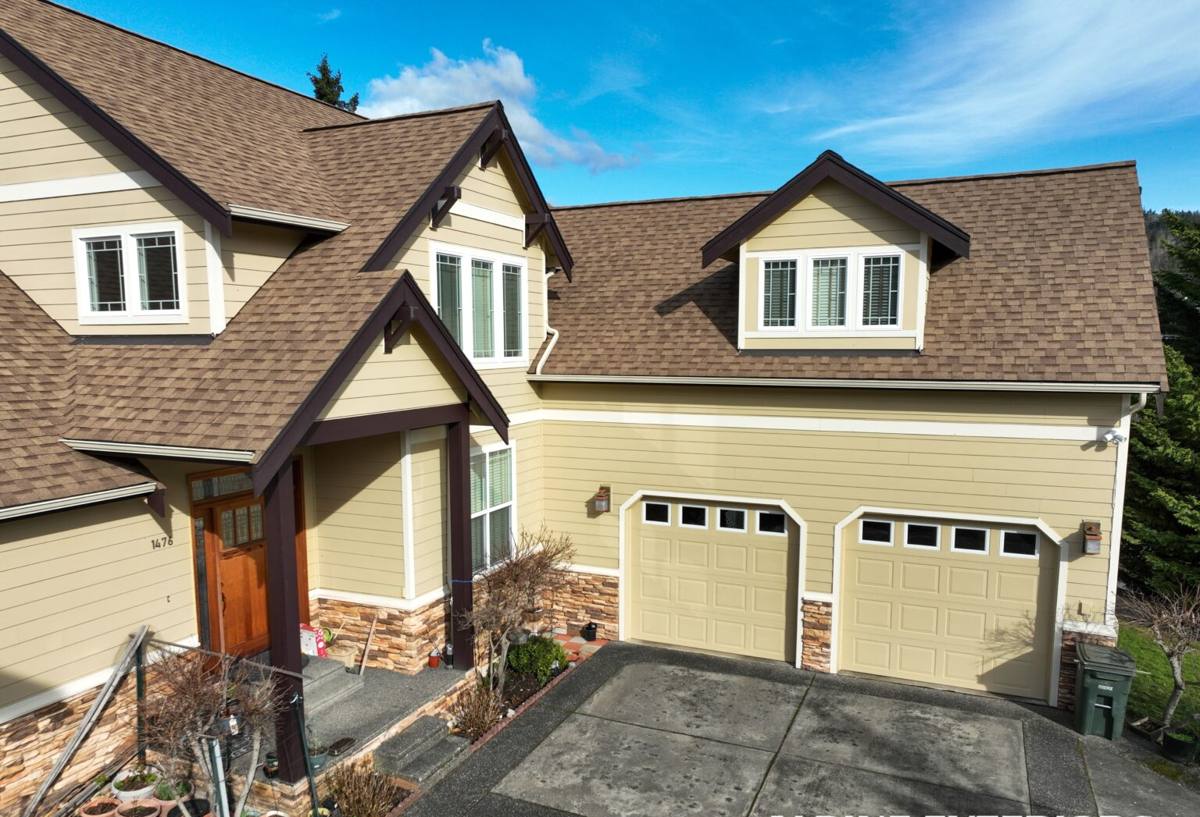
Signs Your Deck Needs Replacing, Not Just Repairing
Not every worn deck needs a full replacement. But there's a point where patching boards or re-sealing the surface is just delaying a bigger problem — and in some cases, masking one that's become a safety issue. Here's what tells us a deck has crossed that line:
- Soft or spongy spots in the decking, especially near the house or in shaded corners where moss holds moisture longest
- Visible rot or dark staining at the ledger board — the beam that attaches the deck to your house
- Rust streaking from screws, bolts, or joist hangers, which usually means the fastener itself is failing underneath
- Railings or stair stringers that flex or feel loose, even after tightening hardware
- Gaps opening up between boards from repeated wet-dry cycling, which weakens the wood fibers over time
- A deck more than 15-20 years old that's never had the substructure inspected, regardless of how the surface looks
A deck can look presentable from a few feet away and still have a compromised frame underneath. That's why any honest assessment starts below the surface, not with the boards you can see.
What a Correct Deck Replacement Involves
"Replacing a deck" sounds simple, but the difference between a deck that lasts 10 years and one that lasts 25+ in this climate comes down to details most homeowners never see once the project is finished.
The Ledger Board and Flashing
The ledger board is where most deck failures start, because it's the single spot where a wood structure meets your house and has to shed water perfectly for decades. Proper flashing — installed correctly, in the right order, with the housewrap or siding lapped over it — is non-negotiable. This is also the detail most likely to be done wrong by a crew in a hurry, and it's invisible once the decking goes down.
Framing and Fasteners
Given the salt air here, we don't cut corners on hardware. Joist hangers, structural screws, and post connectors need to be rated for corrosive, coastal-adjacent exposure — not just generic exterior-grade. Standard galvanized fasteners can start showing rust within a few years in this environment; stainless or high-grade coated hardware costs more up front and holds up far longer.
Ventilation Underneath
A deck built low to the ground or against a slope with poor airflow underneath will trap moisture no matter what decking material sits on top. Proper joist spacing, drainage grading, and gaps between boards all matter for letting the structure dry out between rain events — which, around here, don't leave much time between them.
Railings and Code Compliance
Any deck replacement is a chance to bring railings, guard heights, baluster spacing, and stair specs up to current code, even if the original deck predates those requirements. This matters for safety and for resale — an out-of-code deck can complicate a home sale or an insurance claim down the road.
Choosing the Right Decking Material for This Climate
There's no single "best" decking material — it depends on your budget, how much upkeep you want to do, and how much sun or shade your deck actually gets. Here's how the common options hold up specifically against salt air, rain, and moss:
| Material | Moss/Moisture Resistance | Maintenance | Typical Lifespan |
|---|---|---|---|
| Pressure-treated wood | Moderate — needs sealing to resist moisture intrusion | Annual cleaning and re-sealing recommended | 10-15 years |
| Cedar | Good natural resistance, but surface still hosts moss without upkeep | Periodic cleaning, staining or sealing every few years | 15-20 years |
| Composite decking | Very good — won't rot, but moss/algae still grow on the surface film | Low — occasional washing to prevent surface staining | 25-30 years |
| PVC/capped polymer | Excellent — fully moisture-sealed material | Lowest — soap and water rinses clean | 25-30+ years |
A note on composite and capped polymer decking: these materials resist rot completely, but moss and algae will still grow on any surface that stays damp and shaded, wood or not. We don't oversell any product as "maintenance-free" — every decking material in this climate benefits from an occasional rinse-off, and we'll tell you honestly what upkeep to expect before you commit to one.
Our Deck Replacement Process
1. On-Site Assessment
We walk the existing deck, check the ledger board and framing where accessible, and talk through what you actually use the space for — entertaining, grilling, a quiet spot with morning coffee — since that shapes size and layout decisions as much as the structure does.
2. Material and Layout Discussion
We go over decking material options against your budget and how much maintenance you want to take on, plus railing style and any structural changes like adding stairs, built-in seating, or adjusting the footprint.
3. Permitting
Most deck replacements in Whatcom County require a permit, particularly when the structure is being rebuilt rather than just re-surfaced. We handle the permit application and inspections as part of the job so you're not chasing paperwork.
4. Demolition and Disposal
We remove the old deck down to a clean slate, including hauling away the old material — you're not left with a pile of rotted lumber in the yard.
5. Rebuild
New footings or post bases where needed, corrosion-resistant framing hardware, correctly flashed ledger connection, then decking, railings, and stairs to code.
6. Final Walkthrough
We walk the finished deck with you, point out what routine maintenance looks like for the material you chose, and make sure everything meets what we agreed on before we call it done.
Permits and Code Considerations in Whatcom County
Deck replacement projects that involve rebuilding the structure — not just swapping decking boards on an otherwise sound frame — generally need a building permit and inspection. Requirements can touch on footing depth, ledger attachment method, guard height, and stair geometry. Skipping this step to save time is a real risk: an unpermitted deck can become a problem when you go to sell the house or file an insurance claim after damage. We factor permitting into the timeline and cost from the start so there are no surprises partway through.
Maintenance Checklist for a Long-Lasting Deck
Whatever material you choose, a bit of seasonal upkeep goes a long way toward getting the full lifespan out of a new deck in this climate:
- Rinse or lightly scrub the surface at least once during moss season, more often in shaded areas
- Keep gutters and downspouts clear so runoff isn't dumping extra water directly onto or near the deck
- Trim back overhanging branches to reduce shade and debris buildup that feeds moss growth
- Check railings and stair connections annually for looseness, especially after a hard winter
- For wood decks, plan on re-sealing or re-staining every 2-3 years depending on sun exposure
- Clear leaves and debris from between boards before they trap moisture against the joists below
Why a Crew That Already Works Happy Valley Matters
A contractor who mainly builds decks in drier, inland parts of the county may not think twice about standard galvanized hardware or skip the extra flashing detail that this area's rain actually demands. It's not about skill — it's about knowing what this specific microclimate does to a structure over ten or fifteen years. A crew that's replaced decks throughout Happy Valley and the surrounding Chuckanut area has already seen which details hold up to salt air and driving rain and which ones fail early, and builds accordingly from the first footing.
If your deck is showing its age, or you just want an honest opinion on whether it needs repair or full replacement, we're happy to take a look. Reach out for a free, no-pressure estimate using the form below.