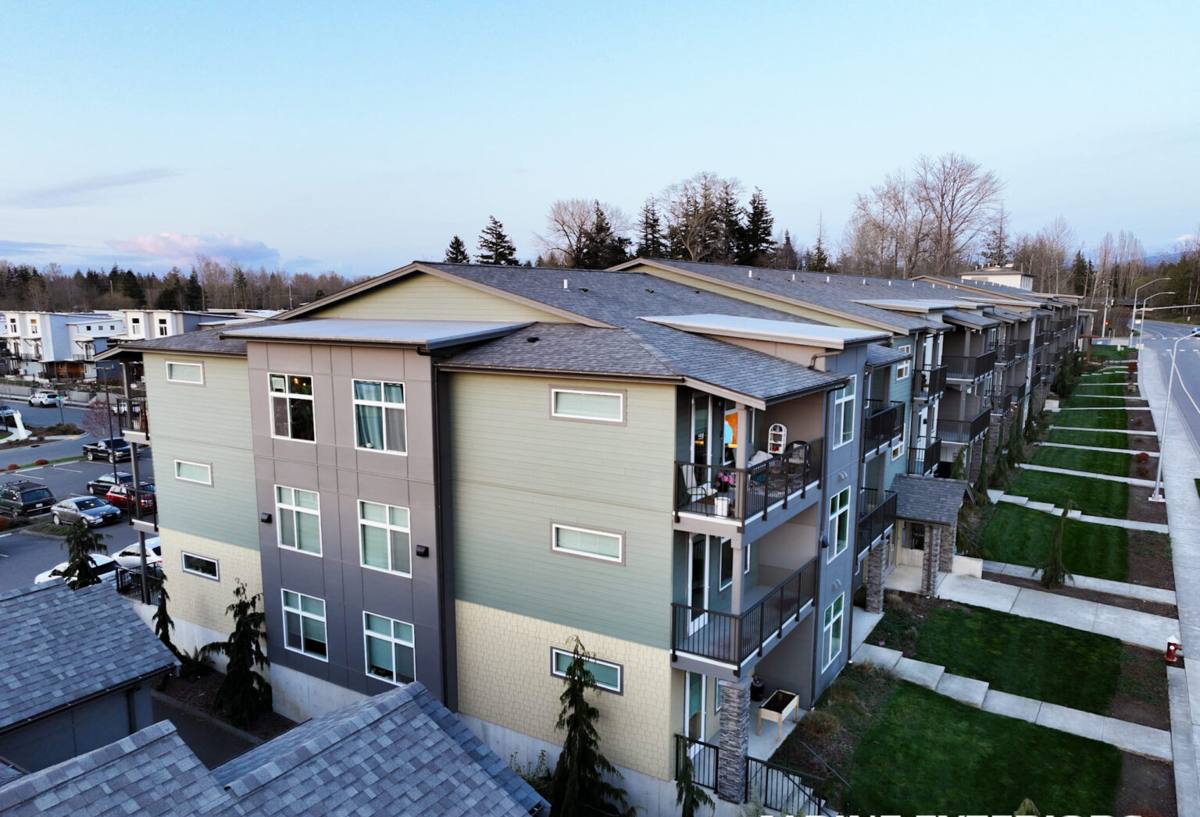
 Chuckanut Exterior
 Windows in Happy Valley Have a Tougher Job Than People Realize
Happy Valley sits close enough to the water and the tree line that its homes take on a different kind of weather load than houses just a few miles inland. Salt-laden air moves in off the water, the rain doesn't just fall here — it drives sideways for days at a stretch, and the shaded, damp corners of a lot grow moss on anything that holds moisture. Windows are one of the first building components to show the wear from all three. A window that's rated fine for a dry inland climate can still fail early here if it wasn't chosen and installed with this specific environment in mind.
This page is about one thing: custom window installation and replacement for Happy Valley homes, and what actually holds up under Chuckanut's conditions. Not a general overview of window options — the specifics that matter for this neighborhood.
What Salt Air, Driving Rain, and Moss Season Actually Do to a Window
Each of these three factors attacks a window differently, and understanding the mechanism helps explain why the fix isn't just "buy a better window."
Salt Air
Airborne salt is corrosive to exposed metal hardware — hinges, cranks, locks, and especially aluminum frame components that aren't properly coated or alloyed for coastal exposure. Over a few seasons, salt exposure can pit finishes, seize moving hardware, and accelerate corrosion at fasteners you can't see once the window is installed.
Driving Rain
Wind-driven rain doesn't behave like a normal rain shower. It gets pushed sideways and upward into gaps that would never see water in calmer weather, which means the flashing detail around a window — not just the window unit itself — is doing most of the real work of keeping water out of the wall assembly. A great window with sloppy flashing will still leak.
Moss and Sustained Moisture
Shaded exposures and long stretches of damp weather let moss, algae, and mildew take hold on sills, tracks, and any horizontal surface near a window that doesn't dry out quickly. Beyond the cosmetic issue, sustained moisture sitting against wood trim or a poorly sealed frame is what eventually leads to rot.
Signs Your Current Windows Are Losing That Battle
Most window failures in this climate show themselves gradually, not all at once. Homeowners in Happy Valley should watch for:
- Fogging or a hazy film between panes of double-pane glass — a sign the seal has failed
- Hardware (cranks, locks, hinges) that's stiff, corroded, or won't latch fully
- Soft or discolored wood trim around the window, especially at the bottom sill
- Moss or dark staining building up on the sill or exterior casing year after year
- A noticeable draft or cold spot near the window frame in winter
- Paint or caulking that's cracked, peeling, or gapping away from the frame
- Difficulty opening or closing that wasn't there when the window was newer
Any one of these on its own isn't an emergency. Several of them together, especially combined with visible wood softness, usually means the window and its surrounding flashing need attention before the next wet season.
What a Correct Window Installation Involves Here
A window replacement done right in this climate is really three jobs layered together: the frame material, the water management detail, and the glass package. Skimping on any one of them shows up later as the exact problems described above.
Frame Material
The frame has to resist both moisture and, near the water, salt exposure — without needing constant upkeep to stay that way. We steer homeowners toward materials that are dimensionally stable and don't rely on paint or finish alone to stay protected, since repainting window frames every few years isn't realistic for most people.
Flashing and Water Management
This is the part that doesn't show once the trim is back on, and it's the part that matters most for driving rain. Correct flashing means water that gets past the window's own weatherseal is directed back out of the wall — not trapped behind the trim where it can sit against sheathing and framing. This includes proper sill pan flashing, correctly lapped house wrap or building paper at the window opening, and sealant used at the right joints rather than as a substitute for proper flashing.
Glass and Glazing
Insulated glass units matter for comfort and energy performance everywhere, but in a marine climate the seal quality matters even more, since sustained humidity and temperature swings are harder on a failing seal than a dry inland climate would be. We talk through glazing options — including low-E coatings and gas fills — based on which direction the window faces and how exposed it is to weather, not a one-size answer for the whole house.
Frame Material Comparison for Coastal Whatcom County Conditions
| Material | How It Handles Salt Air & Rain | Maintenance | Typical Trade-Off |
|---|---|---|---|
| Vinyl | Doesn't corrode; performs consistently in salt air | Low — occasional cleaning | Limited color/finish options versus other materials |
| Fiberglass | Very stable in moisture and temperature swings; strong in driving rain exposures | Low | Higher upfront cost |
| Aluminum (uncoated or poorly finished) | Prone to pitting and hardware corrosion near salt air over time | Higher — finish and hardware need monitoring | We're selective about where and how we use it here |
| Wood (unclad) | Attractive but vulnerable to rot without diligent upkeep in constant damp | High — regular painting/sealing | Best reserved for well-protected exposures |
| Wood-clad | Combines interior wood look with an exterior shell resistant to the weather | Moderate | Cladding integrity depends on installation quality |
None of these materials is automatically "wrong" — the right choice depends on the window's exposure on your specific house, how it's protected by eaves or siding details, and how much upkeep you actually want to commit to.
Our Process for Happy Valley Window Projects
1. On-Site Assessment
We look at each window individually — not just the glass, but the sill condition, the surrounding trim, and how exposed that particular opening is to wind and rain. A window on a covered, protected wall doesn't need the same treatment as one facing open weather.
2. Custom Measurement and Ordering
Older homes rarely have perfectly square, standard-sized openings. We measure precisely and order windows built to the actual opening rather than forcing a stock size to fit, which avoids the shimming and gap-filling that leads to future leaks.
3. Removal and Flashing Correction
When we pull the old window, we inspect the opening for hidden water damage or flashing that was never done correctly the first time. This is often where older installations show their age, and it's the step that gets skipped by crews trying to move fast.
4. Installation
The new window goes in level, plumb, and properly shimmed, with sill pan flashing, correctly integrated house wrap, and sealant placed at the joints designed to take it — not as a catch-all.
5. Interior and Exterior Finish
Trim, caulking, and paint or finish work are completed to match the surrounding siding and trim, so the new window looks original to the house rather than obviously bolted on.
6. Walkthrough
We walk the finished window with the homeowner, operate it, and go over basic care specific to this climate before we consider the job done.
Why a Crew That Already Works Happy Valley Matters
Window installation isn't a one-size-fits-all trade, and coastal Whatcom County conditions punish shortcuts faster than a drier climate would. A crew that regularly works Happy Valley and the broader Chuckanut area already knows which exposures take the worst of the driving rain, which lots hold onto shade and moisture longest, and which flashing details actually hold up here versus on paper. That familiarity shows up in fewer callbacks and fewer surprises once the trim goes back on. It also means we're not learning the local climate on your house — we're applying what we've already seen work and what we've already seen fail on homes like yours.
Keeping New Windows Performing in This Climate
A correctly installed window in a marine climate still benefits from basic upkeep. A few habits go a long way:
- Rinse or wipe down sills and tracks periodically to keep moss and grime from building up
- Check weatherstripping annually and replace it if it's compressed or cracking
- Keep gutters and downspouts clear so roof runoff isn't dumping extra water near window heads
- Operate hardware a few times through the year, especially on windows that don't get opened often, so cranks and locks don't seize
- Address any soft trim or paint failure early, before moisture works its way further into the wood
None of this is heavy maintenance — it's the kind of periodic attention that keeps a well-installed window performing for decades instead of needing early intervention.
Get a Straightforward Look at Your Windows
If you're noticing drafts, fogged glass, stiff hardware, or moss building up around your windows, it's worth having someone look before the next stretch of wet weather. We offer free, no-pressure estimates for Happy Valley homeowners — an honest look at what your windows actually need, with no obligation to move forward. Use the form below to get started.