 Chuckanut Exterior
 Windows Built for Edison's Coastal Climate
Homes around Edison sit close enough to the water and open farmland that the weather has a different character than it does further inland. Salt-laden air moves through on the wind, driving rain comes in sideways during winter storms, and the damp, shaded stretches of a property grow moss on anything that holds moisture for more than a day or two. Windows take the brunt of all three. Frames corrode faster near salt air, seals fail sooner under repeated wind-driven rain, and moss and algae creep into sills and tracks that never fully dry out between storms.
This isn't a page about windows in general. It's about what window installation actually needs to look like for a house in the Edison area, given that climate, and why the details of the job matter more here than they would in a drier part of the state.
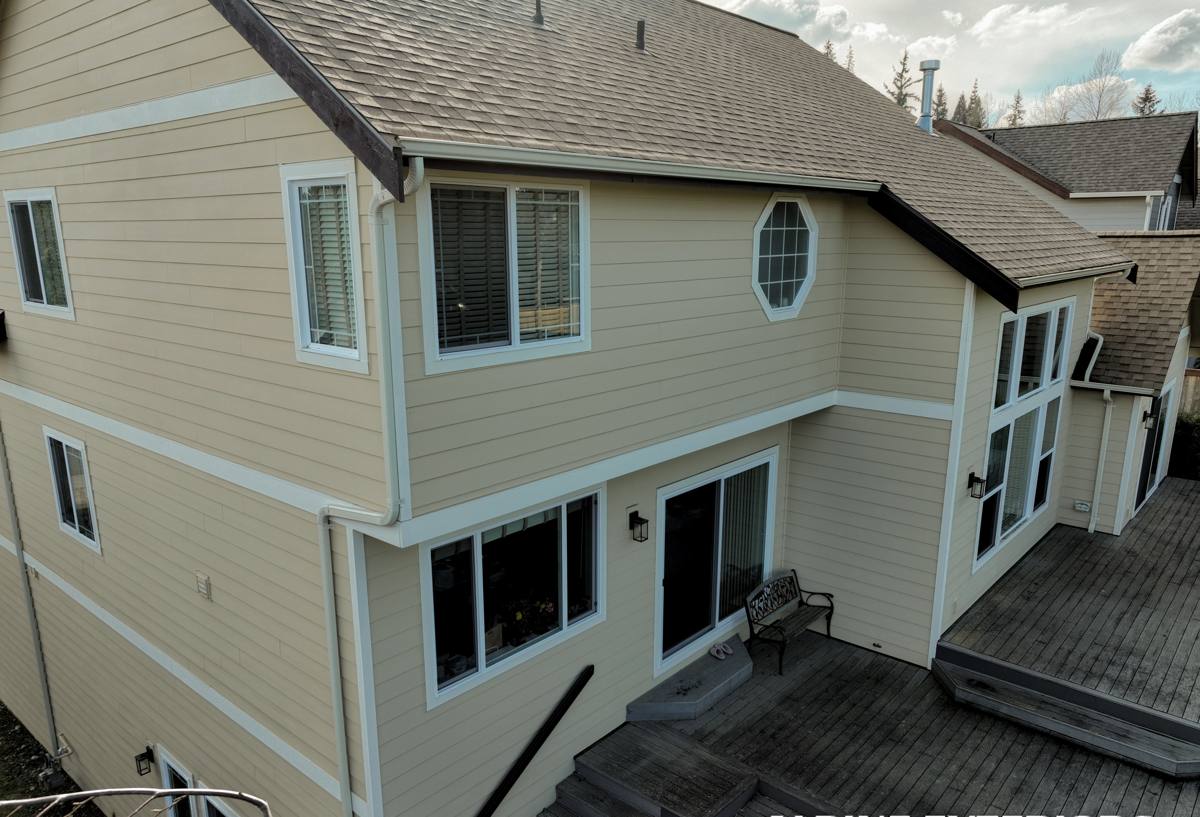
How Coastal Conditions Wear Down a Window System
A window is a system, not just a pane of glass in a frame. The parts that fail first in this climate are usually the ones you can't see from the curb.
Salt Air and Metal Components
Aluminum hardware, screws, and some frame components corrode faster when they're regularly exposed to salt-carrying air, even at a distance from open water. Once corrosion starts on a hinge, latch, or fastener, it's a maintenance problem that only gets worse.
Driving Rain and Water Intrusion
Wind-driven rain doesn't just hit a window head-on — it gets pushed sideways and upward into gaps that would stay dry in a calmer climate. A window opening that isn't flashed and sealed correctly will eventually let water behind the trim, where it can sit against sheathing and framing without anyone noticing until there's a stain, a soft spot, or a musty smell.
Moss and Trapped Moisture
Shaded siding, north-facing walls, and anything under tree cover holds moisture longer here than it would in full sun. Moss and algae growing on sills, in tracks, and around trim isn't just cosmetic — it holds water against wood and finish surfaces and accelerates rot if it's left to build up season after season.
Signs Your Current Windows Are Losing the Battle
- Wood trim or sills that feel soft, spongy, or discolored when pressed
- Visible moss, algae, or black staining collecting in corners and tracks
- Drafts or cold spots near the frame even when the window is fully latched
- Fogging or moisture between panes on double- or triple-glazed units, a sign the seal has failed
- Paint or finish that's peeling or bubbling specifically around the window opening, not the wall generally
- Hardware that's stiff, corroded, or no longer latches tight
- Higher heating bills without any other obvious cause
Any one of these on its own might just mean a window needs attention. Several at once, especially on the same wall, usually points to a water intrusion problem that a new coat of caulk won't fix.
What a Correct Installation Actually Involves
The window unit itself gets most of the attention when people shop, but in a climate like this, the installation details determine whether that window performs for twenty years or starts failing in five.
Flashing and Water Management
Every opening needs to be flashed so that any water that does reach the frame is directed back out and away from the wall assembly, not trapped behind it. This includes sill pan flashing at the bottom of the opening, which is one of the most commonly skipped steps in a rushed installation — and one of the most important in a wind-driven rain climate.
Sealing Without Trapping Moisture
Sealant belongs on the exterior to keep water out, but the assembly still needs a way for any moisture that gets in to escape. Over-sealing an opening on all sides, inside and out, can trap water in the wall cavity instead of keeping it out — a mistake that shows up as rot years later, not on installation day.
Fastening and Frame Support
Windows need to be shimmed, leveled, and fastened according to the manufacturer's instructions to keep the frame square. A frame that's out of square puts uneven stress on the seals and hardware, which shortens the life of both.
Insulation Around the Frame
The gap between the window frame and the rough opening needs to be filled with an appropriate low-expansion foam or insulation, not left empty and not packed so tight it bows the frame. This gap is a major source of drafts and energy loss when it's done poorly.
Choosing a Window Material for This Climate
There's no single "best" window material for every house, but some hold up better than others under salt air, constant damp, and driving rain. Here's how the common options compare for a coastal, moss-prone property.
| Material | Salt Air Resistance | Moisture Behavior | Maintenance |
|---|---|---|---|
| Vinyl | Good — won't corrode | Doesn't absorb water; seals are the main failure point | Low; occasional track and weep-hole cleaning |
| Fiberglass | Very good — stable and corrosion-resistant | Minimal expansion/contraction, holds seals well | Low |
| Aluminum | Fair — prone to corrosion near salt air over time | Conducts cold and can condensate more | Moderate; watch hardware and finish |
| Wood / Wood-Clad | Poor to fair unprotected; better with quality cladding | Vulnerable to rot if seals or finish fail | Higher; needs regular finish upkeep |
We don't refuse to install any particular material outright, but we're honest with homeowners about trade-offs. A wood window with a compromised exterior finish in a wet, shaded spot is a higher long-term maintenance commitment than most people expect, and we'd rather set that expectation up front than have a callback five years later.
Our Installation Process
The process is the same whether we're doing one window or a whole house, just scaled up.
- On-site assessment. We look at the existing openings, check for water damage or rot around current windows, and note anything specific to the house — shaded walls, wind exposure, drainage around the foundation.
- Product recommendation. Based on the assessment, we walk through material and glazing options suited to the wall's exposure, not a one-size-fits-all pitch.
- Removal and opening prep. Old windows come out carefully, and we inspect the rough opening and sheathing before anything new goes in. Any soft or damaged framing gets addressed before installation, not covered over.
- Flashing and installation. Sill pan flashing, proper shimming, correct fastening, and weather barrier integration per the window manufacturer's instructions.
- Sealing and insulation. Exterior sealant where it belongs, insulation in the frame gap, and interior finish work to match the surrounding trim.
- Final check. We test operation, check for square, and walk the job with the homeowner before we consider it done.
What Drives the Cost of a Window Project
We won't quote a number without seeing the house, but these are the factors that move the price up or down.
| Factor | Effect on Cost |
|---|---|
| Number of windows and openings | Larger jobs cost more in total but typically lower per-window |
| Material (vinyl, fiberglass, wood-clad) | Fiberglass and clad units generally cost more upfront than vinyl |
| Existing water or rot damage | Repair work at the opening adds cost beyond the window itself |
| Glazing package (double vs. triple pane, coatings) | Better-performing glass adds cost but improves comfort and efficiency |
| Window size and shape | Large, custom, or specialty shapes cost more than standard sizes |
| Interior/exterior trim work | Matching existing trim or upgrading finish adds labor |
Why a Crew That Already Works Edison Matters
Window installation isn't exotic work, but doing it correctly for this specific stretch of Whatcom County means accounting for conditions that a crew unfamiliar with the area might not think to plan around. We've seen what salt air does to hardware over a few winters, what happens when a sill pan gets skipped on a wall that takes driving rain head-on, and where moss tends to build up on shaded elevations around here. That's not a marketing point — it changes decisions we make on site, like where to add extra flashing attention or which material we'll steer a homeowner away from on a north-facing, tree-shaded wall.
It also means we're not guessing at permitting norms, typical framing conditions in older Edison-area homes, or how a particular product line has actually held up locally over time. That familiarity shows up in fewer surprises during the job and fewer callbacks after it.
Keeping New Windows Performing Long-Term
A correct installation gets you most of the way there. A little seasonal attention keeps it that way.
- Clear debris and moss from sills, tracks, and weep holes each fall before the wet season sets in
- Check exterior caulking annually for cracking or gaps, especially on walls that take direct wind and rain
- Wipe down and lightly lubricate hardware if it starts to feel stiff, particularly on walls closer to open water
- Trim back vegetation that keeps a window or wall shaded and damp
- Watch for early signs of trouble — fogging between panes, soft trim, new staining — and address them before they spread
Get a Free, No-Pressure Estimate
If your windows are showing their age, letting in drafts, or just weren't installed with this climate in mind, we're happy to take a look and give you a straight answer about what your house actually needs. Fill out the form below for a free estimate — no pressure, no pushy sales pitch, just an honest assessment from a crew that works this area.