 Chuckanut Exterior
 Siding Built for Edison's Coastal Exposure
Edison sits close enough to Samish Bay and the tidal flats that homes here deal with a different mix of weather stress than siding built for an inland lot. Salt-laden air off the water, long stretches of driving rain moving in off Chuckanut, and a moss season that can run most of the year in the shaded, damp pockets around this part of Whatcom County all work against ordinary siding at the same time. Installing siding in Edison isn't just about picking a product — it's about detailing the job so that product actually holds up to what this specific stretch of coastline throws at it year after year.
We install James Hardie fiber cement siding exclusively, and on a property like this the reasoning is straightforward: fiber cement doesn't rot, doesn't feed mold or moss growth the way wood-based products can, and it holds a factory finish through salt exposure and UV in a way vinyl and primed wood struggle to match over a 20-30 year span. But the product is only half the equation. A correct install matters just as much, and that's where a crew that already works this specific area earns its keep.
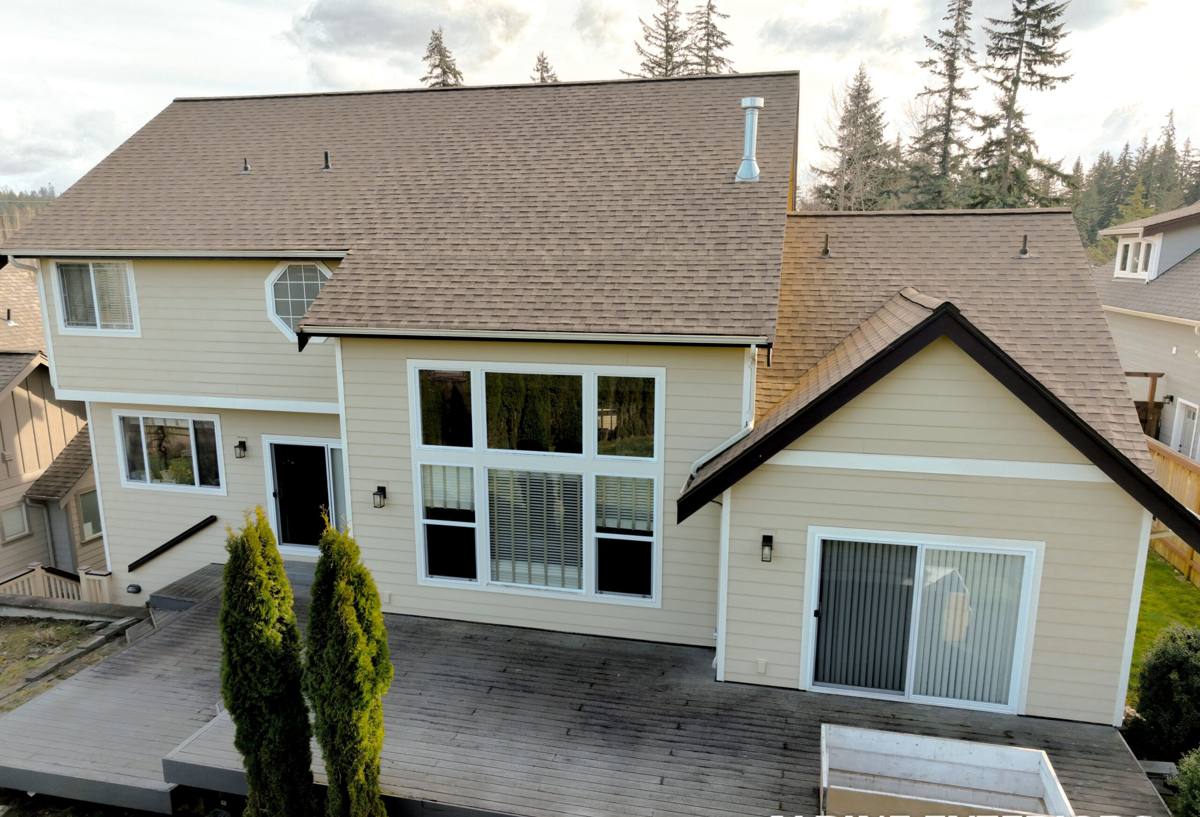
What Edison's Climate Actually Does to Siding
Salt Air and Coastal Moisture
Homes within a few miles of Samish Bay and the Chuckanut shoreline see airborne salt settle on exterior surfaces even when there's no visible spray. Over time that salt accelerates corrosion on fasteners, trim flashing, and any metal components in the siding assembly. It also draws moisture, keeping wall surfaces damp longer after a storm than they would be a few miles inland. Siding and hardware that aren't rated for coastal exposure show pitting, staining, and premature wear years before an equivalent inland installation would.
Driving Rain Off the Water
Rain in this part of Whatcom County rarely falls straight down. Wind off the water pushes it sideways into wall assemblies, which means the weather-resistive barrier, flashing details, and siding laps behind the visible surface matter as much as the siding itself. A wall that looks fine from the curb can still be taking on water at every window head, butt joint, and penetration if those details were rushed.
Moss and Prolonged Dampness
Shade from surrounding trees plus consistently high humidity gives moss and algae a long growing season on north- and west-facing walls in particular. Wood-based sidings give moss something to root into over time; fiber cement gives it nothing to feed on, which keeps cleaning to a simple rinse rather than a structural concern.
Why Product Choice Is the First Decision, Not an Afterthought
A lot of siding problems we get called out to inspect in this area trace back to a product that was never suited to this climate in the first place, installed correctly or not. That's why we standardized on James Hardie fiber cement rather than offering a menu of options. It's engineered specifically for wet Pacific Northwest exposure, factory-finished so the color and moisture protection are baked in rather than applied on site, and backed by a transferable warranty that matters if the home changes hands.
| Factor | What It Means in Edison's Climate |
|---|---|
| Moisture resistance | Fiber cement doesn't swell, warp, or rot from prolonged wall dampness the way wood-based sidings can |
| Salt air durability | Factory ColorPlus finish resists chalking and fading from salt and UV exposure better than field-applied paint |
| Moss and algae resistance | Non-organic material gives growth nothing to root into; surface staining rinses off rather than embedding |
| Fire performance | Non-combustible material, a meaningful consideration during dry summer stretches |
| Long-term cost | Higher upfront than vinyl, but fewer repaint and repair cycles over a 20-30 year window |
What a Correct Installation Involves Here
The siding panel is one layer of a larger system. On a coastal Whatcom County home, we pay particular attention to:
- A continuous, correctly lapped weather-resistive barrier behind the siding, with all seams and penetrations sealed before panels go up
- Corrosion-resistant, coastal-rated fasteners driven to Hardie's exact spec — under- or over-driven nails are one of the most common causes of early failure we see
- Proper flashing at every window, door, and roof-to-wall intersection, since these are the points where driving rain finds its way in
- Correct panel gapping and caulking at butt joints, sized to allow for expansion without opening a path for wind-driven rain
- Adequate clearance between the bottom of the siding and grade, decks, and roof lines to keep splash-back moisture off the material
- Ventilation behind the cladding where the wall assembly calls for it, so damp air has somewhere to go instead of sitting against the back of the panel
Skipping any one of these doesn't show up on day one. It shows up two or three winters later as a soft spot, a stain, or a section of siding that's holding water it was never designed to hold.
Our Process for an Edison Siding Installation
1. On-Site Assessment
We walk the property and look specifically for the failure patterns common to this area: rot at grade level, moss buildup on shaded walls, flashing gaps at window heads, and any signs of past moisture intrusion behind the existing siding.
2. Removal and Wall Inspection
Once the old siding comes off, we inspect the sheathing and framing underneath. This is the point where hidden moisture damage from years of driving rain typically surfaces, and it needs to be addressed before any new material goes up.
3. Weather Barrier and Flashing
We install or repair the weather-resistive barrier and flashing system first, treating it as the primary defense against Edison's rain exposure rather than a formality behind the siding.
4. Hardie Panel Installation
Panels, fasteners, and joint treatment follow James Hardie's installation specifications exactly, adjusted for the coastal exposure this home sees — including fastener selection and clearance details.
5. Final Walkthrough
We check laps, caulking, trim, and clearances before calling the job finished, and go over basic care with the homeowner, including simple seasonal rinsing to keep moss and salt film from building up.
Why a Local Crew Matters More Here Than It Sounds
Siding installation isn't identical from town to town along this coastline. A crew that mainly works drier inland neighborhoods can install a technically fine product with details that don't account for driving rain off the water or the salt film that settles on everything near the bay. A crew that already works Edison and the surrounding Chuckanut area knows which walls take the worst weather, where moss tends to establish first, and which flashing and clearance details actually get tested by this specific climate rather than a textbook one. That local pattern recognition is what keeps small oversights from becoming callbacks.
Maintenance Expectations After Installation
James Hardie siding installed correctly in this climate is low-maintenance, not no-maintenance. Homeowners should expect to:
- Rinse siding periodically, particularly on shaded or north-facing walls where moss and algae are most likely to appear
- Inspect caulking at joints and trim every year or two, since UV and salt exposure will eventually wear sealant faster here than inland
- Keep vegetation trimmed back from walls to maintain airflow and reduce the damp, shaded conditions moss prefers
- Watch for any staining or discoloration near ground level, which can signal splash-back moisture that needs a grading or drainage fix rather than a siding fix
Cost Factors for an Edison Siding Project
Every home is different, but the main variables that move the price of a fiber cement siding installation in this area are worth understanding before you get a quote:
| Factor | Why It Affects Cost |
|---|---|
| Existing wall condition | Hidden rot or moisture damage found during removal adds repair scope before new siding can go up |
| Home size and complexity | More corners, window openings, and roof intersections mean more flashing and trim detail work |
| Siding profile and finish | Lap width, texture, and ColorPlus finish selection affect material cost |
| Access and site conditions | Tree cover, slope, and setback affect staging and labor time |
| Trim and detail scope | Corner boards, fascia, and accent trim add material and labor beyond the field siding itself |
We'll walk the property and give you a real number based on what your home actually needs — not a generic per-square-foot estimate that ignores the condition of what's underneath the existing siding.
If you're planning a siding project in Edison or elsewhere around Chuckanut, we'll come take a look and give you a straightforward, no-pressure estimate based on what your home actually needs. There's a form below to get started.