 Chuckanut Exterior
 Roofing in Edison: A Different Set of Rules
Homes around Edison sit close enough to the water and the tree line that they take a different kind of beating than a roof twenty miles inland. Salt-laden air moves through on the wind, driving rain gets pushed sideways under laps and around flashing, and the shade from surrounding evergreens keeps roof surfaces damp long after a storm has passed. None of that is dramatic on its own, but stacked together over years, it shortens the life of a roof that wasn't built for this specific combination of conditions.
A roof replacement done right here isn't just "put new shingles on." It's a set of material and installation decisions that account for corrosion, wind-driven moisture, and the moss and lichen that thrive in this climate. That's the lens we use on every Edison roof replacement, and it's what this page walks through.
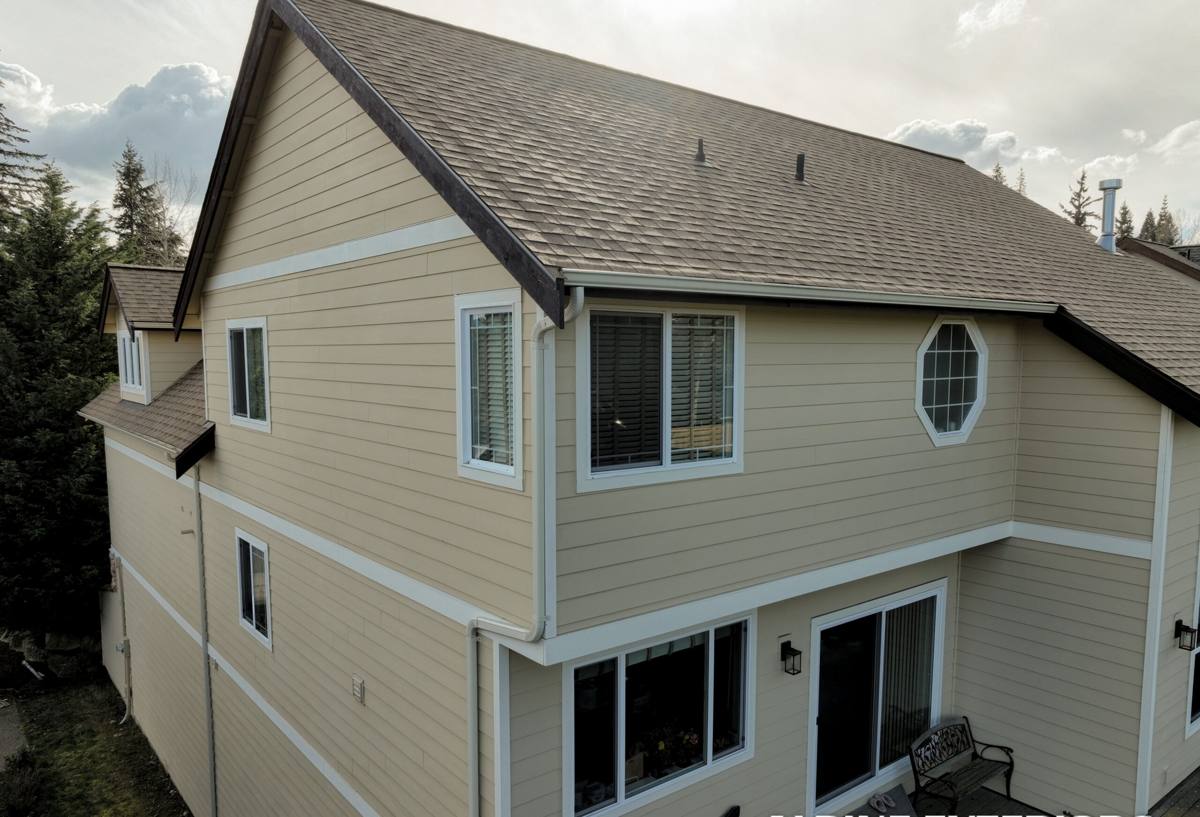
Why the Local Climate Is Hard on a Roof
Salt Air and Metal Fatigue
Salt in the air accelerates corrosion on anything metal a roof depends on — nails, flashing, valley metal, drip edge, gutter hangers. A fastener or flashing piece that would last decades in a dry inland climate can start rusting and weakening well ahead of schedule here. Once a fastener corrodes, it loses its grip and shingles start to lift; once flashing corrodes, water finds a way behind it. This is one of the most common causes of a roof failing early in coastal Whatcom County, and it's almost entirely preventable with the right material choices at install time.
Driving Rain, Not Just Rainfall
Standard vertical-rain roofing assumptions don't hold up well when storms push in off the water with real wind behind them. Wind-driven rain can work its way up and under shingle laps, around chimney and skylight flashing, and into valleys that a calmer rain would never reach. Roofs here need underlayment coverage and flashing details built for rain that isn't just falling — it's being pushed.
A Long Moss Season
Shade, moisture, and mild temperatures add up to a moss and algae season that runs much longer here than in drier parts of the state. Moss doesn't just look bad — it holds water against the roofing surface, works its way under shingle tabs as it grows, and can lift edges enough to let water in underneath. Left unaddressed for a few seasons, moss growth becomes a genuine driver of premature roof replacement rather than just a cosmetic nuisance.
Signs an Edison Roof Is Due for Replacement
Not every roof problem means a full replacement — plenty of issues are repairable. But certain signs mean the roofing system as a whole has reached the end of its useful life, and patching would just be delaying an inevitable, more expensive failure.
- Moss or lichen established across large sections of the roof, not just the shaded north side
- Granules collecting in gutters and downspouts, or shingles that look bald and patchy
- Shingle edges curling, cracking, or lifting, especially after windy, wet weather
- Rust staining running down from flashing, vent boots, or valley metal
- Soft or spongy spots when walking the roof, which usually means deck damage underneath
- Daylight visible through the roof deck from inside the attic
- Leaks that only show up during storms with strong wind, not steady rain
- A roof approaching or past the manufacturer's expected lifespan for this climate
If your home is showing two or more of these, it's worth a proper inspection before another wet season passes.
What a Correct Roof Replacement Actually Involves
A roof replacement is more than swapping old shingles for new ones on top of the same deck and details. Done correctly for this climate, it includes:
Full Tear-Off and Deck Inspection
We remove the old roofing down to the deck rather than layering over it. This is the only way to actually see the condition of the sheathing — moss and moisture retention can cause rot that isn't visible from above, and any soft or damaged decking gets replaced before new roofing goes down. Roofing over hidden deck damage just buries the problem under a new warranty period.
Underlayment Built for Wind-Driven Rain
We use synthetic underlayment across the full roof, with self-adhering ice-and-water membrane at the eaves, valleys, and around every penetration — the spots most likely to take on wind-driven moisture. This layer is what protects the deck even if wind ever pushes water past the shingle surface.
Flashing and Fasteners Chosen for Salt Air
Where a roof twenty miles inland might get standard galvanized components, we lean toward corrosion-resistant flashing and fastener options for homes closer to the water — the small material upgrade that avoids the early rust-driven failures common in this area.
Ventilation That Balances Intake and Exhaust
A roof that traps moisture underneath is a roof that rots from the inside regardless of how good the shingles are. We check and correct attic ventilation as part of every replacement, not as an afterthought.
Moss-Resistant Roofing Where It Makes Sense
On shaded lots, we'll talk through algae-resistant shingle options and, where appropriate, zinc or copper strips near the ridge that help slow future moss growth as rain washes trace amounts of metal down the roof surface over time.
Choosing the Right Roofing Material for This Climate
There isn't one "best" roofing material for every home — it depends on your budget, your roof's exposure to shade and wind, and how long you want to go between maintenance. Here's how the common options stack up for a coastal, moss-prone property like the ones around Edison.
| Material | Salt-Air Corrosion Resistance | Moss/Algae Resistance | Wind Performance | Typical Maintenance |
|---|---|---|---|---|
| Architectural asphalt shingle (algae-resistant) | Good, with corrosion-resistant fasteners and flashing | Good — resists staining, still benefits from periodic cleaning | Strong when rated and installed for high-wind exposure | Low to moderate |
| Standing seam metal | Very good with the right coating and finish | Very good — moss struggles to hold on smooth metal | Excellent | Low |
| Cedar shake | Fair — depends heavily on upkeep | Poor without regular treatment; moss and moisture are a real ongoing concern | Fair to good depending on install | High |
We're upfront about trade-offs. Cedar shake has real appeal, but its natural texture holds moisture and gives moss something to grip, which means it demands more upkeep in a climate like this than either asphalt or metal. That's a maintenance conversation we'll have honestly, not a sales pitch either direction.
Our Process, Start to Finish
- Inspection and honest assessment — we walk the roof, check the attic, and tell you plainly whether you need a replacement or just repairs
- Written estimate — clear scope, materials, and timeline, no vague allowances
- Material selection — we walk through options suited to your home's sun exposure, tree cover, and budget
- Tear-off and deck repair — old roofing removed, deck inspected, any damaged sheathing replaced
- Underlayment, flashing, and ventilation — installed to the standards this climate actually requires
- New roofing installed — with attention to the details that matter most here: laps, valleys, penetrations, and edges
- Cleanup and final walkthrough — magnetic sweep for debris, gutters checked, and a walkthrough so you know exactly what was done
What Drives the Cost of a Roof Replacement
Every roof is different, so we won't quote a number without seeing yours, but the main cost factors are consistent from home to home:
| Factor | Why It Matters |
|---|---|
| Roof size and complexity | More valleys, dormers, and penetrations mean more flashing detail and labor |
| Deck condition | Rot or soft decking found during tear-off adds material and labor to repair before new roofing goes on |
| Material choice | Asphalt, metal, and cedar carry different upfront costs and different long-term maintenance costs |
| Roof pitch and access | Steeper or harder-to-access roofs take more time and safety setup |
| Ventilation and flashing upgrades | Correcting inadequate ventilation or outdated flashing during the replacement is more cost-effective than doing it later |
Why It Matters That We Already Work in Edison
A roofing crew that only shows up in this area occasionally is guessing at conditions a local crew already knows. We've seen how quickly moss re-establishes on shaded roofs here, which flashing details actually hold up to wind-driven rain off the water, and where salt air tends to cause the earliest fastener corrosion. That local pattern recognition shows up in the material choices and installation details on every job — it's the difference between a roof that's built to the manufacturer's minimum spec and one that's built for what this specific stretch of Whatcom County actually throws at it.
It also means straightforward scheduling and accountability. We're not driving in from out of the area for one job and disappearing — if a question comes up after the install, we're a local call, not a search for a number online.
Get a Free, No-Pressure Estimate
If your roof is showing its age, dealing with heavy moss, or you just want an honest opinion on how much life it has left, we're happy to take a look. Fill out the form below for a free estimate on your Edison-area roof replacement — no pressure, no obligation, just a straight answer about what your roof needs.