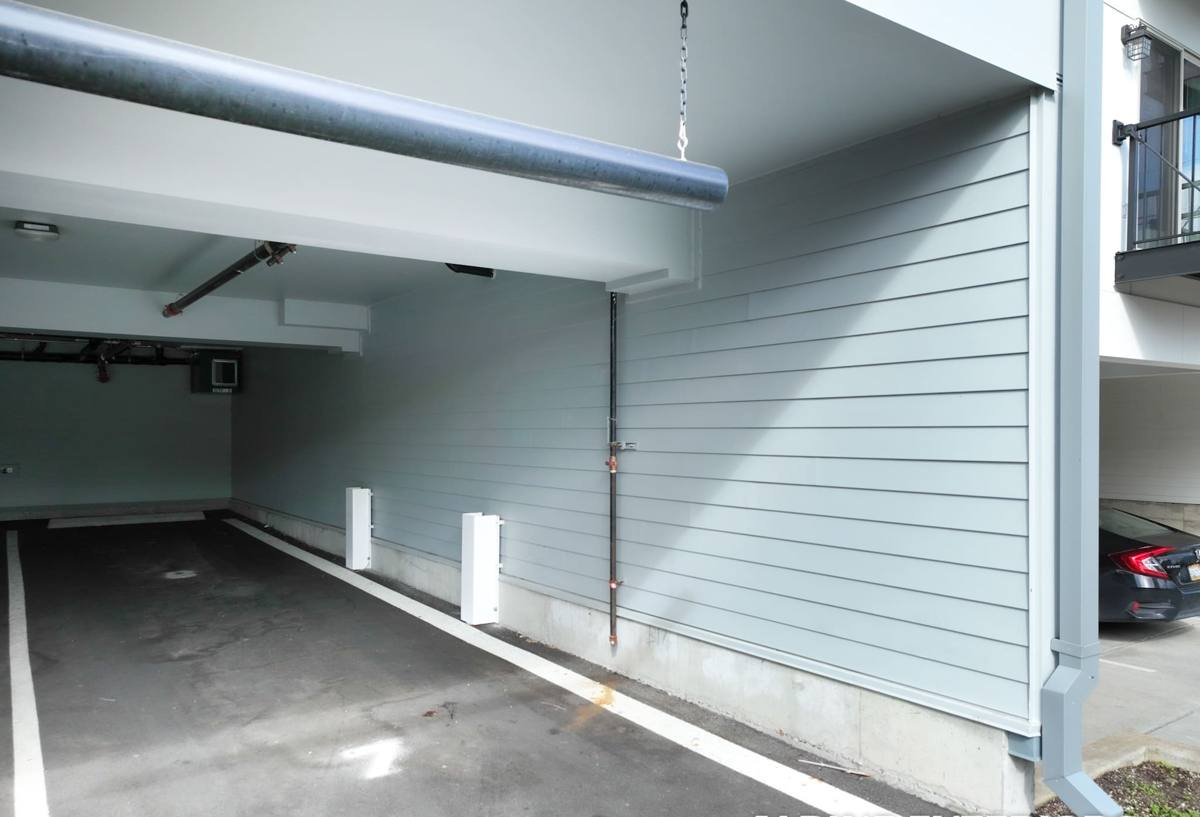
 Chuckanut Exterior
 Building New in Edison? The Windows Are Where the Job Gets Won or Lost
When you're framing a new home near Edison, the window package is one of the few decisions that affects everything else — energy bills for the next thirty years, how the walls perform in a storm, and whether you're calling a contractor back in five years about a soft spot under a sill. New construction gives you one real advantage over a remodel: you get to build the water management right the first time, before siding and trim cover it up. That's worth taking seriously, especially this close to the water.
Edison sits in a stretch of Northwest Washington where the weather comes off the water and doesn't let up for months at a time. Any crew installing windows on a new build here needs to think about salt exposure, wind-driven rain, and a moss season that can run from October into April. This page is about what that actually means for a new-construction window job — the products, the installation details, and the process — not a general primer on windows.
What Edison's Climate Actually Demands From a Window Installation
Salt Air and Corrosion
Homes near Chuckanut and the surrounding shoreline sit in a marine air zone. Salt-laden air accelerates corrosion on unprotected fasteners, cheap hardware, and lower-grade aluminum components. It's not dramatic — you won't see damage in year one — but over a decade it shows up as pitted hardware, stiff or seized operators, and finishes that chalk and fail early. New construction is the right time to spec corrosion-resistant fasteners and hardware from the start, because retrofitting that later means pulling trim and siding again.
Wind-Driven, Not Just Vertical, Rain
Rain in this area rarely falls straight down. Storms push moisture sideways and up under sills, which is exactly the condition standard flashing details are designed to fail on if they're not done carefully. A window that's watertight in a lab test can still leak on a real Edison building if the sill pan, head flashing, and weather-resistive barrier (WRB) laps aren't sequenced correctly. This is an installation issue more than a product issue — even a premium window leaks if it's flashed wrong.
A Long Moss and Mildew Season
Persistent damp, shade from mature trees common around Edison properties, and mild winter temperatures add up to a long window each year where moss, algae, and mildew can take hold on any horizontal or textured surface that stays wet. Window sills, exterior trim, and the tops of window heads are all exposed to this. Material choice and detailing around the window opening matter here — not just the window unit itself.
New Construction vs. Replacement: Why This Job Is Different
A lot of homeowners assume window installation is window installation. On a new build it's a different job entirely from a retrofit, and it should be priced and planned differently.
- You control the rough opening. Framers can build to the window manufacturer's exact rough opening specs, which means fewer shims, fewer gaps, and a tighter seal without compromise.
- Flashing goes in before finish materials. Sill pans, WRB integration, and head flashing all happen while the wall is open — there's no cutting into finished siding or patching drywall to fix a mistake later.
- Nailing-fin windows are the standard choice. New construction typically uses nail-fin (flanged) windows that integrate directly with the WRB, rather than block-frame windows designed for retrofit into an existing opening.
- Sequencing with other trades matters. Window installation has to line up with the framer, the WRB/house-wrap crew, and siding — get the order wrong and you create a warranty gap nobody wants to own.
The upside is real: done correctly, a new-construction window installation should outperform a retrofit for decades, because the water management is continuous and unbroken rather than patched around an existing structure.
Getting the Envelope Right: Flashing and WRB Integration
This is the part of the job that never shows once the house is finished — and the part most likely to determine whether you have a dry wall assembly in fifteen years. A correct sequence, generally, looks like this:
- Rough opening framed square, plumb, and to the window manufacturer's specified dimensions.
- Sill pan flashing installed with a slight outward slope so any water that gets past the window drains back outside the wall, not into the framing.
- WRB (house wrap) lapped correctly at the sides and integrated with the sill pan before the window goes in — water needs a continuous path down and out, with no reverse laps.
- Window set, leveled, and fastened per manufacturer instructions, with shims at load-bearing points only.
- Head flashing installed over the window and lapped under the WRB above it, so water sheds over the top rather than behind it.
- Fin taped or sealed to the WRB on the sides and top, with the sill left to drain rather than fully sealed.
Every one of those steps is inspectable while the wall is open. Once siding goes on, you're trusting whoever did this work. That's a good reason to see a crew's flashing details before the framing gets covered, not after.
Choosing Window Materials for a Marine Climate
There's no single "best" window material — the right choice depends on budget, maintenance tolerance, and how close the home sits to salt air and driving rain. Here's how the common options actually compare for a build near Edison:
| Material | Salt Air / Moisture Performance | Maintenance | Typical Trade-Off |
|---|---|---|---|
| Vinyl | Good — won't corrode or rot; UV-stable formulations hold color well | Low — occasional cleaning | Frame profiles are thicker; limited color range on some lines |
| Fiberglass | Excellent — very stable in temperature swings and moisture, resists warping | Low | Higher upfront cost than vinyl |
| Wood-clad (exterior clad, wood interior) | Good on the exterior clad surface, but any breach in the cladding exposes wood to rot in this climate | Moderate — cladding seams and sealant joints need periodic checks | Best appearance for some styles; more installation sensitivity around flashing |
| Aluminum | Fair — prone to condensation and thermal transfer unless thermally broken; can corrode without proper coating near salt air | Moderate | Slim sightlines, but a poor fit for this specific climate unless upgraded hardware/coatings are specified |
For most new builds near Edison, we steer homeowners toward vinyl or fiberglass for anything on the weather-exposed sides of the house, and reserve wood-clad for protected elevations where a homeowner wants that look and understands the added maintenance. We don't push aluminum-frame windows on this coastline as a standard recommendation — not because it's a bad product everywhere, but because thermal performance and long-term corrosion resistance in salt air make it a harder sell here without significant upgrades that usually erase any cost advantage.
Glass Package Matters Too
Beyond the frame, ask about the glass package: low-E coatings, argon or krypton gas fill, and the number of panes all affect both energy performance and condensation resistance — which matters in a climate with this much ambient humidity. A window with a strong frame and a weak glass package will still fog or perform poorly in our winters.
Energy Code, U-Factor, and Egress on a New Build
Washington's state energy code sets minimum performance requirements for new-construction windows, typically expressed as a maximum U-factor (how much heat the window loses) and, on some projects, a solar heat gain coefficient target. Your specific requirement depends on the compliance path your builder or designer chose for the whole house, so this needs to be coordinated with your general contractor or building department early — not decided window-by-window after the fact.
Bedrooms also have egress requirements: a minimum clear opening size and a maximum sill height above the finished floor, so occupants can get out and firefighters can get in during an emergency. On new construction this is easy to hit correctly because the rough openings are built to spec from day one — it's a much harder fix on a remodel where an opening is already framed too small.
Our New-Construction Window Process
Here's what we walk through with homeowners and builders on an Edison-area new build:
- Review the plan set and confirm rough opening sizes, egress requirements, and energy code targets before ordering
- Recommend frame material and glass package by elevation — weather-exposed sides get different consideration than protected ones
- Coordinate scheduling with the framer and WRB installer so windows go in at the right point in the build sequence
- Install sill pan flashing, integrate the WRB, and set each window per manufacturer specifications
- Install head flashing and complete fin sealing before siding crews start
- Walk the openings with the builder or homeowner before they're covered, so the flashing work is visible and confirmed
- Provide manufacturer warranty documentation and our own installation records for your files
That inspection step — walking the openings before they're closed up — is worth insisting on with any crew you hire, not just us. It's the only point in the whole project where the water management is actually visible.
Why Hire a Crew That Already Works the Edison Area
Window installation instructions look the same printed on the box whether the house is going up in a dry inland valley or right on this stretch of coastline near Chuckanut. What's different is judgment — knowing which elevations take the worst wind-driven rain, which hardware finishes hold up against salt air over time, and how much drainage capacity a sill detail needs given how long moss season runs here. That judgment comes from working this specific area repeatedly, not from a general contractor's license alone.
It also matters for warranty follow-through. If a flashing detail ever needs a look years down the road, you want a local crew that's still around and familiar with your specific build — not a chase to track down whoever did the original install.
Ready to Talk Through Your Window Package?
If you're planning a new build in or around Edison, we're glad to walk through window material, glass package, and flashing details with you or your builder before anything gets ordered. Reach out for a free, no-pressure estimate — there's a form below to get started.