 Chuckanut Exterior
 Storm Damage Roof Repair for Columbia Homes Near Chuckanut
Columbia sits close enough to the water and the hills around Chuckanut that its roofs take a specific kind of beating: salt-laden air off the bay, wind-driven rain that comes in sideways during winter storms, and a moss season that seems to stretch longer every year. When a storm rolls through Whatcom County, the damage isn't always the dramatic kind. More often it's a lifted shingle tab, a cracked pipe boot, or flashing that got jarred loose and now lets water track under the roof deck for weeks before anyone notices a stain on the ceiling below.
This page is about one job, done right, in one area: storm damage roof repair for homes in and around Columbia. Not a general overview of roofing services — the specific work of assessing what a storm actually did to your roof, repairing it correctly for this climate, and leaving the roof in better shape than it was before the storm hit.
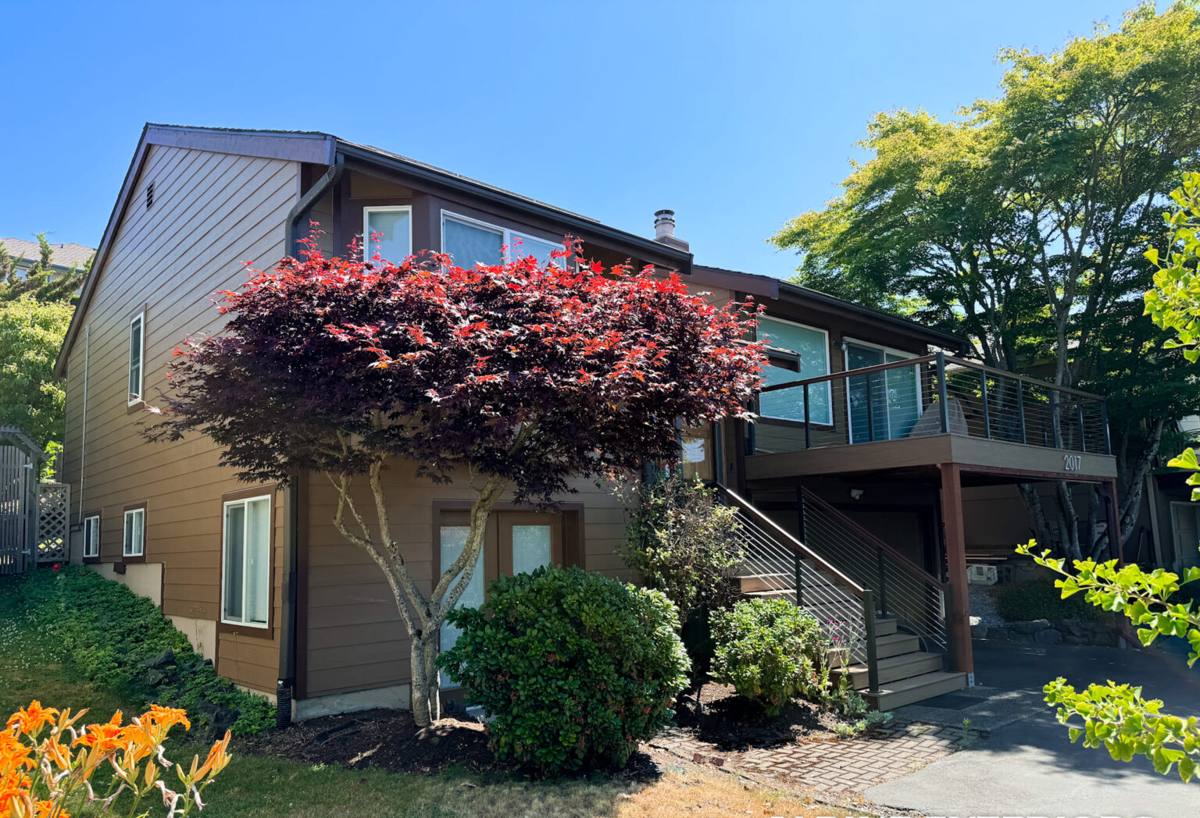
Why Storms Hit Columbia Roofs Differently
Every roof in Whatcom County deals with rain. What makes Columbia's storm exposure worth talking about on its own is the combination of factors working on a roof at the same time.
Salt Air and Metal Fatigue
Proximity to salt water accelerates corrosion on exposed metal — nail heads, flashing seams, gutter fasteners, and the metal drip edge along roof perimeters. A fastener that would hold tight for fifteen years inland can loosen or corrode years earlier this close to the bay. During a windstorm, that's exactly the hardware holding your shingles and flashing in place.
Wind-Driven Rain
Storms coming off the water don't just drop rain straight down — they push it sideways, up under shingle tabs, and into any gap that a calm-weather rain would never reach. A roof can look completely fine from the ground and still be taking on water at a ridge cap, a step-flashing joint, or a skylight curb during a real blow.
A Long Moss Season
Whatcom County's shaded, damp winters give moss a long runway to establish itself on north-facing slopes and anywhere debris collects. Moss holds moisture against the roofing material year-round, and it lifts shingle edges just enough that wind and rain find a foothold they wouldn't otherwise get. A storm often finishes off damage that moss quietly started months earlier.
Signs of Storm Damage Homeowners Often Miss
Most storm damage isn't obvious from the driveway. Some of the most common issues we find during a post-storm inspection in Columbia never show up as a leak until they've been active for a while.
- Granules collecting in gutters or at downspout outlets — a sign shingles took a hard hit or are aging faster than expected
- Lifted or creased shingle tabs, especially on the side of the roof that faces prevailing wind
- Flashing around chimneys, skylights, or wall intersections that's visibly bent, separated, or missing sealant
- Soft spots or sagging in the roof deck, felt underfoot in the attic rather than seen from outside
- Water staining on attic sheathing or insulation that hasn't yet reached the ceiling below
- Moss mats that have shifted or torn loose, taking shingle granules with them
- Debris — branches, needles, gravel from neighboring roofs — wedged at valleys or behind chimneys
If you notice any of these after a storm, it's worth having it looked at before the next system moves through. Small entry points get bigger fast under repeated wind and rain.
What a Correct Storm Damage Repair Involves
A repair that actually holds up in this climate is more than swapping out a few shingles. It has to account for the same salt air, wind, and moisture that caused the damage in the first place.
Emergency Mitigation First
If a roof is actively taking on water, the first priority is stopping further intrusion — tarping exposed areas, clearing blocked drainage, and securing anything loose that could blow off in a follow-up storm. This buys time to do the actual repair correctly instead of rushing it.
Full Inspection, Not Just the Obvious Spot
Storm damage rarely stays confined to one shingle. A proper inspection covers the whole roof plane, the flashing details, the attic side of the deck, and the gutter system — because wind damage on one slope is often a sign the whole roof took stress, even if only one area failed first.
Matching Materials and Fastening Method
Replacement shingles and flashing should match the existing roof in type, weight, and color as closely as possible, and fasteners should be corrosion-resistant given the salt exposure. Using the wrong fastener here is a false economy — it just moves the next repair up by a few years.
Flashing and Underlayment Details
Most storm-related leaks trace back to flashing, not the shingle field itself. Step flashing, valley metal, and pipe boot seals get rebuilt to shed wind-driven rain, not just vertical rainfall. Where underlayment was compromised, it gets replaced rather than patched over.
Ventilation Check
Storm repair is also a good moment to confirm attic ventilation is working. Poor airflow traps moisture that accelerates deck rot and moss growth, which sets the roof up for the next storm cycle to cause damage again in the same spot.
Our Process, Start to Finish
We keep the process straightforward because homeowners dealing with storm damage usually have enough else on their plate.
- Assessment call: a short conversation about what happened and what you're seeing — a leak, missing shingles, debris on the roof, etc.
- On-site inspection: we walk the roof and the attic, photograph the damage, and identify both the storm-caused issue and any pre-existing wear that contributed to it.
- Written scope and estimate: a clear explanation of what needs repair, why, and what it will cost — no pressure to upsell into a full replacement if a repair is the honest answer.
- Repair work: scheduled promptly, with materials matched to your existing roof and fastening appropriate for this coastal climate.
- Final walkthrough: we show you what was done and what to watch for going forward, including any maintenance that would help prevent a repeat.
Repair or Replace? Weighing the Factors
Not every storm-damaged roof needs a full replacement, but some do. The honest answer depends on a few concrete factors, not a sales target.
| Factor | Favors Repair | Favors Replacement |
|---|---|---|
| Age of roof | Under 12-15 years, otherwise sound | Near or past expected service life |
| Extent of damage | Isolated to one area or a few components | Widespread across multiple slopes |
| Deck condition | Solid, no soft spots found | Rot or repeated soft spots at multiple locations |
| Moss/moisture history | Minor, manageable with cleaning | Long-term moss damage under the roofing material |
| Prior repairs | Few, roof otherwise performing well | Multiple past patch jobs stacking up |
When repair is the right call, we say so. When the damage or the roof's overall condition points toward replacement, we'll explain exactly why rather than just quoting the bigger job.
Insurance Claims and Documentation
Many storm repairs in Whatcom County end up going through homeowners insurance, especially after a named windstorm event. A few things make that process smoother:
- Photograph any visible damage as soon as it's safe to do so, before cleanup or tarping changes what's on the roof
- Keep a written record of the storm date and what prompted the inspection request
- Ask for a detailed, itemized estimate rather than a lump-sum quote — adjusters respond better to specifics
- Have the inspection report note both storm-caused damage and pre-existing conditions separately, since insurers distinguish between the two
We can provide documentation from our inspection to support a claim, though the claim itself is between you and your insurer.
Why a Crew That Already Works Columbia Matters
Roofing crews who work this specific stretch of Whatcom County regularly know what's normal wear versus what's storm damage on this exposure, because they've seen the pattern before on roofs facing the same wind and salt conditions. That familiarity shows up in small but real ways: knowing which fastener grade actually holds up here, recognizing moss patterns that predict future leak points, and having a realistic sense of how fast a follow-up storm might arrive so repairs get prioritized correctly. It also means a faster response — a local crew isn't driving in from across the county when a tarp needs to go up before the next system rolls through.
Keeping a Repaired Roof Storm-Ready
Once storm damage is repaired, a bit of regular upkeep goes a long way toward keeping the next storm from causing the same problem twice.
- Clear gutters and downspouts before the wet season sets in, so wind-driven rain has somewhere to go
- Have moss treated or removed before it establishes on shaded slopes, rather than after it's lifted shingles
- Check flashing and sealant at chimneys and skylights annually — these are the first points to fail again
- Trim back overhanging branches that drop debris into valleys and behind chimneys during wind events
- Schedule a quick inspection after any storm with sustained high winds, even if nothing looks obviously wrong
If a recent storm has left you with a leak, missing shingles, or just a nagging feeling you should get the roof checked, we're happy to take a look. Fill out the form below for a free, no-pressure estimate — we'll tell you honestly what we find and what it would take to fix it right.