 Chuckanut Exterior
 Siding Replacement Built for Columbia's Weather, Not Against It
Homes in the Columbia area face a combination most siding products were never designed to handle for the long haul: salt-laden air drifting in off the water, driving rain that hits walls sideways during winter storms, and a moss season that can stretch from October well into spring. If your siding is original to the house or getting close to the end of its service life, a replacement done right isn't just a cosmetic upgrade — it's the difference between a wall assembly that sheds water and one that slowly traps it.
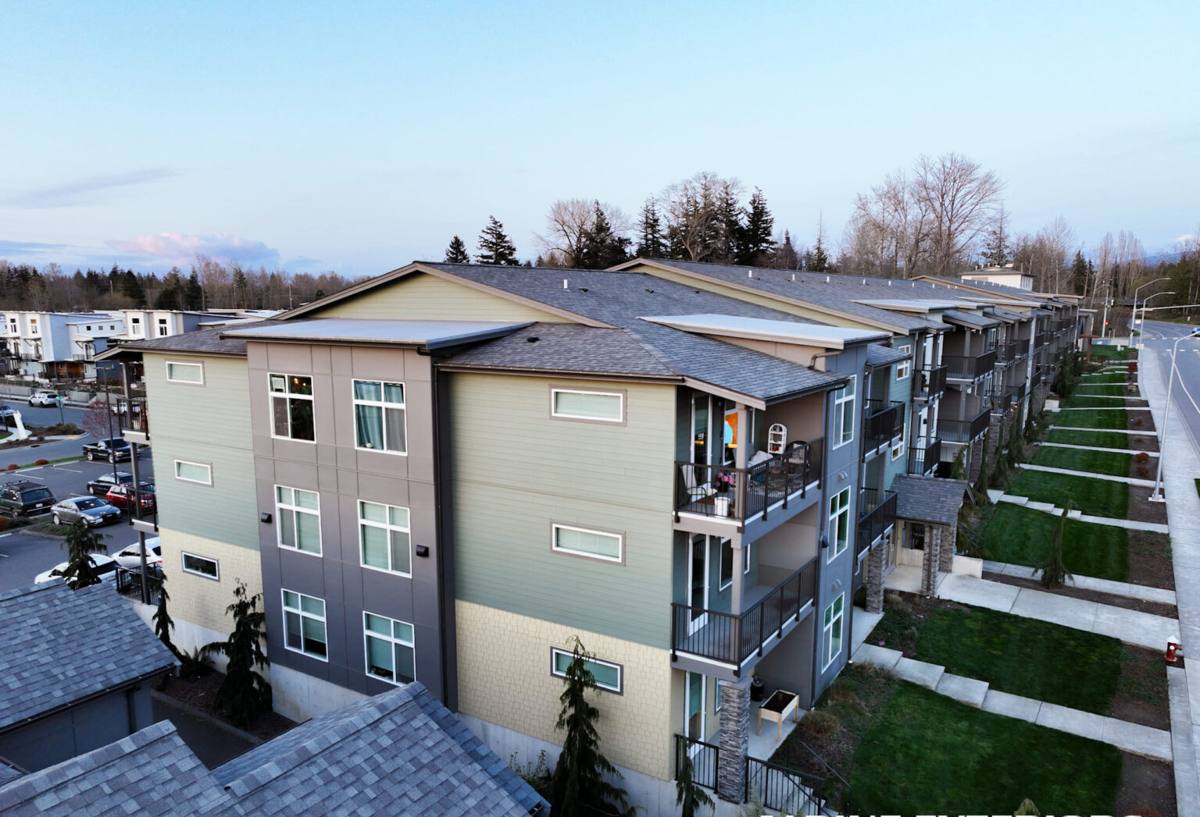
We work on homes throughout Chuckanut and the surrounding Whatcom County neighborhoods, and Columbia's mix of mature tree cover, coastal proximity, and older housing stock means we see the same failure patterns again and again. This page walks through what that climate actually does to siding, what a correctly executed replacement involves, and why the crew doing the work matters as much as the material they're installing.
What Chuckanut's Climate Does to Siding Over Time
Salt Air and Coastal Exposure
Even homes set back from the water pick up airborne salt in this part of Whatcom County, especially on west- and south-facing walls that catch prevailing weather. Salt is hygroscopic — it pulls moisture out of the air and holds it against the siding surface longer than plain rain would. Over years, that constant low-grade dampness accelerates paint failure, corrodes exposed fasteners, and softens any wood-based product that isn't fully sealed on every cut edge.
Driving Rain and Wind-Driven Moisture
Chuckanut doesn't just get a lot of rain — it gets rain pushed sideways by wind off the water, which means moisture is driven up under laps, into seams, and behind trim in ways that vertical-only rain never would. Siding systems that rely on caulk and paint film as their primary defense, rather than a properly lapped and flashed drainage plane, tend to fail first at these pressure points: butt joints, window returns, and inside corners.
Moss, Shade, and Long Wet Seasons
Mature tree canopy is common on Columbia lots, and shaded, north-facing walls stay damp far longer after a storm than sun-exposed ones. That extended dampness is exactly what moss and mildew need to establish. On porous or wood-based siding, moss roots into the surface and holds moisture against it around the clock; on a properly finished fiber cement product, it stays on the surface where a simple wash removes it without damaging the substrate underneath.
Signs Your Columbia Home Needs Replacement, Not Just Repair
Not every siding problem calls for a full replacement, but certain signs mean patching is just delaying the inevitable — and often costing more in the long run than doing the job once, correctly.
- Soft, spongy, or crumbling spots when you press on the siding, especially near the bottom courses and around windows
- Paint that keeps failing within a year or two of repainting, even on surfaces that were properly prepped
- Visible gaps, warping, or cupping boards that no longer sit flat against the wall
- Persistent moss or dark streaking that returns within months of cleaning
- Soft or discolored sheathing visible when a board is pulled or a repair is opened up
- Rising energy bills alongside drafts you can feel near exterior walls
- Siding style or color that's been discontinued, making spot repairs visibly mismatched
If you're seeing two or more of these at once, it's usually a sign the water-management layer behind the siding — not just the visible boards — has been compromised.
Why We Install Only James Hardie Fiber Cement Siding
We made a deliberate decision to install one siding system, on every home, in every neighborhood we serve — James Hardie fiber cement. It's not the only siding product on the market, but for a climate like ours it's the one we're willing to stand behind. Fiber cement doesn't absorb water the way engineered wood products can, it doesn't require the vinyl-specific gapping and expansion allowances that lead to buckling in temperature swings, and it's non-combustible, which matters more each year as wildfire smoke and ember exposure become a regional concern even here in the Pacific Northwest.
Hardie's ColorPlus factory finish is baked on under controlled conditions rather than field-applied, which gives it far better adhesion and UV resistance than a site-painted board — a real advantage on the shaded, damp walls common around Columbia. And Hardie engineers specific product lines (their HZ10 formulation) for wetter, more humid climate zones like ours, which is a level of climate-specific engineering most competing products simply don't offer.
What Correct Siding Replacement Involves
Tear-Off and Structural Inspection
Replacement starts with full removal of the old siding, not installation over it. That's the only way to actually see the sheathing, framing, and existing water barrier underneath. On older Columbia homes, this step frequently uncovers soft sheathing or old trapped moisture that a simple re-side would have sealed in rather than fixed.
Weather-Resistive Barrier and Drainage Plane
Behind every new install, we install a continuous weather-resistive barrier with a drainage gap so any moisture that does get past the siding has somewhere to go besides your sheathing. This is the single biggest factor in how a wall performs against driving rain, and it's invisible once the job is finished — which is exactly why it matters who's doing the work.
Flashing and Trim Details
Windows, doors, and roof-to-wall transitions are where most siding failures actually start. Correct flashing — proper laps, kick-out flashing at roof lines, and head flashing over every window and door — keeps wind-driven rain from ever reaching the barrier in the first place.
Fastening and Installation to Manufacturer Spec
Hardie siding has specific nailing patterns, gapping, and clearance requirements that vary by climate zone and exposure. Installing it correctly protects the product warranty and, more importantly, protects the wall assembly from the kind of movement and moisture intrusion that shortens a siding job's real lifespan.
Our Process for Columbia Siding Replacement Projects
- Walkthrough and assessment — we inspect current siding, trim, and any visible moisture damage, and talk through what we find in plain language.
- Written estimate — a clear scope covering tear-off, barrier and flashing work, materials, and finish details, with no vague allowances.
- Material selection — choosing the Hardie plank profile, texture, and ColorPlus finish that fits the home and the street.
- Tear-off and inspection — full removal, with any sheathing or framing issues flagged and reviewed with you before covering them back up.
- Barrier, flashing, and installation — the weather-resistive barrier, drainage plane, flashing, and Hardie siding installed to manufacturer spec.
- Final walkthrough — a joint review of the finished work, trim lines, and site cleanup before we consider the job done.
Cost Factors for Columbia Siding Replacement
Every home is different, but the factors that move the price on a Columbia siding replacement tend to fall into a consistent set of categories.
| Factor | Why It Matters Here |
|---|---|
| Extent of tear-off and disposal | Layers of old siding or trim add labor and haul-away costs |
| Sheathing or framing repair | Moisture damage found during tear-off must be fixed before new siding goes on |
| Home size and wall complexity | Dormers, gables, and multiple stories increase both material and labor time |
| Siding profile and finish | Lap width, texture, and ColorPlus color selection affect material pricing |
| Trim and flashing scope | Full trim replacement and proper flashing add cost but protect the investment |
| Site access | Shaded, sloped, or tree-crowded lots common in Columbia can affect staging and crew time |
Why Hiring a Crew That Already Works in Columbia Matters
A siding installer who hasn't worked this specific stretch of Whatcom County can still do competent work in general, but they're guessing at things a local crew already knows: which walls take the worst of the wind-driven rain, how much shade a given lot actually holds through the winter, and how aggressively moss needs to be managed on north-facing sections. We adjust flashing details, ventilation, and even siding color and texture recommendations based on patterns we've seen play out on homes in this exact area over time. That local pattern recognition is the kind of thing that doesn't show up in a spec sheet, but it shows up in how the siding performs five and ten years down the road.
Get a Straight Answer About Your Siding
If your siding is showing wear, or you're just planning ahead, we're happy to take a look and give you an honest read on what your home actually needs — no pressure, no upsell. Use the form below to request a free estimate for siding replacement on your Columbia home.