 Chuckanut Exterior
 Why Siding in Columbia Takes a Different Kind of Beating
Columbia sits close enough to open water and the marine layer that comes with it to put its homes in a different category than siding a few miles inland. The combination that does the damage here is specific: salt-laden air that accelerates corrosion of fasteners and trim, driving rain that comes in sideways during winter storms rather than falling straight down, and a moss and algae season that runs long because the shade, moisture, and mild temperatures never really let a wall dry out completely. Any one of those on its own is manageable. Together, over years, they find every weak seam, every under-caulked joint, and every piece of siding that wasn't installed quite to spec in the first place.
We've repaired enough siding in and around Columbia to see the pattern repeat: damage rarely shows up where you'd expect it first look. It shows up at the bottom courses near grade, around window and door trim, at inside corners where wind-driven rain pools, and on the north and west-facing walls that stay damp longest. Understanding that pattern is most of what separates a repair that actually holds from one that fails again in two winters.
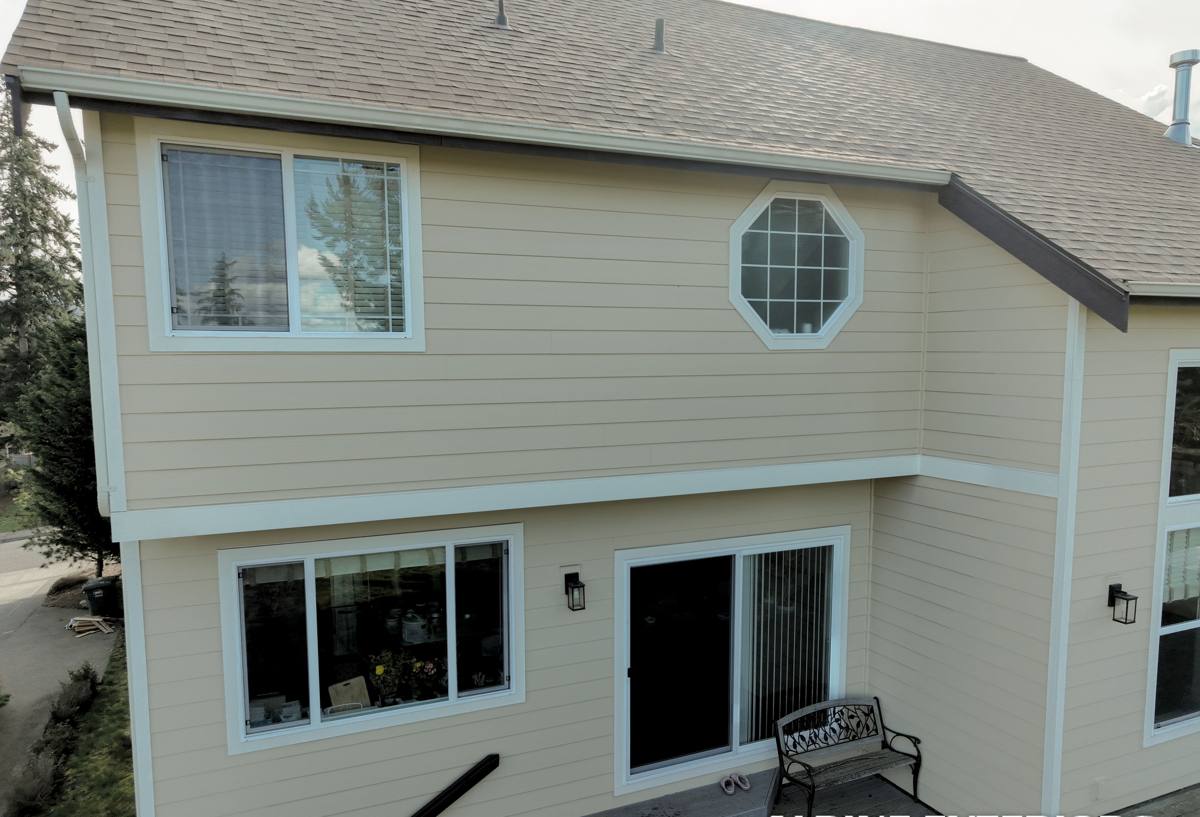
Signs Your Siding Needs Repair, Not Just Cleaning
Early Warning Signs
Most siding problems in this area start small and quiet. Watch for these before they turn into something bigger:
- Persistent dark streaking or green-black moss growth that comes back within weeks of cleaning
- Soft or spongy spots when you press on the siding, especially near the bottom few feet
- Paint that's bubbling, peeling, or chalking unevenly in patches rather than across the whole wall
- Visible gaps opening up at seams, corners, or where siding meets trim, window frames, or the foundation
- Nail heads popping out or rust stains bleeding down from fastener points
- A musty smell near an exterior wall on the inside of the house
When It's Gone Past the Surface
By the time you see visible cracking, warped or bowed panels, or soft sheathing you can push a finger through, water has usually been getting behind the siding for a while. That doesn't always mean a full re-side — but it does mean the repair has to go deeper than a caulk gun and a patch panel. Ignoring these signs in a climate like Columbia's rarely buys time; it usually just moves the eventual repair from a siding job to a sheathing and framing job.
What a Correct Siding Repair Actually Involves
Diagnosing the Real Cause First
Damaged siding is a symptom. A repair that only replaces the visible panel without figuring out why it failed tends to fail again in the same spot. Before we touch a panel, we're checking flashing at windows and doors, kick-out flashing at roof-to-wall intersections, caulking at penetrations, and grade clearance at the bottom of the wall. In a lot of Columbia repair calls, the siding itself is fine right up until the point it wasn't — the actual failure was a flashing detail or a gap that let driving rain in behind it.
Matching Material and Finish
Patching damaged siding with whatever material is on hand — a scrap of vinyl, a piece of primed lumber, a mismatched panel — almost always shows, and it can create a new weak point where two different materials meet and move differently in wet-dry cycles. On homes already sided in James Hardie fiber cement, we repair with matching Hardie product and, where the original is ColorPlus factory-finished, we work to match the reveal, texture, and color as closely as the product line allows so the repair blends instead of standing out.
Rebuilding the Moisture Barrier Correctly
Every repair that opens up a section of wall is a chance to fix what let water in to begin with. That means correcting or replacing damaged house wrap or weather-resistant barrier, re-flashing window and door openings properly, restoring proper lap and overlap on the siding courses, and using the right fasteners and sealants for the coastal exposure rather than whatever's cheapest. Skipping this step is the single biggest reason repairs fail early in this climate.
Repair or Replace? How We Help You Decide
Not every damaged area needs a full re-side, and not every damaged area should just get patched. The honest answer depends on how much of the wall is affected, how old the existing siding is, and what's happening underneath it. Here's how we generally think through it:
| Factor | Favors Repair | Favors Replacement |
|---|---|---|
| Extent of damage | Isolated to one or two areas | Spread across multiple walls |
| Sheathing condition | Dry and solid behind the siding | Soft, rotted, or water-stained |
| Siding age and material | Newer Hardie, matching stock available | Old, discontinued, or failure-prone product |
| Cause of damage | One-time event (impact, isolated flashing failure) | Systemic moisture intrusion across the wall |
| Homeowner's timeline | Wants a targeted, lower-cost fix now | Planning to sell or wants a long-term reset |
We'll always tell you honestly which side of that table your situation falls on. A repair that's likely to need redoing in three years isn't a favor to you — we'd rather scope it accurately the first time.
Why We Repair — and Replace — With James Hardie Fiber Cement
We install and repair with James Hardie exclusively. We don't carry vinyl, LP SmartSide, Cemplank, Allura, primed spruce, or cedar as options, and that's a deliberate standard, not an oversight. Vinyl can look fine for years and then crack or warp in a hard freeze-thaw cycle, and once it's damaged, exact color and profile matches get harder to find as product lines change. Wood and wood-composite products need consistent paint maintenance to keep moisture out, which is a tall order in a climate that stays damp as long as this one does. Hardie's fiber cement is non-combustible, dimensionally stable in wet-dry swings, and the ColorPlus finish is baked on at the factory rather than field-painted, which matters when you're trying to match an existing wall years later for a repair. It's also backed by a strong transferable warranty when installed to Hardie's spec — which is exactly how we install and repair it, every time.
Our Siding Repair Process in Columbia
- On-site inspection. We look at the damaged area and the surrounding wall, not just the spot you called about — hidden damage is common with water intrusion.
- Root-cause diagnosis. We check flashing, sealant, grade clearance, and the moisture barrier to find out why the siding failed, not just where.
- Honest scope and estimate. You get a clear explanation of what's needed, what it'll cost, and why — including whether repair or partial replacement makes more sense.
- Removal and inspection of sheathing. Damaged siding comes off and we confirm the wall underneath is sound before closing it back up.
- Correct rebuild. Weather barrier, flashing, and fasteners get restored to spec, then matching James Hardie siding goes back on.
- Final check. We walk the repair with you so you know exactly what was done and what to watch for going forward.
What to Ask Before You Hire a Siding Repair Crew
Siding repair looks simple from the curb, which is exactly why it attracts crews who'll swap a panel and move on without addressing what caused the damage. Before you hire anyone for a repair in Columbia, it's worth asking:
- Will you inspect the flashing and moisture barrier, or just replace the visible panel?
- Can you match my existing siding's material, profile, and color — and how, if it's already faded some?
- What's your plan if you find rotted sheathing once the siding is off?
- Are you licensed and insured to do exterior work in Washington, and can you show it?
- Will the repair carry any warranty, and does it cover both labor and material?
- Have you worked on homes in this specific area, and do you know its common failure points?
A contractor who answers those questions specifically, rather than generically, is usually the one who'll do the job right the first time.
Why Local Experience in Columbia Matters
A crew that works Columbia regularly already knows where problems tend to start on homes here — which wall orientations hold moisture longest, how much moss buildup is normal versus a sign of a bigger issue, and how the salt air and driving rain typical of this stretch of Whatcom County actually behave against a wall over a full year of seasons. That's the difference between a repair based on a quick look and one based on knowing what's likely happening behind the siding before we even pull the first panel. It also means faster, more accurate estimates, because we're not learning the neighborhood's exposure patterns on your dime.
If you're seeing early signs of siding trouble on your Columbia home — or you already know a section needs attention — we're happy to take a look and give you a straight answer on what it needs. Reach out for a free, no-pressure estimate using the form below.