 Chuckanut Exterior
 Deck Building in Columbia: What Local Homes Actually Need
Columbia sits close enough to the water and the hills around Chuckanut that a deck here lives a harder life than the same structure would a few miles inland. Salt-laden air off the bay works into fasteners and metal connectors. Driving rain, pushed sideways by wind off the water, gets up under railings and into end grain that a straight-down rain would never reach. And for most of the fall, winter, and spring, decks here sit under shade from evergreens and hillside terrain long enough that moss and algae get a real foothold. None of that makes deck building in Columbia impossible — it just means the job has to be done with those specific conditions in mind, not with a generic set of plans pulled from a supplier catalog.
We've built and repaired decks throughout this part of Whatcom County long enough to know which shortcuts show up as problems in year three, not year one. This page walks through what a deck built for Columbia's climate should include, how our process works, and what to ask any contractor before you hire them for this kind of work.
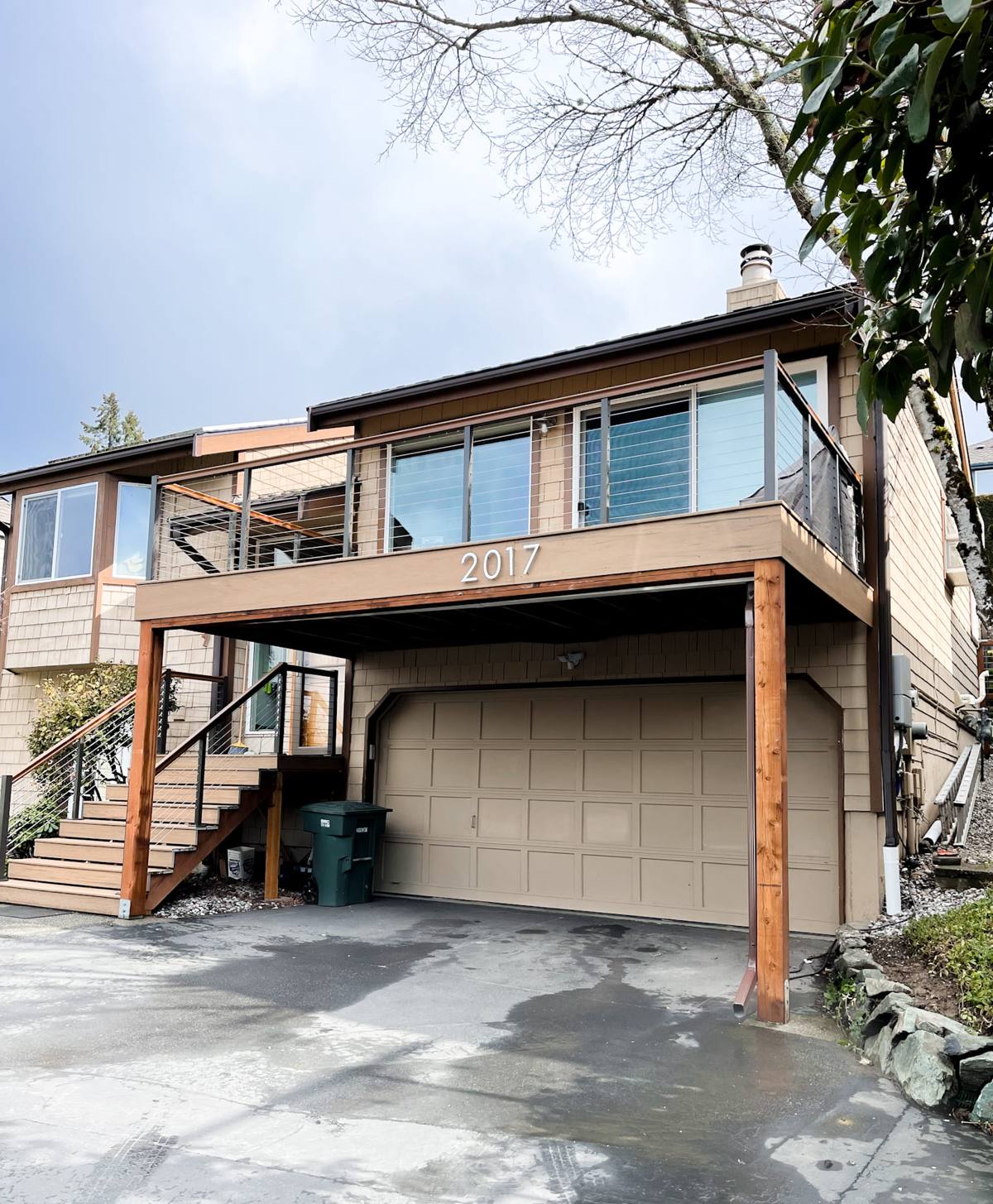
Why Chuckanut's Climate Is Hard on Decks
Salt Air and Metal Fatigue
Fasteners, joist hangers, and structural screws are the parts of a deck nobody sees after the build — and they're also the parts most vulnerable to salt-influenced corrosion. Cheap or mismatched hardware can start showing rust streaks and weakening structurally well before the visible decking shows its age. In a coastal-influenced area like Columbia, hardware selection isn't a place to save money.
Driving Rain and Water Intrusion
Wind-driven rain off the water doesn't fall straight down — it gets pushed under railings, into ledger board connections, and along the underside of decking where standard installation can leave gaps. Over time, water that gets trapped rather than shed causes rot at the exact points that are hardest and most expensive to repair: ledger attachments to the house, post bases, and stair stringers.
Moss, Algae, and Shade
Long moss season isn't just a cosmetic issue. Moss and algae hold moisture against the decking surface, and that constant dampness accelerates wood decay and makes composite surfaces slick and dangerous underfoot. A deck built without airflow and drainage in mind will grow moss faster and hold it longer than one designed with this climate in mind from the start.
What a Correctly Built Deck Includes
A deck that's going to hold up in Columbia's conditions needs attention in a few specific areas that a generic build might skip:
- Corrosion-resistant, code-rated fasteners and structural connectors rated for exterior and coastal-influenced exposure
- A properly flashed ledger board connection where the deck meets the house — this is the single most common source of hidden rot
- Adequate gapping and airflow beneath the decking surface to let moisture escape rather than sit
- Footings and post bases set to keep wood-to-concrete contact away from standing water
- Drainage grading beneath the deck so water moves away from the structure instead of pooling under it
- Material selection that accounts for shade exposure and realistic moss/algae maintenance expectations
Decking Material Choices for This Climate
There's no single "best" decking material for every Columbia home — it depends on sun exposure, budget, and how much upkeep you want to take on. Here's an honest comparison of the common options as they perform specifically in a shaded, damp, coastal-influenced setting like this one:
| Material | Moss/Algae Behavior | Maintenance | Typical Lifespan Here |
|---|---|---|---|
| Pressure-treated wood | Prone to moss in shaded areas; needs regular cleaning | Annual cleaning, periodic sealing | 15-20 years with upkeep |
| Cedar | Naturally more decay-resistant, still needs cleaning in shade | Sealing/staining every 2-3 years | 15-25 years with upkeep |
| Composite decking | Can get slick with algae film; varies by product texture | Periodic washing, no sealing needed | 25-30+ years |
| PVC/synthetic decking | Resists moisture absorption well; still needs surface cleaning | Low — occasional washing | 25-30+ years |
We'll walk you through the real trade-offs for your specific site — how much sun the deck actually gets, which direction the weather comes from, and what kind of maintenance schedule you're realistically going to keep up with. There's no upsell here; the honest answer is sometimes that a well-built wood deck with a realistic care plan is the right call, and sometimes composite is worth the higher upfront cost to cut down on years of upkeep.
Framing and Structure: Where Deck Failures Actually Start
Most deck problems we get called out to inspect aren't decking problems — they're framing problems that took years to surface. The structure underneath is what determines whether a deck is safe and long-lived, and it's also the part that's completely invisible once the decking boards go down. That's exactly why it has to be done right the first time.
Ledger Attachment
The ledger board — where the deck bolts into the house — is the highest-risk point for hidden water damage anywhere on the structure. Proper flashing, a water-resistant barrier behind it, and correct fastening are non-negotiable, especially given how much sideways rain this area sees.
Joist Spacing and Hardware
Joist spacing has to match the decking material's span rating, and every hanger and connector needs to be rated for exterior exposure. This is one of the areas where a slightly higher material cost up front avoids a full deck rebuild a decade down the road.
Post Bases and Footings
Footings need to be sized and set to the appropriate depth for stability, and posts should sit on bases that keep the wood off the concrete and out of standing water. Ground contact is one of the fastest ways to shorten a deck's life in a wet climate.
Railings, Stairs, and Code Compliance
Railings and stairs are where safety code requirements matter most, and they're also exposed to the same wind-driven rain as the rest of the structure. We build to current code for height, baluster spacing, and stair geometry, and we pay particular attention to railing post connections — a loose or under-fastened railing post is one of the more common issues we find on older decks in this area, often from fasteners that were adequate when installed but weren't rated for long-term coastal exposure.
Our Deck Building Process
Here's how a deck build actually goes, from first conversation to finished project:
- On-site assessment — we look at sun exposure, drainage, existing structure (if replacing a deck), and how the site sits relative to prevailing wind and rain direction
- Design and material discussion — honest conversation about decking material trade-offs based on your specific site conditions and budget
- Permitting — we handle the permit process where required; deck permits are common in Whatcom County depending on size and height
- Demolition (if replacing an existing deck) — including inspection of the ledger and framing underneath for hidden rot before rebuilding
- Framing — footings, posts, ledger flashing, and joist installation using exterior-rated hardware throughout
- Decking and railing installation — proper gapping, fastening, and railing post attachment
- Final walkthrough — we go over the finished deck with you, including a realistic maintenance schedule for the material you chose
Maintenance Expectations for a Columbia Deck
Every deck, regardless of material, needs some level of upkeep in this climate. Setting realistic expectations up front saves headaches later:
- Plan on a seasonal cleaning to knock back moss and algae buildup before it gets slick or starts holding moisture
- Check railing posts and stair connections annually for any looseness
- Wood decks need resealing or staining on a regular cycle — skipping this is the single fastest way to shorten a wood deck's life here
- Keep gutters and downspouts near the deck clear so runoff isn't dumping extra water onto or under the structure
- Watch for standing water under the deck after heavy rain — persistent pooling usually means a grading fix is needed
Why Local Experience Matters for This Job
Deck building isn't a one-size-fits-all trade. A crew that mostly builds in drier inland climates will make reasonable decisions that simply don't hold up here — different fastener choices, different attention to ledger flashing, different assumptions about how much shade and moisture a structure will see year-round. Working regularly in Chuckanut and the surrounding Whatcom County area means we've already seen how decks age in these specific conditions, not just how they look on installation day. That experience shows up in the small decisions: which hardware grade to spec, how much airflow to build into the decking gap, where drainage needs extra attention on a shaded lot. Those aren't things you can fix cheaply after the fact — they're decisions that have to be right from the framing stage forward.
Get a Straight Answer About Your Deck Project
Whether you're planning a new deck, replacing an aging one, or want a second opinion on a deck that's showing early signs of trouble, we're glad to come take a look. We'll give you a clear, honest assessment of what your site needs and what it would take to do the job right — no pressure, no upsell. Reach out below for a free estimate.