 Chuckanut Exterior
 Siding Replacement Built for the Burlington Climate
Homes in and around Burlington sit in a stretch of Washington where marine air off the Salish Sea, long wet winters, and shaded, moss-prone lots all work against ordinary siding. If you've watched a wall section start to swell, streak, or grow a green film faster than the rest of the house, that's not bad luck — it's the local climate doing exactly what it does to siding that wasn't built for it. As a crew that works this corridor regularly, we see the same failure patterns often enough to know what actually holds up here and what doesn't.
This page is specifically about siding replacement for Burlington-area homes — not a repair patch job, and not a generic siding overview. We'll walk through what the climate demands, what a correct replacement involves step by step, and why the product we install (and the ones we don't) matters more here than in a drier part of the state.
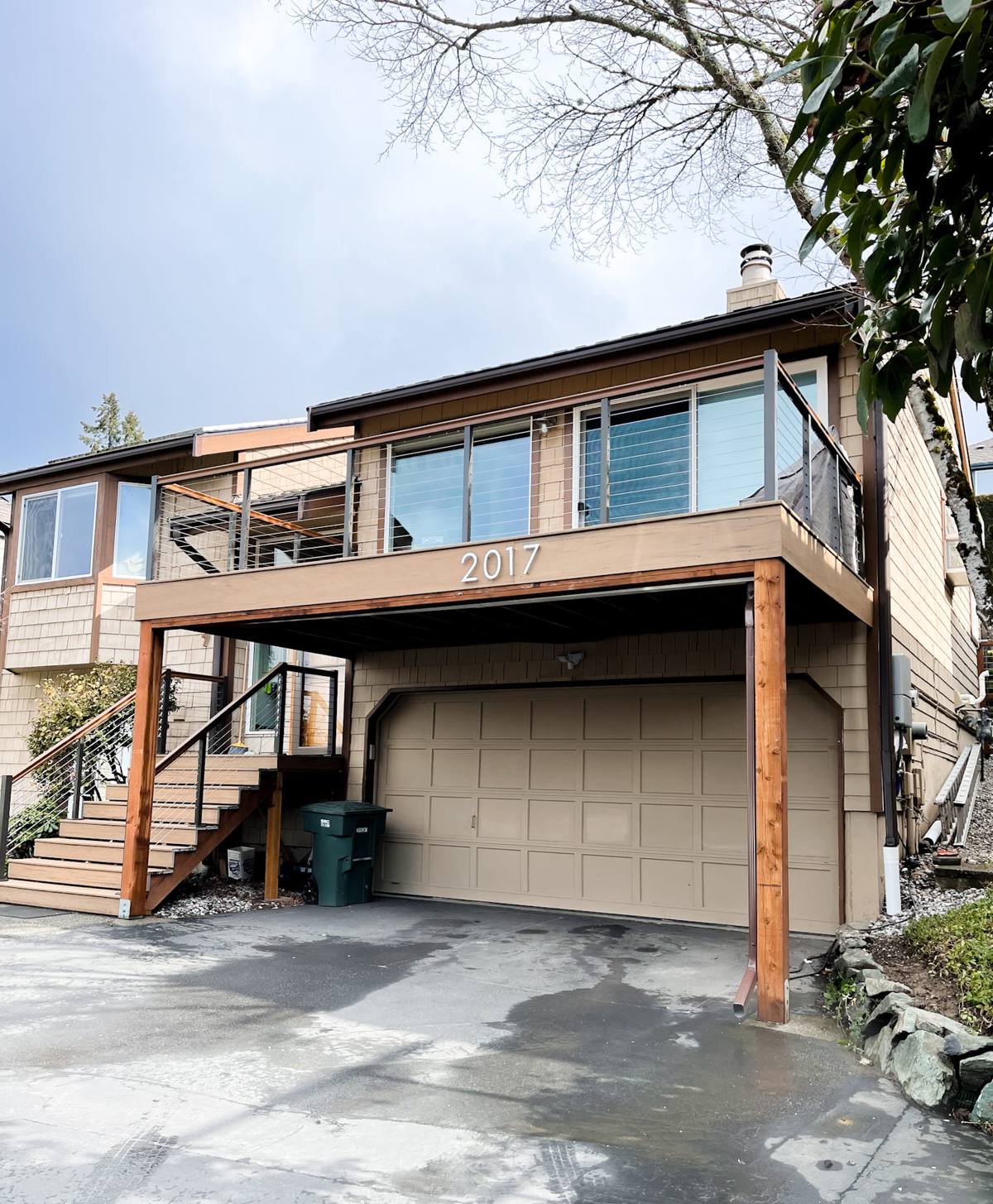
What Salt Air, Driving Rain, and Moss Season Actually Do to Siding
Salt-Laden Marine Air
Proximity to Puget Sound and the Salish Sea means the air carrying moisture inland also carries fine salt content. Over years, that salt exposure accelerates corrosion on fasteners, trim, and any metal flashing that isn't rated for it, and it speeds up the breakdown of paint films on siding materials that rely on surface coatings rather than a factory-cured finish.
Wind-Driven, Sustained Rain
This isn't occasional heavy rain — it's rain that arrives sideways, sits against the wall for days at a time, and finds every gap in flawed flashing or caulking. Siding systems that depend on perfect caulk lines to stay watertight tend to fail here faster than they would in a milder climate, because the caulk itself is under constant load.
Moss Season
Shaded north- and west-facing walls, tree cover, and long stretches of overcast, damp weather create ideal conditions for moss and algae growth on siding surfaces. Materials that hold surface moisture — or that swell and create small ledges and gaps once damaged — give moss more to grip onto, and moss growth trapped against a wall keeps that section wetter, longer, which compounds the problem.
None of this means Burlington is an unusually harsh place to own a home. It means siding here needs to be selected and installed with this specific combination of exposures in mind, rather than treated as a one-size-fits-all decision.
Why We Only Install James Hardie Fiber Cement
We install James Hardie fiber cement siding exclusively. We don't install vinyl, LP SmartSide, Cemplank, Allura, primed spruce, or cedar — not because those products have no merit, but because after years of replacing failed siding in this exact climate, we standardized on the one product line that consistently holds up to salt air, sustained moisture, and moss pressure without the maintenance burden the alternatives carry.
Non-Combustible, Not Just Water-Resistant
Fiber cement is cement-based rather than wood- or polymer-based, so it doesn't swell, rot, or provide the organic material that wood-based products like primed spruce or cedar can offer moisture and pests over time. That matters directly in a climate where siding stays damp for extended stretches during the wet season.
Climate-Engineered Product Lines
James Hardie manufactures different formulations (HZ5 and HZ10 lines) engineered for specific climate zones, including regions with sustained moisture and freeze-thaw cycling. That's a meaningfully different approach than a single generic formulation sold everywhere.
Factory-Applied ColorPlus Finish
Rather than relying on field-applied paint that has to be maintained and recoated, Hardie's ColorPlus finish is baked on at the factory under controlled conditions, which gives it better fade and moisture resistance than a job-site paint job — a real advantage against both UV and the salt content in coastal air.
The Trade-Off We're Honest About
Fiber cement costs more up front than vinyl and requires correct installation technique — improper fastening or missed flashing details will cause problems regardless of the material. That's exactly why installation quality is the other half of this page.
What a Correct Siding Replacement Actually Involves
Swapping old panels for new ones is the easy part. The work that actually determines whether a replacement lasts 10 years or 40 happens underneath and around the panels.
Full Tear-Off and Sheathing Inspection
We remove the existing siding completely rather than installing over it, because that's the only way to actually inspect the wall sheathing for rot, prior water damage, or compromised framing. Covering a problem up guarantees it resurfaces later, often worse.
Water-Resistive Barrier (WRB)
A correctly lapped and sealed weather-resistive barrier underneath the siding is what actually keeps wind-driven rain out of the wall assembly. This layer does more real work than the siding material itself when it comes to water intrusion, and it's often the step that gets rushed on a lower-quality job.
Flashing at Every Penetration
Windows, doors, roof-to-wall transitions, and any wall penetration need properly integrated flashing — not just caulk. Caulk is a maintenance item that degrades under sustained rain exposure; flashing is a permanent water-management detail. In this climate, that distinction is the difference between a wall that stays dry and one that slowly fails from the inside out.
Correct Fastening Schedule
James Hardie specifies exact fastener types, spacing, and placement for its products, and following that schedule (rather than a generic one) is what keeps the panels performing as engineered — including how they handle wind load and moisture cycling.
Proper Clearances
Siding needs the correct gap from grade, roof lines, decks, and other trim to avoid capillary draw and standing moisture at the bottom edge — a common failure point we see on older installations in shaded, damp yards.
Signs a Burlington-Area Home Needs Replacement, Not Repair
- Soft or spongy spots when you press on the siding, especially near the bottom courses or below windows
- Persistent moss or algae growth that returns within weeks of cleaning, particularly on shaded walls
- Visible swelling, delamination, or bubbling of the siding surface
- Paint that's failing across large sections rather than isolated spots
- Warping or bowing panels, especially on the sides of the house exposed to prevailing wind and rain
- Rot or staining visible at panel seams, corners, or around window and door trim
- Rising energy bills with no other explanation, suggesting compromised insulation or air sealing behind the siding
If you're only seeing one or two of these on a small section, repair may still be reasonable. Widespread signs across multiple walls usually mean the underlying moisture barrier has failed, and patching the surface won't fix that.
Our Process for a Burlington-Area Replacement
1. On-Site Inspection and Estimate
We walk the exterior, check for soft spots and existing damage, and give you a straightforward assessment — including telling you honestly if repair is a reasonable option instead of full replacement.
2. Tear-Off and Sheathing Assessment
Old siding comes off, and we inspect the sheathing and framing underneath before anything new goes up. Any rot or damage gets addressed before the new assembly is installed — not covered over.
3. WRB and Flashing Installation
We install and properly lap the weather-resistive barrier and integrate flashing at every window, door, and penetration point, since this is the layer that does the real work of keeping water out.
4. James Hardie Installation to Spec
Panels, trim, and fasteners go in according to James Hardie's published installation requirements for this climate zone — correct fastening schedule, correct clearances, correct joint treatment.
5. Final Walkthrough and Warranty Documentation
We walk the finished job with you, confirm everything meets spec, and make sure you have the warranty documentation for both material and workmanship.
Cost Factors for Siding Replacement
| Factor | Why It Affects Cost |
|---|---|
| Home size and wall complexity | More square footage and more corners, gables, and trim details mean more labor and material |
| Extent of sheathing damage found during tear-off | Rotted sheathing or framing found underneath old siding needs repair before new siding goes on |
| Siding profile and accessories chosen | Lap width, trim style, and accent details (soffit, fascia, trim boards) all affect material cost |
| Number of stories and access | Multi-story walls and difficult access require more scaffolding/staging time |
| Existing paint or coating removal needs | Some tear-offs involve more disposal and prep work than others |
We don't quote from a distance — every estimate is based on an actual walk of your home, because the factors above vary enough house to house that a phone-quote number isn't a real one.
Why a Crew That Already Works This Area Matters
Siding installation isn't just about following a manufacturer's manual — it's about knowing how a specific region's weather behaves against a wall over years, not just during the install. A crew that regularly works Whatcom and Skagit County homes has already seen how wind-driven rain hits certain wall orientations, how shaded lots hold moisture longer, and where moss tends to establish first. That local pattern recognition shows up in small decisions during installation — extra attention to a flashing detail on a wall we know takes more weather, or a clearance adjustment on a lot we know stays damp longer into the season.
It also means a contractor who's still going to be reachable in this area years down the road if a warranty question comes up, rather than a crew that passed through once and moved on.
Maintaining Your Siding After Replacement
Correctly installed James Hardie siding is low-maintenance, not no-maintenance. A yearly rinse to clear moss and debris buildup, keeping gutters clear so water doesn't sheet down the wall face, and a periodic visual check of caulked joints (around trim, not the siding-to-siding joints themselves) will keep the system performing as designed for decades. That's a meaningfully lighter maintenance load than wood-based siding, which needs recoating on a regular cycle to keep moisture out.
If your Burlington-area home is showing signs of siding failure, or you're simply due for a straight, no-pressure look at your options, we're glad to come take a look. Use the form below to request a free estimate — no obligation, just an honest read on what your home actually needs.