 Chuckanut Exterior
 Siding Installation in Alger: The South End of Chuckanut Country
Alger sits where Chuckanut Drive comes down out of the forested hills and meets I-5, at the southern edge of the area we work out of on a regular basis. It's a quieter, more rural stretch than the waterfront neighborhoods closer to Bellingham — wooded lots, open farmland, and homes set back from the road rather than dense residential blocks. But the weather that shapes exterior work here is the same weather that shapes it across the rest of the Chuckanut corridor: salt-tinged air moving in off Samish Bay and the broader Salish Sea, driving rain that Pacific storm fronts push sideways into walls rather than straight down, and a moss season that runs long under the heavy tree cover common to this part of the county. Siding installation done right in Alger has to account for all three, not just the ones that are obvious from the road.
We install James Hardie fiber cement siding exclusively — no other brand, no other material — and this page is specifically about what that looks like for a home in Alger: what the local climate actually does to siding, what a correct installation involves, how our process works from first visit to finished wall, and why it matters that we're a crew already familiar with this end of the Chuckanut corridor rather than one driving out for a single job.
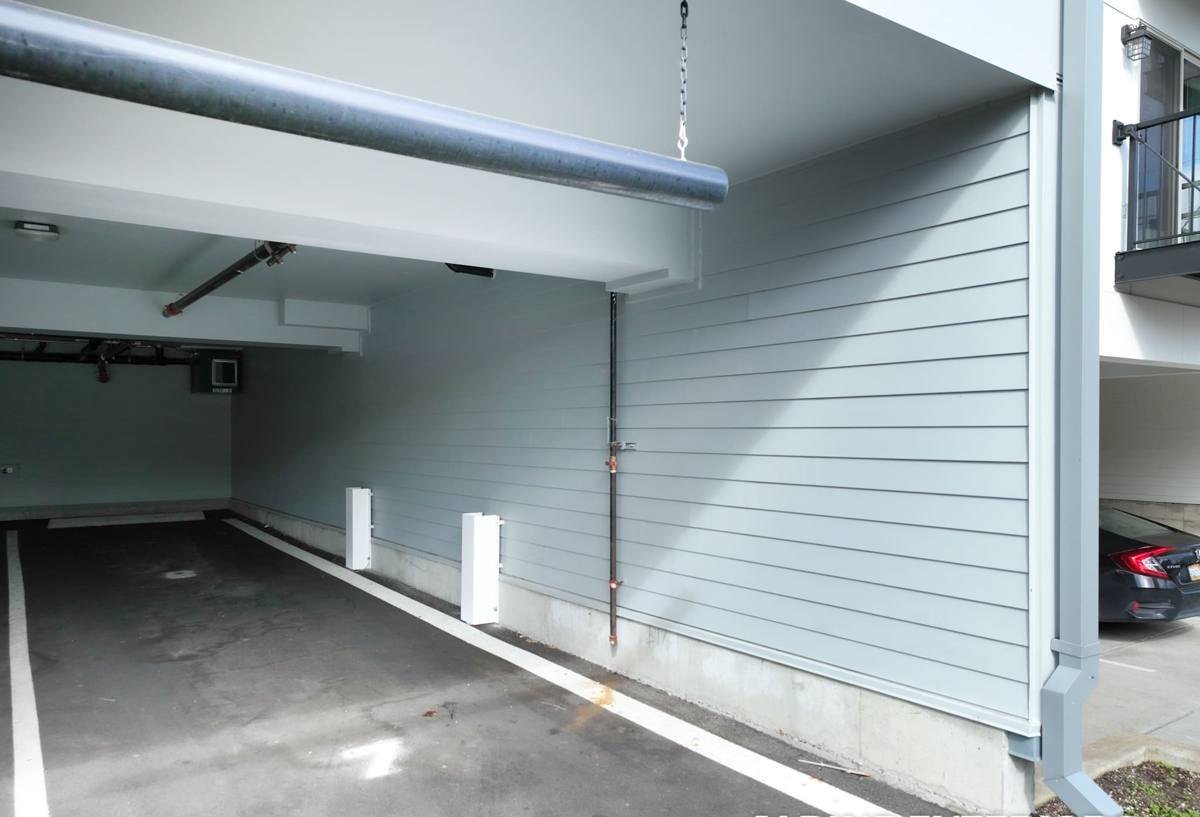
What Alger's Climate Does to Siding
Salt Air, Further Inland Than It Looks
Alger isn't waterfront, and it doesn't take the direct salt spray that homes right on Samish Bay or Bellingham Bay deal with. But salt-laden marine air travels further inland than most people expect, especially during winter storm systems that push weather straight up the Chuckanut Drive corridor from the water. Over years, that steady low-level exposure accelerates corrosion at fasteners, flashing, and any exposed metal trim — slower than it would happen right on the coast, but real, and often underestimated because the property "isn't on the water."
Driving Rain Off Pacific Storm Fronts
Rain in this part of the county rarely falls straight down for long. Wind-driven storm systems coming off the Pacific push rain sideways into whatever wall happens to be facing the weather, and that sideways load finds gaps, unsealed joints, and poorly lapped flashing that a calmer climate would never expose. Alger's mix of open farmland and forested hillside means wind patterns can vary a lot from one property to the next, which is part of why we walk each home rather than pricing siding work off a satellite photo.
A Long Moss and Mildew Season Under Heavy Tree Cover
The wooded terrain that gives Alger its rural character also keeps a lot of walls shaded and slow to dry out after a storm. Combined with the region's mild, damp winters, that adds up to a moss and mildew season that can run most of the year on north-facing or tree-shaded siding. Any material with even mild surface porosity becomes a growth surface over time in those conditions, and once moss takes hold, it holds moisture against the wall behind it and accelerates whatever damage was already starting.
None of this makes Alger a uniquely hostile place to own a home — it's part of the same weather system that shapes exterior work across this whole corner of Washington. It does mean siding installed without those three factors in mind tends to show problems earlier here than it would somewhere drier and more sheltered.
Why We Install Only James Hardie Fiber Cement Siding
We used to install a wider range of siding products. We standardized on James Hardie fiber cement because of what we consistently found on tear-offs and repair calls in exactly this kind of sustained-moisture climate — not because of a supplier arrangement or a marketing push.
- Non-combustible core: Fiber cement doesn't feed a fire the way wood-based siding products can, which matters for both safety and insurance considerations.
- Factory-applied ColorPlus finish: The color is baked on under controlled factory conditions rather than brushed on in the field, so it resists fading, chalking, and moisture intrusion far longer than a site-applied finish.
- Climate-engineered HZ product lines: Hardie's HZ5 formulation is built for regions with sustained moisture and freeze-thaw cycling, which fits this part of the county better than a single generic national formulation.
- Dimensional stability: Fiber cement doesn't swell, cup, or warp the way engineered wood products can after repeated wet-season exposure.
- Strong transferable warranty: Hardie backs its products with one of the more substantial warranty structures in the industry, provided the installation follows spec.
We don't install LP SmartSide, vinyl siding, Cemplank, Allura, primed spruce, or cedar. Those are legitimate products, and homeowners who choose them aren't making a mistake — but we've made a professional decision that in a climate with this much sustained moisture and shade, standing behind one system we fully understand and trust serves Alger homeowners better than offering a cheaper option that quietly shifts maintenance risk onto them a few years down the line.
What a Correct Siding Installation Involves
The material is only part of the equation. Most siding failures we find on tear-offs in this area trace back to an installation shortcut, not a defect in the product itself. On every Alger job, that means:
- A rain screen gap behind the siding, so any moisture that does get past the surface can drain and evaporate instead of sitting against the wall sheathing
- House wrap and flashing installed as one continuous water-management system, lapped correctly at every seam and penetration
- Fastener type and spacing that follow Hardie's spec exactly, using corrosion-resistant fasteners suited to a damp, salt-influenced climate
- Proper clearance between the siding and grade, decks, and roof lines, so splash-back and standing moisture don't sit against the bottom course
- Correctly lapped and sealed butt joints and trim transitions, the most common place we find moisture tracking in on older installs
- Window and door flashing integrated into the surrounding siding, not treated as a separate step done in isolation
None of this is exotic — it's the manufacturer's own installation spec, followed consistently rather than shortcut on the details that are hardest to see once the job is finished and the crew has moved on.
Our Siding Installation Process
Every Alger project starts with an in-person look at the actual house, not a phone estimate or a price based on square footage alone. From there:
- On-site assessment: We walk the property, check the condition of the existing siding and substrate, and note sun exposure, tree cover, and which walls take the worst of the weather.
- Honest scope and estimate: We explain what the job actually needs — full tear-off, overlay, or targeted repair — and give a written estimate with no pressure to decide on the spot.
- Tear-off and substrate check: Where old siding comes off, we check the sheathing and framing underneath for hidden moisture damage before anything new goes up.
- House wrap, flashing, and rain screen: The water-management layer goes in first and gets the same attention as the visible siding, since it's the part that determines how the job performs in ten years.
- Hardie installation to spec: Fastening, spacing, joint sealing, and clearances follow Hardie's published installation requirements, not a shortcut version of them.
- Final walkthrough: We go over the finished work with you before calling the job done, and stand behind it with Hardie's warranty and our own workmanship.
Full Replacement, Overlay, or Repair?
Not every Alger home needs a full tear-off. If the existing siding is an older, failing material with substrate damage underneath, or if moisture has clearly been tracking behind the wall for a while, a full replacement down to the sheathing is the honest answer, even though it costs more upfront. If the wall assembly is sound and the issue is cosmetic or isolated — sun-faded paint, a few damaged boards, a cracked joint — overlay or targeted repair can make sense instead. New construction and full additions are simpler decisions, since there's no existing material to evaluate. We'll tell you which situation your house is actually in once we've had a look, rather than defaulting to whichever option is more profitable for us.
Siding Installation Cost Factors for Alger Homes
| Factor | What It Affects | Alger-Specific Consideration |
|---|---|---|
| Home size and wall complexity | Total material and labor | More trim, gables, and roof intersections mean more flashing detail to get right |
| Tear-off vs. overlay | Labor scope and substrate access | Tear-off exposes hidden moisture damage common under decades-old siding on shaded, wooded lots |
| Substrate condition | Repair cost before new siding goes on | Trapped moisture behind failing siding can rot sheathing before it's visible from outside |
| Site access and tree cover | Labor time and equipment needs | Wooded, rural lots can add setup time and limit staging space compared to open sites |
| Trim and color selection | Material cost and finish longevity | Factory ColorPlus finishes outlast field-applied paint against salt air and shade-driven moisture |
These are general drivers, not a quote. Every Alger property sits a little differently relative to tree cover, sun exposure, and how close the nearest weather-facing wall is to open ground, which is why we price the actual house rather than a square-footage average.
Signs an Alger Home Needs New Siding
- Moss or dark staining that returns quickly after cleaning, especially on shaded or north-facing walls
- Soft or spongy siding, particularly low on the wall or around window and door trim
- Peeling, bubbling, or chalking paint on siding boards or trim
- Visible gaps at seams, corners, or trim joints where wind-driven rain can track in
- Rust staining around fasteners, a common early sign of sustained marine air exposure
- Warping, cupping, or cracked boards after a wet winter
- Rising heating bills that may point to a wall assembly that's no longer sealing properly
Why a Crew That Already Works Alger Matters
A crew that installs siding across this end of the county regularly sees how salt air, driving rain, and moss actually behave on real Alger houses over a full year, not just how a product performs on a spec sheet. That translates into practical decisions on install day: which walls stay wet longest under the tree line, where extra flashing attention pays off on a farmhouse versus a wooded lot, and which details are worth the extra time so you're not dealing with a callback after the next storm off the water. Alger's rural, forested setting isn't identical to the waterfront neighborhoods closer to Bellingham, and a crew with real experience on this end of the Chuckanut corridor accounts for that instead of applying a one-size-fits-all approach.
If your Alger home needs new siding, or you're just not sure whether what you're seeing is cosmetic or something more serious, we're glad to take a look and give you a straightforward, honest read. Reach out using the form below to schedule a free, no-pressure estimate.