 Chuckanut Exterior
 Building Decks for Alger Homes in a Tough Marine Climate
Homes in the Alger area near Chuckanut sit close enough to the water and the tree line that a deck here works harder than a deck built inland. Salt-laden air off the water accelerates corrosion on fasteners and hardware. Driving rain, pushed sideways by wind off the water, gets up under rail caps and into end grain that a calmer climate would never touch. And the long, damp stretch of fall through spring gives moss and algae months to take hold on any surface that doesn't drain and dry properly. None of this means a deck can't last decades here — it means it has to be designed and built with those specific conditions in mind from the first footing to the last board.
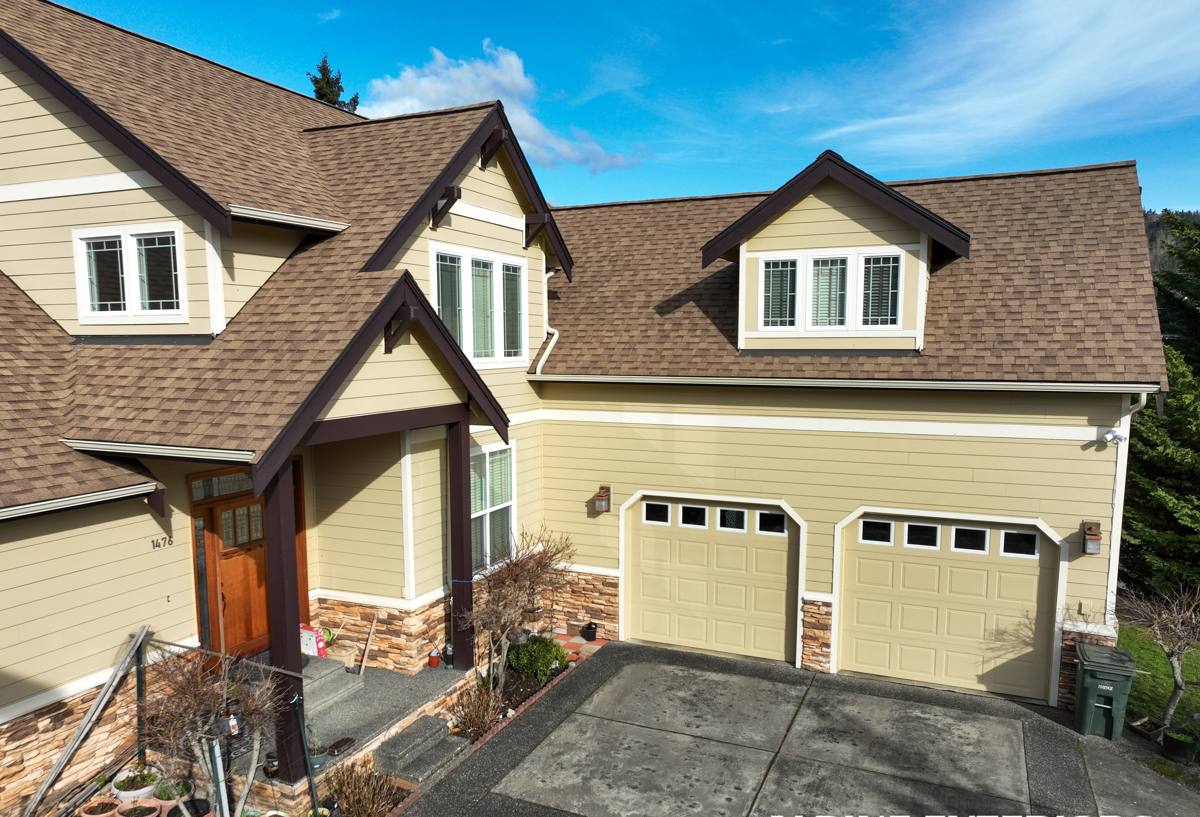
What Whatcom County's Climate Actually Does to a Deck
It helps to be specific about the failure modes we actually see on decks in this area, rather than talk in generalities.
Salt Air and Metal Fatigue
Proximity to salt water speeds up oxidation on anything metal — nails, screws, joist hangers, post bases, and railing hardware. Standard interior-rated or under-spec galvanized fasteners can start showing rust streaks and pitting well before the wood around them shows any wear. Once a fastener corrodes, it loses holding strength long before it looks obviously bad, which is part of why fastener choice matters more here than in a drier, inland build.
Driving Rain and Hidden Rot
Wind-driven rain doesn't fall straight down — it gets pushed sideways and upward into joints, under rail caps, behind ledger boards, and into any gap where flashing was skipped or done wrong. The rot that results is rarely visible from the surface until it's advanced. Most of the deck failures we get called out to inspect started as a small flashing or drainage detail that let water sit somewhere it shouldn't have.
Moss Season
Shade, moisture, and mild temperatures for months at a time are exactly what moss and algae need. On decks, that shows up as slick, dark growth on boards, especially anywhere sunlight doesn't reach directly — under trees, on the north side of the house, or on stair treads that stay shaded. Beyond looking bad, moss holds moisture against the wood surface and turns steps and walking surfaces genuinely slippery.
Choosing the Right Decking Material for This Ground
There's no single "best" decking material for every Alger property — it depends on how much sun the deck gets, how much upkeep the homeowner wants to do, and budget. Here's how the common options actually perform under local conditions.
| Material | Moss & moisture resistance | Maintenance | Typical lifespan here |
|---|---|---|---|
| Pressure-treated pine/fir | Fair — needs sealing to resist moss and checking | Annual cleaning and re-sealing recommended | 15-20 years with upkeep |
| Cedar | Good natural rot resistance, but surface still grows moss in shade | Periodic cleaning, oil or stain every 2-3 years | 20-25 years with upkeep |
| Composite decking | Very good — doesn't absorb moisture like wood, though algae can still film the surface | Periodic washing, no staining or sealing | 25-30+ years, manufacturer-dependent |
| PVC decking | Excellent moisture resistance, least prone to surface rot | Low — occasional washing | 30+ years |
We don't push one product on every job. A shaded, close-to-the-water lot on a moss-prone slope is a very different situation than a sunny, open yard, and we'll walk through the honest trade-offs — upfront cost, maintenance burden, and how the material actually behaves in wet, shaded conditions — before recommending anything.
What a Correctly Built Deck Requires in This Area
A deck that holds up here isn't about using fancier materials everywhere — it's about getting a handful of structural and drainage details right, every time, not just when it's convenient.
Footings and Framing
Footings need to be sized and set to the depth local code requires, on soil that's been properly assessed rather than assumed. Framing hardware should be corrosion-resistant rated for the exposure, not a standard interior grade — the fasteners and hangers are one of the first things that fail if under-specified in a marine-influenced climate.
Ledger Flashing
Where the deck attaches to the house, the ledger board and its flashing are the single most common source of hidden water damage nationwide, and driving rain here makes it worse. Proper flashing directs water away from the ledger-to-house connection instead of letting it wick behind the siding.
Drainage and Airflow Underneath
A deck built low to the ground or over unventilated space traps moisture underneath, which is exactly the environment moss, mold, and rot want. Grading the ground below to drain away from the house, and leaving enough clearance and airflow under the deck, keeps that space from turning into a permanent damp pocket.
Fastener and Hardware Spec
Every screw, nail, hanger, and post base should be rated for the exposure it'll actually see — not just "exterior grade" in a generic sense. This is a small line-item cost difference and a large difference in how the deck ages.
Our Process for an Alger-Area Deck Project
The process is the same discipline whether it's a full rebuild or a first-time build, and it stays consistent because skipping a step is exactly how the hidden-water and moss problems above get built in from day one.
- Site assessment — we look at sun exposure, drainage, existing structure (if any), and how the specific spot on the property handles wind-driven rain.
- Design and material selection — layout, decking material, and hardware spec chosen for that site, not a one-size-fits-all default.
- Permitting — pulled and handled correctly for Whatcom County requirements before any work starts.
- Demo (if replacing an existing deck) — including a check of the ledger and framing behind it for hidden rot before anything new goes up.
- Framing and flashing — footings, structural framing, and ledger flashing done to the standard described above.
- Decking, rail, and stairs installed — with attention to drainage gaps and shaded areas that will need moss resistance.
- Final walkthrough — we go over maintenance expectations specific to the material chosen and the site conditions.
Living With a Deck Here: Realistic Maintenance
Every deck material needs some upkeep in this climate — the difference is how much and how often. Here's a practical baseline checklist for keeping a deck sound and safe through the wet season.
- Sweep debris and standing leaf litter off the deck surface regularly, especially in fall
- Wash the surface at least once a year with a deck-safe cleaner to remove algae and moss film before it builds up
- Check stair treads and shaded walking surfaces more often — these are where slip risk from moss builds fastest
- Inspect fastener heads and visible hardware yearly for early rust or corrosion
- Re-seal or re-stain wood decking on the manufacturer or product's recommended schedule, not just when it looks faded
- Keep gutters and downspouts near the deck clear so runoff isn't dumping extra water onto or under the deck
- Trim back overhanging branches that keep sections of the deck shaded and damp longer than necessary
Common Problems We See on Older Alger-Area Decks
A lot of the repair calls we get in this area trace back to the same handful of shortcuts. Undersized or standard-grade fasteners that have corroded and lost grip. Ledger boards with missing or improperly lapped flashing, found only once the siding or ledger is opened up. Decks built low and tight to grade with no real airflow underneath, so the framing stays damp year-round. And decking boards installed tight together with no drainage gap, which traps water and speeds up both rot and moss growth on the board edges. None of these are exotic problems — they're the standard list of things that go wrong when a deck is built to a generic spec instead of the conditions it actually sits in.
Why Hire a Crew That Already Works in This Area
A contractor who mostly builds decks in drier, inland conditions may not default to marine-grade hardware, proper ledger flashing sequencing, or the drainage and airflow planning that a shaded, damp lot near Chuckanut actually needs. That's not a knock on general skill — it's a matter of what a crew is used to speccing by default. Working regularly in Whatcom County's coastal-influenced climate means these details aren't an afterthought or an upsell; they're just how the job gets built, because we've seen what happens when they're skipped.
If you're planning a new deck or need an honest look at an existing one, we're happy to come out, walk the site, and give you a straightforward assessment — no pressure, no obligation. Use the form below to request a free estimate.