 Chuckanut Exterior
 Composite Decking Built for Alger's Conditions
Alger sits close enough to the water and the tree line that a deck here has to deal with two things most inland decks don't: salt-laden air moving in off the water and long stretches of shade that never really dry out. Add Whatcom County's driving rain and a moss season that can run from late fall through spring, and you have a climate that's genuinely hard on outdoor wood surfaces. Composite decking, installed correctly, holds up to all of it. Installed poorly, it fails in the same ways wood does — just slower.
This page covers what we look at specifically for composite decking projects in the Alger area: what the local climate does to a deck, what a correct installation actually involves, how we run the job, and what upkeep looks like once it's done.
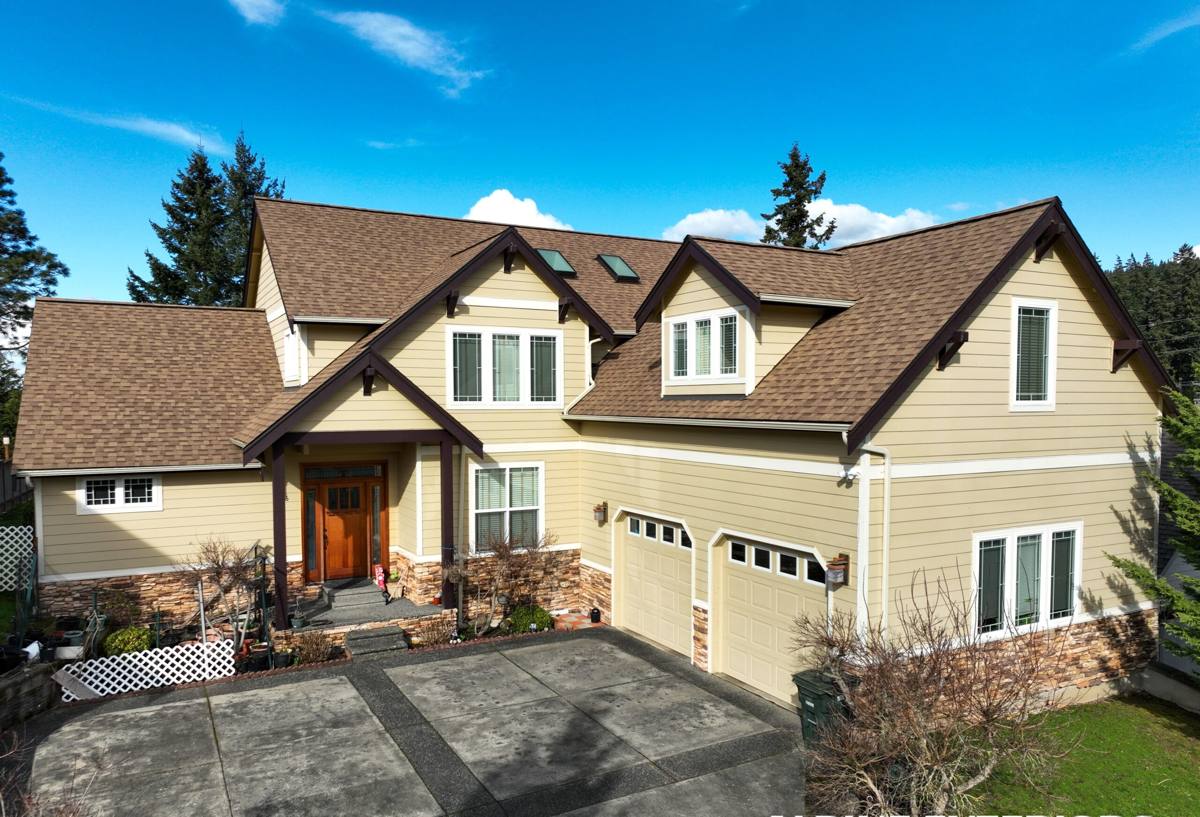
What Alger's Climate Does to a Deck
Salt Air and Corrosion
Homes closer to the water pick up airborne salt that settles on every exposed surface, including fasteners, flashing, and railing hardware. On a wood deck this shows up as accelerated corrosion on nails and screws long before the boards themselves fail. On a composite deck, the boards themselves are unaffected by salt, but the fasteners, brackets, and any exposed metal framing are not. This is one of the most overlooked details in decking work in this area — the boards get all the attention and the hardware gets whatever was left in the truck.
Driving Rain and Moisture
Rain here rarely falls straight down. Wind-driven rain gets pushed under rail caps, into board end cuts, and along ledger connections where the deck meets the house. Composite boards don't absorb water the way wood does, but water still has to go somewhere — if the substructure and drainage plane underneath aren't built to move it out, it sits under the deck and stays wet for days at a time.
Moss and Shade
Many lots in and around Alger have partial tree cover, and shaded, damp surfaces are exactly where moss and algae take hold. Moss itself doesn't damage composite boards the way it can degrade untreated wood, but it holds moisture against the surface longer, makes boards slick underfoot, and looks bad if it's allowed to spread into board grooves and fastener channels.
Why Composite Decking Fits This Environment
We recommend composite decking for a lot of Alger-area homes not because wood decking is a bad product, but because the maintenance burden wood carries in this specific climate is significant — annual or biannual sealing, sanding, and touch-up work that most homeowners don't want to keep up with year after year. Composite shifts that burden from "constant upkeep" to "occasional cleaning," which matters more here than in a drier climate.
| Factor | Wood Decking | Composite Decking |
|---|---|---|
| Moisture absorption | Absorbs and releases water, prone to swelling/cupping | Minimal absorption, dimensionally stable |
| Moss/algae growth | Grows into grain, can stain and soften surface | Grows on surface only, cleans off without damage |
| Salt air exposure | Accelerates fastener corrosion and finish breakdown | Boards unaffected; fasteners still need corrosion-resistant hardware |
| Annual maintenance | Cleaning, sanding, re-sealing/staining | Periodic washing, no sealing or staining |
| Upfront cost | Lower material cost | Higher material cost, offset over time by lower upkeep |
What a Correct Composite Deck Installation Involves
Substructure and Framing
Composite boards are only as good as what's underneath them. We build or evaluate the joist framing for proper spacing for the specific board being installed — composite has different span ratings than wood, and using wood-decking spacing on composite boards leads to bounce and long-term sagging. Joist tape or a comparable barrier over the framing helps keep moisture off the wood substructure, which matters more here given how long lumber stays damp under a shaded, rain-exposed deck.
Fasteners and Hardware
Every screw, hidden fastener clip, joist hanger, and ledger bolt should be rated for coastal or high-moisture exposure, not general-purpose exterior hardware. This is the detail that separates a deck that looks fine for two years from one that stays solid for fifteen. We treat hardware selection as part of the decking job, not an afterthought.
Drainage and Ventilation
Composite boards need airflow underneath them to shed the moisture that does get through. That means correct board gapping, proper slope away from the house at the ledger, and in some cases venting or drainage detailing under low-clearance decks so water doesn't pool against the framing. On lots with heavier shade, we pay extra attention to this step because natural drying time is shorter here than on an open, sun-exposed site.
Our Process for Alger Composite Decking Projects
- On-site assessment of the existing structure (if replacing a deck) or the build site, including drainage, sun/shade exposure, and proximity to salt air
- Board and hardware selection based on that assessment, not a one-size-fits-all package
- Removal of the old deck surface and inspection of ledger, posts, and footings for hidden rot or corrosion before anything new goes down
- Framing repair or upgrade where spacing or hardware doesn't meet the new board's requirements
- Composite board installation with hidden or approved fasteners, correct gapping, and attention to end-cut sealing where boards are trimmed on site
- Railing, fascia, and stair installation matched to the decking system
- Final walkthrough covering how the specific board product handles cleaning, staining risk from leaves and debris, and what to expect through the first moss season
Choosing Composite Boards for This Area
Not all composite boards are built the same, and the differences matter more in a wet, shaded climate than they would somewhere drier.
| Board Type | What It Means | Consideration for Alger |
|---|---|---|
| Capped composite | A protective polymer shell wraps the board | Better resistance to moisture wicking and surface staining from moss and organic debris |
| Uncapped composite | No protective shell, wood fiber more exposed at the surface | More prone to moisture absorption and surface mold in shaded, damp spots |
| Grooved-edge boards | Designed for hidden fastener systems | Cleaner surface, but grooves can trap debris and need periodic clearing |
| Square-edge boards | Face-fastened, no hidden clip system | Easier to inspect and re-fasten, visible screw heads |
| Color/tone | Lighter vs. darker board colors | Darker boards show less moss staining but run hotter in direct sun; lighter boards show organic staining more readily |
We walk homeowners through these trade-offs against their specific lot — how much shade it gets, how close it is to the water, and how the deck will actually be used — rather than defaulting to whatever's easiest to install.
Maintenance in a Moss-Prone, Salt-Air Climate
Composite decking cuts down on maintenance, it doesn't eliminate it. In this climate, a short seasonal routine keeps a deck looking and performing the way it should for the life of the product.
- Sweep or blow off leaves and debris regularly, especially in fall — trapped organic matter is what stains composite boards and feeds moss growth
- Rinse the deck surface and railing with plain water a few times a year to clear salt residue before it builds up on hardware and metal components
- Clean visible moss or algae with a soft-bristle brush and a manufacturer-approved cleaner rather than a pressure washer on high setting, which can damage the board's cap layer
- Check board gaps and drainage areas underneath the deck once a year for debris buildup that blocks airflow
- Inspect visible fasteners, brackets, and railing hardware annually for corrosion, particularly on decks closer to the water
- Keep gutters and downspouts near the deck clear so runoff isn't dumping extra water directly onto or under the structure
Common Mistakes We Fix From Other Installs
A fair amount of our composite decking work in this area is repair or partial rebuild work on decks installed without accounting for local conditions. The recurring issues are consistent: standard-grade fasteners that corrode within a few years near the water, board spacing pulled from wood-decking specs instead of the composite manufacturer's span tables, missing or inadequate drainage slope at the ledger, and boards installed tight against the house trim with no gap for airflow or drainage. Each of these is straightforward to avoid at installation time and expensive to fix later, which is why we treat them as non-negotiable steps rather than optional upgrades.
Why Hire a Crew That Already Works This Area
A composite deck installed to spec sheet minimums will hold up fine in a mild, dry climate. Alger isn't that climate. Crews who haven't worked the salt air and moss conditions here tend to under-spec hardware, skip drainage detailing that isn't strictly required by code, and treat board selection as a color choice rather than a performance decision. We've built and repaired enough decks in Whatcom County to know which shortcuts show up as problems in year two versus year ten, and we build to the standard that holds up here, not just to a generic spec sheet.
If you're planning a new composite deck or replacing one that hasn't held up the way it should, we're happy to take a look and walk you through what your specific lot needs. Reach out for a free, no-pressure estimate using the form below.