 Chuckanut Exterior
 Windows Take a Different Kind of Beating on South Hill
South Hill sits close enough to the water and the weather patterns coming off Bellingham Bay that its homes deal with a specific combination of stresses most inland properties never see: salt-laden air, wind-driven rain that hits windows sideways rather than straight down, and long stretches of damp, low-light months where moss and algae get a foothold on anything that stays wet. None of that is dramatic on its own. The problem is that it's constant, year after year, and window systems that aren't installed with that reality in mind start showing it early — soft trim, foggy glass, drafts that weren't there five years ago.
We install windows across Whatcom County, and South Hill's mix of older homes with original wood-frame windows and newer builds with first-generation vinyl gives us a good cross-section of what actually fails here and why. This page is about that specific job: replacing or installing windows on a South Hill home, done in a way that accounts for the site conditions instead of treating it like a generic swap.
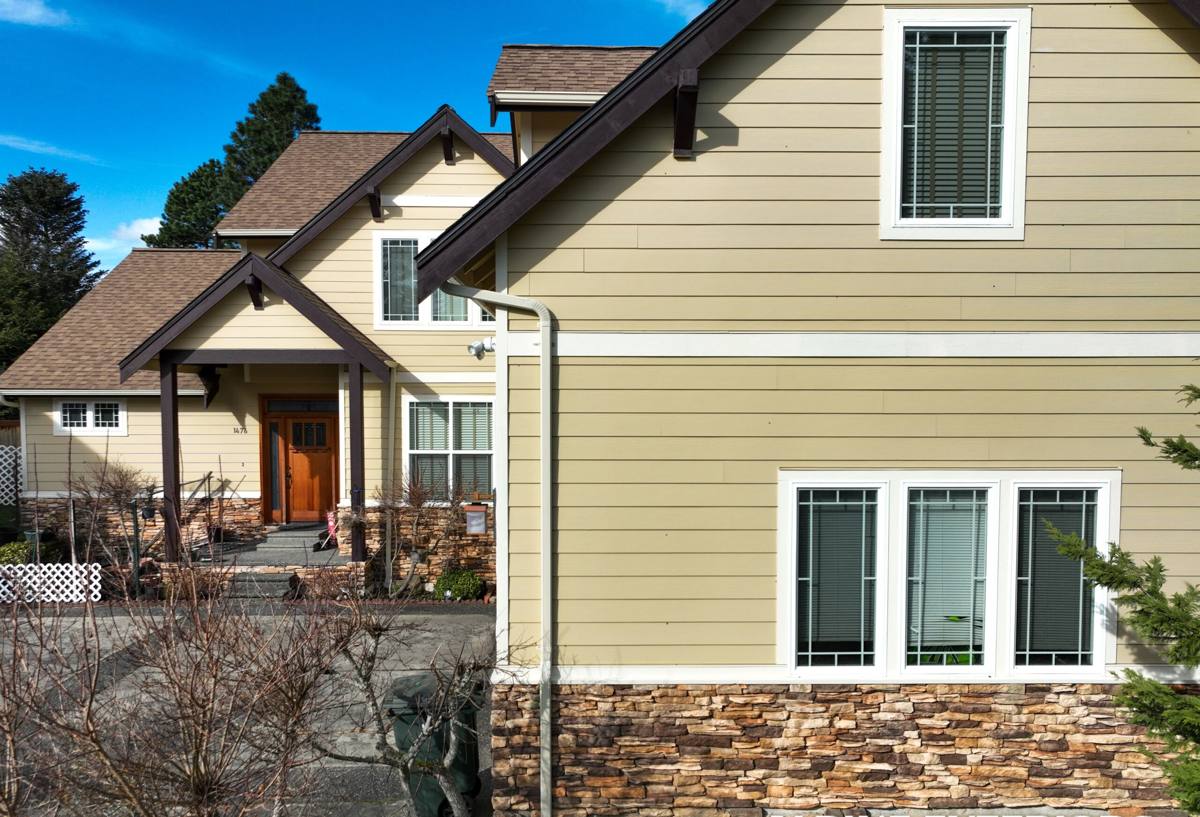
What Salt Air, Rain, and Moss Actually Do to a Window
It helps to understand the failure mechanism, because it changes what "good installation" means in practice.
Salt Air
Airborne salt is corrosive to unprotected metal — hardware, screws, some older aluminum frames, and the fasteners holding trim and flashing in place. It doesn't destroy anything overnight, but it accelerates corrosion timelines compared to inland installs, which is why fastener and hardware choice matters more here than a generic spec sheet would suggest.
Driving Rain
Rain that arrives at an angle, pushed by wind off the water, doesn't behave like rain falling straight down. It gets forced up under sills and behind trim if the flashing and water-resistive barrier details aren't built for it. A window that would perform fine in a calmer microclimate can leak here simply because the original installation assumed vertical rainfall.
Moss and Sustained Moisture
Long damp seasons mean anything that holds moisture against wood — bad drainage, clogged weep holes, caulk used as a substitute for proper flashing — stays wet longer than it would elsewhere in the state. That's when rot starts, usually at the sill and lower corners, well before it's visible from inside the house.
Signs a South Hill Home's Windows Are Due for Attention
Homeowners usually notice one or two of these before calling anyone. Worth checking the rest before assuming it's just one window.
- Visible moss, algae, or dark staining on sills or the wood/trim just below a window
- Soft or spongy trim when pressed with a fingertip, especially at the bottom corners
- Fogging or a permanent haze between double-pane glass — a sign the seal has failed
- Noticeable draft or cold spot near a closed window on a windy day
- Difficulty opening, closing, or locking a window that used to move freely
- Paint that keeps peeling or bubbling around the same window no matter how often it's touched up
- Rising heating bills without any other obvious cause
One or two of these can often be handled with repair or re-sealing. Several at once, especially combined with soft wood, usually means the window and its surrounding assembly need to come out and be done correctly.
What a Correct Installation Actually Involves
The window unit itself is only part of the job. Most leaks and premature failures we see on South Hill trace back to the installation details around the window, not the window product itself.
Removing the Old Window the Right Way
We open up the surrounding wall enough to see the actual condition of the framing and sheathing before assuming anything. If there's hidden rot from years of water intrusion, that gets addressed now — covering it up with a new window is how the same problem comes back in a few years.
Flashing, Not Just Caulk
Caulk is a supplement, not a strategy. A correct install uses layered flashing — sill pan, jamb flashing, and head flashing — installed so that any water that does get past the window sheds outward and down, the same way shingles overlap on a roof. This is the single biggest factor in whether a window stays dry through driving rain over the next twenty years.
Water-Resistive Barrier Integration
The house wrap or building paper around the opening has to be integrated with the window flashing in the correct order — not just taped over afterward. Done out of sequence, it can actually trap water against the framing instead of directing it out.
Air Sealing and Insulation
The gap between the window frame and the rough opening gets sealed with the right materials — not stuffed with excess foam that can bow the frame, not left with big voids that cause drafts and energy loss.
Corrosion-Resistant Fasteners and Hardware
Given the salt air here, we pay attention to fastener and hardware material so corrosion doesn't become the reason trim or hardware needs attention again in a few years.
Choosing a Window Built for This Climate
There's no single "best" window material — it's a tradeoff between upfront cost, maintenance, and how the material handles sustained moisture exposure. Here's how the common options generally compare for a home in this environment.
| Frame Material | Moisture Handling | Maintenance | Notes for This Climate |
|---|---|---|---|
| Vinyl | Good — doesn't rot, but seams and corners need quality construction | Low | Solid value option; check weld quality at corners on driving-rain exposures |
| Fiberglass | Very good — dimensionally stable, resists warping | Low | Handles temperature swings and moisture well; higher upfront cost |
| Wood (clad exterior) | Depends entirely on the cladding and maintenance | Higher | Classic look for older South Hill homes; exterior cladding must be intact and well-sealed |
| Aluminum | Fair — can corrode near salt air without proper coating | Moderate | We're selective here given salt exposure; coated/marine-grade options do better |
Our default recommendation for most South Hill replacements is vinyl or fiberglass because they hold up well against the specific combination of salt air and sustained moisture without demanding ongoing upkeep from the homeowner. Wood-clad windows can still be the right call for a home where matching original character matters — we just make sure the cladding and flashing details are built to handle the exposure.
Glass Package Considerations
Double-pane, low-E glass is the practical minimum for this area given the damp, moderate climate — it cuts down on condensation on interior glass during cold, humid stretches and helps with year-round comfort. Triple-pane adds cost and weight and is worth discussing for north-facing or particularly exposed walls, but isn't automatically necessary for every window on the house.
Our Process, Start to Finish
- On-site assessment — we look at each window individually, not just the house as a whole, since exposure varies by wall orientation and existing condition varies by unit
- Honest scope recommendation — which windows need full replacement, which could be repaired, and why
- Product selection — walking through frame material and glass options based on your budget and that window's specific exposure
- Removal and inspection — opening the wall enough to check framing and sheathing condition before installing anything new
- Flashing and barrier work — sill pan, jamb and head flashing, integrated correctly with the wall's water-resistive barrier
- Window installation and air sealing — set level, plumb, and square, sealed with appropriate materials, not overpacked with foam
- Exterior trim and finish work — matched to the home where possible, sealed against the driving rain this area sees
- Final walkthrough — operation check on every window installed, and a look at the site cleanup before we consider the job done
Why It Matters That We Already Work in South Hill
A window installer who mainly works drier, inland areas can still do a technically fine install and have it underperform here, simply because they're not used to accounting for wind-driven rain and sustained salt exposure in their flashing and material choices. Working regularly in Whatcom County neighborhoods like South Hill means we've seen how different frame materials, sealants, and flashing details actually hold up in this specific environment over years, not just how they're rated on a spec sheet. That local pattern recognition is worth as much as the product itself.
What Affects the Cost of a Window Installation Project
We won't quote a number without seeing the home, but these are the factors that typically move the price up or down on a South Hill project.
| Factor | Why It Matters |
|---|---|
| Number of windows | Per-window cost usually drops somewhat as the total project size grows |
| Frame material | Vinyl is generally the most affordable; fiberglass and clad-wood cost more upfront |
| Hidden rot or framing damage | Discovered during removal — repair adds cost but prevents a repeat failure |
| Window size and type | Custom sizes, bay windows, and larger units take more labor and material than standard sizes |
| Trim and exterior finish work | Matching existing trim profiles or repainting/staining adds to scope |
| Access and site conditions | Second-story windows or tight access can add labor time |
As a rough guide, a single standard-size vinyl replacement window with proper flashing and trim work typically falls in the low-to-mid four figures installed, with fiberglass, wood-clad, custom sizes, or repair work pushing that higher. The only way to get an accurate number is to look at the actual windows and openings involved.
A Note on Timing
Window installation can happen any time of year, but scheduling around the driest stretches of weather when possible reduces the window of exposure during the removal and flashing stage of the job. We plan around the forecast for each project rather than working to a fixed calendar, since a single wrong-weather day during removal can undo careful prep work.
If your South Hill home has windows showing any of the signs above, or you're planning ahead for a renovation, we're happy to take a look and give you a straightforward assessment — no pressure, no inflated scope. Use the form below to request a free estimate.