 Chuckanut Exterior
 Building a Deck That Actually Belongs in Blanchard
Blanchard sits in that stretch of Whatcom County where the water, the mountain, and the weather all have a say in how a deck holds up. A deck built the same way you'd build one twenty miles inland — set back from Bellingham Bay, out of the wind — will not age the same way here. The salt air off the water accelerates corrosion on anything metal. The rain doesn't just fall, it drives sideways under eaves and railings. And the shaded, damp stretches of the year give moss and algae months to work into any surface that doesn't drain or dry properly. A correct deck build in Blanchard accounts for all three from the framing up, not just at the finish coat.
This page covers what a Blanchard deck project should actually involve — material choices, structural details, hardware, drainage, and the maintenance a homeowner should expect to do. It's specific to this service, in this area, because a generic deck-building page written for a dry climate would leave out the details that matter most here.
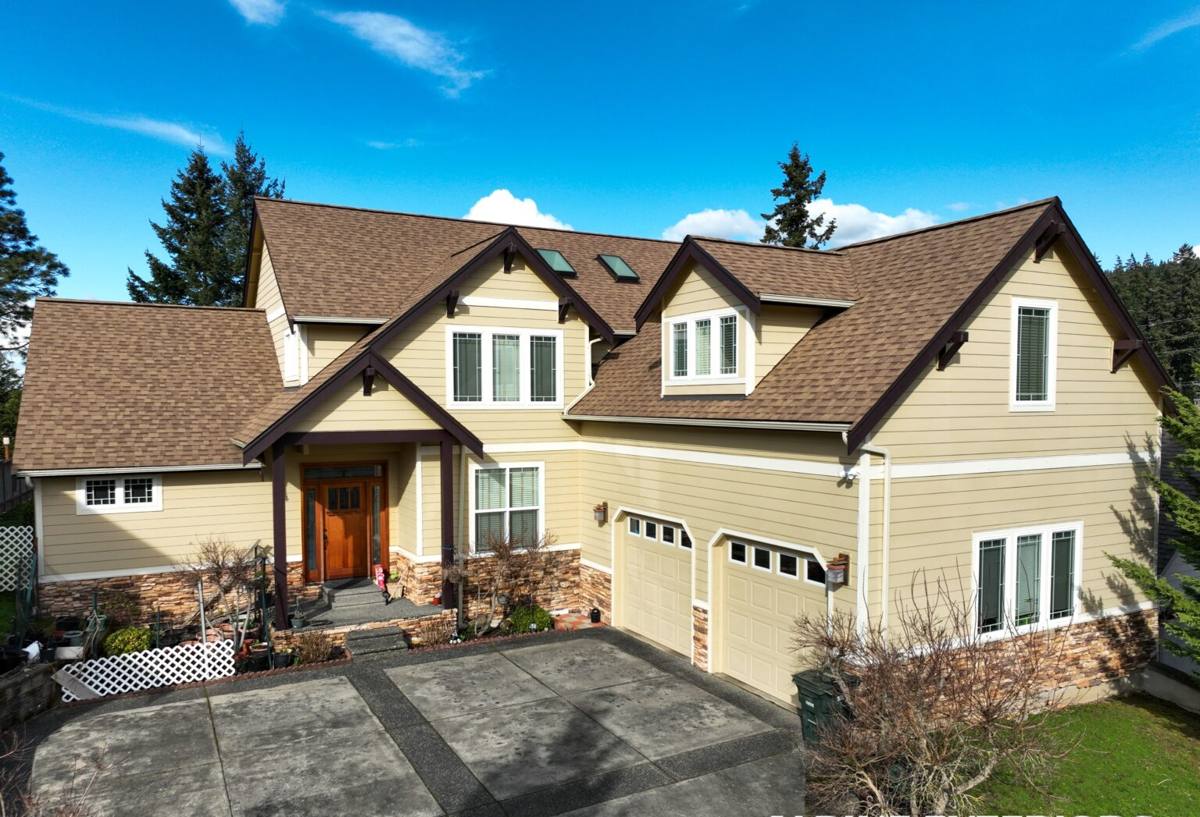
What Salt Air, Rain, and Moss Do to an Unprotected Deck
Every deck failure we get called out to inspect in this part of the county traces back to one of three things: fasteners or connectors corroding from the inside out, water sitting where it shouldn't, or organic growth breaking down a surface faster than it was designed to wear.
Salt Air and Corrosion
Proximity to saltwater means airborne salt settles on exposed metal — screw heads, joist hangers, post bases, railing brackets — and accelerates rust and galvanic corrosion. On a deck built with mismatched or under-rated hardware, this shows up first as rust streaking down the decking, then as loosening connections you can't see until they fail.
Driving Rain
Wind-driven rain gets up under rail caps, behind ledger boards, and into any joint that isn't properly flashed or sealed. Once water gets past the surface, it doesn't evaporate quickly in our climate — it sits in end grain, fastener holes, and framing connections, which is exactly where rot and corrosion start.
Moss and Algae
Whatcom County's long wet, shaded season gives moss and algae a real head start on any deck surface that stays damp — north-facing decks, areas under tree cover, and boards installed without enough of a drainage gap between them. Beyond looking bad, moss holds moisture against the board surface and turns a walking surface slick and genuinely dangerous.
Choosing the Right Decking Material for This Climate
There's no single "best" decking material — there's a best fit for how the deck will be used, how much upkeep the owner wants to do, and the budget. Here's how the common options stack up specifically for a coastal Whatcom County property.
| Material | How It Handles This Climate | Maintenance | Relative Cost |
|---|---|---|---|
| Pressure-treated lumber | Good rot resistance when installed correctly; still needs sealing and gaps for drainage | Annual cleaning, re-sealing every 1-2 years | Lowest upfront |
| Cedar | Naturally rot- and insect-resistant, ages to a gray patina if left unfinished | Regular cleaning, periodic finish if color is to be maintained | Mid-range |
| Composite decking | Doesn't absorb water or rot; still needs airflow underneath and periodic cleaning to prevent surface algae | Low — occasional washing | Higher upfront, lower long-term |
| PVC/capped composite | Fully sealed surface, best resistance to moisture and staining | Lowest — soap and water | Highest upfront |
We'll walk through these trade-offs honestly during an estimate. A composite or capped board often makes sense for a low-maintenance primary deck; cedar is a reasonable choice where the owner wants a natural look and is willing to do the upkeep. What we won't do is sell a material that looks right on paper but is a poor fit for how wet and shaded a particular site actually is.
Framing and Structural Details That Matter Here
The framing is where most long-term deck problems actually start, and it's the part homeowners can't see once the decking goes down. In Blanchard's conditions, a few details are non-negotiable:
Ledger Flashing
Where the deck attaches to the house, proper flashing keeps driving rain from working its way behind the ledger board and into the house's wall framing. This is one of the most common shortcuts we find on older or poorly built decks, and it's expensive to fix after the fact because it usually means opening up siding.
Footings and Post Bases
Footings need to be set below frost depth and sized for the soil conditions on the specific lot — coastal soils here vary quite a bit within short distances. Post bases should hold the post above the concrete and decking surface so wood never sits in standing water.
Joist Protection
Joist tape or an equivalent moisture barrier on top of framing lumber prevents water from wicking into the top of the joist where fasteners penetrate — one of the most common early rot points on decks in wet climates.
Fasteners and Hardware: Where Corner-Cutting Shows Up First
In a salt-air environment, hardware grade is not a place to save money. Structural connectors, joist hangers, and fasteners should be rated for coastal or salt-air exposure — typically stainless steel or heavy hot-dip galvanized coatings, matched correctly to the type of lumber being used so you don't create galvanic corrosion between dissimilar metals. We spec hardware for this environment as standard practice, not as an upgrade option, because the cost difference over the life of the deck is small compared to the cost of replacing corroded connectors under a finished deck surface.
Drainage, Airflow, and Moss Prevention
A deck that sheds water and dries out between rain events will outlast one that doesn't, regardless of material. This comes down to a few build decisions made before a single board is installed:
- Correct board spacing to let water drain through rather than pool on the surface
- Adequate clearance and airflow underneath the deck, especially for low decks close to grade
- Slight slope away from the house on any attached structure
- Keeping decking clear of overhanging branches where practical, since shade and leaf litter both extend how long a surface stays wet
- Solid or ventilated skirting choices that don't trap moisture against the framing
These aren't add-ons — they're part of getting the layout right at the design stage, which is why we walk the actual site before recommending a design rather than working from a generic plan.
Our Process for a Blanchard Deck Build
We approach every deck project in this area the same structured way:
- Site evaluation. We look at sun exposure, drainage patterns, tree cover, and how exposed the site is to wind and rain off the water, since that shapes both material and framing decisions.
- Design and material selection. We go over the honest trade-offs between wood and composite options for that specific site and budget, not a one-size answer.
- Permitting. Deck work typically requires a permit depending on height and attachment to the structure; we handle that coordination as part of the project.
- Framing and structural work. Ledger flashing, footings, joist protection, and coastal-rated hardware are built in at this stage, not treated as optional.
- Decking, railing, and finish. Installed with the drainage and airflow spacing this climate requires.
- Walkthrough. We go over what maintenance the specific material and site will actually need going forward.
Maintenance Checklist for Blanchard Homeowners
A well-built deck in this climate still needs some seasonal attention. What we recommend depends on material, but the general checklist looks like this:
- Sweep debris and standing leaves off the deck surface regularly, especially in fall
- Clean surface algae and moss buildup before it gets established, particularly on shaded or north-facing sections
- Check railing connections and fastener heads once a year for early rust or looseness
- Reseal or refinish wood decking on the schedule appropriate to the product used
- Keep gutters and downspouts near the deck clear so runoff isn't discharging directly onto or under it
- Confirm skirting and under-deck areas stay ventilated and aren't trapping moisture
Why a Local Crew Matters for This Job
Deck building isn't a one-size-fits-all trade, and the details that make a deck last in Whatcom County's coastal conditions are different from what a crew used to drier, inland projects would default to. A contractor who already works in and around Chuckanut and Blanchard knows what this specific stretch of coastline does to a deck over a few winters — which hardware grades actually hold up, which orientations collect moss, and which framing shortcuts show up as callbacks two or three years later. That local track record is worth more than a lower bid from a crew building to a generic spec.
If you're planning a new deck or replacing one that's showing its age, we're happy to come take a look and talk through what makes sense for your property. Reach out for a free, no-pressure estimate using the form below.