 Chuckanut Exterior
 Building New in South Hill? What the Windows Need to Handle
If you're framing a new home or a major addition in South Hill, the window package is one of the few building decisions that has to be right the first time. Once siding, trim, and interior finishes go on around a window opening, fixing a bad install means tearing back work that's already done. That's a different level of risk than a straightforward replacement job, and it's why new-construction window work deserves its own plan rather than treating it as an afterthought on the framing schedule.
South Hill sits in coastal Whatcom County, where homes deal with a combination most inland builders never have to plan around: salt-laden air off the water, wind-driven rain that comes in sideways more often than straight down, and a damp, shaded season that runs long enough to grow moss on anything that stays wet. New-construction windows here need to be selected and installed with all three of those in mind from the rough opening stage forward — not caulked and hoped for after the fact.
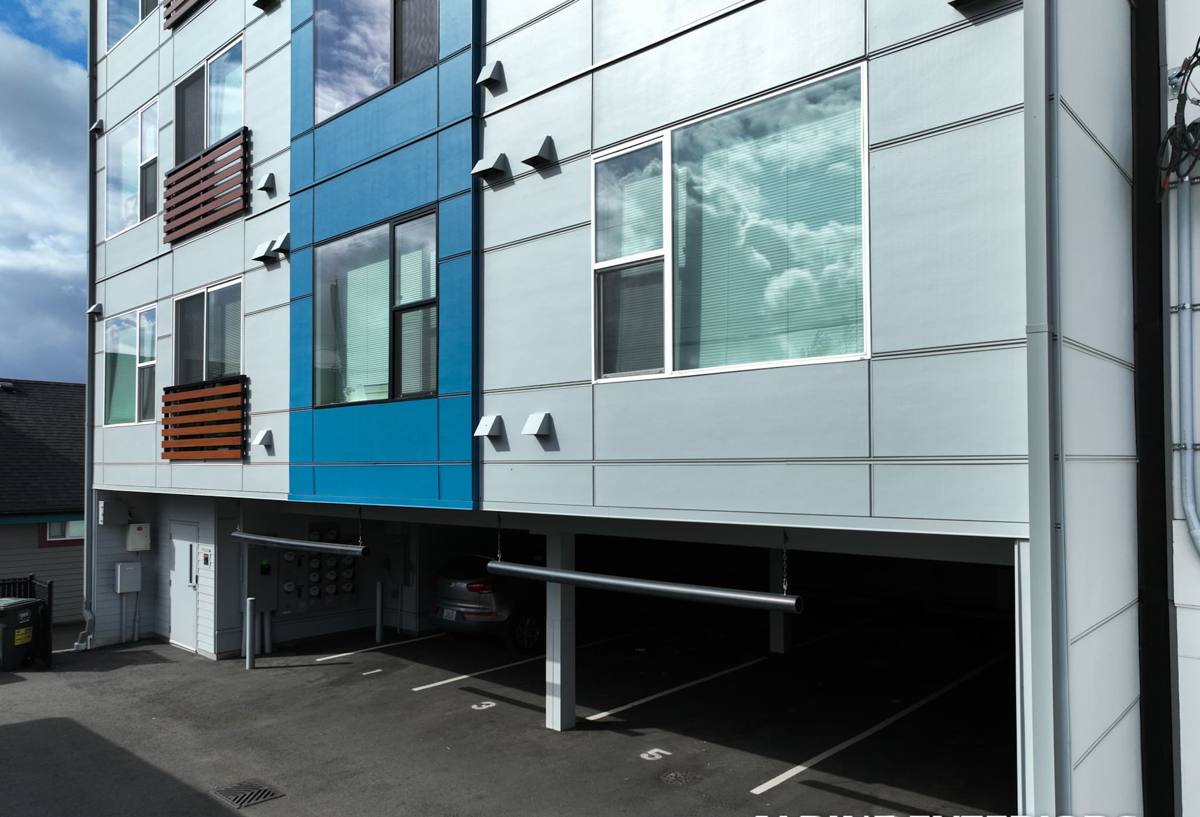
New-Construction vs. Replacement: Why the Job Is Different
New-construction windows use a nailing flange (also called a nail fin) that fastens directly to the wall sheathing and integrates with the house's weather-resistant barrier before siding goes on. That's different from a pocket or insert replacement window, which fits inside an existing frame and relies on the old frame's condition and flashing. In new construction, we're not working around anything — we're building the water management system for that opening from scratch, which means the opening itself, the flashing sequence, and the window all have to work together as one assembly.
The upside of doing it at the new-construction stage is that it's the easiest point in a home's life to get this right. There's no old caulk to strip, no hidden rot to discover, and no finished interior wall to protect. The downside is that mistakes made now — a reversed flashing lap, a skipped sill pan, an out-of-square rough opening — get sealed behind siding and drywall and won't show up as a problem until years later, usually as a stain, a soft spot, or a musty smell that's hard to trace back to its source.
What a Correct Rough Opening Looks Like
Before a window ever gets set, the opening needs to be square, plumb, and sized to the manufacturer's tolerances — typically with a small amount of shim space on all sides rather than a tight friction fit. An opening that's out of square forces the window frame to rack when it's fastened, which stresses the corner welds or joints and can keep the sash from operating smoothly for the life of the window. We check this before the window ever leaves the truck.
What Salt Air, Driving Rain, and Moss Season Do to a Window Over Time
Coastal air carries fine salt particles that settle on exterior hardware, screens, and unprotected metal. Over years, that accelerates corrosion on anything that isn't rated for a marine or near-coastal environment — cheap screen frames, unfinished fasteners, and low-grade hinge hardware are usually the first things to show it. It's a slow process, so it rarely factors into a homeowner's thinking at the framing stage, but it's exactly the kind of detail that separates a window package that still operates smoothly in ten years from one that starts sticking and pitting after five.
Driving rain is the bigger day-one concern. Wind-driven rain doesn't just fall on a window, it gets pushed sideways and upward against the frame and flashing, which is why a flashing detail that would be fine in a calm-rain climate can fail here. Water finds the smallest gap — a missed shingle-lap in the weather barrier, a sealant joint applied to a dirty or wet surface, a sill pan that wasn't sloped to drain — and it will find it during the first real winter storm, not gradually.
Then there's moss. Long stretches of damp, low-light weather let moss and algae take hold on any horizontal surface that holds moisture — window sills, the tops of trim boards, and shaded north-facing elevations especially. Moss itself doesn't destroy a window, but it holds water against wood trim and caulk joints longer than they'd otherwise sit wet, which shortens the life of both. Detailing sills to shed water quickly, and choosing trim materials that don't feed moss growth the way bare wood does, matters more here than it would in a drier climate.
Frame Material Comparison for Coastal Whatcom County Builds
There's no single "best" frame material for every new build — it depends on budget, the look you want, and how much maintenance you're willing to do. Here's how the common options actually perform under South Hill's conditions:
| Frame Material | Moisture & Salt-Air Performance | Maintenance | Typical Cost Position |
|---|---|---|---|
| Vinyl | Won't corrode or rot; performs well in coastal air | Low — occasional cleaning | Most affordable |
| Fiberglass | Excellent — dimensionally stable, resists moisture and salt exposure | Low | Mid to upper |
| Aluminum | Corrosion-prone unless properly finished; conducts cold, prone to condensation | Moderate | Mid |
| Wood-Clad | Good if cladding and seals stay intact; exposed wood needs protection | Higher — cladding joints and interior wood need monitoring | Upper |
Our standard is to steer new-construction clients away from bare aluminum frames and unclad wood on exposed elevations here — not because either product is inherently bad, but because both carry a maintenance burden that's harder to keep up with under this much rain and salt exposure than most homeowners expect going in. Vinyl and fiberglass hold up with far less upkeep, which is why they make up most of what we install on new builds in this area.
Flashing and Weather-Barrier Details That Actually Matter
The window itself is only part of what keeps water out — the flashing sequence around it is what actually does the work. On every new-construction install we follow the same core sequence:
- Sill pan first — a sloped, back-dammed pan under the rough opening so any water that gets past the window has somewhere to drain instead of pooling on the sheathing.
- Weather-resistant barrier integration — the house wrap is cut and lapped so water sheds over the top of the window flange, never under it, following a strict shingle-lap order (bottom, sides, then top).
- Window set into the opening — shimmed, squared, and fastened per the manufacturer's schedule, not just caulked into place.
- Head flashing — installed over the top flange, lapped under the barrier above it, to direct water around the opening rather than into it.
- Sealant at the right joints only — compatible sealant at specified points, never as a substitute for proper flashing overlap. Sealant is the backup layer, not the primary defense.
Skipping or reversing any one of these steps doesn't usually cause an immediate leak — it creates a weak point that shows up after enough driving-rain events stack up. That's the pattern we see most often when we're called to diagnose a leak in a home that's only a few years old: one step in this sequence was done out of order.
Glass and Performance Ratings Worth Choosing Deliberately
Whatcom County's climate is mild compared to inland Washington, but it's damp and often overcast, which puts different demands on glass than a hot, dry climate does. A few ratings worth understanding before you sign off on a window package:
U-Factor
U-factor measures how well a window resists heat loss — lower is better. In a marine climate with cool, wet winters, a lower U-factor keeps interior glass and frame surfaces warmer, which directly affects condensation.
Low-E Coatings
Low-emissivity coatings reduce heat transfer through the glass while still letting daylight through. In this region, where cloud cover is common, a coating that doesn't overly darken the glass is usually the right trade-off — you want the thermal benefit without losing the daylight you already get less of in winter.
Condensation Resistance
Warm, humid interior air meeting cold glass or frame surfaces causes condensation, which over time contributes to the same moisture problems as an exterior leak — just on the inside. A window with a solid condensation resistance rating and a warm-edge spacer in the glass unit performs noticeably better here than a budget unit without one.
All of this is documented on the NFRC label that comes with every code-compliant window — we go over those numbers with clients rather than just quoting a brand name, because two windows from the same manufacturer can carry very different ratings depending on the glass package selected.
Our New-Construction Window Process
- Plan review. We look at the framing plans or rough openings before install day to confirm sizes, swing directions, and egress requirements match what's ordered.
- Opening prep. Rough openings are checked for square and plumb, and corrected if framing tolerances are off before any window is set.
- Sill pan and flashing installation. Sill pans go in first, followed by the weather barrier integration around each opening.
- Window setting. Each unit is shimmed, leveled, squared, and fastened to the manufacturer's schedule — not just tacked and caulked.
- Head flashing and barrier lap-out. The sequence is completed so water sheds outward at every layer, top to bottom.
- Operation check. Every sash and lock is tested before we leave the opening, since a frame that's slightly out of square won't show up until the window is operated.
- Final walk-through. We review the completed openings with the builder or homeowner before siding closes them in, since that's the last point where a flashing detail can be corrected without demo work.
What Drives Cost — and What to Confirm Before Installation Day
New-construction window pricing depends on more than just the window unit itself. The factors that move the number most are:
| Cost Factor | Why It Matters |
|---|---|
| Number and size of openings | More glass and larger units mean more material and labor per opening |
| Frame material | Vinyl is typically the most affordable; fiberglass and wood-clad cost more upfront |
| Glass package | Upgraded Low-E coatings and gas fills add cost but improve comfort and condensation resistance |
| Opening complexity | Custom shapes, large sliders, or multi-unit combinations take more time to flash and set correctly |
| Access and building height | Second- and third-story openings require staging or lift access that adds labor time |
Because these variables swing the total so much, we walk every new-construction quote through them individually rather than giving a single flat number — a homeowner choosing between a mid-grade vinyl package and an upgraded fiberglass package should know exactly what that difference buys, not just what it costs.
Before installation day, it's worth confirming a short list of details with whoever is coordinating your build:
- Final window schedule matches the approved plans — sizes, operation type, and swing direction for each opening
- Rough openings have been framed to the manufacturer's specified dimensions, not just "close enough"
- Weather barrier is installed and ready before window setting begins, not applied afterward
- Glass package and frame color have been confirmed in writing before the order is placed
- A clear plan exists for who flashes and seals each opening, so nothing falls between the window crew and the siding crew
Why a Crew That Already Works South Hill Matters
Framing crews, builders, and inspectors in this area have their own habits and expectations, and a window crew that's already worked alongside them moves faster and causes fewer coordination headaches. We know how local building departments here in Whatcom County expect flashing and weather-barrier work to be documented, and we schedule around this area's weather patterns rather than working through a driving rain event that a crew unfamiliar with the region might not plan around.
More than anything, working in South Hill regularly means we've seen how homes here age — which details hold up against the salt air and moss season, and which ones show wear early. That experience shapes how we detail every opening, not just the ones on this project.
If you're planning a new build or addition in South Hill and want the window package handled by a crew that treats flashing and weather detailing as seriously as the windows themselves, we're happy to walk your plans and give you a straightforward, no-pressure estimate. Use the form below to get started.