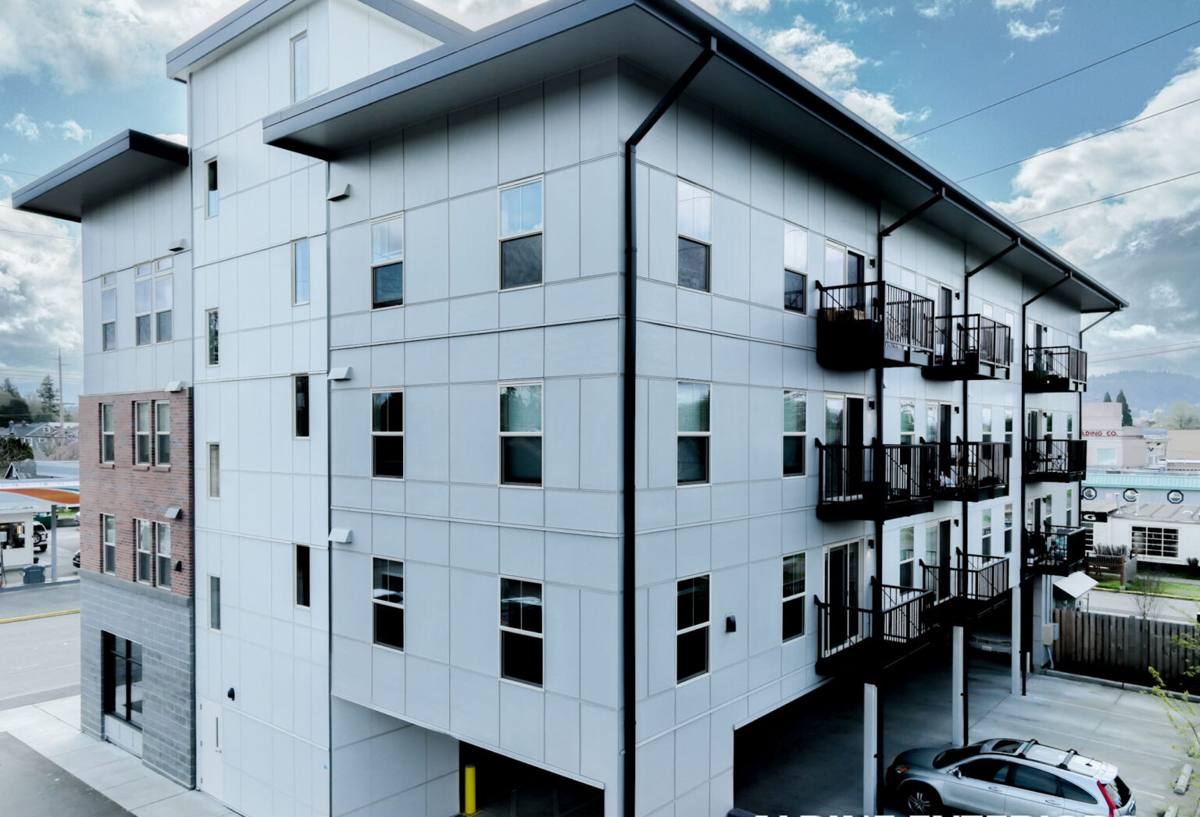
 Chuckanut Exterior
 Why Sehome Windows Take More Punishment Than the Catalog Photos Suggest
Window brochures are shot in dry, sunny conditions that a Sehome home rarely sees for more than a few weeks a year. In reality, windows here deal with salt-laden air drifting in off the water, driving rain that hits glass and trim sideways during winter storms, and a moss season that can stretch from October through May whenever shade and moisture combine. None of that is dramatic on its own, but stacked year after year, it's exactly the kind of slow, steady exposure that ages a window faster than the manufacturer's warranty paperwork assumes.
That's the lens we use when we talk about "energy-efficient windows" for a Sehome home. Efficiency isn't just a U-factor number on a spec sheet — it's whether the window still seals tight, still drains water correctly, and still holds its glass unit's seal five, ten, and twenty years from now, in this specific climate.
What Constant Moisture Actually Does to a Window Over Time
Seal and Sash Failure
Insulated glass units rely on a perimeter seal to keep argon gas in and moisture out. In a climate with this much sustained humidity, marginal seals fail earlier — you'll see that as fogging or a hazy ring between the panes. Once that happens, the insulating value of the glass is gone, no matter how good the frame around it still looks.
Frame and Sill Rot
Wood and wood-composite frames that aren't detailed correctly for this kind of weather can trap water at the sill or in the corner joints. The damage is often invisible from inside the house until paint starts bubbling or a sill feels soft underfoot — by then, water has usually been getting in for a while.
Moss, Algae, and Mildew Buildup
Anywhere shade and standing moisture combine — tracks, sills, the underside of exterior trim — moss and mildew will eventually take hold. It's mostly cosmetic on the glass itself, but on wood trim and older weatherstripping it holds moisture against the material and shortens its life.
What "Energy-Efficient" Should Actually Mean in This Climate
In the Pacific Northwest, the bigger energy loss is usually heat leaving the house through a long, mild, overcast heating season — not heat gain from intense summer sun. That changes which numbers matter most on a spec sheet.
| Spec | What It Measures | Why It Matters Here |
|---|---|---|
| U-Factor | How much heat escapes through the window | Lower is better — this is the number that matters most for our mild, heating-dominant climate |
| SHGC (Solar Heat Gain Coefficient) | How much solar heat passes through the glass | Moderate values are usually fine here — we don't need aggressive solar blocking like a hot, sunny climate would |
| Air Leakage Rating | How much air passes through the assembled window | Directly tied to draft complaints and how hard your furnace or heat pump works during storms |
| Condensation Resistance | How well the window resists interior condensation | Relevant given our humidity levels, especially on north-facing rooms |
We don't push the highest-numbered package on every job. A well-built double-pane window with a solid frame and correct installation often outperforms a premium triple-pane unit that was installed with sloppy flashing. Installation quality and product quality both have to be right — one doesn't make up for the other.
Signs Your Sehome Home's Windows Are Underperforming
Most homeowners don't realize how much a window has declined until they compare it to a new one. A few checks you can do yourself:
- Fogging or a visible haze between the panes of glass, especially noticeable on cool mornings
- A noticeable draft near the window frame when it's windy or storming outside
- Difficulty opening, closing, or latching a window that used to move smoothly
- Soft or discolored wood at the sill, especially on windows facing prevailing weather
- Moss or dark staining building up in the tracks or on exterior trim that won't clean off and reappears quickly
- Noticeably colder rooms near certain windows compared to the rest of the house
- Rising heating bills without a clear reason, especially in a home with its original windows
One or two of these can be a minor fix. Several at once, especially on an older window, usually means the unit has reached the end of its useful service life.
Frame Material Trade-Offs for This Climate
There's no single "best" frame material — each has a real trade-off, and we'll tell you honestly which one fits your situation rather than upselling whatever has the best margin.
| Frame Material | Strengths | Trade-Offs Here |
|---|---|---|
| Vinyl | Low maintenance, good insulating value, competitively priced | Quality varies a lot between manufacturers — thinner vinyl can flex and fade faster with sustained damp exposure |
| Fiberglass | Very stable dimensionally, holds paint well, strong moisture resistance | Higher upfront cost than vinyl |
| Wood / Wood-Clad | Classic appearance, works well for character homes | Needs consistent exterior maintenance in a wet climate, or moisture will find any gap in the finish |
| Aluminum | Slim sightlines, strong for large openings | Conducts heat and cold readily, and can be prone to corrosion issues in salt-air exposure without proper coatings |
For most Sehome homes, we lean toward vinyl or fiberglass for the balance of low maintenance and moisture resistance. Wood windows are still a good choice on character or historic-style homes where the look matters, as long as the owner is realistic about the upkeep it takes to keep that look.
What a Correct Installation Actually Involves
The window unit itself is maybe half the equation. The other half is how it's installed — and this is where a lot of window problems actually originate, regardless of how good the product was.
Flashing and Water Management
Every opening needs to be flashed so that any water that gets behind the siding or trim is directed back out, not into the wall cavity. This is the single most common thing we find missing or done incorrectly on older installations.
Air Sealing and Insulation
The gap between the window frame and the rough opening needs to be properly insulated and air-sealed — not stuffed with excess foam, which can bow the frame, and not left with gaps, which defeats the purpose of an efficient window entirely.
Exterior Sealant and Weep Paths
Sealant needs to go in the right places and, just as important, be left out of the wrong places — windows need a way to drain any water that does get into the frame track. Sealing a weep hole shut to make a window "look tight" is a mistake that traps water instead of releasing it.
Our Process, Start to Finish
- On-site assessment. We look at your current windows, note problem areas, and talk through what's actually driving the issue — sometimes it's the window, sometimes it's a flashing or trim detail nearby.
- Straightforward proposal. You get a clear breakdown of product options and pricing, without pressure to upgrade to something you don't need.
- Scheduling around the weather. We plan installation days with an eye on the forecast so openings aren't left exposed longer than necessary.
- Removal and inspection. Once the old window is out, we check the rough opening and framing for hidden moisture damage before anything new goes in.
- Correct installation. Flashing, air sealing, and sealant are done to spec — not just "close enough."
- Final walkthrough. We test every window with you before we consider the job finished — smooth operation, tight seal, clean finish work.
Why Hiring a Crew That Already Works in Sehome Matters
A contractor who works regularly in this part of Whatcom County already knows what a home here is up against — the exposure patterns from prevailing storms, how quickly moss establishes itself in shaded, damp spots, and which frame and flashing details actually hold up long-term versus which ones look fine for a year or two and then fail. That's not something you get from a national installer who treats every job the same way regardless of climate.
It also matters for accountability. A local crew is still around next season if a question comes up, and has a reputation in the community worth protecting — not just a job number that closes out once the invoice is paid.
Get a Straight Answer on Your Windows
If you're not sure whether your current windows need to be replaced or just serviced, we're happy to take a look and give you an honest read — no pressure, no upsell. Use the form below to request a free estimate for your Sehome home.