 Chuckanut Exterior
 Why Sedro-Woolley Siding Wears Out Faster Than Homeowners Expect
Homes in the Sedro-Woolley area deal with a specific combination of stressors that's harder on exterior siding than most homeowners realize. Salt-laden air moves inland with weather systems off the water, driving rain comes in sideways during fall and winter storms and finds every gap in a wall assembly, and a long moss season keeps north- and shade-facing walls damp for months at a stretch. None of these alone is unusual for Northwest Washington. Together, over years, they add up to premature paint failure, soft trim, and siding that looks tired long before it should.
Wood-based products are especially vulnerable to this combination because moss and algae need organic material and sustained moisture to take hold — exactly what a shaded, rain-soaked wall provides for a good chunk of the year. Vinyl holds up against moisture itself but moves with temperature swings and can crack or pull away from fasteners over time, which opens the door for water to get behind it. Whatever siding goes on a Sedro-Woolley home needs to handle repeated wet-dry cycling, resist feeding moss and algae, and stay dimensionally stable through temperature swings — not just look good on installation day.
Signs Your Siding Has Reached Replacement, Not Repair
Not every siding problem means a full tear-off. But there's a point where patching individual boards or caulking joints stops being a real fix and starts being a way to delay a job that needs doing. Watch for:
- Soft or spongy spots when you press on siding, especially near the bottom courses or below windows
- Moss or dark algae staining that comes back within a season or two of cleaning
- Boards separating at seams or pulling away from the wall at corners
- Paint that's peeling, bubbling, or failing again within a year or two of a repaint
- Visible rot or crumbling at butt joints and panel edges
- A noticeable draft indoors near exterior walls, or a heating bill that's crept up without an obvious cause
Any one of these on its own might be a localized repair. Several showing up at once, especially spread across different walls, usually means the siding system as a whole has reached the end of its useful life.
What a Correct Siding Replacement Job Actually Involves
Tear-Off and What's Underneath
Pulling old siding is also the only real chance to see what's happening behind it. Sheathing that's stayed wet under failed siding for years can be soft, delaminated, or rotted, and that damage doesn't show up from the outside. A correct job means inspecting the sheathing once it's exposed, repairing or replacing damaged sections, and never hanging new siding over a substrate that's already compromised. Skipping this step is one of the most common ways a siding job looks fine for a year or two and then fails from the inside out.
Weather-Resistive Barrier and Flashing
In a climate where driving rain is a regular event rather than an occasional storm, the weather-resistive barrier and flashing details matter as much as the siding itself. That means a continuous, properly lapped barrier, correctly integrated flashing at every window and door, and kick-out flashing wherever a roofline meets a wall so water is directed out and away instead of down behind the siding. These details are invisible once the job is finished, which is exactly why they're worth asking about before work starts.
Installing to Manufacturer Spec
Fiber cement siding has a specific nailing pattern, joint spacing, and clearance requirements that are part of keeping the manufacturer's warranty valid — and part of what makes the siding perform the way it's designed to. That includes keeping the bottom edge properly clear of decks, patios, and grade so moisture doesn't wick up into the material, and using the right caulk at joints so seams stay sealed rather than becoming a moss and moisture trap.
Finish Work
Trim, corners, and caulking are where a job either looks finished or looks rushed. Clean trim lines and properly sealed joints aren't cosmetic extras — they're part of what keeps water out of the wall assembly long-term.
Material Choice: Why We Install Only James Hardie Fiber Cement
We get asked fairly often why we don't offer vinyl, LP SmartSide, or cedar as options. Each of those products has real strengths, and we're not going to pretend otherwise — but given what this climate does to a wall over 20-plus years, we standardized on James Hardie fiber cement and stopped installing the alternatives.
| Material | Moisture & Moss Behavior | Maintenance | Fire Rating |
|---|---|---|---|
| Vinyl | Doesn't rot, but can warp or crack with temperature swings, opening gaps behind the panel | Low, but cracked or bowed panels are hard to spot-repair invisibly | Combustible |
| LP SmartSide (engineered wood) | Wood-based substrate; cut edges and seams need diligent, ongoing sealing to resist moisture | Moderate to high — regular inspection of seams and edges | Combustible |
| Cedar | Attractive but organic; feeds moss and algae readily in a damp, shaded climate without upkeep | High — periodic refinishing and moss treatment | Combustible |
| James Hardie Fiber Cement | Non-organic composition doesn't feed moss/algae growth the way wood products can; engineered for wet climates | Low — factory finish, occasional washing | Non-combustible |
Vinyl is affordable and low-maintenance, but it moves with the weather, and once a panel warps or a fastener works loose, water can get behind it without any obvious outward sign. LP SmartSide is a genuine improvement over old-style wood siding, but it's still a wood-based product at its core — cut edges and seams need consistent, correct sealing to keep performing, and in a climate with this much sustained moisture and moss pressure, that margin for error is thin. Cedar looks great fresh, but it's an organic material in a climate built to grow moss on organic materials, and keeping it looking right means real, ongoing upkeep.
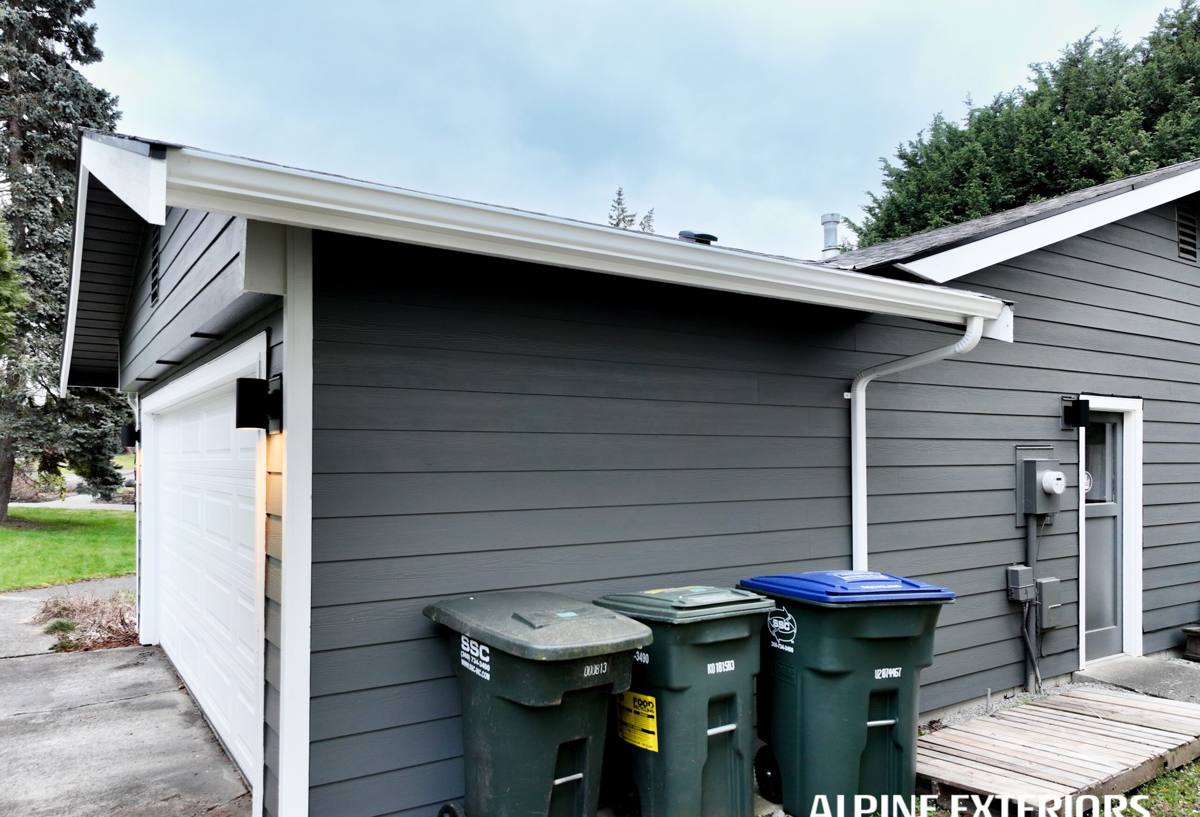
James Hardie fiber cement is cement-based, not wood-based, so it doesn't give moss and algae the same organic material to root into, and it holds its shape through the wet-dry, warm-cool cycling this region puts siding through every year. It's factory-finished with ColorPlus technology so the color coat is baked on rather than field-applied, it's non-combustible, and Hardie's HZ product lines are engineered specifically for climate zones like ours. It's also backed by a strong, transferable manufacturer warranty when installed to spec — which is why correct installation, not just material choice, is half the job.
Our Process, Start to Finish
- Free on-site inspection, including a look at visible siding condition and likely sheathing risk areas
- Written estimate with product line and color selection
- Permitting handled as required for the scope of work
- Tear-off and sheathing inspection, with repair of any damage found before new siding goes up
- Weather-resistive barrier and flashing installation at all windows, doors, and roof-wall intersections
- Hardie siding installed to manufacturer specification for nailing, spacing, and clearance
- Trim, caulking, and finish touch-up
- Final walkthrough so you know exactly what was done and what to expect from it
What Affects the Cost of Siding Replacement
Every home is different, and we're not going to throw out a number that doesn't mean anything until we've actually looked at your house. What we can tell you is what tends to move the price up or down.
| Factor | Why It Matters |
|---|---|
| Sheathing condition | Hidden rot found during tear-off adds repair scope that isn't visible until the old siding is off |
| Home size and number of stories | More wall area and taller work both add labor and equipment time |
| Trim and architectural detail | Homes with more corners, gables, and trim detail take longer to finish cleanly |
| Siding profile | Lap, shingle, and panel styles differ in material and labor cost |
| Color and finish | Standard ColorPlus factory colors versus custom field-applied paint affects both cost and long-term maintenance |
In general, expect siding replacement to range from several thousand dollars for a smaller, straightforward home to a good deal more for a larger house with complex trim or hidden substrate repair. The only way to get a real number is a walk-through of your specific home.
Why Hiring a Crew That Already Works Sedro-Woolley Matters
A crew that works this area regularly already knows how moss and moisture behave on local homes, which walls tend to take the worst of the driving rain, and how to sequence a tear-off around weather rather than getting caught mid-job when a storm rolls through. That local knowledge shows up in small decisions throughout the job — where extra flashing attention is worth it, which details can't be skipped in this climate even if they'd be less critical somewhere drier.
It also matters after the job is done. Siding is a long-term investment, and if a question or warranty issue comes up five or ten years down the road, you want a company that's still local, still reachable, and familiar with the work — not a crew that came through once from out of the area.
If your Sedro-Woolley home's siding is showing its age, we're happy to take a look and give you a straightforward, no-pressure assessment of what it actually needs. Use the form below to request a free estimate.