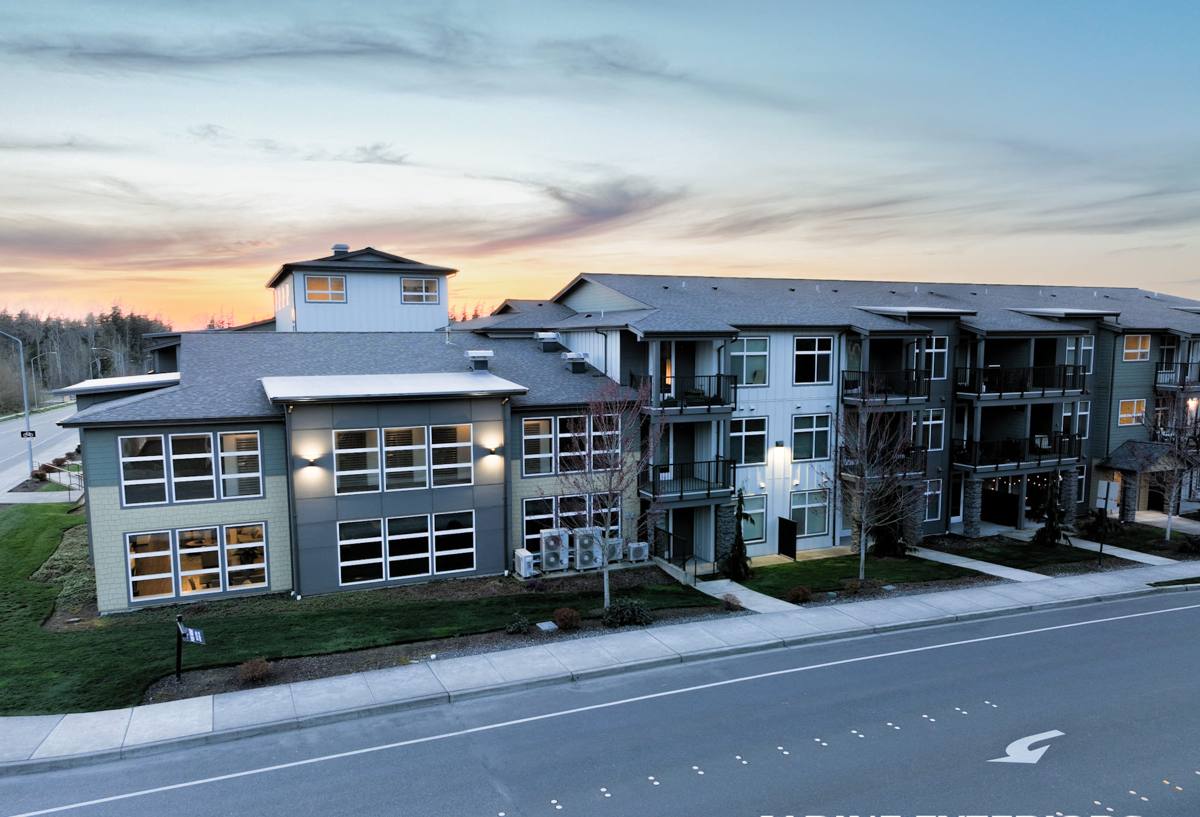
 Chuckanut Exterior
 Roof Repair Built Around What York Homes Actually Deal With
York sits close enough to the water and to Chuckanut's tree cover that roofs here age differently than roofs twenty miles inland. Salt air off the Sound accelerates corrosion on metal flashing, fasteners, and vents. Driving rain off Bellingham Bay finds every gap in flashing and underlayment that a calmer climate would never expose. And the moss season here isn't a two-month nuisance — depending on the year, it can run from early fall through late spring, which means shaded roof sections rarely get a real chance to dry out.
None of that means York roofs need constant replacement. Most of the time, what a homeowner is dealing with is a repair — a specific failure point that, if diagnosed correctly and fixed correctly, buys the roof many more years. The problem is that a lot of repair work done in this region gets rushed: a patch of roofing cement slapped over a symptom instead of the cause. We'd rather spend the extra fifteen minutes finding out why water is getting in.
Signs a York Roof Needs Repair, Not Replacement
Most homeowners call us because of a visible symptom — a stain on the ceiling, a damp smell in the attic, or moss they can see from the driveway. Here's how we sort out what's actually going on before we recommend anything:
- Ceiling stains that grow after rain — usually a localized flashing or underlayment failure, not a whole-roof problem.
- Granule buildup in gutters — normal in small amounts on asphalt shingles, but heavy buildup on a roof under 15 years old points to a specific damaged section.
- Moss concentrated on one slope — almost always the shaded, north-facing side; this is a maintenance and repair issue, not a sign the whole roof is failing.
- Curling or lifted shingles near valleys and edges — these are the highest-stress areas on any roof and the most common repair points.
- Rust streaks below metal flashing or vent boots — salt-air corrosion showing up exactly where you'd expect it, at penetrations and flashing seams.
Full replacement makes sense when the roofing material itself is at the end of its service life across the whole roof, or when repairs have been deferred long enough that decking underneath is compromised. Short of that, targeted repair is almost always the more honest recommendation — and it's usually what we make.
What a Correct Roof Repair Actually Involves
A repair that holds up in this climate isn't just about covering the spot where water is showing up inside the house. Water travels — it can enter several feet from where it appears on a ceiling. A repair done right includes:
Finding the real entry point
We trace the leak from the interior stain or damp spot back up through the attic framing to the actual point of failure on the roof deck, rather than assuming the leak is directly above the stain.
Checking what's underneath
Once we're at the failure point, we check the decking for soft spots or rot. A shingle repair over compromised decking won't hold — the decking has to be sound, or replaced, before anything goes back on top.
Matching materials correctly
Flashing, underlayment, and fasteners all need to be compatible with what's already on the roof and appropriate for a salt-air environment. Mixing metals at flashing joints, for example, sets up galvanic corrosion that causes a repair to fail again within a few years.
Sealing for wind-driven rain, not just vertical rain
Rain in this part of Whatcom County rarely falls straight down. Repairs around valleys, chimneys, and wall-to-roof transitions need to account for wind-driven rain pushing sideways and upward under the shingle line, not just water running downhill.
Our Process, Start to Finish
- Inspection and diagnosis. We walk the roof (or use a lift for steep or fragile sections) and check the attic from the inside where accessible, so we're diagnosing the actual cause rather than guessing from the ground.
- Written estimate. You get a clear explanation of what's failing, why, and what it'll take to fix it — no pressure to upgrade to a full replacement if a repair is the honest answer.
- Repair. We remove and replace only the affected materials, matching shingle type, flashing metal, and underlayment to what's appropriate for the rest of the roof.
- Moss and debris clearing. If moss or organic buildup contributed to the failure, we clear it from the repaired area and surrounding roof so the fix isn't undermined within a season.
- Cleanup and walk-through. We haul debris and fasteners off-site and walk you through what was done and what to watch for going forward.
Common Repair Issues We See Around York
Because of the tree cover and proximity to the water, a handful of issues come up repeatedly on York-area roofs:
Moss-driven shingle lift
Moss doesn't just sit on the surface — its root structure works under shingle edges and lifts them slightly, which is enough for wind-driven rain to get underneath. By the time moss is visible from the ground, it's often been doing this for a while.
Corroded flashing at penetrations
Vent boots, chimney flashing, and skylight flashing take the brunt of salt-air exposure. Rubber vent boots crack and metal flashing corrodes at seams years before the shingle field around them shows wear.
Valley failures
Valleys carry more water volume than any other part of the roof. In a region with sustained heavy rain, a valley that was installed with a marginal amount of overlap or the wrong material will show problems well before the rest of the roof does.
Gutter and edge damage from moss-clearing neglect
When moss and debris aren't cleared regularly, water backs up at the roof edge instead of draining, which rots fascia boards and drip edge and eventually works its way under the first course of shingles.
Repair vs. Replacement: How We Help You Decide
| Factor | Points Toward Repair | Points Toward Replacement |
|---|---|---|
| Age of roofing material | Under roughly 70% of expected lifespan | Near or past expected lifespan |
| Extent of damage | Localized to one section, valley, or penetration | Widespread across multiple slopes |
| Decking condition | Solid, no rot found during inspection | Soft spots or rot found in multiple areas |
| Repair history | First or second repair in this area | Same area repaired repeatedly without lasting fix |
| Moss/organic damage | Surface-level, caught early | Long-term buildup with granule loss and shingle degradation |
This isn't a rigid formula — it's a starting point for the conversation we have on-site. Two roofs the same age can be in very different condition depending on how much shade and moss exposure they've had.
Materials and Standards We Hold To
For flashing and fasteners in a salt-air environment, we favor corrosion-resistant materials over the cheapest option that technically meets code, because the maintenance and callback burden of undersized flashing shows up within a few years here, not decades. Where a homeowner is considering a lower-cost material substitution, we'll walk through the honest trade-offs — moisture behavior, how forgiving (or not) it is during installation, and what the manufacturer's warranty actually requires for it to stay valid — rather than just quoting a price.
We also match underlayment to the exposure level of the specific roof section being repaired. A section under heavy tree cover with prolonged moisture exposure gets treated differently than a sun-exposed south slope, even on the same roof.
Before You Hire: A Practical Checklist
Whether you call us or someone else, these are worth confirming before any repair work starts:
- Is the contractor licensed and insured in Washington, and will they show you proof without being asked twice?
- Does the estimate name the actual cause of the leak or damage, not just "we'll fix the roof"?
- Will they check the attic or interior, not just the exterior, before diagnosing the problem?
- Are they using materials matched to what's already on your roof, including flashing metal type?
- Is moss or debris clearing included if it contributed to the damage, or is that a separate line item?
- Do they explain repair vs. replacement trade-offs in plain terms, or push straight to the bigger job?
Why It Matters That We Already Work in York
A crew that regularly works this specific part of Whatcom County already knows which roof sections in this area tend to hold moisture longest, which flashing details fail first under sustained wind-driven rain, and roughly what moss season is doing to a roof at any given point in the year. That's not a substitute for inspecting your specific roof — every house is different — but it means less guesswork and fewer surprises once we're up there.
It also means we're not a crew that shows up once and disappears. If a repair needs a follow-up check after the next heavy rain, or moss comes back sooner than expected on a shaded slope, we're a local call, not a search for someone new.
Get a Straight Answer About Your Roof
If you're dealing with a leak, moss buildup, or damaged flashing on a York-area roof, we'll come take a look, tell you honestly whether it's a repair or something bigger, and give you a written estimate with no pressure either way. The estimate is free, and there's no obligation — just use the form below to get started.