 Chuckanut Exterior
 Larrabee's Siding Has a Harder Job Than Most
Homes along Chuckanut Drive and the wooded, waterfront terrain around Larrabee sit at the edge of Bellingham Bay, tucked under evergreen canopy and exposed to open water in the same breath. That combination is tough on exterior materials. Salt-laden air moves in off the water and settles on siding, trim, and fasteners. Driving rain off Puget Sound hits west- and south-facing walls hard, often sideways, during fall and winter storms. And the shade from the trees that make this stretch of Whatcom County so appealing also means siding stays damp longer after every rain, which is exactly what moss and mildew need to take hold.
None of that is unusual for the Pacific Northwest coastline, but Larrabee gets a concentrated version of it. A siding product that performs fine in a drier, more open part of the county can struggle here. We install exclusively James Hardie fiber cement siding for this reason — it's the one product line we've found holds up to salt exposure, sustained moisture, and moss pressure without turning into a maintenance project every couple of years.
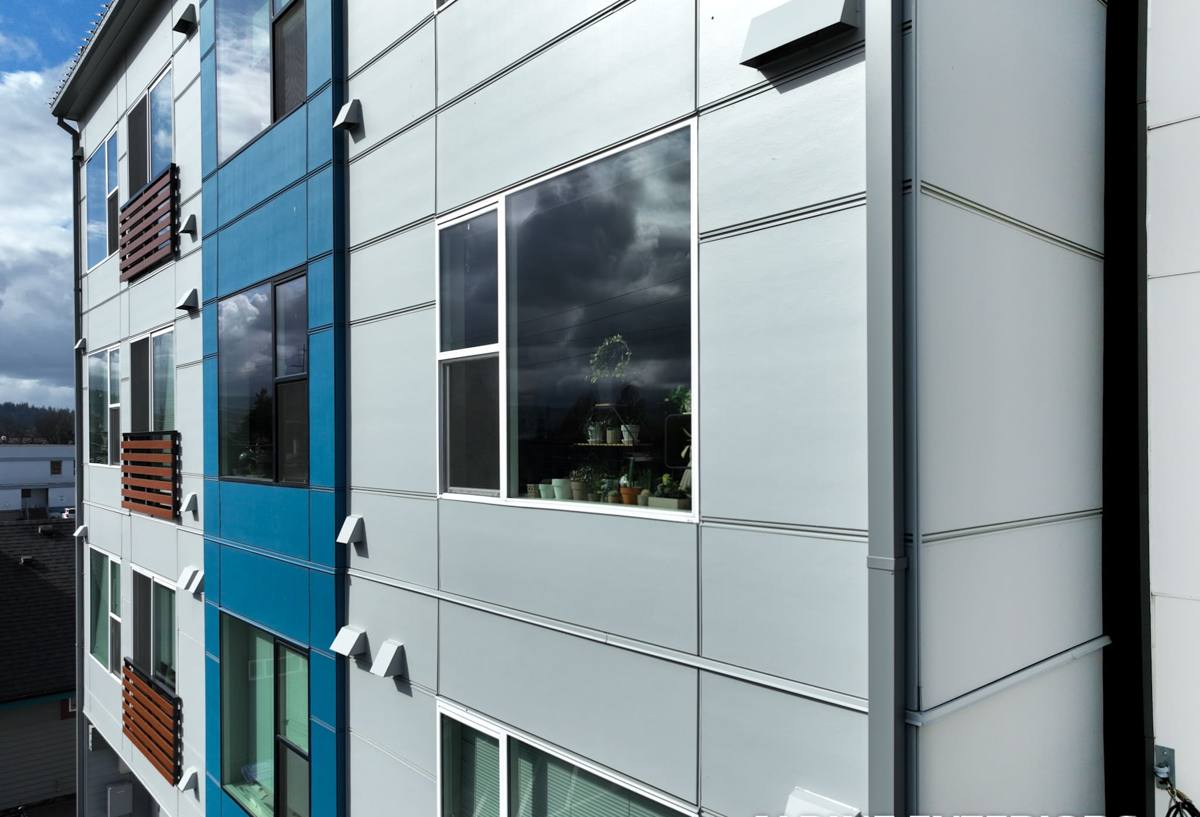
What Chuckanut's Climate Actually Does to Exterior Walls
Salt Air and Metal Fasteners
Airborne salt accelerates corrosion on anything metal — nail heads, trim flashing, hose bibs, light fixtures mounted to the wall. Over years, corroding fasteners can stain siding, loosen panels, and create small gaps where water gets behind the cladding. Corrosion-resistant fastening and flashing detail matter more here than in inland Whatcom County.
Driving Rain and Wind-Driven Moisture
Storms coming off the Sound don't just fall straight down — wind pushes rain sideways into wall assemblies, especially on exposed or unscreened elevations. Siding that isn't installed with correct drainage gaps, flashing, and clearances can trap that moisture against the wall sheathing instead of shedding it.
Shade, Moisture Retention, and Moss
The tree cover that shades Larrabee's homes also slows drying time after rain. Combined with cool, damp winters, that's a long moss and algae season — often eight or nine months of the year where conditions favor growth on north-facing and shaded walls. Porous or absorbent siding materials give moss more to grab onto and more moisture to work with.
Why We Only Install James Hardie in This Area
James Hardie fiber cement is a cement, sand, and cellulose fiber composite — it doesn't absorb water the way wood-based products do, and it won't rot, delaminate, or feed moss growth the way some organic siding materials can. For Larrabee specifically, we spec Hardie's HZ5 product line, engineered for harsh, wet climate zones, which covers the wind and moisture exposure this stretch of coastline sees.
The factory-applied ColorPlus finish is also relevant here. It's baked on under controlled conditions rather than field-painted, which means better adhesion and better resistance to fading and moisture intrusion at the finish layer — the layer that takes the brunt of salt air and UV exposure at this elevation.
We won't put vinyl, LP SmartSide, cedar, or primed spruce on a home in this micro-climate. Each of those has legitimate uses elsewhere, but every one of them has a known weak point that this specific combination of salt, rain, and shade tends to find — vinyl can warp and doesn't handle wind-driven debris well, wood-based products are vulnerable to moisture intake at cut edges and seams, and field-applied paint finishes fail faster under sustained damp and UV than a factory-cured finish does. Fiber cement, installed correctly, is the one product we're confident standing behind on a Larrabee home for decades.
What "Installed Correctly" Actually Means Here
Fiber cement siding is only as good as its installation. A poorly installed Hardie job can still trap moisture and fail early — the product isn't magic, the assembly is what protects the wall. In a climate like Larrabee's, a few details matter more than usual:
- A continuous, correctly lapped weather-resistive barrier behind the siding, with all penetrations properly flashed and sealed
- Proper drainage gap (rainscreen) so wind-driven moisture that gets behind the panel has somewhere to go and dry out
- Correct fastener type, spacing, and corrosion resistance for a coastal, high-moisture zone
- Manufacturer-specified clearance from grade, roofing, decks, and other hard surfaces so panels aren't wicking up standing moisture
- Tight, properly caulked joints at trim, windows, and butt seams — the places where wind-driven rain finds its way in first
- Factory-cut and factory-primed edges used wherever possible, with any field cuts sealed per Hardie's application instructions
Skip any one of these and you can end up with moisture problems behind fiber cement siding just as easily as behind any other material. This is the checklist our crews actually work off of on every Larrabee job, not a marketing list.
How Fiber Cement Compares for a Home Like This
| Factor | James Hardie Fiber Cement | Vinyl | Cedar / Wood-Based |
|---|---|---|---|
| Moisture behavior | Does not absorb water; resists rot when installed to spec | Doesn't rot, but can warp and gap, letting water behind | Absorbs moisture at cuts/seams; prone to rot without upkeep |
| Moss/algae resistance | Non-porous surface, less for growth to grip | Can grow moss in shaded, damp spots | Porous surface, moss-prone in shade |
| Salt-air durability | Cement composite unaffected by salt; fasteners are the concern | Generally stable but can become brittle over time | Vulnerable to accelerated weathering |
| Finish life expectancy | Factory ColorPlus finish, long fade/moisture resistance | Color is through-body but can fade and chalk | Requires repainting/restaining every few years |
| Fire resistance | Non-combustible | Combustible, can melt/deform near heat | Combustible |
This isn't a knock on every use of vinyl or cedar — they have their place. It's why, for the specific conditions this part of Whatcom County throws at a wall, we've standardized on one product and installation method rather than offering several and hoping the cheaper option holds up.
Our Process on a Larrabee Job
Assessment and Moisture Check
We start by walking the exterior and checking for existing moisture damage, particularly around windows, roof-to-wall transitions, and any north- or shade-facing walls where past siding may have trapped water. If there's rot in the sheathing or framing, that gets addressed before any new siding goes up — covering a wet wall with new siding just hides the problem.
Prep and Weather Barrier
Old siding comes off, sheathing is inspected and repaired as needed, and a new weather-resistive barrier goes on with correct lapping and flashing at every window, door, and penetration. This step is where most long-term failures either get prevented or get built in — we don't rush it.
Rainscreen and Fastening
We install a drainage gap behind the siding and use fasteners rated for coastal exposure, spaced and set to Hardie's specifications. This is one of the details that separates a job built for Larrabee's climate from a generic installation.
Siding, Trim, and Final Detailing
Panels go up with correct overlap and clearances, joints are sealed with appropriate sealant, and trim is finished to shed water away from the wall rather than into it. We do a final walk-through checking every seam, corner, and penetration before calling the job done.
Living With Fiber Cement in a Moss-Heavy, Salt-Air Climate
Correctly installed Hardie siding is low-maintenance, not zero-maintenance. In an environment like Larrabee's, a little seasonal attention keeps it performing the way it's designed to:
- Rinse the exterior once or twice a year, focusing on shaded, north-facing walls where moss and algae are most likely to start
- Keep gutters clear so overflow isn't running down the siding face during heavy storms
- Trim back vegetation that's holding moisture against the wall or blocking airflow and sun exposure
- Check caulking at trim and window joints periodically — sealant is a maintenance item even on a low-maintenance siding system
- Watch for any staining near fasteners or flashing, which can signal a corrosion or moisture issue worth catching early
None of this is heavy lifting compared to repainting or restaining a wood-based exterior every few years, but it's not nothing either. We tell every Larrabee homeowner this upfront rather than overselling "maintenance-free" siding, because that term doesn't really exist on a coastal property.
Why It Matters That We Already Work This Area
Siding installation standards don't change much from one Whatcom County neighborhood to the next, but the judgment calls do. Knowing which elevations in Larrabee take the worst of the wind-driven rain, how much shade a given lot actually gets through the year, and how salt exposure varies with proximity to the water changes decisions on flashing details, fastener choice, and where extra attention is worth the time. A crew that's worked this stretch of Chuckanut Drive and the surrounding area has already made those calls on other homes nearby and knows what holds up here versus what doesn't.
It also means a straightforward conversation about what your home actually needs — not a generic siding pitch, but one shaped by what we've seen work on comparable homes in this specific climate.
Get a Straightforward Estimate for Your Larrabee Home
If your current siding is showing moss buildup, moisture staining, or wear from years of salt air and driving rain, we're happy to take a look and give you an honest read on what's going on and what it would take to fix it right. Reach out for a free, no-pressure estimate on James Hardie fiber cement siding for your Larrabee home — no obligation, just a clear picture of your options.