 Chuckanut Exterior
 Roofing Around Lake Samish Has Its Own Set of Problems
Lake Samish sits in a pocket of Whatcom County where the roofs take a beating from more than one direction at once. You've got the lake's own humidity rising off the water, driving rain funneling down from the Chuckanut hills, and salt-laden air drifting in from Samish Bay and the greater Puget Sound. Add heavy tree cover on most lots — fir, cedar, big-leaf maple — and you get a roofing environment that's shadier, damper, and slower to dry out than a roof just a few miles inland. That combination is exactly why moss, trapped moisture, and slow leak damage show up here more than almost anywhere else we work in Whatcom County.
We're not describing a generic "wet Pacific Northwest roof" problem. Lake Samish roofs deal with a specific mix: dense shade that keeps shingles damp for days after a storm, wind-driven rain that gets pushed sideways into vents and flashing, and a moss season that can run eight months or longer depending on the year. A roof repair here has to account for all three, not just patch the spot where water is showing up inside the house.
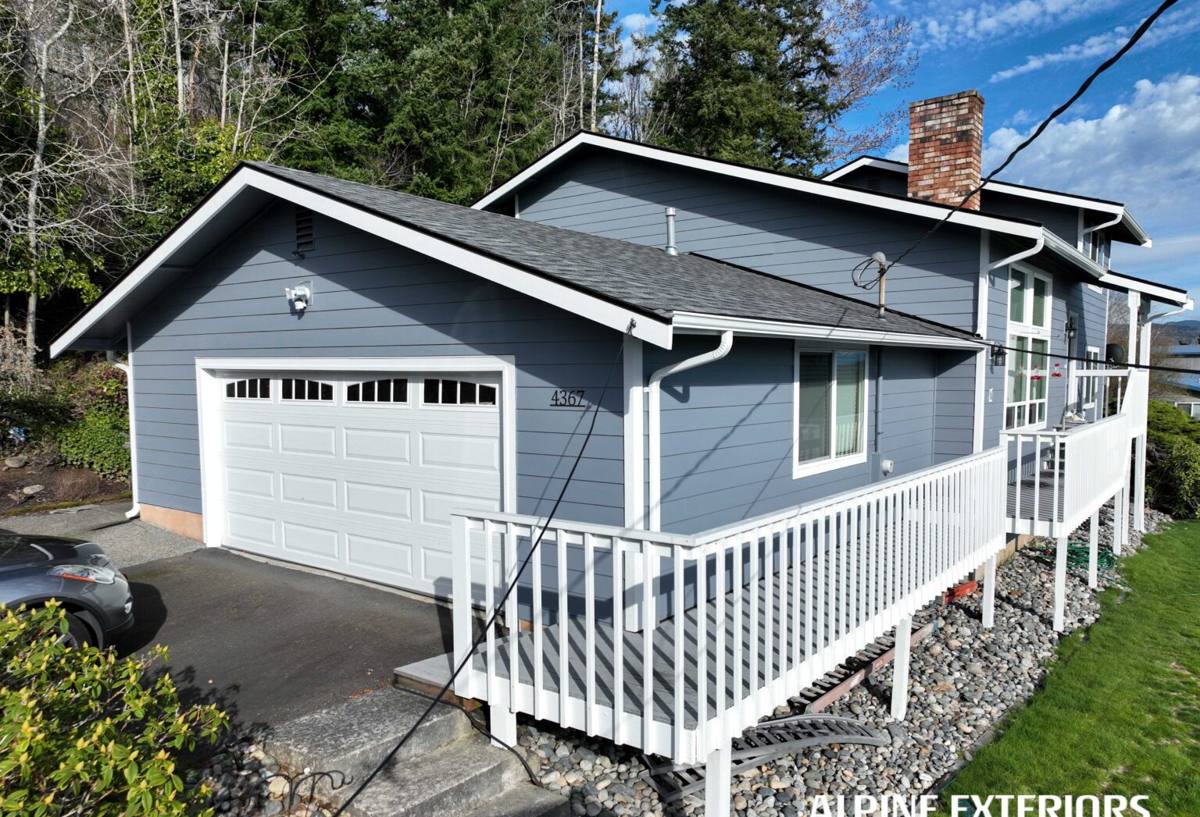
What "Correct" Roof Repair Looks Like on a Lake Samish Home
A lot of roof repairs fail — or come back within a year — because they treat the visible symptom instead of the cause. On a shaded, lakeside roof, that distinction matters more than usual. Water rarely enters where it shows up on your ceiling. It travels along the underlayment or decking first, sometimes for several feet, before it finds a gap in the drywall or insulation to drip through.
Diagnosis Before Repair
Before we touch anything, we're looking for the actual entry point: lifted or cracked shingle tabs, nail pops that have worked loose from years of freeze-thaw and moisture cycling, flashing that's separated at a chimney or sidewall, or moss mats that have wedged shingle edges up just enough to let wind-driven rain underneath. On homes near the lake, we also check valleys and low-slope sections closely — these hold water and debris longer because the surrounding tree canopy slows evaporation.
What We Actually Fix
- Replace damaged or missing shingles/shakes, matching existing material as closely as possible
- Re-seat or replace failed flashing at chimneys, skylights, and roof-to-wall intersections
- Clear and repair valleys where debris and moss have dammed water flow
- Address soft or delaminated decking discovered under damaged roofing before it's covered back up
- Reset or replace pulled and popped nails, not just seal over them
- Clean and treat moss growth as part of the repair, not as a separate afterthought
Sealing a leak from the top without checking what's happening underneath is the single most common shortcut we see undone on older repairs in this area. If decking underneath is already soft, a new shingle on top just buys a season or two before the same spot fails again.
Why Moss Is a Bigger Deal at Lake Samish Than Most Places
Moss needs shade and moisture to establish, and Lake Samish properties tend to have both in abundance thanks to tree cover and the lake's microclimate. Once moss gets a foothold on a roof, it doesn't just sit there looking green — it holds water against the roofing material around the clock, lifts shingle edges as it grows, and works its root-like rhizoids into the surface of asphalt shingles and wood shakes alike. On a roof that's already dealing with reduced sun exposure, that moisture retention adds up to years of accelerated wear.
A roof repair that removes moss but doesn't address why it grew back in the first place isn't a complete job. We look at what's feeding the growth — usually a mix of shade, debris buildup in valleys and gutters, and lack of airflow — and address what we reasonably can as part of the repair scope.
Moss Removal Done Right vs. Done Fast
| Done Right | Done Fast (and why it backfires) |
|---|---|
| Hand removal or soft brushing to lift moss without gouging the shingle surface | Pressure washing, which strips granules and shortens shingle life |
| Treatment applied after removal to slow regrowth | Treatment sprayed over moss without removing it first, doing little |
| Inspection underneath for granule loss or soft spots once moss is cleared | No inspection — moss is removed and the job ends there |
| Valley and gutter clearing so debris doesn't reseed growth | Roof surface only, debris left to wash right back into low points |
Driving Rain, Salt Air, and Wind Off the Lake
Wind patterns around Lake Samish and the nearby Chuckanut foothills push rain at angles that flat, straight-down rain doesn't produce. That matters for repair work because it means flashing, vent boots, and shingle overlaps need to hold up to water coming in sideways, not just from above. A patch that would be fine on a calm, open-exposure roof can still let water in here if it doesn't account for wind-driven intrusion at seams and penetrations.
The salt air factor is subtler but real. Metal flashing, fasteners, and vent components corrode faster within a few miles of saltwater exposure than they do further inland. When we're replacing flashing or fasteners on a Lake Samish repair, we favor corrosion-resistant materials suited to that exposure rather than whatever's cheapest at general supply — the cost difference is small relative to how much sooner standard-grade metal fails out here.
Signs a Lake Samish Roof Needs Repair Now, Not Later
- Dark streaking or green growth concentrated on the shaded, north-facing slopes
- Granules collecting in gutters or at downspout outlets
- Soft spots underfoot if you're ever up there for gutter cleaning
- Daylight visible through the attic roof deck at nail holes or seams
- Water stains on ceilings or attic framing, especially after a windy rainstorm
- Shingle tabs that look lifted, curled, or cupped rather than lying flat
- Moss visibly bridging across multiple shingle courses rather than isolated patches
Our Repair Process
1. On-Site Inspection
We walk the roof and the attic when accessible, looking for the actual water path rather than just the ceiling stain. On tree-covered lots we also note canopy coverage and airflow, since that shapes both the repair and what we'd recommend to slow future moss growth.
2. Straight Explanation, No Pressure
You get a plain explanation of what's actually wrong, what's driving it, and what the repair involves — not a scare pitch toward a full replacement you don't need. If a section is close to end-of-life and a patch is genuinely a short-term fix, we'll say so plainly rather than let you find out the hard way next winter.
3. Repair, Not Just Patch
We fix the cause — flashing, decking, nailing pattern, moss buildup — not just the spot where the leak became visible. Materials are matched to what's already on the roof where possible, and hardware is chosen with the salt-air exposure in mind.
4. Cleanup and Walkthrough
We clear debris, moss, and old material from the site and the gutters, then walk you through what was done and what to keep an eye on.
Cost Factors for Roof Repair Near Lake Samish
Every roof is different, but a few factors consistently drive cost up or down on repairs in this specific area. We'll always give you specifics for your roof after inspection — this is just to help you understand where the estimate comes from.
| Factor | Why It Matters Here |
|---|---|
| Roof access and slope | Steep sections and tree-crowded lots take longer to work safely |
| Extent of moss/moisture damage | Hidden decking damage under moss-affected shingles is common and adds scope |
| Material match | Older or discontinued shingle/shake styles can be harder to match exactly |
| Flashing material upgrade | Corrosion-resistant flashing costs a bit more but lasts far longer near the bay |
| Number of penetrations | Skylights, chimneys, and multiple vents each add a flashing detail to get right |
| Debris and moss removal scope | Heavier tree cover means more buildup to clear before repair can start |
Why Local Experience at Lake Samish Actually Matters
A roofing crew that mostly works drier, more open neighborhoods elsewhere in Whatcom County isn't necessarily set up to think about shade-driven moss cycles, lakeside humidity, or salt-air corrosion the way a crew that regularly works this specific area is. It shows up in small decisions — which fastener grade to use, how aggressively to treat moss without damaging shingles, where wind-driven rain is most likely to find a gap — that add years to how long a repair actually holds.
We work throughout Chuckanut and the surrounding Whatcom County communities, including the homes around Lake Samish, and we've built our repair approach around what actually causes roofs to fail out here: persistent shade, moss, driving rain off the hills, and the corrosive edge that comes with living near saltwater. That's not a sales pitch — it's just what the climate demands if you want a repair that lasts.
Maintenance That Extends a Repair's Life
A good repair buys you time, but a few habits stretch that time considerably on a Lake Samish property:
- Clear gutters and valleys at least twice a year given the tree cover — more often on heavily wooded lots
- Trim back branches that shade the roof directly, where practical, to improve drying time after rain
- Have moss treated before it spreads across full shingle courses, not after
- Schedule a roof check after major windstorms, since wind-driven rain finds weak points fast
- Address small leaks promptly — decking damage compounds quickly in a persistently damp environment
If you're seeing moss buildup, a stain on the ceiling, or you just want an honest read on how your roof is holding up against everything Lake Samish throws at it, we're glad to take a look. Estimates are free and there's no pressure — just a straight answer about what your roof needs.