 Chuckanut Exterior
 New Roof Installation for York Homes Near Chuckanut
When a roof in the York area needs full replacement, the job isn't quite the same as a re-roof somewhere inland. Homes here sit close enough to the water and the wooded slopes around Chuckanut that the roof takes on a specific combination of stress: salt-tinged air, long stretches of driving rain, and shaded, damp conditions that keep moss and moisture active for most of the year. A new roof installed without accounting for that combination will look fine on day one and start showing problems well before it should.
This page covers what a new roof installation actually involves for a York-area home, what the regional climate demands from the materials and the install, and how our process works from first look to final walk-through.
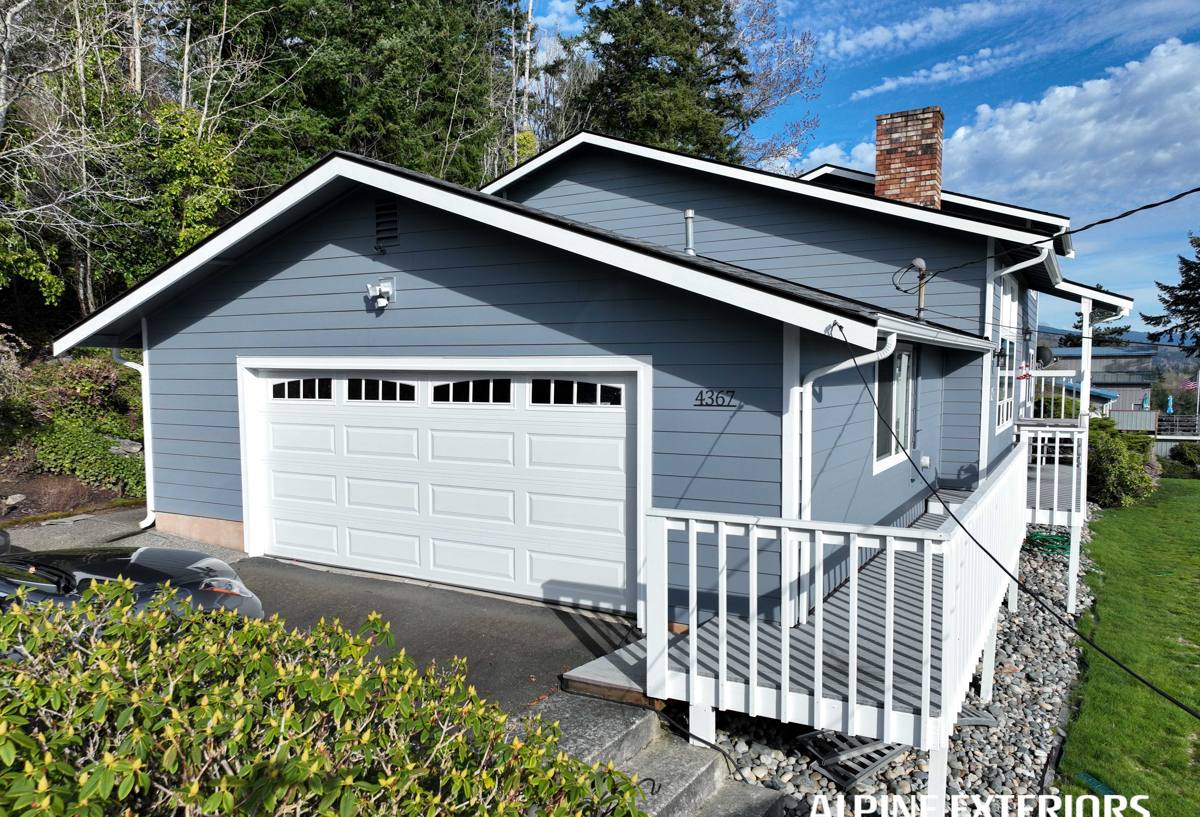
Why the York Microclimate Changes the Job
Whatcom County weather is not uniform from block to block, and the York area has its own particular mix of exposure. Homes closer to the water pick up salt-laden air that accelerates corrosion on exposed metal fasteners, flashing, and vents. Homes tucked under tree cover near the Chuckanut hillside get less direct sun and more shade, which means roof surfaces stay damp longer after every rain and moss gets a real foothold.
None of that is unusual for this part of Washington, but it does mean a roof built for a drier, sunnier climate somewhere else won't perform the same way here. The materials, the fastener choices, and the ventilation design all need to be selected with this specific combination in mind.
What Salt Air Does Over Time
Salt-laden moisture accelerates corrosion on anything metal — nails, flashing, drip edge, vent housings. Standard fasteners can start showing rust streaks and weakening well ahead of the shingle's own service life, which is why fastener and flashing material selection matters as much as the shingle brand on a coastal-influenced roof.
What Driving Rain Demands
Wind-driven rain doesn't just fall straight down — it gets pushed sideways and up under laps, edges, and around penetrations. A roof built for this needs tighter attention to underlayment coverage, valley treatment, and flashing detail than a roof going up somewhere with calmer, more vertical rainfall.
What a Long Moss Season Means
Moss needs shade and moisture to establish, and this area supplies both for a good part of the year. Once moss gets a hold on a roof surface, it lifts shingle edges, traps water against the deck, and shortens the life of the roof underneath it. New installation is the best point to build in moss resistance — trying to solve it after the fact is always a step behind.
What a Correctly Built Roof Looks Like Here
A new roof installation is really a system of layers working together, not just shingles laid over the old ones. For York-area homes, we pay particular attention to a handful of details that matter more here than they would in a milder climate.
- Deck inspection and repair: Any soft, delaminated, or water-damaged decking gets replaced before anything new goes down — covering a compromised deck just hides the problem.
- Ice-and-water shield at vulnerable points: Eaves, valleys, and penetrations get self-adhering membrane, not just felt, since these are the spots where wind-driven rain finds its way in.
- Corrosion-resistant fasteners and flashing: Given the salt air exposure closer to the water, we favor materials that hold up better against corrosion rather than the cheapest standard option.
- Balanced ventilation: Proper intake and exhaust venting keeps the underside of the deck dry and reduces the damp, moss-friendly conditions that shaded roofs are prone to.
- Valley and flashing detail: Valleys carry a disproportionate amount of water in a heavy-rain climate, so they get built to shed water fast, not just meet minimum code.
- Moss-resistant material selection where appropriate: On shaded lots, we'll talk through options built with algae and moss resistance in mind, since standard materials weather that exposure faster.
Choosing Materials for This Climate
There's no single "best" roofing material for every home — it depends on the home's exposure, the roof's pitch and shading, and the homeowner's budget and priorities. What we won't do is recommend a product just because it's the cheapest option on the truck. Here's how the common choices stack up for a York-area home specifically.
| Material | How It Handles Salt Air & Rain | Moss/Algae Resistance | Typical Lifespan |
|---|---|---|---|
| Standard asphalt shingle | Good with correct flashing and corrosion-resistant fasteners | Moderate; benefits from algae-resistant granules on shaded roofs | 20–30 years |
| Architectural/dimensional shingle | Very good; heavier profile sheds wind-driven rain better | Good, especially with algae-resistant options | 25–35 years |
| Metal roofing | Excellent when coated and fastened correctly; needs coastal-rated coatings near the water | Excellent; sheds moisture fast, little for moss to grip | 40–60 years |
| Wood shake/shingle | Poor without ongoing maintenance; retains moisture in shaded, damp settings | Poor; requires regular treatment to resist moss | 20–30 years with upkeep |
For most York homes we're recommending architectural asphalt shingle or metal, depending on the roof's pitch, the home's style, and how much shade the roof sits under. Wood shake can be made to work, but it asks for a level of ongoing maintenance that most homeowners in this climate would rather not sign up for — that's a maintenance-burden conversation, not a knock on the material itself.
Our Installation Process
Every full roof replacement follows the same core sequence, though the details flex based on what we find once the old roofing comes off.
- On-site assessment: We walk the roof, check the attic or crawlspace for ventilation and moisture signs, and look at pitch, shading, and exposure to figure out what the roof actually needs.
- Written estimate: You get a clear scope of work and materials before anything is scheduled — no surprise line items added mid-job.
- Tear-off: Old roofing comes off down to the deck, and we inspect every square foot of decking as we go.
- Deck repair: Any damaged sheathing is replaced before underlayment goes down.
- Underlayment and flashing: Ice-and-water membrane at critical points, synthetic underlayment across the field, and new flashing at all valleys, walls, and penetrations.
- Ventilation check: We confirm intake and exhaust venting are balanced for the home's attic space, correcting it if it isn't.
- Material installation: Shingles, metal panels, or your chosen material go on to manufacturer spec, with fastening and lap details built for this area's wind and rain exposure.
- Cleanup and walk-through: Site is cleared of debris and nails, and we walk the finished roof with you before calling the job done.
What to Expect Timeline-Wise
Most single-family roof replacements in this area take one to three days depending on roof size, complexity, and weather. Given how much rain the region gets, we build in flexibility for weather delays rather than rushing a job into questionable conditions — a roof installed dry performs better than one installed in a downpour to hit a deadline.
Signs a York-Area Roof May Need Replacing, Not Patching
Not every roof problem calls for full replacement, but there's a point where repeated repairs stop making financial sense. Some signs worth a real inspection:
- Granule loss heavy enough that shingles look bald or patchy in spots
- Curling, cupping, or cracked shingles across multiple areas of the roof, not just one spot
- Persistent moss growth that comes back shortly after cleaning
- Soft spots or sagging when walking the roof or viewed from the attic
- Daylight visible through the roof deck from inside the attic
- Water stains on ceilings or in the attic that show up during heavy rain
- Roof is nearing or past the expected lifespan for its material
Why a Crew That Already Works York Matters
A roofing crew that's worked other homes in this specific area already understands the exposure patterns here — which lots sit in more shade, which roofs face the brunt of storms coming off the water, and how moss tends to behave on the roof types common in this neighborhood. That's not something you get from a manufacturer's install manual alone; it comes from actually working on roofs in this climate over time.
It also means practical things go smoother: knowing what to expect from local permitting, understanding typical roof styles and pitches in the area, and being realistic about scheduling around the region's rain patterns instead of promising a timeline the weather won't allow.
Maintaining Your New Roof
A correctly installed roof still benefits from basic upkeep, especially in a climate this active. A short checklist worth keeping in mind after installation:
- Have gutters cleared regularly so water isn't backing up under the roof edge
- Keep overhanging branches trimmed back to reduce shade and debris buildup
- Schedule a moss check-and-treat before it gets established, especially on shaded slopes
- Have the roof looked at after major storms, not just on a fixed annual schedule
- Watch for granules collecting in gutters, which can signal accelerated wear
If you're weighing a new roof for a York-area home, we're glad to come take a look and give you a straightforward, no-pressure estimate — no obligation, just an honest read on what your roof actually needs. Use the form below to get started.