 Chuckanut Exterior
 Metal Roofing Built for the Happy Valley Microclimate
Happy Valley sits close enough to the water and the tree line that its homes take a different kind of weather beating than roofs a few miles inland. You get driving rain off the Sound, salt-laden air that speeds up corrosion on anything metal or fastened, and a long, damp moss season that starts early and doesn't let go until well into spring. A roof that would hold up fine in a drier part of Whatcom County can wear out faster here if it wasn't specified and installed with this exact combination of conditions in mind.
Metal roofing, done right, is one of the better answers to that combination — but "done right" is doing a lot of work in that sentence. The wrong panel system, the wrong fastener metal, or a lazy flashing detail will show up as a leak, a streak of rust, or a moss mat within a few years. This page covers what actually matters for a metal roof on a Happy Valley home, not generic metal-roofing marketing.
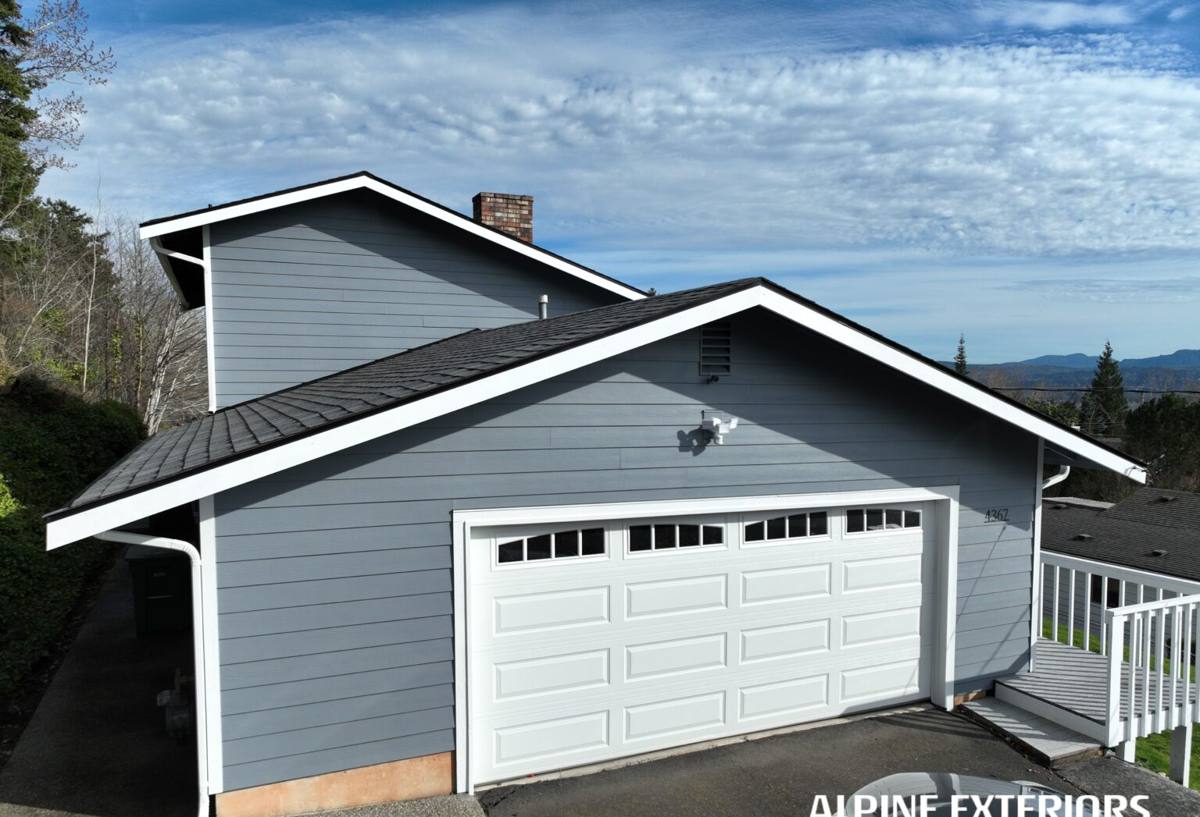
What Salt Air and Moss Season Actually Do to a Roof
Two separate problems stack on top of each other here, and they call for different defenses.
Salt Air and Corrosion
Airborne salt accelerates galvanic corrosion wherever dissimilar metals touch — a steel fastener in an aluminum panel, or a cheap fastener washer that wasn't matched to the panel material. On a home this close to the water, that process runs faster than most manufacturers' warranty language assumes. It shows up first as rust bleeding from screw heads, then as pitting along panel seams and cut edges that weren't properly sealed or coated.
Moss, Debris, and Moisture Retention
Whatcom County's wet season is long, and homes tucked near trees or with north-facing roof planes stay damp for weeks at a stretch. Moss doesn't just sit on the surface — its root structure holds moisture against the roofing material and, on shingles, works into the granule layer. Metal roofing doesn't feed moss the way organic shingle material does, but moss and debris can still pack into valleys, panel seams, and around penetrations, holding water against flashing and fasteners longer than it should sit there.
The upshot: a metal roof here needs corrosion-resistant hardware matched to the panel metal, and a design that doesn't give moss and debris anywhere flat to collect.
Choosing the Right Metal System for This Environment
Not every metal roofing product is a good fit for a coastal, moss-prone site, and we're upfront about the trade-offs rather than selling whatever's easiest to install.
Standing Seam vs. Exposed Fastener Panels
Standing seam panels use concealed clips instead of exposed screws through the panel face, which matters a lot in salt air — there's no exposed fastener head to corrode and no penetration through the panel itself to eventually leak. Exposed-fastener panel systems cost less up front, but every screw is a maintenance point that needs its rubber washer checked periodically, and washers degrade faster under UV and salt exposure. We'll install either depending on budget and the home, but on a Happy Valley roof we'll always walk you through why standing seam tends to need less attention over the life of the roof.
Metal Type, Coating, and Fastener Matching
Steel panels need a quality paint or coating system standing between the steel and the salt air — bare or lightly coated steel will show corrosion at cut edges and fastener points well before its expected service life here. Aluminum doesn't rust, which is an advantage this close to the water, but it's softer and typically costs more. Whichever panel metal we use, fasteners and flashing accessories get matched to it — mixing metals without isolating them is one of the most common causes of early corrosion we see on roofs that weren't installed with this climate in mind.
| Factor | Standing Seam | Exposed Fastener Panel |
|---|---|---|
| Fastener exposure | Concealed clips, no face penetrations | Screws through panel face, need periodic washer checks |
| Typical upfront cost | Higher | Lower |
| Salt air performance | Fewer failure points over time | Washers and screw heads are the weak point |
| Best fit | Full re-roofs, longer ownership horizon | Outbuildings, budget-driven projects |
What a Correct Metal Roof Installation Actually Involves
The panels themselves get most of the attention, but the details underneath and around them are what determine whether the roof performs in this climate.
Underlayment and Water Protection
A synthetic, high-temperature underlayment goes down first, with self-adhered ice-and-water membrane at eaves, valleys, and any low-slope transitions — the spots most likely to see standing water during a heavy Sound storm. This layer is what protects the deck if wind-driven rain ever gets past the panel seams, which happens on any roof during a strong enough storm.
Flashing and Penetration Details
Chimneys, vents, skylights, and wall transitions are where most metal roof leaks actually start — not in the field of the panels. Every penetration gets properly flashed and sealed with materials compatible with the panel metal, and valleys are detailed so debris and moss have a clear path off the roof instead of a place to collect. Rushed flashing work is the single biggest difference between a metal roof that lasts decades and one that leaks within a few years.
Ventilation
Attic ventilation keeps moisture from condensing on the underside of the deck, which matters as much as what's happening outside the panels. We check existing ventilation on re-roofs and correct it where it's inadequate rather than just roofing over a problem.
Our Process on a Happy Valley Project
Assessment First
We start with a full roof and site walk — slope, tree cover, existing ventilation, and how exposed the home is to wind and salt air off the water. That assessment drives the panel and fastener recommendation, not the other way around.
A Clear, Written Scope
You get a written proposal covering panel type, gauge, coating, underlayment, and flashing approach before any work starts — no vague line items. If there's a cheaper option that trades off durability, we'll tell you that plainly so you can decide with real information.
Weather-Aware Scheduling
Metal roofing can be installed in cooler, damper conditions more forgivingly than some roofing materials, but we still work around active storm systems and avoid installing over a wet deck. In Whatcom County that means watching the forecast closely rather than working to a rigid calendar.
Cleanup and Walkthrough
We do a magnetic sweep for stray fasteners, clear debris from gutters and valleys, and walk the finished roof with you before calling the job done.
Maintaining a Metal Roof in Salt Air and Moss Season
Metal roofing is lower-maintenance than shingles, but "lower" isn't "none," especially in this environment. A short annual routine catches most problems while they're still cheap to fix.
- Clear moss, needles, and debris from valleys and low-slope areas before the wet season sets in
- Check exposed-fastener systems for loose screws or worn washers
- Look for early rust streaking near cut edges, fasteners, or flashing seams
- Keep gutters and downspouts clear so water isn't backing up against eave flashing
- Trim back overhanging branches that keep sections of roof shaded and damp longer than the rest
- After any major windstorm off the Sound, do a visual check for lifted panels or displaced flashing
What Affects the Cost of a Metal Roof Here
Every home is different, but these are the factors that move the price most on a Happy Valley project.
| Cost Factor | Why It Matters |
|---|---|
| Panel system chosen | Standing seam runs higher than exposed-fastener panel |
| Roof complexity | Valleys, dormers, and multiple penetrations add labor and flashing work |
| Tear-off vs. overlay | Removing an old roof adds cost but lets us fully inspect and correct the deck and ventilation |
| Access and pitch | Steep or hard-to-access roofs take longer and need more safety setup |
| Metal and coating grade | Higher corrosion resistance for salt air exposure costs more up front, saves on maintenance |
We'd rather walk your specific roof and give you real numbers than quote a broad range that doesn't mean much for your situation.
Why Local Experience in Happy Valley Matters
A crew that hasn't worked this stretch of Whatcom County can underestimate how much salt exposure and moss really affect a roof's long-term performance here. We've seen what happens to roofs that were specified for a drier, inland climate and installed here anyway — premature fastener corrosion, moss buildup in low-slope areas, and flashing that wasn't detailed for driving, wind-blown rain. Working in this area regularly means we spec materials and details that match the conditions your roof will actually face, not a generic installation.
If you're weighing a metal roof for your Happy Valley home, we're happy to take a look and talk through what makes sense for your specific roof and budget — no pressure, no hard sell. Fill out the form below for a free estimate.