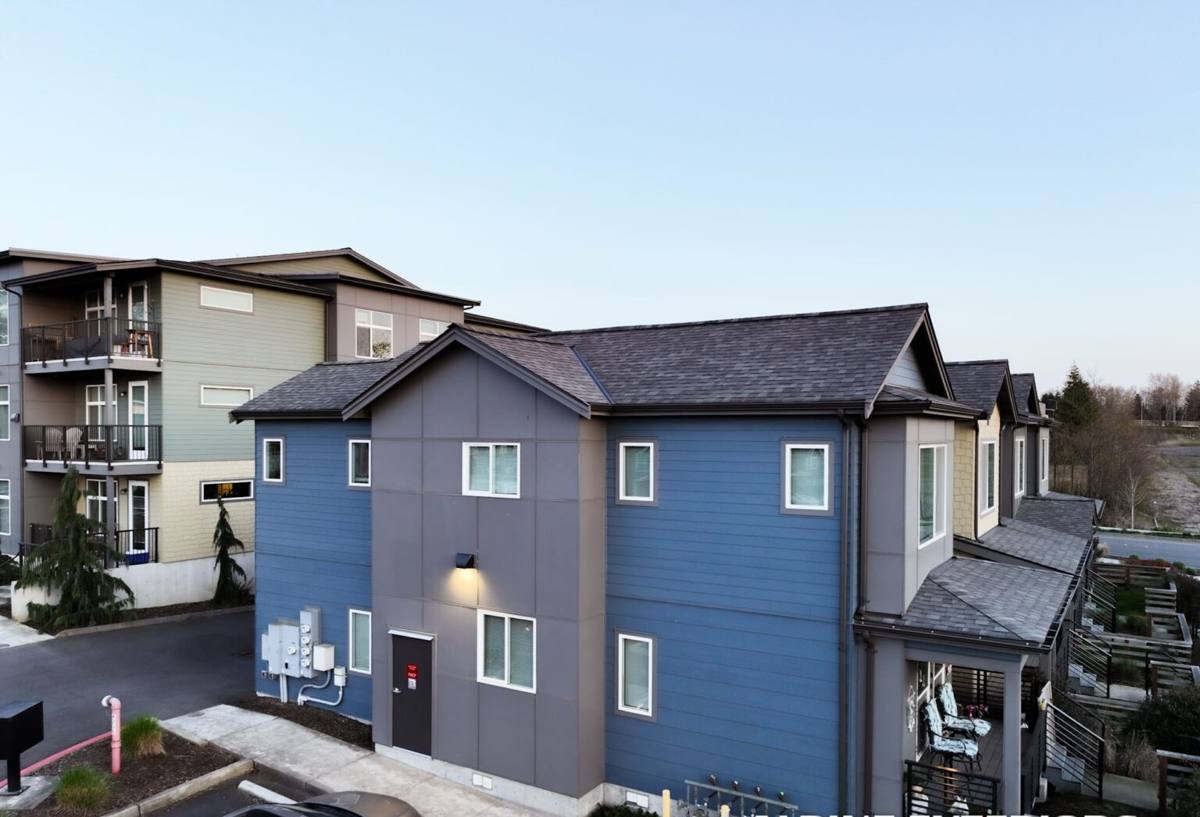
 Chuckanut Exterior
 Why Mount Vernon Homes Wear Through Windows Faster Than Most
Homes around Mount Vernon sit in a stretch of Washington where the weather doesn't do anything in half measures. Salt-laden air moves in off the water, driving rain comes sideways for weeks at a stretch in the fall and winter, and a long, wet moss season keeps roofs, siding, and window trim damp far longer than homes see in drier parts of the state. None of that is dramatic on its own. What it does is compound. Old wood sashes swell and stick. Aluminum frames pit and corrode. Weatherstripping that would last a decade in a dry climate gives out in five or six years here. By the time a homeowner notices a draft at the window sill, the seal has usually been failing quietly for a year or two already.
Energy-efficient windows are marketed everywhere as a way to cut heating and cooling bills, and that's true, but for homes in this part of Skagit and Whatcom County the bigger issue is often moisture management, not just insulation value. A window can have excellent glass and still perform poorly here if it isn't flashed, sealed, and installed to handle wind-driven rain. We treat those two things — thermal performance and water management — as equally important on every job.
What "Energy-Efficient" Actually Means in This Climate
The term gets used loosely in advertising, so it's worth breaking down what actually matters for a home in the Mount Vernon area:
- Low U-factor — measures how well the window resists heat transfer. Lower is better. This matters most during the long stretch of cool, damp months rather than a handful of hot summer days.
- Low-E glass coatings — a microscopically thin coating that reflects radiant heat while still letting visible light through. Helps in winter and during the occasional hot spell.
- Gas-filled sealed units — argon or krypton gas between panes slows heat transfer compared to plain air. The seal on these units has to hold up over years of pressure changes from wind and weather, which is a bigger deal here than in a calmer climate.
- Frame and sash airtightness — the best glass in the world underperforms if the frame lets air pass around it. In a windy, rain-heavy area, gasket and weatherstrip quality matters more than the spec sheet number.
Certification labels like ENERGY STAR give a useful baseline, but they're tested under standardized conditions that don't fully capture what happens when a window faces sustained horizontal rain and salt air for years. That's where installation quality and frame material choice start to matter as much as the glass package itself.
Signs Your Current Windows Are Already Costing You
Most homeowners don't replace windows because of a single dramatic failure. It's usually a slow accumulation of small signs. Worth checking for before deciding whether replacement or repair makes more sense:
- Visible fog or moisture trapped between panes on double-pane windows — the seal has failed and the gas fill is gone
- A cold draft you can feel with your hand near the frame edge on a windy day
- Wood sashes that have started to soften, discolor, or feel spongy at the bottom corners
- Aluminum frames with white, chalky corrosion or pitting near the sill
- Difficulty opening or closing a window that used to move freely — often swelling or a warped frame
- Condensation forming on the inside of the glass regularly, even with normal indoor humidity
- A noticeable jump in heating costs without any other explanation
- Moss or dark staining building up on the exterior trim or sill, a sign moisture is sitting rather than shedding
One or two of these on an otherwise sound window might just mean a resealing or hardware fix. Several of them together, especially fogged glass plus frame damage, usually means the window has reached the end of its useful life.
Frame Material: What Actually Holds Up Near the Water
Frame material choice matters more here than in a drier inland climate, because the frame is what's absorbing the brunt of the salt air and driving rain year after year. Here's how the common options compare for this specific environment:
| Frame Material | How It Handles This Climate | Trade-offs |
|---|---|---|
| Vinyl | Doesn't corrode or rot; handles moisture well; good baseline energy performance | Can't be painted to match trim color changes; quality varies a lot between manufacturers |
| Fiberglass | Very stable in temperature swings, resists corrosion, holds paint well over time | Higher upfront cost than vinyl |
| Wood-clad (wood interior, clad exterior) | Warm interior look, exterior cladding protects from weather if installed correctly | Any gap or failure in the cladding lets moisture reach the wood core — installation precision matters a lot here |
| Aluminum | Strong and slim sightlines | Prone to corrosion and pitting in salt air over time; poor natural insulator unless thermally broken |
We don't push one material on every home. A vinyl or fiberglass window is often the more practical, lower-maintenance choice for a house that takes direct weather exposure, while a wood-clad window can still make sense on a more protected elevation where the homeowner wants a specific interior look. The honest answer depends on which side of the house the window sits on and how exposed it is.
Glass Packages Worth Considering
Double-pane, low-E, argon-filled glass is a reasonable standard for most homes here. Triple-pane adds meaningful sound dampening and a slightly lower U-factor, which some homeowners near busier roads or in colder microclimates find worthwhile, but it also adds weight and cost. For most single-family homes in the Mount Vernon area, a well-installed double-pane low-E unit with a quality frame delivers most of the practical benefit without the added expense of triple-pane glass.
How We Install Windows to Handle This Weather
The window itself is only part of the equation. Installation quality determines whether it actually performs the way its spec sheet claims, especially against wind-driven rain. Our process on a typical replacement:
- Remove the old window and inspect the rough opening for hidden rot, water staining, or damaged sheathing before anything new goes in
- Repair or replace any compromised framing — installing a new window into a damaged opening just traps the problem behind new trim
- Install a proper flashing system around the opening, sequenced so water sheds outward and down, never inward
- Set the window level, plumb, and square, shimmed correctly so the frame isn't under stress that can crack seals over time
- Seal and insulate the gap between the window frame and rough opening with the correct materials — not just spray foam alone
- Finish exterior trim and caulking in a way that sheds water rather than holding it against the wall
- Test operation and check the seal from both inside and outside before calling the job done
That flashing and sequencing step is where a lot of window failures actually originate, even on installations using good-quality windows. A window installed without proper flashing can let water behind the siding, and by the time it shows up as a stain or soft spot inside the home, there's often been damage building for a while. It's a less visible part of the job than the window itself, but it's the part that determines whether the installation lasts.
What Affects the Cost of a Window Replacement Project
Pricing depends on several factors that vary from house to house. Rather than quote a single number that won't apply to most homes, here's what actually moves the price:
| Factor | Why It Matters |
|---|---|
| Number of windows | Per-window cost typically drops somewhat as the total job size grows |
| Frame material | Vinyl is generally the most budget-friendly; fiberglass and wood-clad cost more upfront |
| Glass package | Double-pane low-E is the baseline; triple-pane or specialty coatings add cost |
| Opening condition | Rot or framing repair discovered during removal adds labor and material beyond the window itself |
| Window size and style | Larger openings, custom shapes, and operable styles like casements generally cost more than standard double-hung sizes |
| Access and site conditions | Second-story or hard-to-reach windows take more time and equipment |
Broad ranges for standard vinyl replacement windows, fully installed, generally run from the low thousands per window down toward the low hundreds for smaller units on a larger job, with fiberglass and wood-clad options running higher. The only way to get a number that means anything for a specific home is a walkthrough, since opening condition and window count swing the total significantly.
Why It Matters to Hire a Crew That Already Works in This Area
A crew that installs windows regularly around Mount Vernon has already seen how the local weather plays out over years, not just how a product performs in a showroom. That shows up in small but consequential decisions — which flashing sequence to use on a wall that takes direct weather, which frame materials hold up on an exposed elevation versus a sheltered one, and how much slope to build into a sill so water actually sheds instead of pooling. It also means a crew that's accountable locally: if a question comes up two years after installation, you're not trying to track down an out-of-area company that's moved on to other regions.
Maintaining Energy-Efficient Windows Through a Long Moss Season
New windows still need basic upkeep in this climate, and it's minimal compared to what old wood or aluminum windows demand:
- Rinse frames and sills periodically to clear salt residue and organic buildup before it holds moisture against the frame
- Check and clear weep holes on the sill so water has a path to drain rather than sitting
- Inspect exterior caulking once a year, typically before the fall rains start, and re-caulk any cracked or separated joints
- Keep nearby vegetation trimmed back so moss and organic debris don't build up against the frame or trim
- Operate hardware periodically, even on windows that aren't used often, to keep mechanisms from seizing
None of this is heavy maintenance, but skipping it is how even a good window's lifespan gets cut short in a climate that stays damp for months at a time.
If your windows are drafty, fogged, or just old enough that you're wondering whether repair or replacement makes more sense, we're happy to take a look and give you a straight answer. Reach out below for a free, no-pressure estimate — there's a short form on this page to get started.