 Chuckanut Exterior
 Windows Built for the Sedro-Woolley Stretch of Whatcom County
Sedro-Woolley sits in that in-between zone of Whatcom County — close enough to the water to catch salt-laden air on windy days, and tucked against the foothills where fall and winter rain settles in for weeks at a time. Homes here take a different kind of weathering than houses twenty miles inland, and windows are usually the first place it shows. Fogged panes, swollen sashes, black streaking on the trim, and drafts that seem to come from nowhere are all signs that the windows were never really matched to this climate in the first place.
Chuckanut Exterior Company works this area regularly, and custom windows for Sedro-Woolley properties are one of our most requested jobs — not because every window needs full replacement, but because a correctly specified and correctly installed window solves problems that caulk and weatherstripping never will.
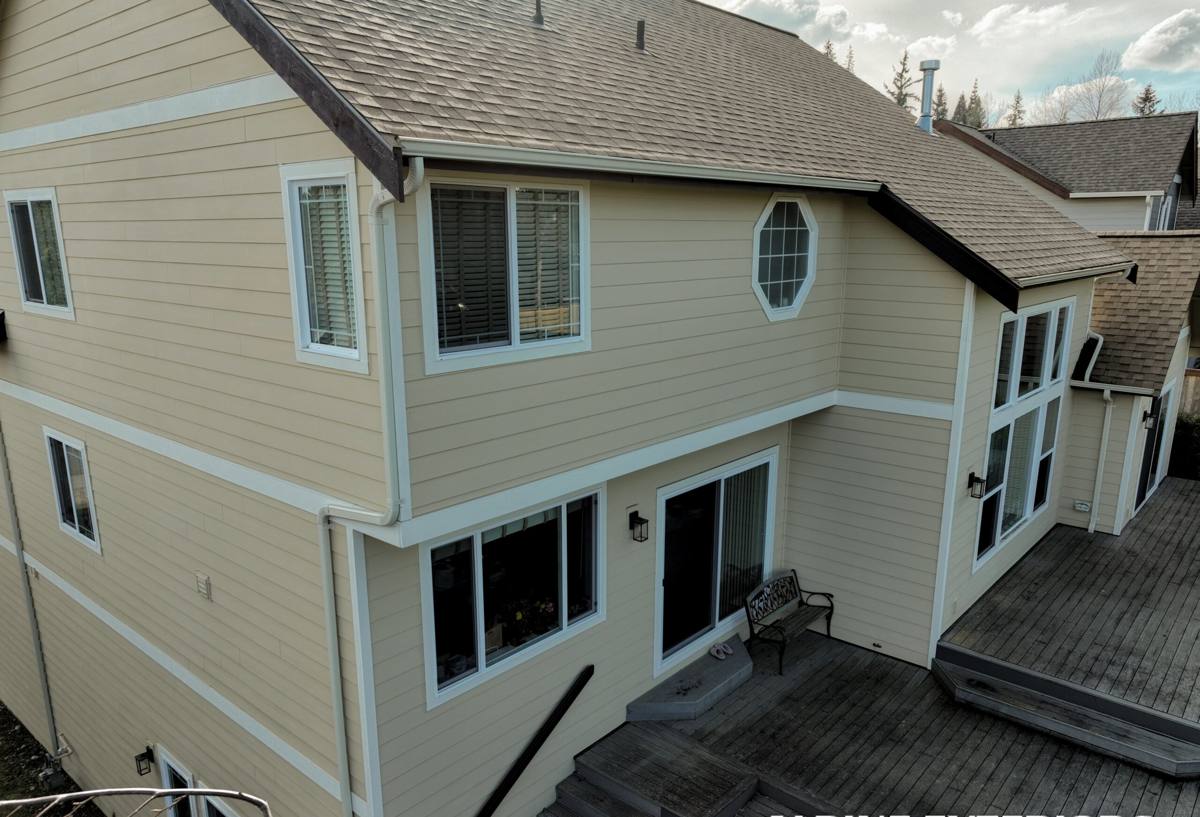
What This Climate Actually Does to a Window
Salt Air and Metal Fatigue
Even a few miles from saltwater, airborne salt finds its way onto window hardware, screens, and exposed fasteners. Over years, it accelerates corrosion on lower-grade metal components — locks stick, cranks seize, and aluminum cladding can pit and discolor faster than manufacturers' glossy brochures suggest. This is a slow, cumulative process, which is exactly why it's easy to underestimate until a window won't latch anymore.
Driving Rain and Wind-Driven Moisture
Sedro-Woolley gets its share of storms that push rain sideways into a home's exposed faces. A window that's watertight in a gentle drizzle can still leak under wind-driven rain if the flashing detail, sill pan, or sealant joint isn't done right. Most of the water damage we find around older windows didn't come through the glass — it came in around a poorly flashed frame, one drop at a time, for years.
Moss Season and Trapped Moisture
The long stretch of wet, low-light months creates ideal conditions for moss and algae to take hold on north-facing trim, sills, and anywhere water sits instead of draining. Beyond the cosmetic issue, moss holds moisture against wood surfaces, which speeds up rot at the corners and joints of a window frame — often in spots that are hard to see without getting up close.
Signs a Sedro-Woolley Home Needs New Windows, Not Just Repairs
- Visible fogging or a hazy film between the panes of double-glazed glass — the seal has failed
- Soft or spongy wood at the sill or lower corners of the frame
- Windows that are difficult to open, close, or lock, especially after damp weather
- Noticeable drafts even with weatherstripping intact
- Paint or finish that's peeling from the inside out, which usually points to moisture working from within the frame
- Visible daylight or gaps around the frame when viewed from outside
- Persistent moss, algae, or black streaking on the sill or trim that returns after cleaning
If you're only seeing one or two of these signs on a single window, a repair or resealing job may be all that's needed. When several show up across multiple windows on the same wall or elevation, that's usually a sign of a systemic flashing or product issue, and replacement is the more honest recommendation.
What a Correct Custom Window Job Involves
"Custom" doesn't mean fancy shapes or high-end trim packages, though we do those too. It means the window is sized, specified, and installed to fit the actual opening and the actual conditions of your home, rather than forced into a stock size with shims and extra caulk. For older Sedro-Woolley homes especially, openings are rarely perfectly square after decades of settling, so an accurate measurement matters more than it sounds like it should.
The Installation Details That Matter Most Here
| Detail | Why It Matters in This Climate |
|---|---|
| Sill pan flashing | Directs any water that gets past the sash out and away from the wall cavity instead of pooling under the frame |
| Corrosion-resistant hardware | Locks, cranks, and hinges hold up longer against salt air exposure |
| Proper shimming and squaring | Prevents racking that causes seals to fail early and sashes to bind |
| Compatible sealants and backer rod | Keeps wind-driven rain from finding a path around the frame perimeter |
| Frame material choice | Vinyl, fiberglass, and clad-wood each behave differently under sustained moisture — worth matching to the specific wall and exposure |
| Drip cap and trim detailing | Sheds water away from the top of the frame and reduces moss buildup on horizontal surfaces |
Skipping any one of these doesn't usually cause an immediate problem. It shows up two, five, or ten years later as a leak, a rotted sill, or a seal failure — right on schedule for this kind of weather.
Choosing Frame Materials for a Sedro-Woolley Property
There isn't a single "best" frame material for every house — it depends on the wall assembly, sun exposure, and how close the home sits to prevailing weather. Vinyl frames are a solid, low-maintenance choice for most exposures and hold up well against moisture without ongoing upkeep. Fiberglass frames cost more up front but resist expansion and contraction better across our temperature swings, which can matter on larger window units. Wood windows with a clad exterior give a traditional look but need more attention to the cladding seams, since any breach there lets moisture reach the wood underneath — a real consideration given how long our wet season runs.
We'll walk through the trade-offs for your specific home rather than pushing one product line, because the right answer genuinely depends on the house.
Our Process for a Sedro-Woolley Window Job
1. On-Site Assessment
We look at each window opening individually — not just the glass, but the framing behind it, the flashing condition, and any signs of past moisture intrusion. This is also when we flag anything that suggests a broader issue, like a wall section with no functioning drainage plane.
2. Accurate Measurement and Product Selection
Openings get measured precisely rather than estimated, since even small gaps translate into insulation and air-sealing problems. We help you pick frame material, glass package, and hardware based on the exposure of that specific wall.
3. Removal Without Collateral Damage
Old windows come out carefully so we don't create new damage to siding or interior trim that then needs separate repair. Any rot or damage found during removal gets addressed before the new unit goes in — not covered over.
4. Proper Flashing and Sealing
Sill pans, flashing tape, and sealants go in per the manufacturer's installation instructions, adapted for our wind-driven rain conditions rather than a bare-minimum approach.
5. Final Check and Walkthrough
Every window gets operated, checked for square, and inspected for a clean seal before we call the job done, and we walk you through basic care for your specific frame material.
Why Hiring a Crew That Already Works This Area Matters
A window installer who mainly works drier, inland climates may do fine work there and still under-detail a job for Sedro-Woolley's conditions, simply because it's not the problem they see every day. We work this part of Whatcom County regularly, which means we're used to accounting for salt air on hardware choices, driving rain on flashing details, and moss-prone conditions on trim and drainage design. That familiarity shows up less in the sales pitch and more in the parts of the job you don't see once it's finished — the sill pan under the frame, the flashing behind the trim, the sealant joint that holds up through ten storms instead of two.
Maintaining Custom Windows in a Wet Climate
- Rinse salt residue and grime off frames and hardware a few times a year, especially after windy weather off the water
- Keep weep holes clear of debris so water can drain out instead of pooling in the frame
- Clean moss or algae off sills and trim promptly rather than letting it sit against the surface
- Operate locks and cranks periodically through the winter so they don't seize up from disuse plus moisture
- Check exterior caulking annually and re-seal any cracked or shrunken joints before the next wet season
None of this is difficult, but skipping it is exactly how a well-installed window ends up needing early attention anyway.
Get a Straight Answer for Your Home
If you're dealing with fogged glass, a drafty room, or windows that just don't feel right anymore, we're glad to take a look and tell you honestly whether you need full replacement, targeted repair, or nothing at all. Reach out for a free, no-pressure estimate using the form below, and we'll walk your Sedro-Woolley home window by window.