 Chuckanut Exterior
 Why Fairhaven Siding Wears Differently Than Siding Ten Miles Inland
Fairhaven sits close enough to the water that homes here take a different kind of weather than a house up on the hill or out toward the valley. Salt-laden air off Bellingham Bay works on fasteners, trim, and paint film in ways drier inland air doesn't. Add Whatcom County's long, wet shoulder seasons — where a house can go weeks without a full dry-out — and you get a siding system that's under near-constant low-grade stress even when nothing looks obviously wrong from the curb.
Most siding problems we find in Fairhaven aren't dramatic. They're slow: a soft spot behind a downspout, moss creeping up from a shaded north wall, caulk that gave up around a window three winters ago and let water start tracking behind the cladding. By the time it's visible, the damage is usually already a season or two old. That's the case for treating siding replacement here as a climate decision first, not just a cosmetic one.
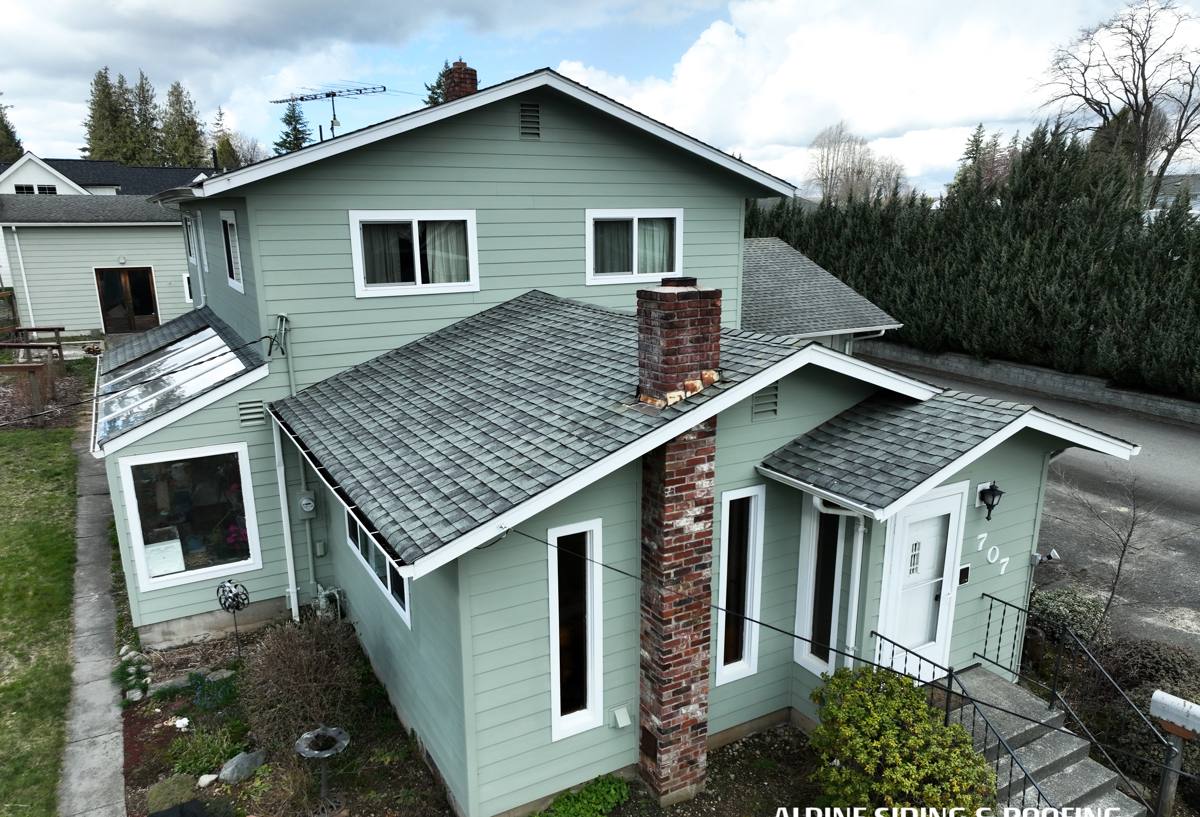
What Salt Air, Driving Rain, and Moss Season Actually Do to Siding
Salt Air
Airborne salt is hygroscopic — it pulls moisture out of the air and holds it against whatever surface it lands on. On siding, that means fastener heads, trim edges, and any exposed cut ends stay damp longer than they would a few miles inland. Over years, that accelerates corrosion on lower-grade fasteners and breaks down paint films that weren't built to shed salt residue.
Driving Rain
Fairhaven's exposure means wind-driven rain doesn't just fall on siding — it gets pushed sideways into laps, seams, and butt joints. A siding system with a weak or thin coating, or a water-resistive barrier detail that's just "good enough," will eventually let moisture past the face material and into the wall assembly. Wood-based products are the most vulnerable here because once water gets behind them, they don't just get wet — they start to break down.
Moss and Prolonged Dampness
Whatcom County's moss season isn't a few weeks — it's most of the fall through spring on shaded or north-facing walls. Moss and algae hold moisture against the siding surface long after the rain stops, which keeps that surface wet far more of the year than a south-facing wall a mile away. On products that absorb moisture, that constant dampness is what drives swelling, delamination, and paint failure.
Why We Only Install James Hardie Fiber Cement Here
We don't install LP SmartSide, vinyl, Cemplank, Allura, primed spruce, or cedar, and Fairhaven's climate is a big part of why. Wood-based engineered siding and traditional wood products can perform fine in drier climates, but they depend on caulking, paint maintenance, and end-cut sealing staying perfect year after year — and in a marine, high-moss environment, that's a hard standard to hold for decades. Vinyl handles moisture fine on its own, but it's a poor match for the driving rain and wind exposure some Fairhaven lots get, and it doesn't hold color or rigidity the way a factory-finished fiber cement product does.
James Hardie fiber cement is non-combustible and dimensionally stable — it doesn't swell, warp, or rot the way wood-based products can when moisture gets past the surface. The ColorPlus factory finish is baked on under controlled conditions, which gives it better adhesion and UV resistance than field-applied paint, and it comes with a real, transferable limited warranty on both the substrate and the finish. For a neighborhood dealing with salt air and a long wet season, that combination is what actually holds up — not just on day one, but fifteen and twenty years in.
To be fair to the alternatives: cedar looks excellent and has real fans, LP SmartSide is a reasonable engineered wood product when maintained diligently, and vinyl is inexpensive and low-maintenance in the right setting. We're not claiming those products are junk. We're saying that for the specific combination of salt exposure, driving rain, and moss season that Fairhaven homes deal with, we'd rather stand behind one product system we know performs — and that's the professional line we've drawn.
What a Correct Siding Replacement Involves
Replacing siding well is mostly about what happens before the new boards go up. The parts nobody sees from the street are the parts that determine whether the job lasts twenty years or five.
Tear-Off and Wall Inspection
Once the old siding is off, we inspect the sheathing and framing underneath — this is often the first real look anyone's had at that wall assembly in decades. Soft or water-damaged sheathing gets replaced, not covered over. In a marine climate, skipping this step is how a good-looking new siding job ends up hiding a rot problem that just keeps going.
Water-Resistive Barrier and Flashing
We install a new weather-resistive barrier and flashing system at every window, door, and penetration. This is the layer that actually keeps driving rain out of the wall — the siding itself is the second line of defense, not the first. Flashing details around window heads and sills matter more in a high-wind-driven-rain area like Fairhaven than almost anywhere else.
Rainscreen Consideration
On many Fairhaven homes, we build in a drainage gap (rainscreen) behind the siding. That gap lets any moisture that does get past the cladding drain and dry out instead of sitting against the back of the boards — which matters a lot in a climate where walls don't get long dry stretches to recover.
Hardie Installation to Spec
James Hardie siding is engineered for climate-specific performance, but it only delivers that performance when installed to the manufacturer's specifications — correct fastener type and placement, proper clearances at grade and roof lines, and factory-caulked or properly sealed joints. Installed loosely, any siding product underperforms. Installed to spec, Hardie's HZ5 product line is built for exactly this kind of climate exposure.
Our Process for a Fairhaven Siding Replacement
| Step | What Happens | Why It Matters Here |
|---|---|---|
| Site walk and assessment | We look at wall orientation, moss/shade exposure, and existing damage | North walls and shaded lots need different moisture handling |
| Written estimate | Scope, product line, and timeline laid out plainly | No pressure, no surprise change orders |
| Tear-off and sheathing check | Old siding removed, framing inspected and repaired as needed | Hidden rot from salt-air moisture gets caught early |
| Barrier, flashing, rainscreen | New WRB, flashing at all openings, drainage gap where appropriate | This is what actually stops driving rain intrusion |
| Hardie installation | Installed to manufacturer spec with correct fasteners and clearances | Preserves the transferable warranty and long-term performance |
| Final walkthrough | We review the finished work with you before calling it done | You should understand what's on your house and why |
What to Look for Before You Hire
Not every crew that "does siding" has real experience with the moisture and wind conditions closer to the water. A few questions are worth asking any contractor before you hire them for a Fairhaven job:
- Do they carry current Washington L&I contractor registration and liability insurance?
- Will they inspect and repair sheathing before re-siding, not just cover it?
- Do they install a proper water-resistive barrier and flashing system, or just staple up house wrap?
- Are they a factory-trained or preferred installer for the siding brand they're recommending?
- Will the manufacturer warranty transfer to a future homeowner if you sell?
- Can they explain, specifically, why they recommend one product over another for your wall exposure?
A crew that already works in and around Fairhaven has an advantage that's easy to overlook: they've already seen how the specific combination of salt air, wind direction, and shade patterns in this area plays out on real walls, and they know which details actually matter here versus which are boilerplate.
Cost Factors for a Fairhaven Siding Job
Every siding replacement is priced around a handful of variables, and it's worth understanding them before you get quotes so you can compare apples to apples.
| Factor | Why It Moves the Price |
|---|---|
| Wall square footage and home height | More surface area and multi-story access both add labor time |
| Extent of sheathing repair needed | Hidden rot found during tear-off adds material and labor |
| Trim complexity | Bay windows, dormers, and detailed trim work take more time than flat runs |
| Product line selected | Hardie's standard, Statement Collection, and Artisan lines are priced differently |
| Rainscreen/drainage detailing | Adds a step but improves long-term moisture performance on exposed walls |
We give real, written numbers after a site walk — not a ballpark over the phone. Every wall is a little different, and a fair estimate reflects the actual condition of your house, not a generic per-square-foot guess.
Signs Your Fairhaven Home May Need Siding Replacement Soon
- Persistent moss or algae growth that comes back within weeks of cleaning
- Soft, spongy, or crumbling siding when pressed near the base of walls or under windows
- Paint that's peeling, bubbling, or chalking heavily on just one or two walls
- Visible gaps or cracked caulk at seams, corners, and window trim
- A musty smell or discoloration on interior walls that back up to exterior siding
- Warped or bowed boards, especially on wood-based or engineered wood siding
Any one of these on its own isn't necessarily an emergency, but a few together — especially on a wall that faces the prevailing wind and rain — are a good reason to get a professional look before the next wet season.
Let's Take a Look at Your Home
If your Fairhaven home is showing any of these signs, or you're just planning ahead before the next wet season sets in, we're happy to come take a look. We'll walk the exterior with you, talk through what we see, and give you a straightforward, no-pressure estimate — no scare tactics, no upsell on a product we wouldn't put on our own homes. Use the form below to get started.