 Chuckanut Exterior
 Why Silver Beach Homes Are Harder on Windows Than the Average House
Homes near the water deal with a different set of stresses than houses even a few miles inland. In Silver Beach, that means salt-laden air that works its way into hardware and finishes, wind-driven rain that gets pushed sideways into gaps a calm-weather window seal would never see, and a moss season that runs long enough to keep wood trim and sills damp for months at a time. None of that is unique to any one house on the water — it's the shared reality of this part of Whatcom County, and it shows up in windows before it shows up almost anywhere else on a home.
Standard window replacement advice — the kind written for a generic climate — tends to focus on glass performance and stop there. That's not wrong, but it's incomplete for a neighborhood like this one. A window here has to handle moisture intrusion, corrosion resistance, and prolonged dampness on top of the usual job of keeping heat in and cold out. Get the moisture and sealing details wrong, and the most energy-efficient glass package in the world won't save the frame around it.
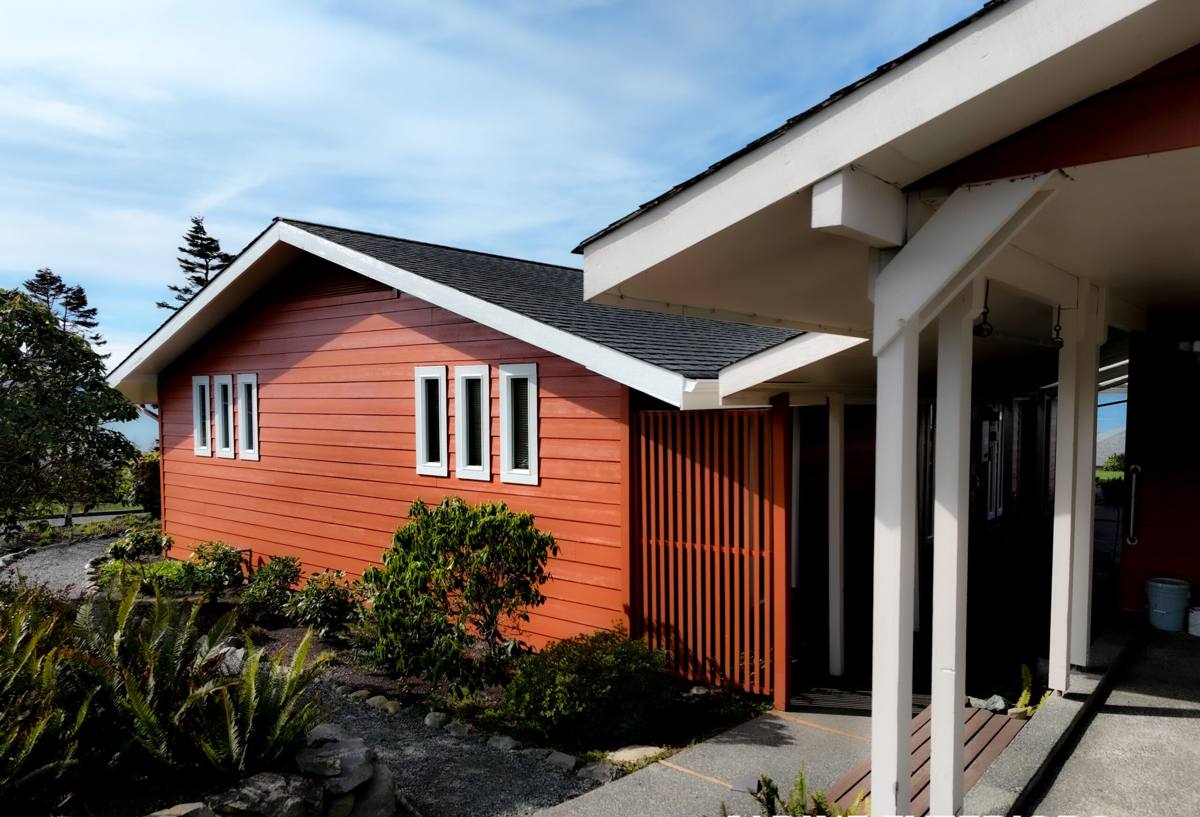
What "Energy-Efficient" Actually Needs to Mean in This Climate
Energy efficiency in a window comes down to a handful of measurable things: the U-factor (how much heat passes through), the solar heat gain coefficient, the type of low-E coating on the glass, and whether the space between panes is filled with plain air or an inert gas like argon. Those numbers matter everywhere, and they're worth asking about on any bid.
But in a marine, rain-heavy climate, efficiency and durability are tied together in a way they aren't in a drier region. A window that loses its seal in three years because the frame material handled coastal moisture poorly stops being "energy efficient" the moment fog appears between the panes. So we treat the water-management details of the installation as part of the efficiency conversation, not a separate topic — because out here, a window's long-term performance depends on both.
The Numbers Worth Asking About
- U-factor — lower is better for heat retention; look for numbers suited to Pacific Northwest heating seasons
- Solar heat gain coefficient — affects how much summer sun heat comes through
- Low-E coating type — affects both heat retention and UV fading of interior furnishings
- Gas fill (argon or krypton) — improves insulation between panes but depends on a sealed unit staying sealed
- Warm-edge spacers — reduce condensation risk at the glass edge, which matters in a damp climate
Signs Your Current Windows Are Already Losing the Fight
Most homeowners don't notice window failure until it's well underway, because it happens slowly and often at the edges — literally. Here's what we look for during an assessment, and what you can check yourself in the meantime.
- Fogging or haze between the panes of a double-pane window — the seal has failed and the gas fill is gone
- Noticeable drafts near the frame, especially during windy, wet weather
- Green or black staining on sills, tracks, or exterior trim — a sign of prolonged moisture and the start of moss season buildup
- Soft or swollen wood at the corners of the frame or sill
- Condensation collecting on the inside of the glass or pooling on the sill
- Hardware — locks, cranks, hinges — that's stiff, corroded, or discolored from salt air exposure
- Visible daylight or a folded dollar bill sliding freely through a closed window's edge
- A heating bill that's climbed without a clear reason
Any one of these on its own isn't necessarily urgent. Several together, especially on the side of the house that takes the worst of the wind and rain, usually mean it's time to stop patching and start planning a replacement.
What a Correct Installation Involves Near the Water
Water Management Comes Before Glass Performance
The single biggest difference between a window that lasts and one that fails early in this climate isn't the brand or the glass package — it's what happens at the rough opening before the window ever goes in. That means a proper sill pan to direct any intruding water back outside instead of into the wall cavity, correctly lapped flashing tape sequenced so water sheds downward and outward, and sealants chosen for compatibility with the specific frame and siding materials involved.
Salt Air Considerations
Fasteners and exposed hardware matter more here than they would inland. We favor corrosion-resistant fasteners and hardware finishes, and we pay attention to any exposed metal components that will sit within reach of salt-carrying wind over the life of the window.
Sealing for Driving Rain
Wind-driven rain doesn't fall straight down — it gets pushed sideways and upward under eaves and around trim edges. That means exterior sealant joints have to be continuous and properly tooled, not just caulked over gaps as an afterthought, and any trim capping needs to shed water rather than trap it against the frame.
Frame Material: What Holds Up Here and What It Costs You in Upkeep
There's no single "best" frame material — each comes with trade-offs, and the right call depends on your home's exposure, your appetite for maintenance, and your budget. Here's how the common options stack up specifically against salt air, driving rain, and a long damp season.
| Frame Material | Moisture & Salt Air Behavior | Maintenance Needs | Best Fit |
|---|---|---|---|
| Vinyl | Doesn't corrode or rot; performs consistently in salt air | Low — occasional cleaning | Homeowners who want low upkeep and solid value |
| Fiberglass | Excellent dimensional stability, resists moisture and corrosion well | Low to moderate | Homes wanting a premium, long-lifespan option |
| Wood or wood-clad | Attractive but vulnerable where the cladding or finish is compromised; needs vigilant sealing in this climate | Higher — regular inspection and finish upkeep | Homeowners committed to the look and willing to maintain it |
| Aluminum | Conducts heat and cold readily; can corrode over time in salt air without proper coatings | Moderate | Specific architectural applications, less common for whole-home replacement here |
We're not going to tell you one of these is "junk" — every material listed above has a legitimate place. Our job is to walk you through the honest trade-offs for a Silver Beach exposure specifically, so the choice fits how the house sits relative to wind and water, not just how it looks in a showroom.
Our Process, Start to Finish
On-Site Assessment
We look at each window individually — not just the glass, but the condition of the surrounding trim, sill, and framing. Wind and rain exposure varies side to side on most homes near the water, and that affects what we recommend room by room.
Product Selection
We go over frame material, glass package, and hardware options against your priorities — energy performance, maintenance tolerance, and budget — without steering you toward the most expensive option by default.
Installation Day
Old windows come out, the opening gets inspected for hidden moisture damage before anything new goes in, and any rot or compromised framing is addressed rather than covered up. New windows are set, shimmed, insulated, flashed, and sealed using a sequence built for wind-driven rain, not a generic dry-climate install.
Final Sealing and Walkthrough
Exterior sealant beads are tooled and inspected, interior trim is reset, and we walk the job with you so you know what was done and what to keep an eye on.
Living With a Long Moss Season: Upkeep That Actually Matters
New windows reduce a lot of your maintenance burden, but a marine climate with an extended damp season still asks something of every homeowner. None of this is difficult — it's just easy to forget until moss and grime have already taken hold.
- Clear window tracks and weep holes of debris and moss buildup each season so water can drain as designed
- Rinse salt residue off exterior glass and frames periodically, especially after storms
- Keep nearby vegetation trimmed back to allow airflow and sun exposure around windows, which slows moss growth
- Do a quick visual check of exterior sealant beads once a year and flag any cracking or separation early
- Wipe down interior sills if condensation collects, to prevent long-term moisture damage to trim
Cost Factors: What Actually Moves the Number
We'd rather explain what drives cost than throw out a number that doesn't mean anything until we've seen your house. These are the factors that matter most on a real Silver Beach bid.
| Factor | Cost Impact | Why It Matters Here |
|---|---|---|
| Number and size of windows | High | Straightforward scope driver on any job |
| Frame material chosen | Medium to High | Vinyl, fiberglass, and wood-clad carry different material costs |
| Glass package (double vs. triple pane, coatings) | Medium | Affects long-term energy savings, not just upfront price |
| Existing rot or moisture damage found at removal | Variable | More common here than in drier climates; addressing it properly avoids a repeat failure |
| Accessibility (second story, tight sightlines to water) | Low to Medium | Some Silver Beach lots have exposure or access quirks that affect labor |
Why It Matters That We Already Work in This Neighborhood
A crew that mostly installs windows in dry, inland conditions can still do a technically fine job — right up until the first storm season tests the details they didn't think to prioritize. Working regularly in shoreline neighborhoods like Silver Beach means we're not guessing about how hard the wind and rain hit a given exposure, or how fast moss reclaims a north-facing sill. We've built our sealing sequence, fastener choices, and material recommendations around that reality, not around a manufacturer's install guide written for a different climate.
That local familiarity also means fewer surprises during the job itself — we generally know what to expect when we open up an older window opening in this area, whether that's outdated flashing, deteriorated sheathing, or hardware that's seen more salt air than it was built for. Catching that early keeps the job on schedule and keeps your new windows performing the way they're supposed to.
If your windows are showing any of the wear signs above, or you're just ready to stop losing heat and money through old glass, we're happy to take a look. We offer free, no-pressure estimates for Silver Beach homeowners — walk the property with you, point out what we find, and give you honest options with no obligation to move forward.