 Chuckanut Exterior
 Why South Hill Decks Wear Out Faster Than the Brochures Suggest
Decks in South Hill don't fail because homeowners neglect them. They fail because the neighborhood sits in a climate that never really lets a deck dry out. Whatcom County gets a long stretch of low, gray, wet weather every year, and South Hill's elevation and tree cover mean shade lingers on parts of a deck long after the rain has stopped. Add in the salt-tinged air that drifts through much of this part of Washington, and you have three forces working against wood and fasteners at the same time: standing moisture, slow drying, and mild corrosion.
None of that means a deck is doomed. It means a deck built or replaced without accounting for the local climate will show problems years before it should — soft spots, black staining, rust bleeding from screws, and a green film of moss that keeps coming back no matter how often it's scrubbed off. A correctly built replacement deck handles all of that by design, not by luck.
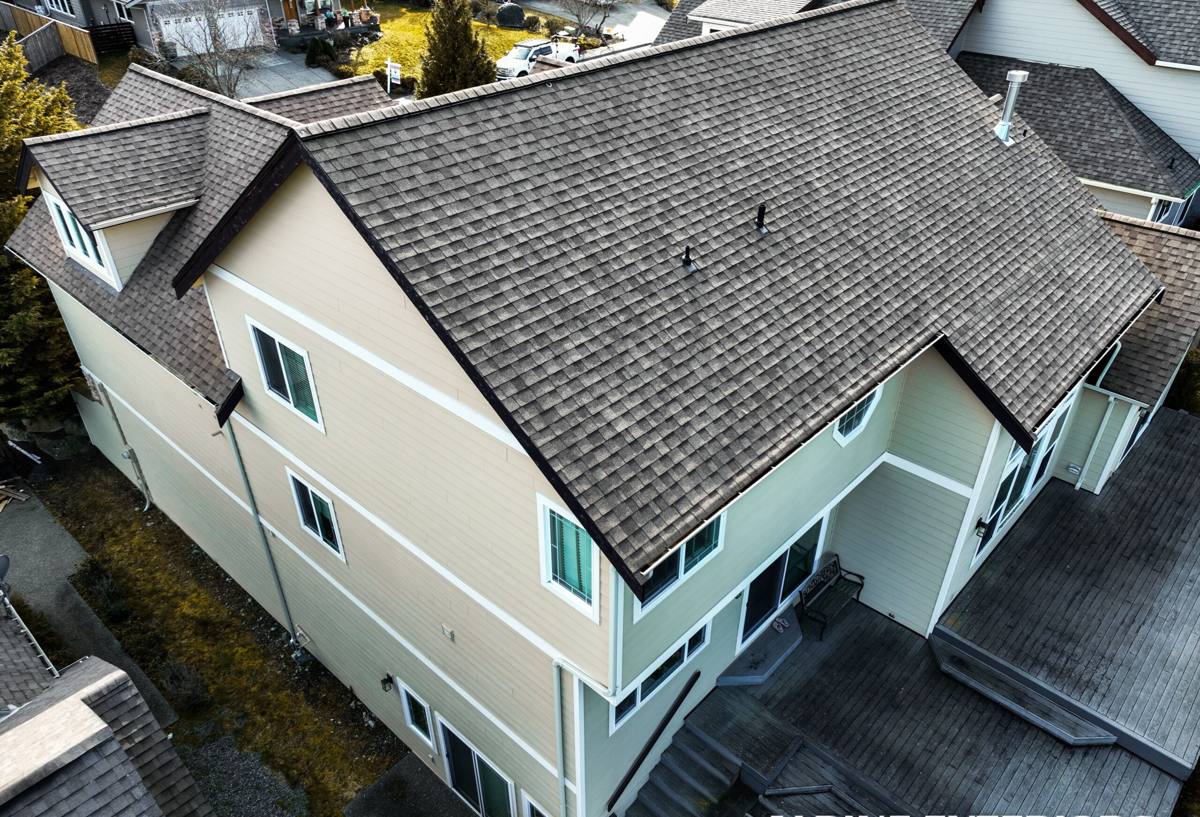
What "Deck Replacement" Should Actually Include
A lot of what gets sold as deck replacement in this region is really just new boards on old framing. That's fine when the framing is genuinely sound — but on a deck old enough to need full board replacement, the framing underneath has usually been absorbing the same moisture for just as long, if not longer, since it's hidden from view and dries even more slowly than the surface.
A real replacement means:
- Full removal of the decking surface, railings, and any trim so the frame is fully exposed for inspection
- Evaluation of every joist, beam, ledger board, and post — not a visual glance from below, but a physical check with a probe for soft or spongy wood
- Replacement of any structural member showing rot, insect damage, or excessive moisture staining, not just the boards a homeowner can see
- Correct flashing at the ledger board where the deck meets the house — this is the single most common failure point in this climate
- New fasteners and hardware rated for the decking material chosen, since mismatched metals corrode faster in damp coastal air
Skipping any of these steps doesn't save real money — it just moves the cost a few years down the road, usually after the new surface boards are already down.
The Ledger Board Problem
Most deck failures we're called out to inspect trace back to the ledger board — the piece that bolts the deck to the house. When that connection wasn't properly flashed, water works its way behind it every time it rains, and in a climate with as much sustained wet weather as Whatcom County sees, that adds up fast. A deck can look structurally sound from the surface while the ledger connection is quietly failing underneath. Replacement is the point where this gets fixed correctly, because it's the only time that area is fully exposed.
Choosing Materials for a Climate Like This
Every decking material sold today can look good on day one. The real question for a South Hill homeowner is how each one behaves after five wet seasons in a row. Here's an honest comparison of the main options we work with:
| Material | Upfront Cost | Moisture & Moss Behavior | Maintenance Needed | Realistic Lifespan Here |
|---|---|---|---|---|
| Pressure-treated wood | Lowest | Absorbs moisture readily; needs sealing to resist moss and staining | Annual cleaning and re-sealing | 10-15 years with upkeep |
| Cedar | Moderate | Naturally rot-resistant but still needs treatment against moss and graying | Regular cleaning, periodic oil or sealant | 15-20 years with upkeep |
| Capped composite | Higher | Sheds moisture well; a cap layer resists moss growth much better than raw wood | Occasional washing, no sealing or staining | 25-30+ years |
| PVC decking | Highest | Fully synthetic, no organic material for moss or rot to take hold in | Occasional washing only | 25-30+ years |
We're honest with homeowners that wood costs less to install and more to maintain, while composite and PVC cost more upfront and less over time. Neither choice is wrong — it depends on whether a homeowner wants a lower purchase price or a lower total cost of ownership. What we won't do is install a low-grade composite that isn't fully capped on all sides, since the exposed edges on some of those products absorb moisture in exactly the conditions this area sees most of the year, defeating the purpose of choosing composite in the first place.
Structural Details That Matter More Here Than in Drier Climates
Footings and Post Bases
Ground contact is a weak point everywhere, but a region with heavy seasonal rain makes it worse. Post bases should sit above grade on proper metal connectors, not buried in soil or sitting directly on a footing where water can wick up into the wood.
Joist Spacing and Board Direction
Composite and PVC boards generally need tighter joist spacing than wood to avoid sagging over time, especially in a climate where boards stay damp longer between dry stretches. This is a detail that's easy to shortcut and hard for a homeowner to catch until the deck starts to feel spongy underfoot years later.
Drainage Underneath
A deck built tight to the ground, or without any slope for water to run off, holds moisture against the framing far longer than one designed with airflow and drainage in mind. In a moss-prone climate, that trapped moisture is exactly what moss and mildew need to establish themselves under the deck as well as on top of it.
Our Deck Replacement Process
- On-site evaluation — we inspect the existing deck's framing, ledger connection, and footings before quoting anything, since the condition underneath determines the real scope of work
- Material walkthrough — we go over wood, composite, and PVC options honestly, including what each one will actually cost to own over the next decade, not just to install
- Demolition — full removal of the old structure down to what's being reused or the ground
- Framing repair or rebuild — including proper ledger flashing, post bases, and joist spacing matched to the new decking material
- Decking, railing, and trim installation — following manufacturer specs for fastening and spacing, which matter more in wet climates than most homeowners realize
- Final walkthrough — we go over the finished deck and what maintenance, if any, it will need going forward
Permits and Local Requirements
Deck replacement in Whatcom County frequently requires a permit, particularly when the deck is attached to the house, exceeds certain height or size thresholds, or involves rebuilding structural framing rather than a simple surface swap. Requirements can vary depending on the deck's height above grade and its footprint. We handle the permit process as part of the job so homeowners aren't left figuring out county requirements on their own — and so the finished deck is inspected and documented correctly, which matters at resale.
Signs Your Deck Needs Replacement, Not Just Repair
Homeowners often ask us to look at a deck expecting a repair quote and end up needing a full replacement instead. These are the signs that usually mean repair isn't enough:
- Boards that feel soft, spongy, or flex noticeably underfoot
- Rust streaks bleeding out from around fasteners, which signals moisture reaching the metal from inside the wood
- Moss or dark staining that returns within weeks of cleaning
- Visible gaps, cupping, or splitting across multiple boards rather than just one or two
- A ledger board area that feels damp or shows staining on the house siding directly above it
- Railing posts that wobble or have visibly separated from the frame
- A general sag or unevenness across the deck surface that wasn't there when it was newer
One or two of these on an otherwise solid deck might mean a targeted repair is enough. Several of them together, especially involving the framing or ledger connection, usually mean the deck has reached the point where replacement is the more honest recommendation.
Why a Crew That Already Works South Hill Matters
Deck problems in this part of Whatcom County follow patterns that repeat from house to house — the same ledger flashing shortcuts, the same moss buildup on the shaded side of a deck, the same footing issues on sloped lots. A crew that has worked on South Hill decks before has already seen how these issues show up locally and knows what to check for before the first board comes off. That's different from working off a generic checklist written for a drier climate, where moss resistance and drainage aren't given the same weight they need here.
Local experience also means fewer surprises during the permit process, since the county's requirements and inspection expectations are already familiar. That translates into a more accurate quote upfront and fewer change orders once the old decking comes up and the framing is exposed.
Get a Straight Answer About Your Deck
If your South Hill deck is showing any of the signs above, or you just want an honest read on whether it needs repair or full replacement, we're happy to take a look. The estimate is free, there's no pressure to book anything on the spot, and you'll get a clear explanation of what we find and why — use the form below to get started.