 Chuckanut Exterior
 Deck Repair Built for the Mount Vernon Climate
A deck in this part of Washington works harder than most people realize. Between salt-laden air moving in off the water, long stretches of driving rain, and a moss season that can stretch from fall well into spring, the wood, fasteners, and framing underneath your deck boards are under constant pressure. We work on decks throughout the Mount Vernon area regularly, and the patterns we see are consistent: it's rarely one dramatic failure that brings a deck down, it's months of small moisture problems compounding until a board, a ledger connection, or a support post finally gives out.
Deck repair done right in this climate isn't cosmetic work. It means understanding where water actually goes once it gets under or between your boards, and fixing the structure underneath, not just what you can see from the top.
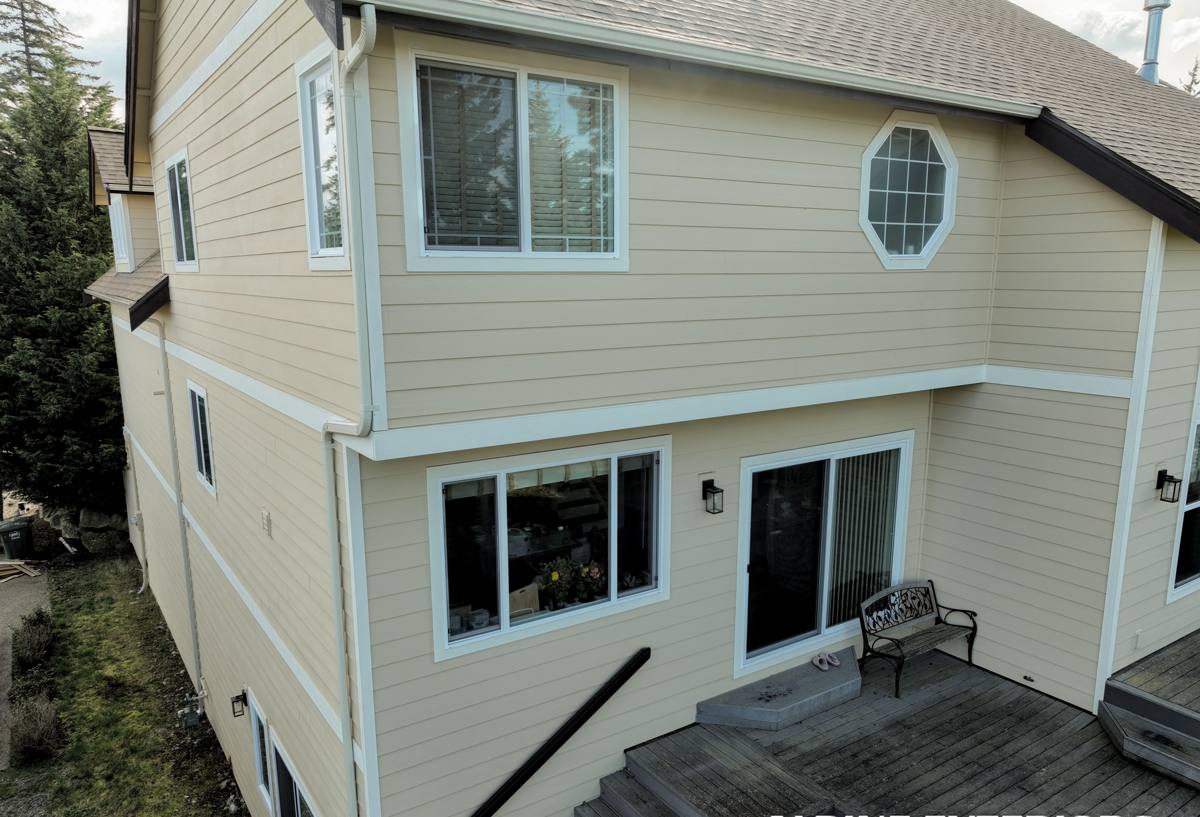
Why Local Decks Wear Out Faster Here
Moisture That Never Fully Lets Up
Unlike drier climates where a deck gets a hard freeze-thaw cycle or two a year and otherwise dries out, decks here rarely get a long enough dry stretch to fully shed moisture. Boards stay damp at the joints and fastener holes, which is exactly where rot starts. Driving rain also pushes water sideways under flashing and ledger boards in a way that vertical rain doesn't, which is why ledger connections fail more often here than in inland climates.
Moss and Organic Growth
A long moss season does more than make a deck look neglected. Moss and algae hold water against the wood surface, block sunlight that would otherwise help boards dry, and make the surface slick and dangerous underfoot. Left alone through multiple seasons, that trapped moisture works its way into checks and cracks in the wood and accelerates rot from the top down, not just from the ground up.
Salt Air and Hardware Corrosion
Salt-influenced air corrodes exposed metal faster than inland air does — nails, screws, joist hangers, and post bases all take the hit. Once a fastener starts to corrode, it loses holding strength long before it looks obviously bad, which is part of why deck problems here often show up as "wobble" or "give" rather than a visible broken part.
Common Problems We Find in Mount Vernon Deck Repairs
- Soft or spongy decking boards, especially near the house or in shaded, low-airflow areas
- Rot at the ledger board where the deck attaches to the house — often hidden behind the rim joist
- Corroded or failing joist hangers and fasteners, sometimes with rust staining as the first visible clue
- Moss and algae buildup on decking and stair treads, creating a slip hazard
- Loose, wobbly, or leaning railings and posts from moisture-softened framing
- Gaps opening between boards as wood swells and shrinks through repeated wet-dry cycles
- Undersized or missing flashing where the ledger meets the house siding
Most of these start small and stay hidden. A deck can look fine on the surface while the framing underneath has already lost real strength — which is why we always inspect from underneath, not just walk the surface.
What a Correct Deck Repair Actually Involves
Deck repair isn't one job — it's a category that ranges from swapping a handful of boards to rebuilding the structural connection to the house. A correct repair starts with figuring out which category you're actually in.
Our Inspection Process
We check the decking surface, but more importantly we get underneath the deck to look at the ledger connection, joists, beams, posts, and footings. We probe suspect wood with an awl rather than guessing from appearance, since rotten wood under a coating of algae or a fresh coat of stain can look deceptively solid. We also check flashing at the ledger board, since that's the single most common source of hidden water damage on an older deck.
Structural Repairs Come First
If joists, the ledger board, posts, or footings are compromised, those get addressed before any decking is replaced. Replacing boards on top of a weakened structure just hides the real problem and shortens the life of the repair. This is the step that gets skipped most often by rushed or inexperienced repair work, and it's the one that actually determines whether your deck is safe.
Fastener and Hardware Upgrades
Where corrosion is part of the problem, we replace failing hardware with fasteners and connectors rated for exterior, corrosive-prone environments rather than matching whatever was originally used. A repair that reuses compromised hardware just resets the clock on the same failure.
Repair or Replace? How We Help You Decide
Not every deck problem calls for a full rebuild, and not every deck is worth continuing to patch. The honest answer depends on how much of the structure is still sound.
| Factor | Leans Toward Repair | Leans Toward Replacement |
|---|---|---|
| Ledger board condition | Solid, properly flashed | Rotted or improperly flashed throughout |
| Framing (joists/beams) | Isolated soft spots | Widespread softness or sagging |
| Posts and footings | Stable, minimal movement | Settling, leaning, or undersized for current code |
| Decking boards | Scattered bad boards | Most boards cupped, splitting, or rotted |
| Age of original build | Under 15-20 years, built to code | Older build with outdated framing or connections |
We'll walk you through where your deck falls on this spectrum honestly. Sometimes a repair genuinely is the right call and buys you many more years; other times, patching an aging deck piece by piece ends up costing more over time than addressing the structure once, properly.
Our Deck Repair Process
- On-site inspection — we examine the deck from above and below, checking framing, fasteners, ledger flashing, and footings
- Written scope and estimate — you get a clear breakdown of what's failing and what it will take to fix it, not just a lump-sum number
- Structural repair — ledger, joist, post, or footing work is completed and inspected before decking goes back on
- Decking and hardware replacement — damaged boards and corroded fasteners are replaced with materials suited to this climate
- Final walkthrough — we check the repair with you and point out anything worth keeping an eye on going forward
Materials We Use and Why
Material choice matters more here than in drier parts of the country, because the difference between a good and a poor material decision shows up years sooner in this kind of moisture exposure.
| Material | Strengths | Trade-offs |
|---|---|---|
| Pressure-treated lumber | Affordable, widely available, easy to repair/replace in sections | Requires periodic sealing/staining to perform well long-term |
| Cedar | Naturally rot-resistant, attractive weathered look | Softer wood, more prone to surface wear and needs regular maintenance |
| Composite decking | Low maintenance, resists rot and moss staining better than wood | Higher upfront cost, structure underneath still needs wood-based framing care |
We don't push one material as universally "best." A pressure-treated repair on a deck you plan to keep maintained is a perfectly sound choice; a switch to composite decking makes more sense for homeowners who want to reduce the yearly upkeep that this climate demands. What matters most, regardless of surface material, is that the structural framing underneath is sound and properly protected from moisture.
Deck Maintenance Checklist for This Climate
Between repairs, a few habits go a long way toward stretching the life of your deck in a climate that doesn't give wood much of a break:
- Clean moss and algae off boards and stairs at least once a year, more often in shaded areas
- Keep gutters and downspouts clear so runoff isn't draining directly onto or under the deck
- Check for gaps or cracked caulk where the ledger board meets the house
- Look underneath the deck once a year for staining, soft wood, or rusted hardware
- Reseal or restain wood decking on the manufacturer's recommended schedule, not just when it looks worn
- Keep planters and furniture legs from sitting directly on boards for long periods, which traps moisture
Why Local Experience Matters for Deck Repair
Deck repair advice that works in a dry climate can be actively wrong here. A crew that doesn't regularly work in coastal Washington conditions may under-flash a ledger board, skip corrosion-rated hardware, or assume a deck only needs attention every few years. We work on homes throughout the Mount Vernon area often enough to know which failure points show up again and again in this climate, and we build repairs to hold up against salt air, driving rain, and a moss season that doesn't leave much of a dry window. That local pattern recognition is often the difference between a repair that lasts and one that needs redoing in a couple of years.
If you've noticed soft spots, wobble, moss buildup, or gaps opening up in your deck, it's worth getting a second set of eyes on it before the problem grows underneath the surface. We offer a free, no-pressure estimate — use the form below to get a time on the calendar.